
TurboQuant
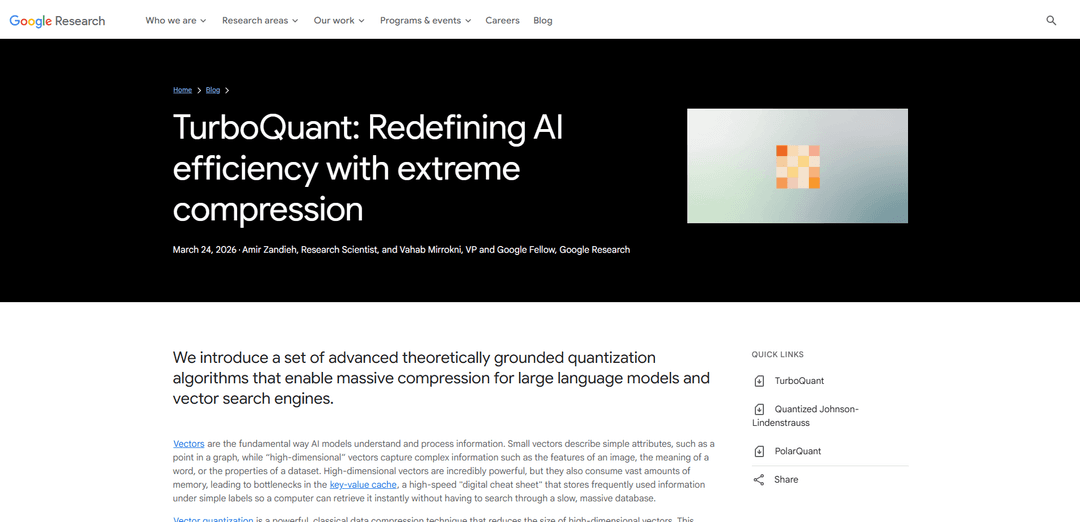
TurboQuant is Google Research's groundbreaking compression algorithm that reduces LLM key-value cache memory by at least 6x and delivers up to 8x speedup with zero accuracy loss through extreme compression techniques.
https://research.google/blog/turboquant-redefining-ai-efficiency-with-extreme-compression?ref=producthunt
Product Information
Updated:Apr 8, 2026
What is TurboQuant
TurboQuant, set to be presented at ICLR 2026, is a novel compression algorithm developed by Google Research to address the critical challenge of memory overhead in vector quantization. It works alongside two companion techniques - Quantized Johnson-Lindenstrauss (QJL) and PolarQuant - to optimize the key-value (KV) cache in large language models. Unlike traditional vector quantization methods that require extra bits for storing quantization constants, TurboQuant achieves efficient compression down to 3 bits per value without requiring model retraining or fine-tuning.
Key Features of TurboQuant
TurboQuant is a groundbreaking compression algorithm introduced by Google Research that efficiently reduces LLM key-value cache memory by at least 6x while maintaining zero accuracy loss. It combines two innovative techniques - PolarQuant for high-quality compression and Quantized Johnson-Lindenstrauss (QJL) for error elimination - to achieve 3-bit compression without requiring model retraining or fine-tuning, resulting in up to 8x faster attention computation on NVIDIA H100 GPUs compared to traditional 32-bit processing.
Zero-Overhead Compression: Eliminates the traditional memory overhead issue by using PolarQuant's polar coordinate system and QJL's single-bit error correction, avoiding the need to store quantization constants
Data-Oblivious Quantization: Works instantly without requiring time-consuming k-means training or dataset-specific tuning, making it immediately deployable for any dataset
Extreme Compression Ratio: Compresses KV cache to just 3 bits per value while maintaining perfect downstream results across benchmarks
Hardware-Compatible Design: Optimized for modern GPU architectures, enabling up to 8x speedup in attention computation on NVIDIA H100 GPUs
Use Cases of TurboQuant
Large-Scale Vector Search: Enables faster and more efficient similarity lookups in massive vector databases for semantic search applications
Long-Context LLM Inference: Allows processing of longer context windows by reducing KV cache memory requirements in production deployments
Edge AI Deployment: Enables running larger AI models on resource-constrained devices by reducing memory requirements without sacrificing accuracy
Pros
No accuracy loss despite extreme compression
No training or fine-tuning required
Significant performance improvements in both memory usage and computation speed
Cons
Currently only tested on specific models (Gemma and Mistral)
Requires specific GPU hardware for optimal performance
How to Use TurboQuant
Note: Cannot provide implementation steps: Based on the provided information, TurboQuant is a newly announced technology (for ICLR 2026) by Google Research that has not been publicly released yet. The sources only describe the theoretical approach and results, but do not provide implementation details or usage instructions. The technology appears to still be in the research phase and not yet available for public use.
Future availability expectations: According to the sources, the expected deployment timeline is: Q2 2026 for integration into frontier lab inference stacks (Google, Anthropic), Q3 2026 for open-source implementation in llama.cpp, and Q4 2026 for hardware-level support in next-gen AI chips.
Monitor official channels: To implement TurboQuant when available, users should monitor Google Research's official channels and publications for release announcements, documentation, and implementation guides.
TurboQuant FAQs
TurboQuant is a compression algorithm developed by Google Research that optimally addresses the challenge of memory overhead in vector quantization. It helps reduce key-value (KV) cache bottlenecks in AI models while preserving output accuracy, enabling more efficient processing of long-context tasks.
Popular Articles

Atoms: A Multi-Agent AI Platform That Transforms Ideas into Launch-Ready Products
Oct 13, 2026

Nano Banana SBTI: What It Is, How It Works, and How to Use It in 2026
Apr 15, 2026

Atoms Review — The AI Product Builder Redefining Digital Creation in 2026
Apr 10, 2026

Kilo Claw: How to Deploy and Use a True "Do‑It‑For‑You" AI Agent(2026 Update)
Apr 3, 2026
Latest AI Tools Similar to TurboQuant
Gait
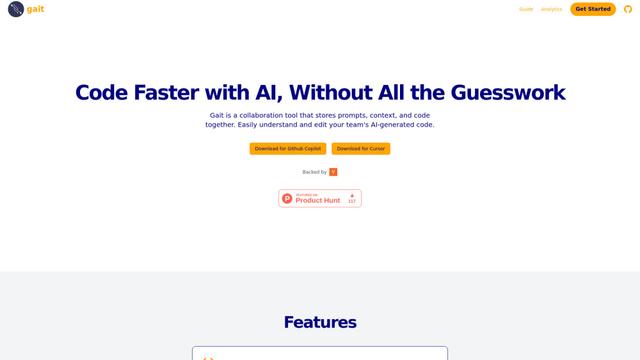
Gait is a collaboration tool that integrates AI-assisted code generation with version control, enabling teams to track, understand, and share AI-generated code context efficiently.

invoices.dev
invoices.dev is an automated invoicing platform that generates invoices directly from developers' Git commits, with integration capabilities for GitHub, Slack, Linear, and Google services.
EasyRFP
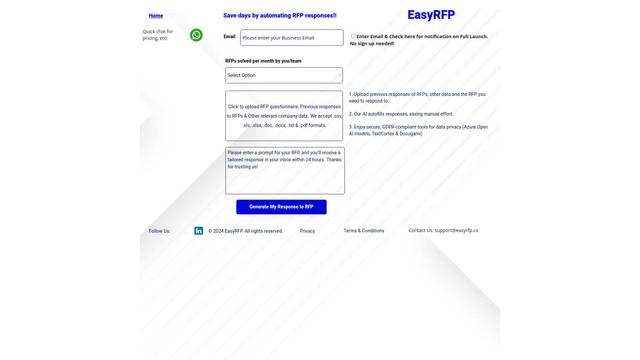
EasyRFP is an AI-powered edge computing toolkit that streamlines RFP (Request for Proposal) responses and enables real-time field phenotyping through deep learning technology.

Cart.ai
Cart.ai is an AI-powered service platform that provides comprehensive business automation solutions including coding, customer relations management, video editing, e-commerce setup, and custom AI development with 24/7 support.
Popular AI Tools Like TurboQuant

GitHub Copilot Chat
GitHub Copilot Chat is an AI-powered coding assistant that provides natural language interactions, real-time code suggestions, and contextual support directly within supported IDEs and GitHub.com.
CopilotForXcode
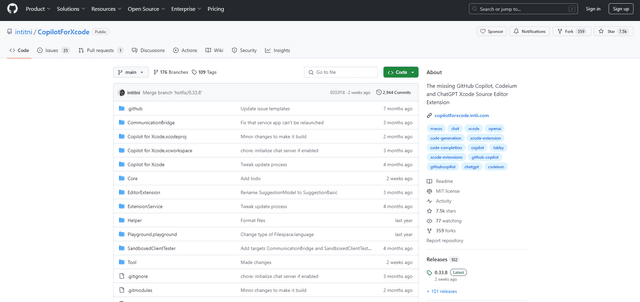
CopilotForXcode is an Xcode Source Editor Extension that integrates GitHub Copilot, Codeium, and ChatGPT to provide AI-powered code suggestions, chat assistance, and prompt-to-code functionality within Xcode.

BrowserAI
BrowserAI is an open-source library that enables running local Large Language Models (LLMs) directly in web browsers with WebGPU acceleration, offering privacy-focused AI capabilities without requiring server infrastructure.
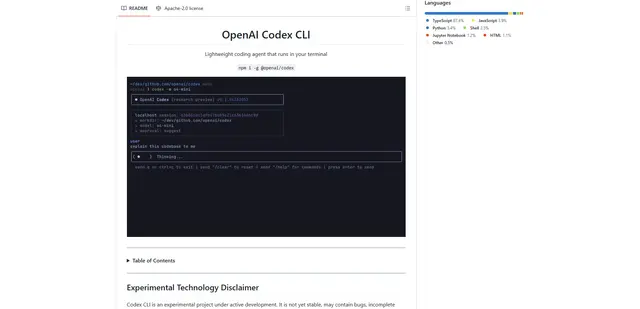
OpenAI Codex CLI
OpenAI Codex CLI is a lightweight, open-source coding agent that runs in your terminal, enabling developers to translate natural language into code execution while providing ChatGPT-level reasoning with the ability to run code, manipulate files, and iterate under version control.