
JellyNet
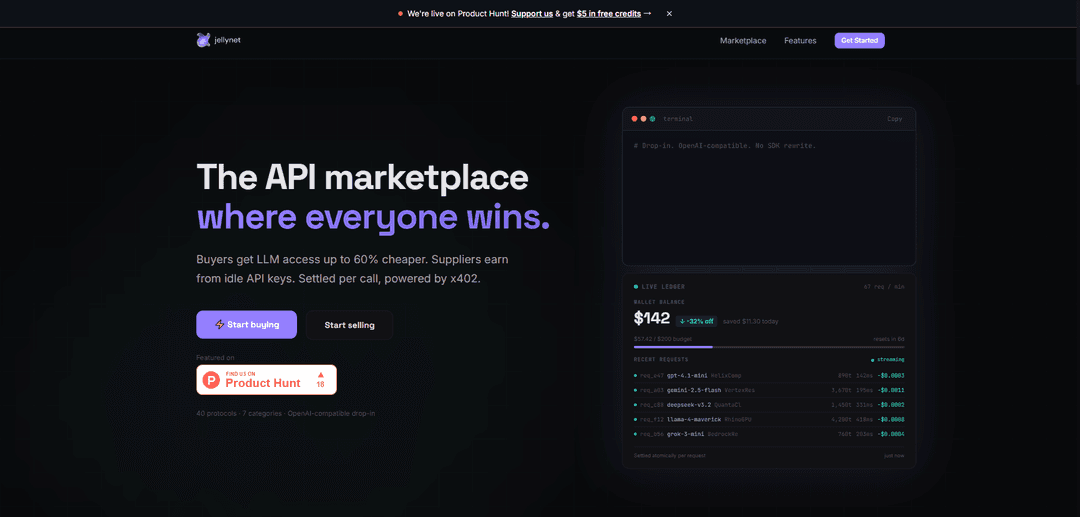
JellyNet is an agentic API marketplace that offers OpenAI-compatible, drop-in access to 40+ LLM providers with up to 60% lower costs, automatic failover, and per-call settlement via the x402 micropayment protocol on Solana (USDC).
https://www.jellynet.net/?ref=producthunt
Product Information
Updated:Jun 8, 2026
What is JellyNet
JellyNet is a two-sided API capacity-sharing marketplace that connects buyers who need on-demand AI model access with suppliers who have idle API keys and capacity. It provides a universal, OpenAI-compatible endpoint for chat/completions and other AI modalities, enabling developers and tools to route requests across a large pool of providers without managing multiple vendor accounts. Pricing and usage are presented transparently, and requests are settled per call, making it suitable for both human-driven usage (e.g., budgets and dashboards) and fully automated agent workflows.
Key Features of JellyNet
JellyNet is an agentic API marketplace that lets buyers access 40+ LLM providers through a single OpenAI-compatible API (often at lower cost), while suppliers monetize idle API keys by serving requests and earning per-call revenue. It supports transparent per-request settlement and ledger visibility, automatic routing/failover across a pooled supply, and agent-native payments via the x402 protocol where an agent can receive an HTTP 402, pay the exact USDC amount on Solana, and retry with a payment proof header—enabling pay-per-call usage without traditional signup or key management for agents.
OpenAI-compatible drop-in API: Use a familiar /v1/chat/completions-style interface so existing OpenAI clients/SDKs can switch with minimal or no rewrite.
Multi-provider access via one integration: Route to many major LLM providers and modalities (text/image/audio/embeddings) through a single endpoint and key.
x402 pay-per-call for agents: Agents handle a standard 402 Payment Required response, pay the exact USDC amount on Solana, then retry with an X-Payment proof—enabling per-request micropayments without traditional account provisioning.
API capacity-sharing marketplace: Suppliers list idle API keys (and related resources) and earn per served call/tokens; buyers benefit from marketplace pricing.
Automatic failover across a pool: A universal access layer with automatic failover helps maintain continuity when a specific upstream provider/key is rate-limited or unavailable.
Transparent pricing and live ledger: Per-request costs and activity are visible, supporting budgeting and clearer cost attribution across models and workloads.
Use Cases of JellyNet
AI agent platforms with autonomous billing: Agent builders can run tools that pay per invocation using x402 (USDC on Solana), avoiding subscription accounts and reducing operational overhead.
Cost-optimized LLM ops for startups: Teams can route workloads to cheaper marketplace capacity while keeping a single OpenAI-compatible integration for rapid iteration.
Enterprise multi-model routing and resilience: Organizations can use one gateway to access multiple vendors and leverage failover to improve uptime for mission-critical assistants.
Developers migrating or benchmarking models: Easily swap between providers/models behind the same API to compare quality, latency, and cost without rebuilding client logic.
Monetizing unused API subscriptions: Individuals or teams with underutilized provider plans can list idle keys and earn revenue when others consume that capacity.
Pros
Single, OpenAI-compatible integration that can reduce switching costs across many LLM providers
Agent-native per-call payments via x402 (402→pay USDC on Solana→retry) can eliminate traditional signup/key-management flows
Marketplace dynamics and transparent per-request ledger can improve cost control and visibility
Cons
x402 flow requires handling crypto payments (USDC on Solana) and payment-proof logic for agent buyers
Reliance on a marketplace/pool may introduce variability in pricing, latency, or availability depending on supplier capacity
How to Use JellyNet
1) Choose how you want to use JellyNet (Buyer vs Agent Buyer vs Supplier): JellyNet supports (a) human buyers who use a JellyNet API key, (b) agent buyers who pay per-call via x402 without an account, and (c) suppliers who monetize idle API keys/resources.
2) (Buyer) Get your JellyNet Base URL and API key: Set BASE_URL to JellyNet’s OpenAI-compatible endpoint (e.g., https://api.jellynet.net/v1) and obtain a JellyNet API key (format shown as jn_live_*****).
3) (Buyer) Make an OpenAI-compatible request: Send requests to the OpenAI-style routes (e.g., /chat/completions) using Authorization: Bearer <JellyNet_API_KEY> and your model/messages payload.
4) (Buyer) Example: call /chat/completions with curl: Example shown in docs: export BASE_URL=https://api.jellynet.net/v1; export API_KEY=jn_live_*****; curl $BASE_URL/chat/completions -H "Authorization: Bearer $API_KEY" -d '{ "model": "claude-sonnet-4.6", "messages": [...] }'.
5) (Buyer) Track usage and pricing in the live ledger: Use JellyNet’s dashboard/ledger to view recent requests, per-request settlement, and transparent pricing (buyer pays per token; JellyNet takes a cut; supplier earns per consumed token).
6) (Agent Buyer / x402) Send a request without signup and expect a 402 challenge: Agents can call JellyNet endpoints without an account. The first request returns HTTP 402 Payment Required with an x402 payload describing accepted payment options (e.g., network=solana, asset=USDC, maxAmountRequired, payTo).
7) (Agent Buyer / x402) Read the 402 response and extract payment details: From the 402 JSON, read x402Version and the accepts array (network, asset, payTo, maxAmountRequired) to know where/how much to pay.
8) (Agent Buyer / x402) Pay the exact amount on-chain and retry with proof: Pay the required USDC amount on the specified network (example: Solana), then retry the same request including the payment proof in the X-Payment header as a base64-encoded proof.
9) (Agent Buyer / x402) Example: two-step curl flow: Step 1: curl -i https://api.jellynet.net/v1/chat/completions -d '{"model":"gpt-4o","messages":[...]}' -> receive 402 + accepts. Step 2: curl https://api.jellynet.net/v1/chat/completions -H "X-Payment: <base64_proof>" -d '{"model":"gpt-4o","messages":[...]}' -> receive 200 OK with upstream response.
10) (Supplier) Prepare the resource you want to monetize: Suppliers can contribute unused digital resources such as idle API keys (across many LLM providers) and list them to earn per call served.
11) (Supplier) List your resource in JellyNet: Use the supplier flow described: paste an API key (or configure a proxy endpoint / share compute), set pricing, and publish it to the marketplace.
12) (Supplier) Serve traffic via JellyNet’s x402-protected proxy endpoint: Your listed resource is exposed through a unique x402-protected proxy endpoint with payment headers built in; when agents call it and pay, you earn per-request.
13) (Supplier) Monitor earnings and settlements: Watch earnings stack up in real time; transactions are presented as settled per request with transparent accounting (and described as verified on-chain for x402 flows).
JellyNet FAQs
JellyNet is an agentic API marketplace where buyers can access LLM APIs more cheaply and suppliers can earn from idle API keys/resources. It is OpenAI-compatible and supports many providers and modalities (text, image, audio, embeddings).
JellyNet Video
Popular Articles

Atoms: A Multi-Agent AI Platform That Transforms Ideas into Launch-Ready Products
May 22, 2026

Nano Banana SBTI: What It Is, How It Works, and How to Use It in 2026
Apr 15, 2026

Atoms Review — The AI Product Builder Redefining Digital Creation in 2026
Apr 10, 2026

Kilo Claw: How to Deploy and Use a True "Do‑It‑For‑You" AI Agent(2026 Update)
Apr 3, 2026
Latest AI Tools Similar to JellyNet
Gait
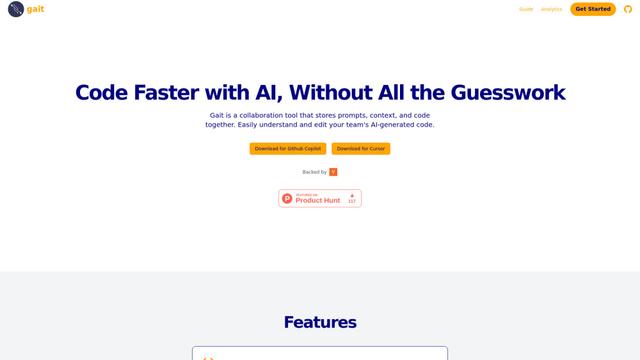
Gait is a collaboration tool that integrates AI-assisted code generation with version control, enabling teams to track, understand, and share AI-generated code context efficiently.
invoices.dev
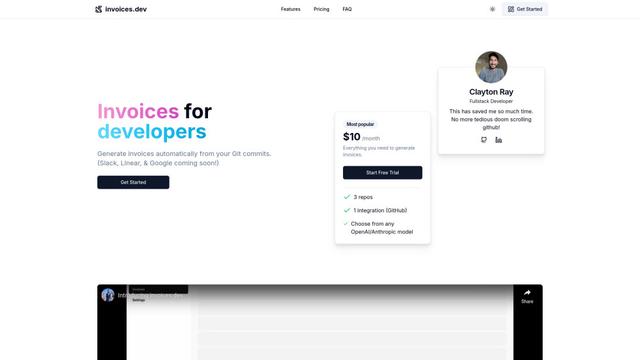
invoices.dev is an automated invoicing platform that generates invoices directly from developers' Git commits, with integration capabilities for GitHub, Slack, Linear, and Google services.
EasyRFP
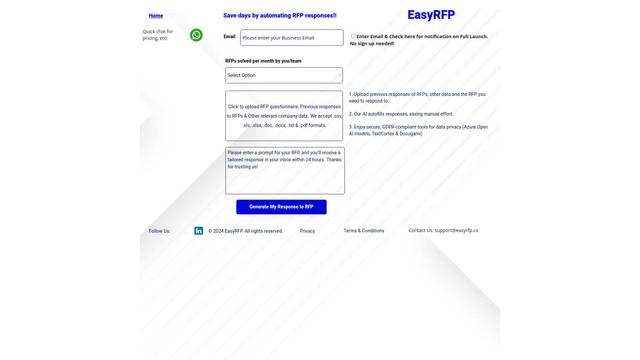
EasyRFP is an AI-powered edge computing toolkit that streamlines RFP (Request for Proposal) responses and enables real-time field phenotyping through deep learning technology.

Cart.ai
Cart.ai is an AI-powered service platform that provides comprehensive business automation solutions including coding, customer relations management, video editing, e-commerce setup, and custom AI development with 24/7 support.
Popular AI Tools Like JellyNet

GitHub Copilot Chat
GitHub Copilot Chat is an AI-powered coding assistant that provides natural language interactions, real-time code suggestions, and contextual support directly within supported IDEs and GitHub.com.
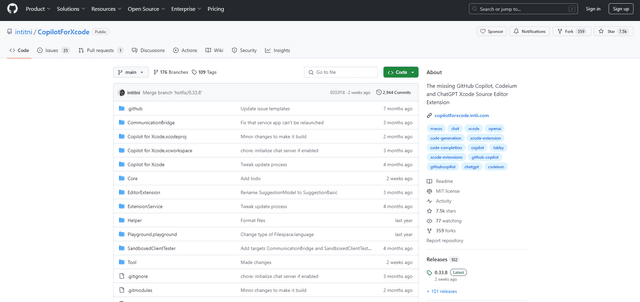
CopilotForXcode
CopilotForXcode is an Xcode Source Editor Extension that integrates GitHub Copilot, Codeium, and ChatGPT to provide AI-powered code suggestions, chat assistance, and prompt-to-code functionality within Xcode.
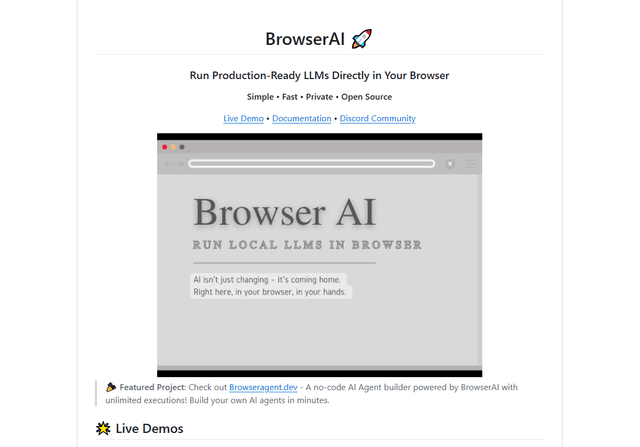
BrowserAI
BrowserAI is an open-source library that enables running local Large Language Models (LLMs) directly in web browsers with WebGPU acceleration, offering privacy-focused AI capabilities without requiring server infrastructure.
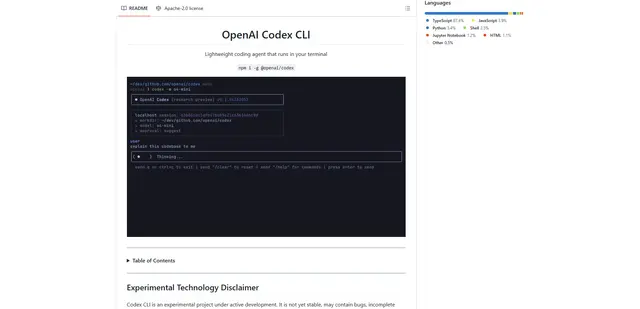
OpenAI Codex CLI
OpenAI Codex CLI is a lightweight, open-source coding agent that runs in your terminal, enabling developers to translate natural language into code execution while providing ChatGPT-level reasoning with the ability to run code, manipulate files, and iterate under version control.