swain.
swain. is Descry’s open-source, local-first security review tool that scans launch-risk surfaces and guides you to “fix first” issues before you ship—no accounts, no quota, no config.
https://descry.app/?ref=producthunt

Product Information
Updated:Jun 8, 2026
What is swain.
swain. is an open-source applied AI infosec tool from descry built to make machine-written code “legible—and stoppable.” Designed as a one-command, local security review, it helps teams quickly scan a codebase for common, high-impact launch risks and then prioritizes what to remediate first. The project emphasizes local, private, deterministic runs, aiming to integrate easily into a developer’s workflow right before release.
Key Features of swain.
Swain is an open-source, local-first security review tool from descry designed to scan “launch-risk surfaces” in codebases—especially those increasingly written with AI assistance—so nothing the machine writes passes unseen. It runs locally and deterministically with a one-command workflow, producing actionable findings and a “fix first” prioritization view. Coverage focuses on common high-impact web/app security areas such as authentication/session handling, tokens/privilege boundaries, secrets, uploads, tenant isolation/object-level authorization, and common injection/XSS classes.
One-command local security scan: Run a security review quickly (e.g., demo mode) with no quota, no config, and no new accounts—optimized for fast pre-ship checks.
Local & deterministic analysis: Executes locally and aims for repeatable results, supporting privacy-sensitive environments and predictable CI-style workflows.
“Fix first” prioritization: Highlights higher-priority findings and points directly to affected files/areas so teams can remediate the most critical issues first.
Coverage of core web security risk areas: Targets common launch blockers including auth/sessions/tokens/privilege, billing/webhooks trust, uploads/path handling, secrets, SQL injection/parameterization, XSS/unsafe rendering, and tenant/object-level authorization.
Open-source infosec tooling (Apache-2.0): Available as an open-source project for inspection, self-hosting, and integration into internal security practices.
Use Cases of swain.
Pre-release security gate for SaaS/web apps: Scan a codebase before shipping to catch auth, tenant isolation, injection, XSS, and secrets issues that commonly lead to incidents.
AI-assisted development risk control: Teams using code-generation tools can run Swain to make machine-written code legible and stoppable by surfacing security flaws early.
CI-friendly security checks for engineering teams: Use deterministic local scans as a repeatable step in build/release workflows to prevent regressions in sensitive areas like sessions and tokens.
Security review for fintech billing and webhook flows: Apply scans to payment/billing integrations to identify trust boundary issues around webhooks and related backend endpoints.
Multi-tenant platform hardening: Validate object-level authorization and tenant boundary handling to reduce cross-tenant data exposure risk in B2B platforms.
Pros
Local-first and privacy-friendly (no new accounts, no quota, no config implied by demo workflow).
Focused on high-impact launch risks (auth, secrets, injection, XSS, tenant isolation, uploads, billing/webhooks).
Open-source (Apache-2.0), enabling transparency and internal customization.
Cons
Scope appears centered on web/app “launch-risk surfaces,” so it may not cover all security domains (e.g., full SAST/DAST breadth) based on the provided sources.
Effectiveness and depth of findings are not independently benchmarked in the provided sources.
How to Use swain.
1) Install swain locally: From the descry site, run the installer command shown: `curl -fsSL …/install.sh | sh` (use the exact URL from the site). This installs the `swain` CLI on your machine.
2) Verify the CLI is available: Open a new terminal session and confirm the command exists by running `swain` (or `swain --help`) to see available commands/options.
3) Run the no-quota demo scan: Execute `swain demo` to run a local, private demo that showcases findings without requiring accounts, configuration, or quotas.
4) Review the findings output: Read the CLI output that lists files and findings (example shown on the site: findings mapped to paths like `components/UserProfile.jsx`, `api/search.py`, `api/user.py`) along with severity (e.g., “medium”).
5) Use “fix first” to prioritize remediation: Follow the tool’s “fix first” guidance (as shown in the UI/flow on the site) to focus on the highest-priority issues first, starting with the specific file(s) it highlights.
6) Re-scan after changes: After applying fixes in your codebase, run swain again (e.g., re-run `swain demo` or your chosen scan command) to confirm findings are reduced or resolved.
7) Expand coverage areas you check for: Use swain to review the risk surfaces listed on the official page: auth (sessions/tokens/privilege), billing/payment trust & webhooks, uploads (path handling/tenant boundaries), secrets (hardcoded/env handling), SQL injection (parameterization), XSS (unsafe rendering/innerHTML), and tenant object-level authorization/isolation.
8) Use the open-source repo for deeper usage and integration: Open the GitHub repository linked on the official page (Descry-Technologies/Swain) to find the authoritative README, additional commands, configuration options, and recommended workflows for running swain on real projects.
swain. FAQs
swain. is an open-source security review tool from descry that scans “launch-risk surfaces” in code and highlights findings with “fix first” guidance.
Popular Articles

Vosko AI: Localize and Dub Videos for Global Audiences
Oct 15, 2026

Atoms: A Multi-Agent AI Platform That Transforms Ideas into Launch-Ready Products
Oct 13, 2026

Nano Banana SBTI: What It Is, How It Works, and How to Use It in 2026
Apr 15, 2026

Atoms Review — The AI Product Builder Redefining Digital Creation in 2026
Apr 10, 2026
Latest AI Tools Similar to swain.
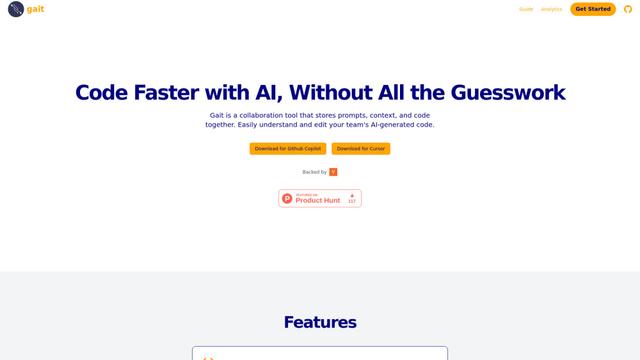
Gait
Gait is a collaboration tool that integrates AI-assisted code generation with version control, enabling teams to track, understand, and share AI-generated code context efficiently.
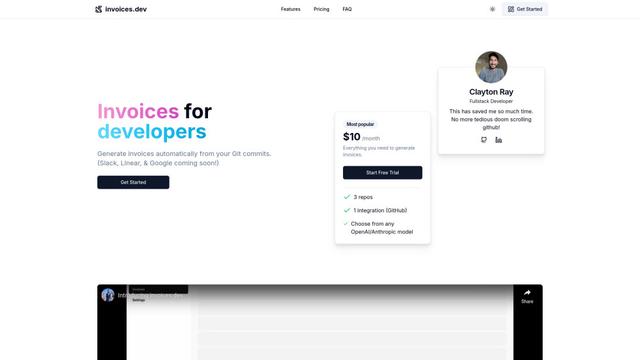
invoices.dev
invoices.dev is an automated invoicing platform that generates invoices directly from developers' Git commits, with integration capabilities for GitHub, Slack, Linear, and Google services.
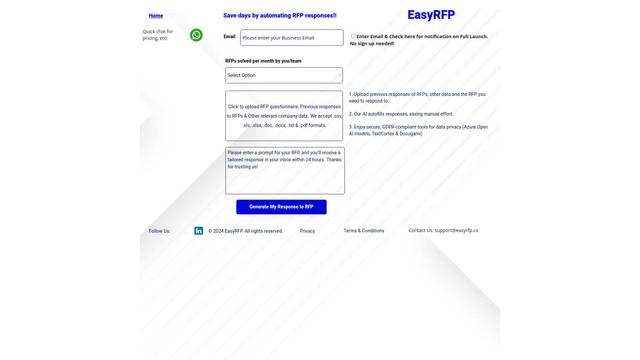
EasyRFP
EasyRFP is an AI-powered edge computing toolkit that streamlines RFP (Request for Proposal) responses and enables real-time field phenotyping through deep learning technology.

Cart.ai
Cart.ai is an AI-powered service platform that provides comprehensive business automation solutions including coding, customer relations management, video editing, e-commerce setup, and custom AI development with 24/7 support.
Popular AI Tools Like swain.

GitHub Copilot Chat
GitHub Copilot Chat is an AI-powered coding assistant that provides natural language interactions, real-time code suggestions, and contextual support directly within supported IDEs and GitHub.com.
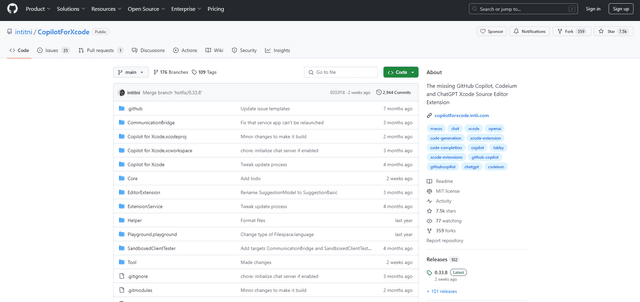
CopilotForXcode
CopilotForXcode is an Xcode Source Editor Extension that integrates GitHub Copilot, Codeium, and ChatGPT to provide AI-powered code suggestions, chat assistance, and prompt-to-code functionality within Xcode.

BrowserAI
BrowserAI is an open-source library that enables running local Large Language Models (LLMs) directly in web browsers with WebGPU acceleration, offering privacy-focused AI capabilities without requiring server infrastructure.
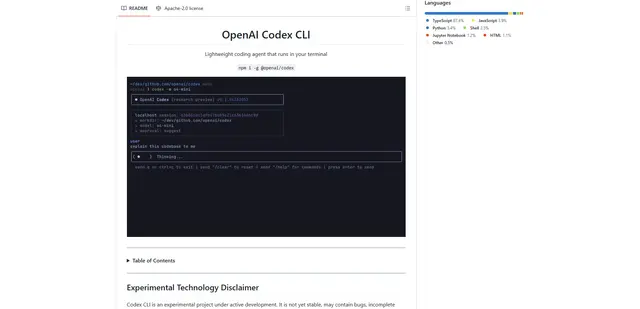
OpenAI Codex CLI
OpenAI Codex CLI is a lightweight, open-source coding agent that runs in your terminal, enabling developers to translate natural language into code execution while providing ChatGPT-level reasoning with the ability to run code, manipulate files, and iterate under version control.