
SPECTRE
SPECTRE is a slash command-based workflow tool for AI-powered software development that streamlines the complete development lifecycle from scoping to evaluation, helping developers achieve higher quality and more consistent results through structured processes.
https://github.com/Codename-Inc/spectre?ref=producthunt
Product Information
Updated:Mar 8, 2026
What is SPECTRE
SPECTRE (Scope → Plan → Execute → Clean → Test → Rebase → Evaluate) is an open-source workflow tool designed to enhance product development with AI coding agents. It provides a systematic approach to software development by breaking down the process into well-defined stages, each supported by specialized commands and documentation. The tool aims to eliminate ambiguity in development processes, which is crucial when working with AI coding agents, by enforcing clarity and specificity at each stage of development.
Key Features of SPECTRE
SPECTRE is a comprehensive workflow framework that helps developers and product builders manage the complete software development lifecycle through structured commands and processes. It breaks down development into seven key phases (Scope, Plan, Execute, Clean, Test, Rebase, Evaluate) while maintaining session memory across development cycles. The framework emphasizes reducing ambiguity in development, generating clear documentation, and enabling AI coding agents to work more effectively and autonomously.
Structured Workflow Commands: Provides a set of slash commands (/spectre:scope, /spectre:plan, etc.) that guide developers through each phase of development with clear next steps and automated transitions
Session Memory Management: Maintains context across development sessions through /spectre:handoff command, allowing seamless continuation of work and preservation of important context
Knowledge Capture System: Automatically captures and loads relevant project knowledge, patterns, and decisions through skills that are automatically referenced in future sessions
Parallel Subagents: Deploys specialized AI agents for different tasks like development, testing, code review, and research, enabling efficient parallel processing
Use Cases of SPECTRE
Astrophysics Research: Used for multi-scale, multi-physics problems in astrophysics and gravitational physics research, supporting simulation of black holes and neutron star mergers
Product Development: Enables rapid development of complex software products like mobile apps and desktop applications with consistent quality and documentation
Security Testing: Applied in testing for CPU vulnerabilities and security exploits, particularly in analyzing speculative execution side-channel attacks
Pros
Reduces ambiguity in development process through structured workflows
Enables autonomous AI agent work for longer periods
Maintains consistent quality through standardized processes and documentation
Cons
May feel like waterfall development methodology which some teams avoid
Requires initial setup and learning curve to understand the workflow
Can be process-heavy for very small features or quick fixes
How to Use SPECTRE
Install SPECTRE: Within Claude Code, add marketplace and install SPECTRE using commands:
1. /plugin marketplace add Codename-Inc/spectre
2. /plugin install spectre@codename
Configure Settings: Turn off auto-compact in Claude Code settings using /config command to ensure proper context management
Start Feature Development: Begin with /spectre:scope command to define requirements, constraints and success criteria for your feature
Create Technical Plan: Use /spectre:plan to research codebase and create implementation plan with specific tasks
Execute Implementation: Run /spectre:execute to implement tasks using parallel subagents that handle code review and validation
Manage Sessions: Use /spectre:handoff when switching tasks or when context window gets large (>160k tokens) to maintain session memory
Clean Up Code: Run /spectre:clean to remove dead code, apply linting, and format code properly
Add Tests: Use /spectre:test to add risk-aware test coverage to your implementation
Prepare for Merge: Run /spectre:rebase to safely prepare code for merging and handle any conflicts
Review and Document: Complete the cycle with /spectre:evaluate to perform architecture review and capture knowledge for future reference
Optional Steps: Use additional commands as needed:
- /spectre:ux_spec for UI-heavy features
- /spectre:fix for debugging issues
- /spectre:sweep for light cleanup
- /spectre:forget to clear session memory
SPECTRE FAQs
SPECTRE is a slash command based workflow for Claude Code designed to help build product features more efficiently. It follows a structured workflow: Scope → Plan → Execute → Clean → Test → Rebase → Evaluate. It helps get higher quality and more consistent results from coding agents while allowing them to work autonomously for longer periods.
Popular Articles

Atoms: A Multi-Agent AI Platform That Transforms Ideas into Launch-Ready Products
May 22, 2026

Nano Banana SBTI: What It Is, How It Works, and How to Use It in 2026
Apr 15, 2026

Atoms Review — The AI Product Builder Redefining Digital Creation in 2026
Apr 10, 2026

Kilo Claw: How to Deploy and Use a True "Do‑It‑For‑You" AI Agent(2026 Update)
Apr 3, 2026
Latest AI Tools Similar to SPECTRE

Gait
Gait is a collaboration tool that integrates AI-assisted code generation with version control, enabling teams to track, understand, and share AI-generated code context efficiently.
invoices.dev
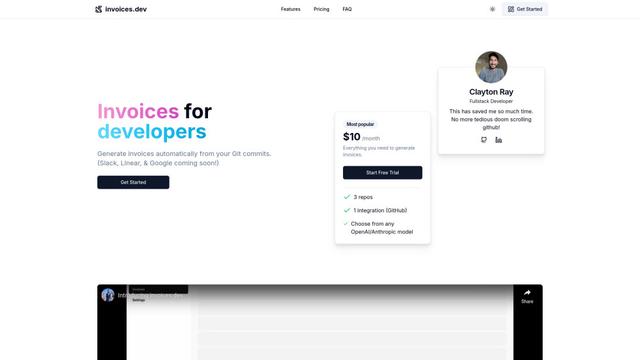
invoices.dev is an automated invoicing platform that generates invoices directly from developers' Git commits, with integration capabilities for GitHub, Slack, Linear, and Google services.
EasyRFP
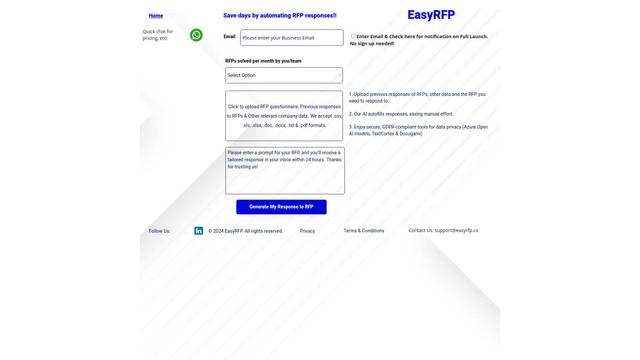
EasyRFP is an AI-powered edge computing toolkit that streamlines RFP (Request for Proposal) responses and enables real-time field phenotyping through deep learning technology.

Cart.ai
Cart.ai is an AI-powered service platform that provides comprehensive business automation solutions including coding, customer relations management, video editing, e-commerce setup, and custom AI development with 24/7 support.
Popular AI Tools Like SPECTRE

GitHub Copilot Chat
GitHub Copilot Chat is an AI-powered coding assistant that provides natural language interactions, real-time code suggestions, and contextual support directly within supported IDEs and GitHub.com.
CopilotForXcode
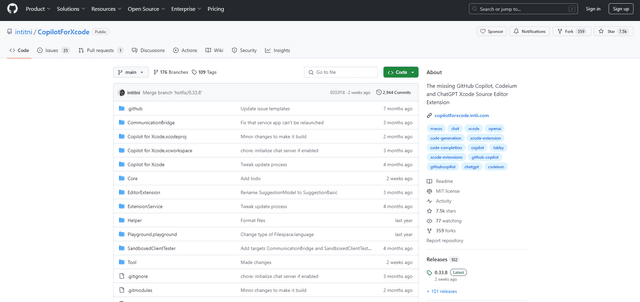
CopilotForXcode is an Xcode Source Editor Extension that integrates GitHub Copilot, Codeium, and ChatGPT to provide AI-powered code suggestions, chat assistance, and prompt-to-code functionality within Xcode.
BrowserAI
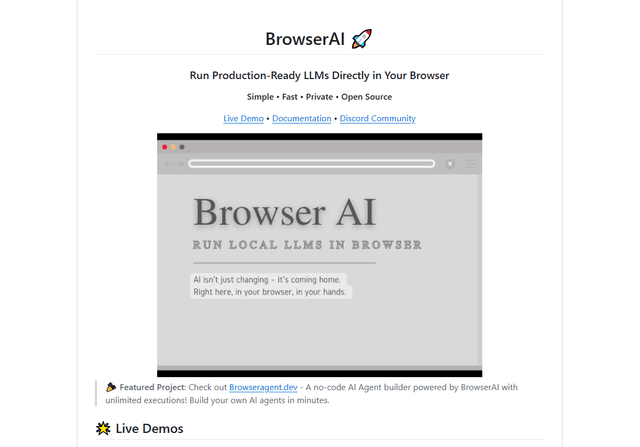
BrowserAI is an open-source library that enables running local Large Language Models (LLMs) directly in web browsers with WebGPU acceleration, offering privacy-focused AI capabilities without requiring server infrastructure.
OpenAI Codex CLI
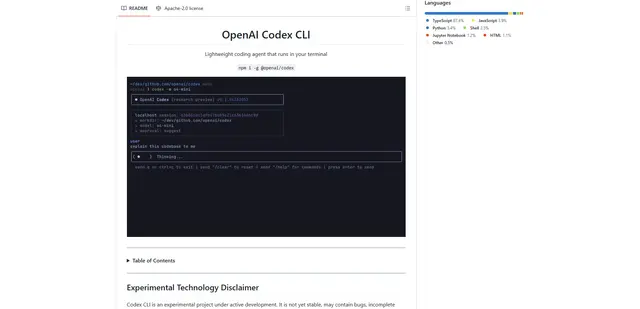
OpenAI Codex CLI is a lightweight, open-source coding agent that runs in your terminal, enabling developers to translate natural language into code execution while providing ChatGPT-level reasoning with the ability to run code, manipulate files, and iterate under version control.