
Deep Work Plan
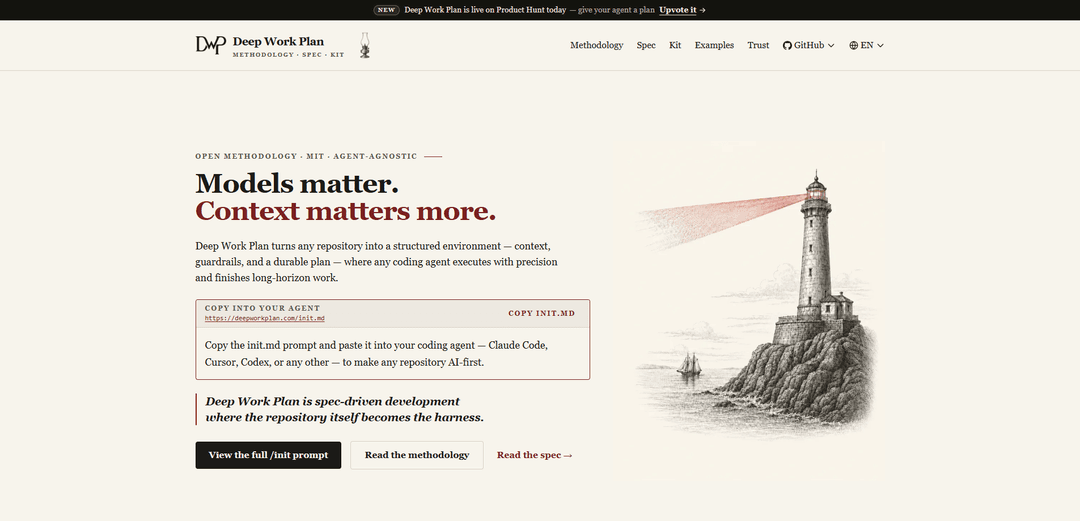
Deep Work Plan is an MIT-licensed, agent-agnostic, spec-driven methodology that turns any repository into a durable “agent harness” (context, guardrails, and resumable plans) so coding agents can execute long-horizon work reliably with explicit acceptance criteria and validation gates.
https://deepworkplan.com/?ref=producthunt
Product Information
Updated:Jul 8, 2026
What is Deep Work Plan
Deep Work Plan is a structured execution framework for AI coding agents designed to prevent “drift” on multi-hour or multi-day engineering efforts like migrations, refactors across many files, or building new subsystems. Instead of relying on an agent’s short-term context window, it makes the repository itself the source of truth by installing a set of standardized, auditable Markdown artifacts (e.g., AGENTS.md, docs/, and an .agents/ kit) plus a git-native planning workspace (.dwp/). The result is a portable, repeatable way for teams to run spec-driven development where any agent can pick up work, follow the same guardrails, and produce verifiable outcomes.
Key Features of Deep Work Plan
Deep Work Plan is an MIT-licensed, agent-agnostic methodology and skill pack that turns any code repository into a structured “harness” for long-horizon AI coding work. It installs repo-native planning and execution artifacts (e.g., AGENTS.md, a categorized docs/ tree, a cross-agent .agents/ kit, and a gitignored .dwp/ workspace) so agents can execute multi-hour tasks with explicit acceptance criteria and validation gates, reduce drift, and reliably resume after context limits—without external daemons, accounts, or telemetry.
Repository-as-harness onboarding: Inspects the repo’s real stack (languages, frameworks, manifests, CI) and generates adapted artifacts—treating generic placeholders as failure—so the repo itself becomes a durable execution environment for agents.
Spec-driven Deep Work Plans with validation gates: Creates resumable plans with explicit acceptance criteria and verification steps, keeping long-horizon work auditable and preventing mid-run drift across many files and decisions.
Agent-agnostic, Markdown-first workflow: Uses Markdown and simple procedures so multiple agents/tools can follow the same source of truth; adapters support Claude Code, Cursor, Codex, Copilot, Gemini, Windsurf, Cline, and more.
AGENTS.md + unified rules via symlinks: Writes AGENTS.md at the repo root and symlinks CLAUDE.md to it, plus a .claude → .agents symlink, ensuring different tools read one consistent instruction set.
Git-native resumability with .dwp/: Stores plans/drafts in a gitignored .dwp/ folder and relies on git state rather than external services, enabling recovery after context overflow and easy handoff between sessions or agents.
Objective conformance checks: Includes a verification command that produces pass/fail conformance against the spec, making “AI-first” repository readiness measurable and re-checkable over time.
Use Cases of Deep Work Plan
Large refactors in SaaS engineering teams: Plan and execute multi-file refactors (e.g., architecture cleanup, module boundaries, dependency upgrades) with acceptance criteria and validation steps so work stays coherent across hours/days.
Framework or platform migrations: Run long-horizon migrations (e.g., build system changes, API version upgrades, monolith-to-modular shifts) with resumable state and repo-derived commands for repeatable verification.
AI-first onboarding for new or inherited repositories: Standardize documentation, commands, and agent rules by generating AGENTS.md and categorized docs/ from the actual codebase, improving maintainability for new teams or acquisitions.
Orchestrating work across multi-repo programs: Use the “orchestrator hub” archetype to coordinate child plans across several repositories, keeping boundaries, navigation, and verification consistent in complex product ecosystems.
Regulated or privacy-sensitive development environments: Adopt agent-assisted workflows without external telemetry or accounts by keeping plans and execution state local and git-native—useful for finance, healthcare, or internal enterprise codebases.
Pros
Agent-agnostic and portable: works across many coding agents/tools using Markdown as the common interface.
Reduces long-horizon drift: explicit acceptance criteria and validation gates keep multi-hour work verifiable.
Git-native and resumable: no external state, enabling recovery after context overflows and easy handoffs.
Onboarding adapts to the actual repo: generates commands/docs based on real manifests and CI rather than templates.
Cons
Best suited to longer, structured work: may feel heavyweight for quick one-off edits or very small repos.
Quality depends on repo hygiene: unclear tests/CI or missing manifests can limit how well onboarding infers validation commands.
Requires process adoption: teams must commit to spec/plan discipline to fully realize the drift-reduction benefits.
How to Use Deep Work Plan
1) Choose a target repository and a long-horizon task: Pick the repo you want to make “AI-first” and a task that typically causes agent drift (migration, new subsystem, multi-file refactor). Ensure the repo is clean (commit or stash local changes) so the Deep Work Plan onboarding can be committed atomically.
2) Start onboarding by pointing your coding agent at /init.md: In your agent (Claude Code, Cursor, Codex, Copilot, Gemini, etc.), give a single instruction to open and follow the onboarding prompt at https://deepworkplan.com/init.md. This is the entry point that tells the agent what methodology to adopt and what artifacts to generate.
3) Let the agent reason about your stack (no templates): The agent inspects your repository’s real manifests, folder layout, and CI to infer languages/frameworks, package manager, and the actual validation commands (test/lint/build). It also classifies the repo as either an individual repository or an orchestrator hub.
4) Generate and commit AGENTS.md as the durable source of truth: The agent writes AGENTS.md at the repo root, populated with your repo’s real commands and conventions (not placeholders). If CLAUDE.md is used by your tooling, it is symlinked to AGENTS.md so there is one canonical instruction set.
5) Generate categorized docs/ and per-module documentation: The agent scaffolds a docs/ hierarchy (setup, architecture, standards, troubleshooting) and creates per-module README/docs where appropriate (especially in monorepos). This documentation is derived from your codebase and build/CI reality.
6) Scaffold the cross-agent .agents/ kit: The agent creates a .agents/ directory (skills, agents, commands) and adds the .claude → .agents symlink so multiple agent tools can read the same operational kit. This makes the repo portable across agents.
7) Install the Deep Work Plan skill pack and create .dwp/ state: The agent installs the DWP skill pack (create, execute, refine, resume, status, verify, onboard, author) and scaffolds a gitignored .dwp/ folder for plans and drafts. The key idea is Git-native resumability without external state.
8) Verify conformance with /dwp-verify: Run the verification command (/dwp-verify) to produce an objective pass/fail report against the Deep Work Plan specification. Fix any failures until the repo is re-verifiably “AI-first.”
9) Create a Deep Work Plan for your task (spec-driven): Use the DWP create flow (e.g., /dwp-create) to generate a plan that includes explicit acceptance criteria and validation gates (tests/lint/build commands). The plan should be written so any agent can execute it and so progress is checkable.
10) Execute the plan step-by-step with validation gates: Run the execution flow (e.g., /dwp-execute). The agent follows the plan, implements changes across files, and runs the specified validation commands at the defined gates. This reduces drift and keeps work verifiable.
11) Track progress and adjust when reality changes: Use status and refinement flows (e.g., /dwp-status, /dwp-refine) to update the plan when new information appears. Keep acceptance criteria and gates current so the plan remains the durable source of truth.
12) Resume reliably across sessions (even after context overflow): If the agent stops mid-task or context overflows, use the resume flow (e.g., /dwp-resume). Because plans/drafts live in the gitignored .dwp/ folder and the repo contains the harness (AGENTS.md, docs, .agents/), any compatible agent can pick up where the last one left off.
13) (Optional) Use the author tools to extend the harness: If you need repo-specific automation, use the author sub-skill (skill-create, agent-create) to add new skills/agents/commands under .agents/. This lets the repository evolve its own repeatable procedures over time.
14) (Optional) Orchestrator hub workflow for multi-repo programs: If onboarding classified your repo as an orchestrator hub, use the hub’s manifest/index to spawn child Deep Work Plans in each sub-repository. Each child plan commits in its own repo, while the hub coordinates boundaries and navigation.
Deep Work Plan FAQs
Deep Work Plan is an MIT-licensed, agent-agnostic methodology and skill pack that turns a code repository into a structured “harness” (context, guardrails, and a durable plan) so AI coding agents can execute long-horizon work reliably using spec-driven development, explicit acceptance criteria, and validation gates.
Popular Articles

Vosko AI: Localize and Dub Videos for Global Audiences
Oct 15, 2026
Atoms: A Multi-Agent AI Platform That Transforms Ideas into Launch-Ready Products
Oct 13, 2026
Nano Banana SBTI: What It Is, How It Works, and How to Use It in 2026
Apr 15, 2026

Atoms Review — The AI Product Builder Redefining Digital Creation in 2026
Apr 10, 2026
Latest AI Tools Similar to Deep Work Plan
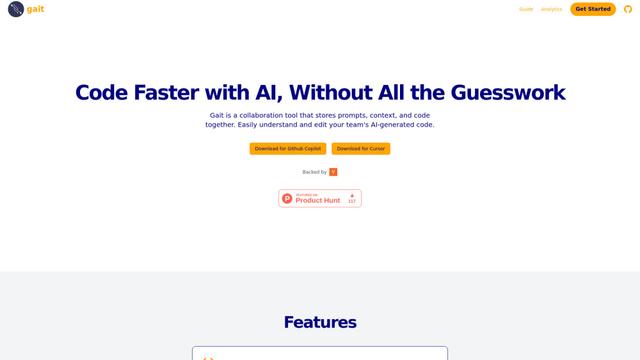
Gait
Gait is a collaboration tool that integrates AI-assisted code generation with version control, enabling teams to track, understand, and share AI-generated code context efficiently.
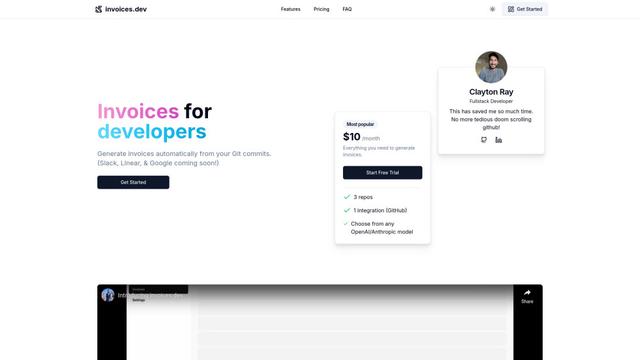
invoices.dev
invoices.dev is an automated invoicing platform that generates invoices directly from developers' Git commits, with integration capabilities for GitHub, Slack, Linear, and Google services.
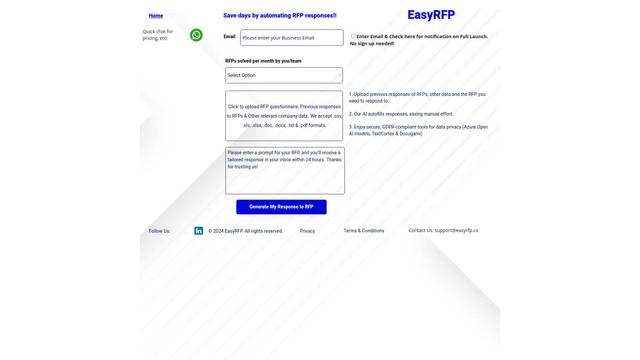
EasyRFP
EasyRFP is an AI-powered edge computing toolkit that streamlines RFP (Request for Proposal) responses and enables real-time field phenotyping through deep learning technology.

Cart.ai
Cart.ai is an AI-powered service platform that provides comprehensive business automation solutions including coding, customer relations management, video editing, e-commerce setup, and custom AI development with 24/7 support.
Popular AI Tools Like Deep Work Plan

GitHub Copilot Chat
GitHub Copilot Chat is an AI-powered coding assistant that provides natural language interactions, real-time code suggestions, and contextual support directly within supported IDEs and GitHub.com.
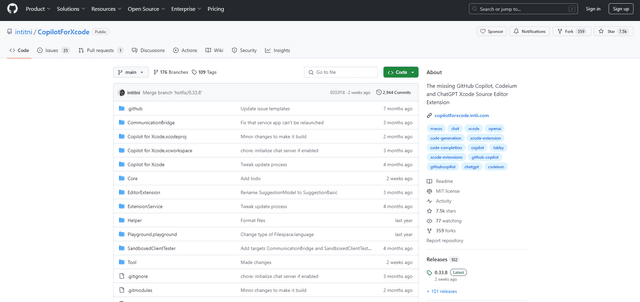
CopilotForXcode
CopilotForXcode is an Xcode Source Editor Extension that integrates GitHub Copilot, Codeium, and ChatGPT to provide AI-powered code suggestions, chat assistance, and prompt-to-code functionality within Xcode.
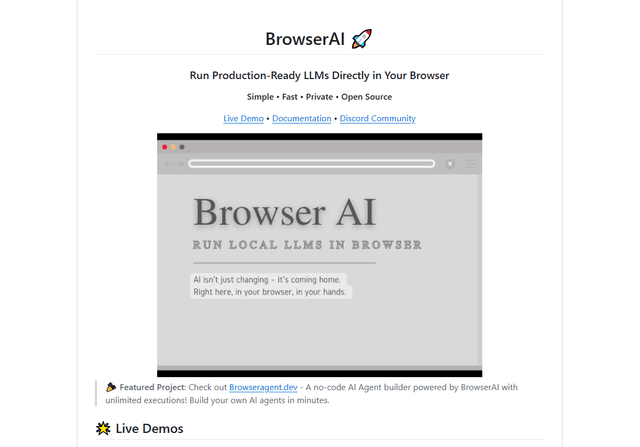
BrowserAI
BrowserAI is an open-source library that enables running local Large Language Models (LLMs) directly in web browsers with WebGPU acceleration, offering privacy-focused AI capabilities without requiring server infrastructure.
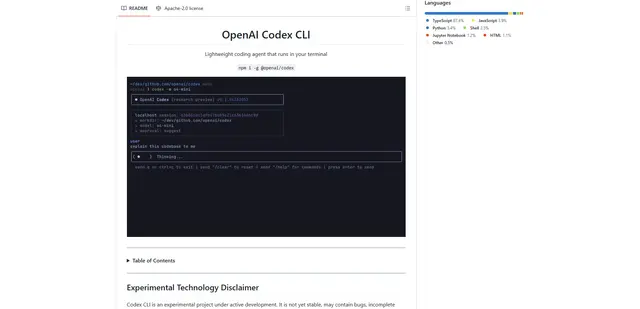
OpenAI Codex CLI
OpenAI Codex CLI is a lightweight, open-source coding agent that runs in your terminal, enabling developers to translate natural language into code execution while providing ChatGPT-level reasoning with the ability to run code, manipulate files, and iterate under version control.