
Paritok
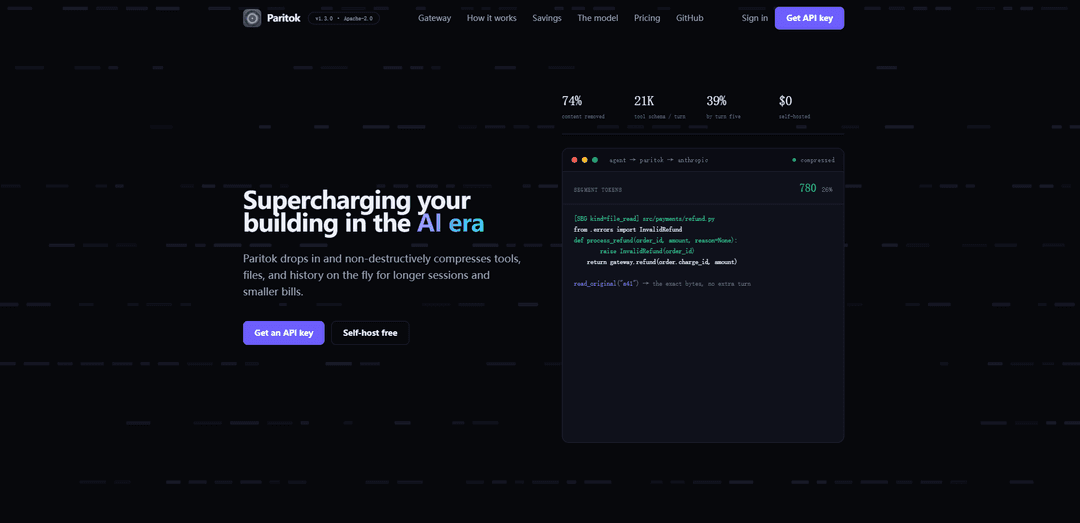
Paritok is a drop-in, non-destructive context compression gateway for AI coding agents that semantically compresses tool schemas, file reads, and conversation history to enable longer sessions and significantly lower token bills.
https://www.paritok.com/?ref=producthunt
Product Information
Updated:Aug 15, 2026
What is Paritok
Paritok is an open-source (Apache-2.0) middleware layer that sits between a coding agent (e.g., Claude Code, Cursor, Codex, OpenHands, or any OpenAI/Anthropic-compatible client) and an upstream LLM API. Its purpose is to fight “context bloat” by compressing the large amounts of repeated input agents resend on every turn—tool schemas, file contents, logs, and accumulated history—so agents can run for more turns within the same context window and at a lower cost. It’s powered by a code-native 4B compression model (based on Qwen3-4B-Instruct with PEFT/LoRA) trained end-to-end on tens of thousands of real coding-agent trajectories, and it can be self-hosted or used via a hosted GPU endpoint.
Key Features of Paritok
Paritok is a drop-in, non-destructive compression gateway for AI coding agents that sits between an agent (e.g., Claude Code, Cursor, Codex, OpenHands) and an upstream LLM API (Anthropic/OpenAI-compatible). On every request it strips tool-schema bloat, semantically compresses file reads and tool outputs, and summarizes stale conversation history to keep sessions within a fixed context budget—reducing token spend (often 25% on early turns to 85%+ in long/saturated sessions) and enabling ~3× more turns in the same context window. Compression is “lossy on the wire but recoverable,” allowing the agent to pull exact original bytes on demand via recall (e.g., read_original), while responses from the upstream model pass through unchanged.
Drop-in proxy via one env var: Integrates as a middleware layer by pointing your agent’s BASE_URL (e.g., ANTHROPIC_BASE_URL) to Paritok, requiring minimal setup while remaining compatible with OpenAI/Anthropic-style APIs.
Tool-schema filtering and stubbing: Reduces repeated per-turn tool JSON overhead (often tens of thousands of tokens) by keeping only relevant tool schemas in full and stubbing the rest; the tool block can be frozen per conversation for cache stability.
Semantic compression of files and tool results: Uses an open-source, code-native 4B model trained on real coding-agent trajectories to compress file reads, logs, and command outputs while preserving identifiers, paths, function signatures, and error details.
Stale-history summarization under a budget: Summarizes older turns once a configured context budget fills, keeping recent turns intact and preventing context-window overflows during long multi-step debugging or refactor sessions.
Non-destructive recall of originals: Nothing is permanently discarded: compressed segments are tagged so the agent can request exact original content locally (e.g., read_original(ref)) when high-fidelity details are needed.
Flexible deployment: self-host or hosted GPU: Available as an Apache-2.0 open stack (gateway + 4B model) for self-hosting, plus a managed hosted-GPU option for faster compression without owning hardware.
Use Cases of Paritok
Enterprise software engineering copilots: Reduce LLM input costs and increase session length for internal coding assistants that frequently read large files, run tests, and paste logs—especially in MCP-heavy environments with many tools.
Long-running debugging and incident response: Keep multi-turn troubleshooting sessions stable by compressing repeated logs, stack traces, and tool outputs while summarizing stale history to avoid context overflow during production incidents.
Large-codebase navigation and PR automation: Enable repo-aware agents to traverse directories, read many files, and generate PRs without ballooning context, making automated refactors and code review workflows more practical.
Cost-controlled agent platforms and IDE integrations: For vendors building IDE assistants or agent runtimes, Paritok can lower variable token spend and improve reliability by trimming tool schemas and repeated context sent each turn.
Privacy-conscious on-prem development: Self-host the compressor to keep raw tool outputs and file contents local while still sending a smaller, compressed prompt upstream—useful for regulated industries handling sensitive code.
Pros
Significant token savings that compound over longer sessions (reported up to 85%+ in context-saturated runs) and can fit ~3× more turns in the same context window.
Non-destructive design with on-demand recall of exact originals reduces risk versus irreversible truncation/summarization.
Drop-in compatibility with popular coding agents and OpenAI/Anthropic-compatible APIs; minimal integration effort.
Open-source (Apache-2.0) gateway and 4B compression model with self-hosting option for cost control and privacy.
Cons
Compression is inherently lossy in the forwarded prompt; some edge-case details may require explicit recall calls to recover exact originals.
Adds an extra component (gateway/proxy) to infrastructure, increasing operational complexity and a potential point of failure.
Quality retained is high but not perfect versus uncompressed baselines (reported ~86.5% in a benchmark setting without recall), so outcomes may vary by workflow.
How to Use Paritok
1) Choose your deployment mode (Self-host or Hosted GPU): Paritok is a middle layer between your coding agent and your LLM API. You can either (a) self-host the open-source gateway + 4B compression model on your own hardware, or (b) use Paritok’s hosted GPU endpoint (with a usage dashboard) so you don’t need a GPU.
2) Put Paritok in the middle of your agent and the LLM provider: Paritok works as a gateway/proxy: your agent sends the usual chat/messages + tool schemas + tool results to Paritok, Paritok compresses them, then forwards the compressed request to your upstream model provider (Anthropic/OpenAI-compatible upstreams). Output from the upstream model is left unchanged.
3) Point your agent at the Paritok gateway using one environment variable: Set your agent’s provider base URL to the Paritok gateway. Example shown for Anthropic-compatible agents: `export ANTHROPIC_BASE_URL=http://127.0.0.1:8080`. After this, tools/files/history sent by the agent will be routed through Paritok automatically.
4) Enable semantic tool-schema filtering (biggest win for tool-heavy agents): If your agent sends many tools (often 40–70+), configure Paritok’s tool discovery to keep only the few relevant tool schemas in full and stub the rest. Use: `tool_discovery.strategy: embedding`. This can shrink the per-turn tool schema block substantially (e.g., ~29K → ~8K tokens per turn in the example).
5) Let Paritok compress file reads and tool outputs as tagged segments: Paritok is designed for coding-agent traffic (file reads, tool results, logs). Wrap content you want compressed in segment tags so the compressor knows what it is. Example pattern: `[SEG id=1 kind=file_read] ... [/SEG]` (similarly for tool results/log output). Paritok’s 4B model compresses these segments while preserving identifiers, paths, and errors.
6) Use the open-source Paritok 4B compression model directly (optional, local/offline compression): If you want to run the compressor model yourself in Python, load the base model and Paritok adapter, then generate compressed text from your tagged segments. Example from the sources: import torch; from peft import PeftModel; from transformers import AutoModelForCausalLM, AutoTokenizer; BASE_MODEL=`Qwen/Qwen3-4B-Instruct-2507`; ADAPTER=`paritok/paritok-4b-v1`; load tokenizer+base, attach adapter with `PeftModel.from_pretrained`, then pass a message containing `[SEG ...]` content through the chat template and model.
7) Rely on non-destructive compression with on-demand recovery: Paritok is lossy on the wire but recoverable: it tags everything it compresses and supports pulling back exact original bytes when needed (e.g., via a `read_original(ref)`-style retrieval). This means you can keep requests small while still being able to recover full fidelity locally without spending extra LLM turns.
8) Run longer sessions by summarizing stale history when you hit a budget: As conversations grow, Paritok can summarize older turns once you reach a context budget you set, while keeping recent turns untouched. This helps prevent context-window overflows and increases the number of turns that fit before compaction.
9) Verify savings and iterate on your setup: Measure token reductions across turns (savings compound as history grows). Tool-heavy setups (70+ tools) and context-saturated sessions typically see higher savings. If using Hosted GPU, use the Paritok dashboard to track token/cost savings and confirm traffic is going through the hosted GPU server.
10) Use with common coding-agent environments: Paritok is designed to be compatible with popular coding-agent tools and frameworks that use standard message formats (e.g., Claude Code, Cursor, Codex, OpenHands, and OpenAI-compatible upstreams). Once the base URL is pointed at Paritok, your existing agent workflows should continue working while sending less input context.
Paritok FAQs
Paritok is a non-destructive compression gateway for AI coding agents that sits between your agent (e.g., Claude Code, Cursor, Codex, OpenHands, or any OpenAI-compatible BASE_URL agent) and the upstream LLM. It rewrites each request by stripping tool-schema bloat, compressing tool results and file reads, and summarizing stale history—then forwards the compressed request upstream (so you’re billed on fewer input tokens).
Popular Articles
Atoms: A Multi-Agent AI Platform That Transforms Ideas into Launch-Ready Products
May 22, 2026
Nano Banana SBTI: What It Is, How It Works, and How to Use It in 2026
Apr 15, 2026

Atoms Review — The AI Product Builder Redefining Digital Creation in 2026
Apr 10, 2026
Kilo Claw: How to Deploy and Use a True "Do‑It‑For‑You" AI Agent(2026 Update)
Apr 3, 2026
Latest AI Tools Similar to Paritok
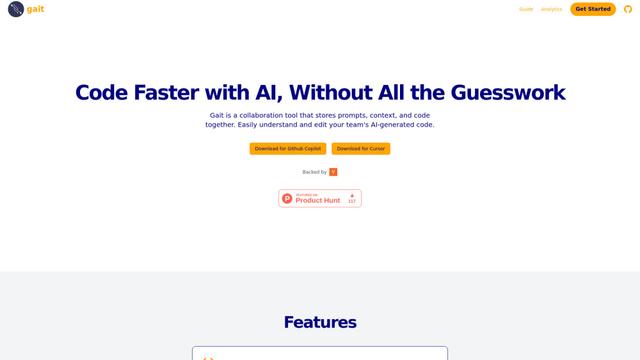
Gait
Gait is a collaboration tool that integrates AI-assisted code generation with version control, enabling teams to track, understand, and share AI-generated code context efficiently.
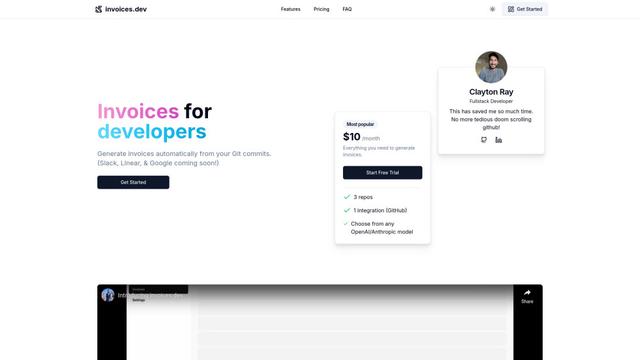
invoices.dev
invoices.dev is an automated invoicing platform that generates invoices directly from developers' Git commits, with integration capabilities for GitHub, Slack, Linear, and Google services.
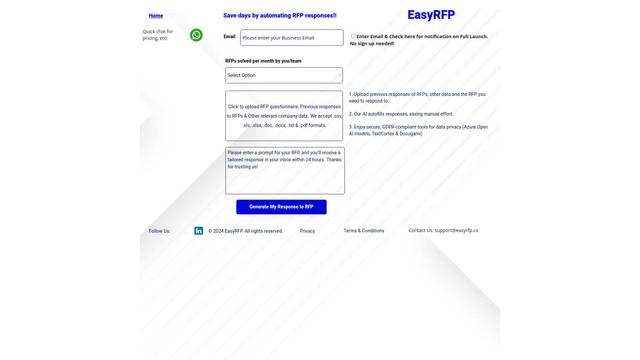
EasyRFP
EasyRFP is an AI-powered edge computing toolkit that streamlines RFP (Request for Proposal) responses and enables real-time field phenotyping through deep learning technology.

Cart.ai
Cart.ai is an AI-powered service platform that provides comprehensive business automation solutions including coding, customer relations management, video editing, e-commerce setup, and custom AI development with 24/7 support.
Popular AI Tools Like Paritok

GitHub Copilot Chat
GitHub Copilot Chat is an AI-powered coding assistant that provides natural language interactions, real-time code suggestions, and contextual support directly within supported IDEs and GitHub.com.
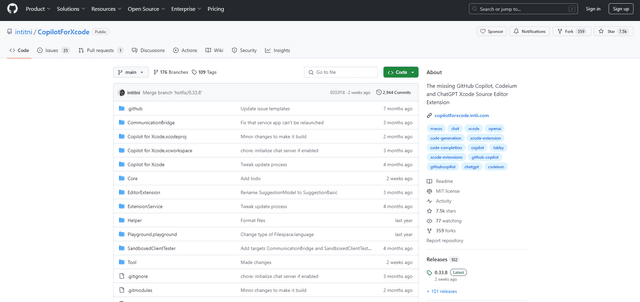
CopilotForXcode
CopilotForXcode is an Xcode Source Editor Extension that integrates GitHub Copilot, Codeium, and ChatGPT to provide AI-powered code suggestions, chat assistance, and prompt-to-code functionality within Xcode.
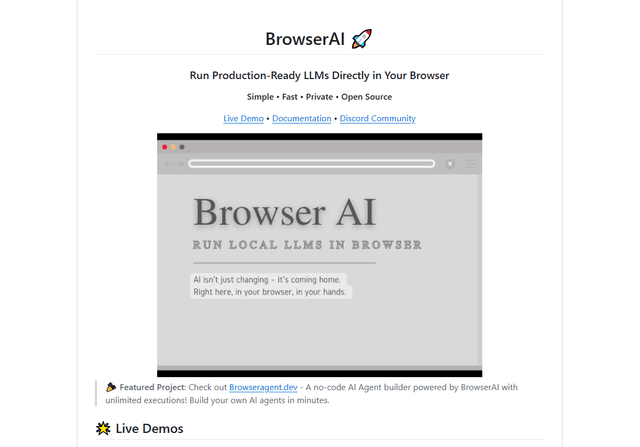
BrowserAI
BrowserAI is an open-source library that enables running local Large Language Models (LLMs) directly in web browsers with WebGPU acceleration, offering privacy-focused AI capabilities without requiring server infrastructure.
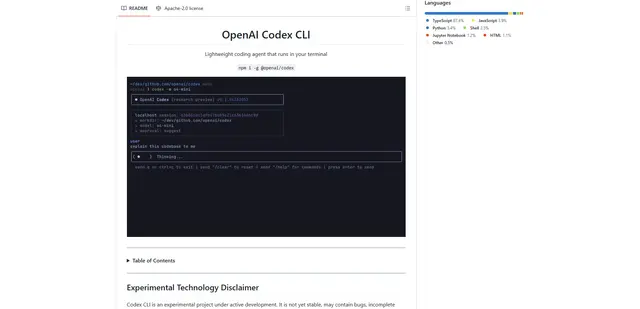
OpenAI Codex CLI
OpenAI Codex CLI is a lightweight, open-source coding agent that runs in your terminal, enabling developers to translate natural language into code execution while providing ChatGPT-level reasoning with the ability to run code, manipulate files, and iterate under version control.