
BestDefense.io
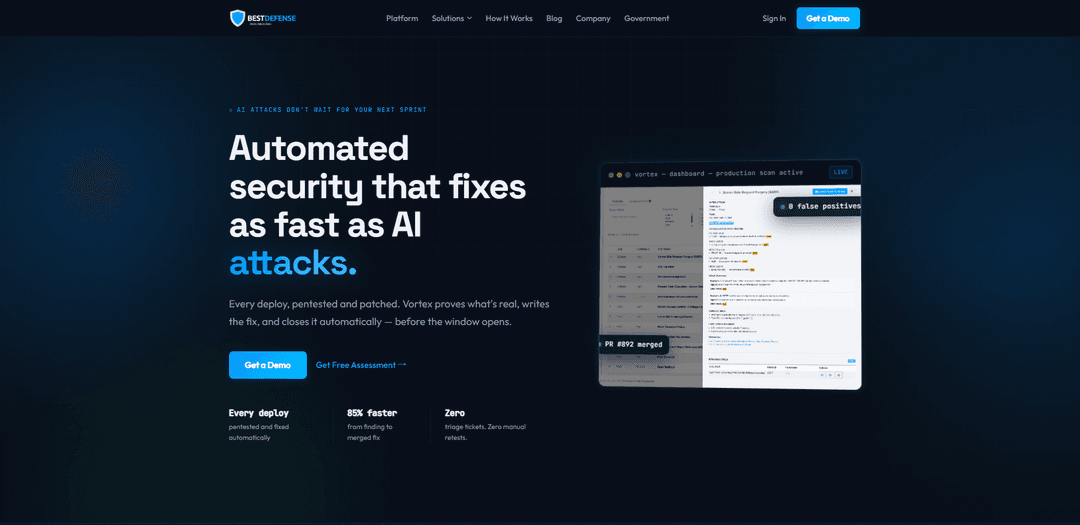
BestDefense.io is a continuous security validation platform that automatically maps your attack surface, runs exploit-confirmed AI pentests, generates code-fix pull requests, re-tests the original exploit chain, and produces audit-ready compliance evidence on every deploy.
https://bestdefense.io/?ref=producthunt
Product Information
Updated:Jul 8, 2026
What is BestDefense.io
BestDefense.io is an infrastructure and application security auditing platform focused on continuous security validation—designed to keep pace with rapid software releases and AI-accelerated threats. Centered on its AI-powered system, Vortex, the product continuously discovers and tests real attack paths across web apps and APIs, then goes beyond detection by producing stack-aware remediation pull requests and verification records. BestDefense.io positions itself as a developer-native solution that integrates into common engineering workflows (e.g., GitHub/GitLab, CI/CD and collaboration tools) to help organizations reduce risk, shorten remediation time, and stay ready for audits and compliance requirements.
Key Features of BestDefense.io
BestDefense.io is a continuous security validation platform focused on automated, exploit-confirmed penetration testing and fast remediation. Its core system (Vortex) continuously maps an application’s attack surface on every deploy, executes real-world exploit chains (e.g., SQLi, SSRF, auth bypass, privilege escalation, business-logic and prompt-injection attacks), and only reports findings that successfully execute—aiming for zero false positives. For confirmed issues, it auto-generates stack-aware pull requests with patches and tests, enforces CI/CD gates to block vulnerable releases, re-runs the original exploit chain to verify closure, and produces timestamped compliance evidence mapped to frameworks like SOC 2, ISO 27001, NIST, PCI DSS, CMMC, and FedRAMP.
Exploit-confirmed pentesting: Runs adversarial techniques (SQL injection, SSRF, auth bypass, privilege escalation, business logic flaws, prompt injection) and only escalates findings that are proven via a live exploit chain against a real target.
Continuous attack-surface mapping: Automatically crawls and enumerates endpoints, APIs, auth flows, dependencies, and shadow/changed routes on every deploy so testing scope stays current between releases.
Auto-remediation via pull requests: Generates production-ready, stack-aware fix PRs (with tests and remediation context) instead of delivering a PDF report, reducing time from discovery to merged fix.
CI/CD gate enforcement: Blocks merges/releases when confirmed vulnerabilities exist, preventing vulnerable deploys from shipping until the issue is resolved.
Automatic retest and proof of closure: Re-executes the original exploit chain after the fix merges to verify the vulnerability is actually closed and detect regressions before production.
Compliance evidence automation: Creates timestamped proof records mapped to SOC 2 Type II, ISO 27001, NIST 800-53, PCI DSS, CMMC, and FedRAMP for 1-click audit reporting and continuous evidence collection.
Use Cases of BestDefense.io
SaaS continuous security for fast CI/CD: Pentest every commit/deploy, auto-generate fix PRs, and enforce release gates to keep pace with rapid shipping and reduce MTTR without adding manual triage workload.
SOC 2 / ISO 27001 audit readiness: Continuously collect and export mapped evidence (proof records + remediation trails) to accelerate compliance efforts and reduce quarterly audit scramble.
API-first platforms and webhook ecosystems: Continuously discover and validate changing API surfaces (including new/changed endpoints and shadow APIs) and test for auth bypass, injection, and business-logic flaws.
Regulated and public sector environments: Support security validation and audit evidence needs aligned to frameworks like NIST and FedRAMP, with integrations that fit enterprise/government toolchains.
Blockchain and high-risk systems validation: Validate systems under real-world adversarial techniques and produce exploit-backed findings plus verified fixes, supporting security posture improvements and compliance acceleration.
Pros
Exploit-confirmed findings reduce noise by avoiding unproven scanner alerts ("if it doesn't execute, it never reaches your team").
Automated fix PRs plus CI/CD gating and retesting can materially shorten time-to-remediation and prevent vulnerable releases.
Continuous attack-surface mapping helps keep coverage current as endpoints and services change.
Built-in compliance evidence mapping supports faster audits and ongoing readiness across multiple frameworks.
Cons
Best suited to environments where the platform can safely run exploit chains against real targets; some orgs may require careful staging/controls to avoid operational impact.
Auto-generated patches may still require engineering review and may not align with every team’s coding standards or architectural constraints.
Integration and workflow changes (CI/CD gating, PR-based remediation) can require process buy-in and initial setup effort.
How to Use BestDefense.io
1) Request access / start a trial: Go to https://bestdefense.io and choose “Get Started” (or “Schedule Demo”). Create an account (no credit card required per the site) so you can connect a code repository and begin running Vortex on deploys/commits.
2) Connect your source repo (GitHub/GitLab/Bitbucket): From the Vortex dashboard, connect your repository using the built-in integrations (GitHub/GitLab/Bitbucket are referenced on the site). Grant the minimum permissions needed so Vortex can: (a) read code, (b) open pull requests for fixes, and (c) report status checks back to your CI/CD gate.
3) Hook Vortex into your CI/CD pipeline: Enable Vortex to run “every deploy / every commit” by wiring it into your CI/CD workflow (the site lists integrations like GitHub, GitLab, Jenkins). Configure it so security validation runs automatically on each build/deploy event rather than quarterly/manual testing.
4) Run the automatic attack-surface discovery (Crawl/Map): Trigger a scan (or let it trigger on deploy). Vortex will crawl and map your application like an attacker: enumerating endpoints, APIs, auth flows, and dependencies. This map is rebuilt on every deploy so coverage stays current as routes/services change.
5) Execute continuous pentesting on the discovered surface (Pentest): Let Vortex run adversarial tests (as described on the site) such as SQL injection, SSRF, auth bypass, privilege escalation, business-logic flaws, and prompt injection. Findings are intended to be exploit-chain confirmed (i.e., only issues that execute are surfaced).
6) Review confirmed findings in the dashboard: Open the Vortex dashboard to view severity breakdown and the list of confirmed vulnerabilities. Each finding is presented with exploit context (what was tested, what executed) and impact details, rather than a PDF-only report.
7) Accept the auto-generated remediation pull request (Fix): For each confirmed exploit, Vortex generates a stack-aware patch as a PR (with code changes and tests). Assign it to an engineer as needed. The intended workflow is “PR, not a PDF”: merge the fix rather than manually translating a report into tickets.
8) Enforce the deploy gate so vulnerable builds don’t ship: Configure your CI/CD to block merges/deploys when Vortex reports an open confirmed vulnerability. The site states “Nothing merges until the vulnerability is resolved,” so treat Vortex status checks as required checks in your repo settings.
9) Let Vortex automatically re-run the original exploit chain (Retest/Verify): After the PR is merged, Vortex re-executes the same exploit chain against the patched build to confirm closure and detect regressions. Use this verification step as your definition of “closed means closed,” not just a ticket status.
10) Generate audit-ready evidence and compliance mapping (Prove): Use the platform’s evidence/proof output to produce timestamped records mapped to compliance frameworks mentioned on the site (e.g., SOC 2 Type II, PCI DSS 4.0, ISO 27001, NIST 800-53, CMMC, and FedRAMP). Export the one-click report for audits and continuous evidence collection.
11) Keep coverage current as your app changes: Rely on the “rebuilt on every deploy” attack-surface rediscovery so new/changed endpoints are queued for the next pentest cycle automatically. This ensures testing runs against what’s actually shipped, not a stale quarterly scope.
12) Operationalize notifications and workflow integrations: Connect developer-native tools referenced on the site (e.g., Jira and Slack) so findings, PRs, and verification results flow into the same places engineers already work—reducing manual triage and speeding time-to-fix.
BestDefense.io FAQs
BestDefense.io is a cybersecurity platform offering continuous security validation with automated penetration testing that finds exploitable vulnerabilities, generates remediation pull requests, re-tests fixes, and produces audit-ready evidence.
BestDefense.io Video
Popular Articles

Vosko AI: Localize and Dub Videos for Global Audiences
Oct 15, 2026

Atoms: A Multi-Agent AI Platform That Transforms Ideas into Launch-Ready Products
Oct 13, 2026

Nano Banana SBTI: What It Is, How It Works, and How to Use It in 2026
Apr 15, 2026

Atoms Review — The AI Product Builder Redefining Digital Creation in 2026
Apr 10, 2026
Latest AI Tools Similar to BestDefense.io
Gait
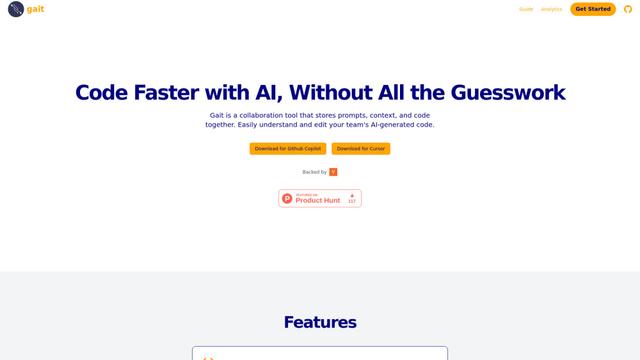
Gait is a collaboration tool that integrates AI-assisted code generation with version control, enabling teams to track, understand, and share AI-generated code context efficiently.
invoices.dev
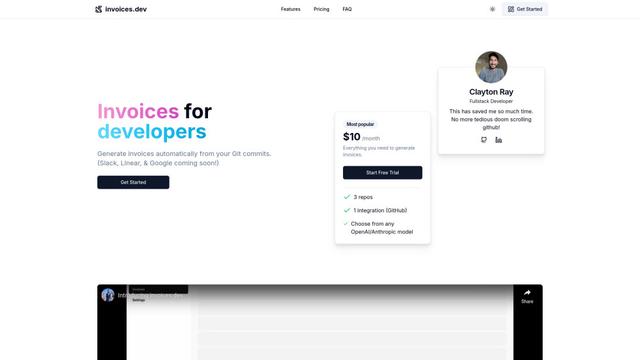
invoices.dev is an automated invoicing platform that generates invoices directly from developers' Git commits, with integration capabilities for GitHub, Slack, Linear, and Google services.
EasyRFP
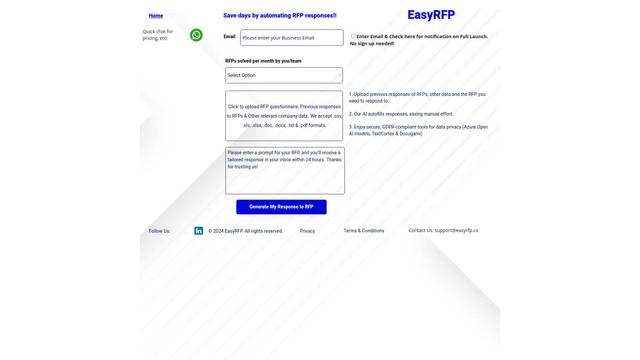
EasyRFP is an AI-powered edge computing toolkit that streamlines RFP (Request for Proposal) responses and enables real-time field phenotyping through deep learning technology.

Cart.ai
Cart.ai is an AI-powered service platform that provides comprehensive business automation solutions including coding, customer relations management, video editing, e-commerce setup, and custom AI development with 24/7 support.
Popular AI Tools Like BestDefense.io

GitHub Copilot Chat
GitHub Copilot Chat is an AI-powered coding assistant that provides natural language interactions, real-time code suggestions, and contextual support directly within supported IDEs and GitHub.com.
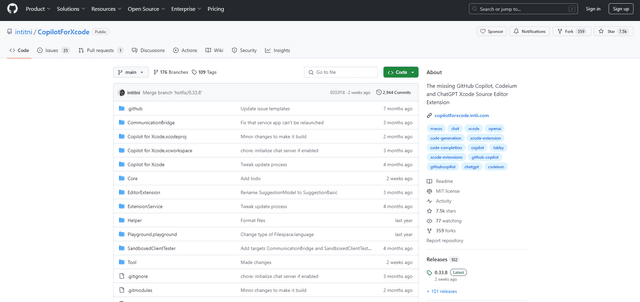
CopilotForXcode
CopilotForXcode is an Xcode Source Editor Extension that integrates GitHub Copilot, Codeium, and ChatGPT to provide AI-powered code suggestions, chat assistance, and prompt-to-code functionality within Xcode.

BrowserAI
BrowserAI is an open-source library that enables running local Large Language Models (LLMs) directly in web browsers with WebGPU acceleration, offering privacy-focused AI capabilities without requiring server infrastructure.
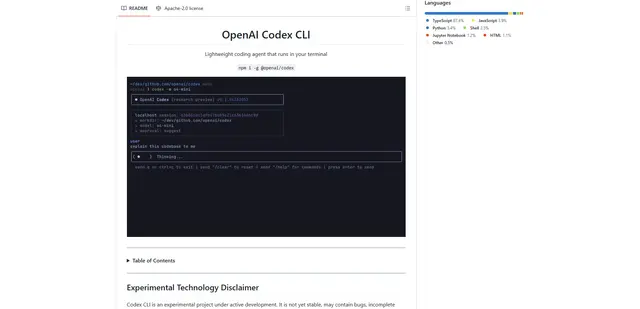
OpenAI Codex CLI
OpenAI Codex CLI is a lightweight, open-source coding agent that runs in your terminal, enabling developers to translate natural language into code execution while providing ChatGPT-level reasoning with the ability to run code, manipulate files, and iterate under version control.