Assemble
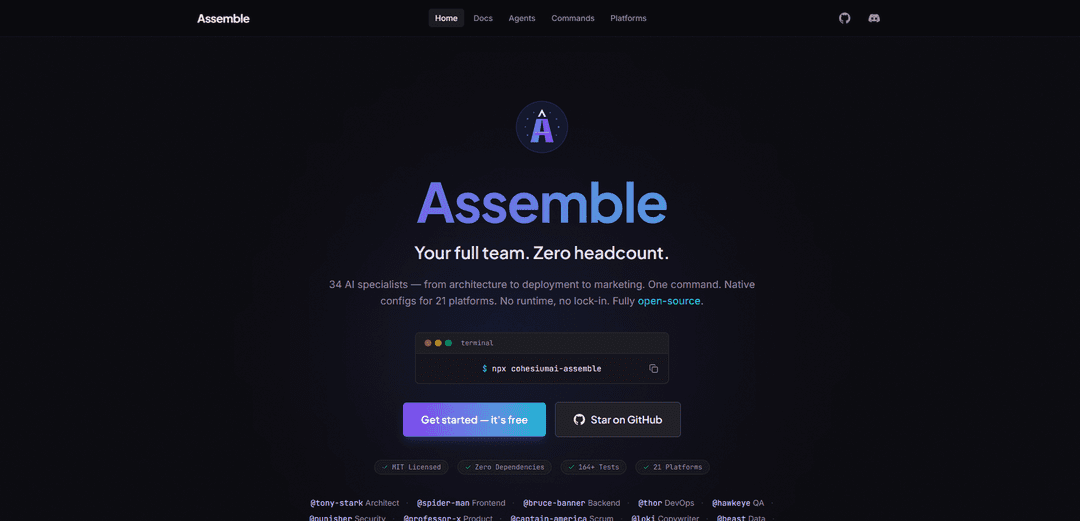
Assemble by Cohesium AI is an open-source configuration generator that provides 34 specialized AI agents across 21 platforms, transforming solo developers and teams into fully-staffed operations without runtime dependencies or vendor lock-in.
https://assemble.cohesium.ai/?ref=producthunt
Product Information
Updated:May 8, 2026
What is Assemble
Assemble by Cohesium AI is a revolutionary open-source tool that gives developers access to a complete team of 34 specialized AI agents—from system architects to security specialists—through a single command. Built on 20 years of real-world team management experience, Assemble generates native configuration files for 21 major AI coding platforms including Cursor, Windsurf, GitHub Copilot, Claude Code, and more. Unlike traditional AI frameworks, Assemble requires zero runtime, has zero dependencies, and creates no vendor lock-in. Each agent is inspired by Marvel characters whose personas are deeply encoded in LLM weights, enabling them to function as true domain experts rather than generic assistants. The tool is MIT licensed, completely free, and designed specifically for solo developers and teams who need specialized expertise without the overhead of managing multiple tools and configurations.
Key Features of Assemble
Assemble by Cohesium AI is an open-source configuration generator that provides developers with 34 specialized AI agents representing different roles (from architecture to marketing) through a single command. Unlike runtime frameworks, it generates static configuration files for 21 different AI coding platforms (including Cursor, Windsurf, GitHub Copilot, and Claude Code) from one unified source, eliminating the need to manage multiple config formats. Built on 20 years of team management experience, it uses Marvel character names as semantic shortcuts to activate specific behavioral profiles in LLMs, and includes structural dissent mechanisms through agents like @deadpool to prevent groupthink and reduce hallucination-driven errors by 65%.
34 Specialized AI Agents: Pre-configured domain experts with Marvel-inspired identities including @tony-stark (System Architect), @spider-man (Frontend Developer), @punisher (Security), @professor-x (Product Manager), and @deadpool (Devil's Advocate) that collaborate and challenge each other like real team members.
21 Platform Native Output: One configuration source (.assemble.yaml) automatically generates native config files for all major AI coding tools including Cursor, Windsurf, GitHub Copilot, Claude Code, Gemini CLI, and 16+ others, keeping everything in sync without manual updates.
Zero Runtime Architecture: No daemon, server, or background process required - generates static config files with zero dependencies, no lock-in, and no ongoing resource consumption, making it lightweight and portable.
Spec-Driven Methodology with YOLO Mode: Structured 5-phase workflow (Specify, Plan, Tasks, Implement, Close) for complex tasks with automatic complexity assessment by Jarvis, and optional YOLO mode that executes all phases autonomously without stopping for validation.
Structural Dissent System: Built-in anti-groupthink mechanisms with @deadpool permanently challenging workflows and @doctor-doom escalating irreversible decisions, achieving 65% reduction in hallucination-driven errors through mandatory conflict protocols.
15 Orchestrated Workflows: Pre-built workflows for common tasks including /feature, /bugfix, /review, /sprint, /release, /security, /seo, and /campaign that coordinate multiple agents to deliver complete solutions with one command.
Use Cases of Assemble
Solo Developer Productivity: Independent developers can access a full team of specialists (architect, QA, security auditor, PM) without hiring, turning projects quoted at 2 days that took 10 days with generic AI into 30-minute completions with structured team collaboration.
Multi-Platform Development Teams: Organizations using multiple AI coding tools (Cursor, Copilot, Windsurf, etc.) can maintain one source of truth instead of managing 21+ different config formats, ensuring consistent agent behavior and rules across all platforms.
Startup Product Development: Early-stage companies can execute complete feature development cycles from specification through implementation and security review using orchestrated workflows like /feature and /sprint without building a full engineering team.
Security-Critical Projects: Projects requiring rigorous security review can leverage specialized agents (@punisher for InfoSec, @microchip for offensive security) with structural dissent mechanisms that automatically flag and block risky decisions before implementation.
Agency Client Work: Development agencies can standardize their AI-assisted workflows across multiple client projects and team members, with customizable agent profiles and workflows that adapt to different client requirements and tech stacks.
Enterprise Code Quality Assurance: Large organizations can enforce consistent code review standards, testing protocols, and architectural decisions across distributed teams using pre-configured specialist agents and mandatory validation workflows.
Pros
Completely free and open-source with MIT license, zero dependencies, and no usage limits or premium tiers
No runtime overhead or lock-in - generates static config files that work independently without background processes
Supports 21 different AI coding platforms from a single configuration source, eliminating config drift and duplication
Built-in structural dissent mechanisms reduce AI hallucination errors by 65% through mandatory challenge protocols
Cons
Requires familiarity with multiple AI coding platforms to fully leverage cross-platform configuration capabilities
Marvel character naming convention, while semantically efficient, may not align with all organizational cultures or preferences
Static configuration approach means runtime coordination between agents is limited compared to frameworks like CrewAI or AutoGen
Initial setup wizard with 12 configuration steps may be overwhelming for users seeking immediate plug-and-play simplicity
How to Use Assemble
1. Install Assemble: Open your terminal and run the command: npx cohesiumai-assemble. This takes approximately 30 seconds with zero dependencies required.
2. Run the Interactive Configuration Wizard: The wizard will guide you through 12 configuration steps including: selecting your team profile (startup, enterprise, agency, or custom), choosing your programming language, selecting target platforms, configuring governance settings, and enabling YOLO mode if desired. Answer the 6 key questions presented.
3. Generate Your Configuration: Your choices will automatically generate a .assemble.yaml config file. This single source of truth will be used to create native config files for all your selected AI coding platforms (out of 21 supported platforms like Cursor, Windsurf, Claude Code, GitHub Copilot, etc.).
4. Start Working with Your AI Team: Use commands like '/go fix the auth bug' to assign tasks to your AI team. You can mention specific agents using @ symbols (e.g., @tony-stark for architecture, @spider-man for frontend, @hawkeye for QA) to get specialized expertise.
5. Use Workflows for Complex Tasks: For high-stakes or complex tasks, use the built-in workflows (like /feature, /bugfix, /review, /sprint, /release, /security). These follow a 5-phase Spec-Driven Methodology: SPECIFY (@professor-x), PLAN (@tony-stark), TASKS (@captain-america), IMPLEMENT (Board Execution), and CLOSE (Jarvis).
6. Customize and Extend (Optional): Add custom agents by dropping Markdown files in .assemble/agents/ with your agent's persona, skills, and rules. You can also add custom skills, workflows, and platform adapters to tailor Assemble to your specific needs.
Assemble FAQs
Yes. Assemble is MIT licensed and free forever. There is no premium tier, no feature gating, and no usage limits.
Assemble Video
Popular Articles

Vosko AI: Localize and Dub Videos for Global Audiences
Oct 15, 2026

Atoms: A Multi-Agent AI Platform That Transforms Ideas into Launch-Ready Products
Oct 13, 2026

Nano Banana SBTI: What It Is, How It Works, and How to Use It in 2026
Apr 15, 2026

Atoms Review — The AI Product Builder Redefining Digital Creation in 2026
Apr 10, 2026
Latest AI Tools Similar to Assemble
Gait
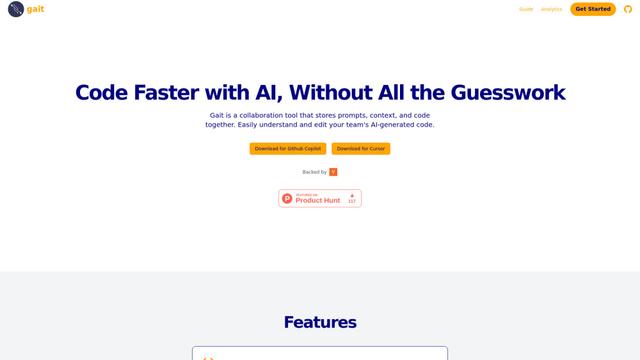
Gait is a collaboration tool that integrates AI-assisted code generation with version control, enabling teams to track, understand, and share AI-generated code context efficiently.
invoices.dev
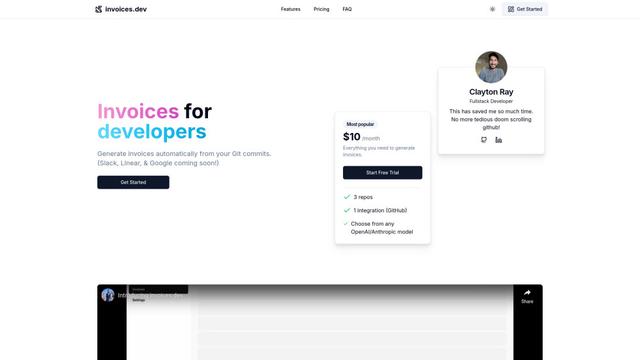
invoices.dev is an automated invoicing platform that generates invoices directly from developers' Git commits, with integration capabilities for GitHub, Slack, Linear, and Google services.
EasyRFP
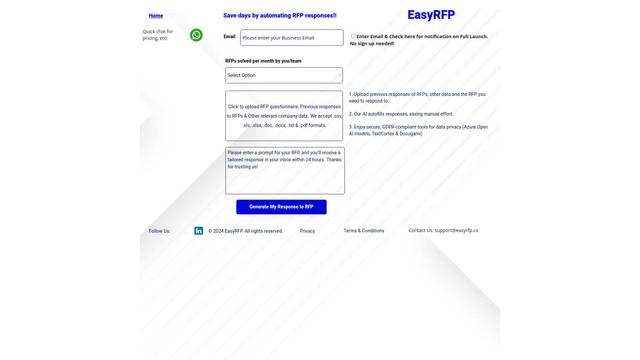
EasyRFP is an AI-powered edge computing toolkit that streamlines RFP (Request for Proposal) responses and enables real-time field phenotyping through deep learning technology.

Cart.ai
Cart.ai is an AI-powered service platform that provides comprehensive business automation solutions including coding, customer relations management, video editing, e-commerce setup, and custom AI development with 24/7 support.
Popular AI Tools Like Assemble

GitHub Copilot Chat
GitHub Copilot Chat is an AI-powered coding assistant that provides natural language interactions, real-time code suggestions, and contextual support directly within supported IDEs and GitHub.com.
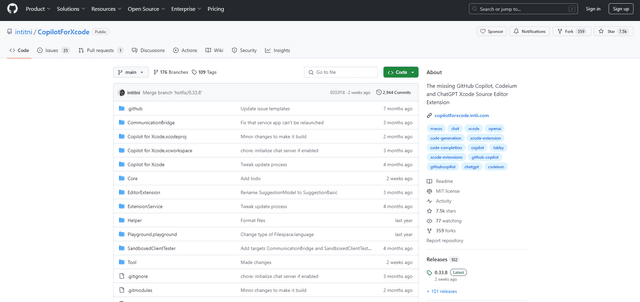
CopilotForXcode
CopilotForXcode is an Xcode Source Editor Extension that integrates GitHub Copilot, Codeium, and ChatGPT to provide AI-powered code suggestions, chat assistance, and prompt-to-code functionality within Xcode.
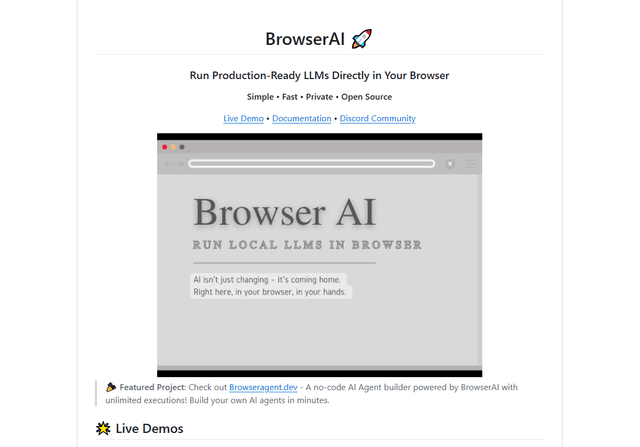
BrowserAI
BrowserAI is an open-source library that enables running local Large Language Models (LLMs) directly in web browsers with WebGPU acceleration, offering privacy-focused AI capabilities without requiring server infrastructure.
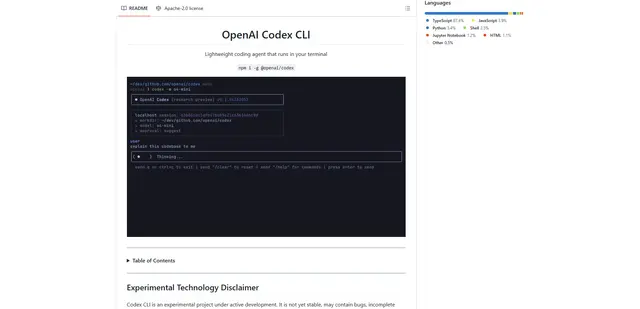
OpenAI Codex CLI
OpenAI Codex CLI is a lightweight, open-source coding agent that runs in your terminal, enabling developers to translate natural language into code execution while providing ChatGPT-level reasoning with the ability to run code, manipulate files, and iterate under version control.