
Wirable
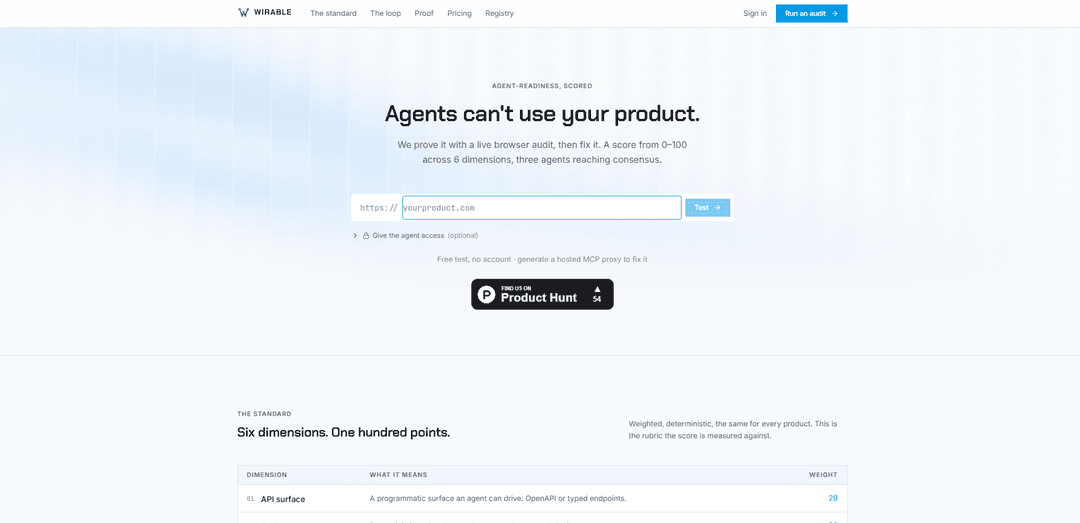
Wirable audits and scores your product’s agent-readiness (0–100) using a live browser and three-agent consensus, then boosts it by deploying a hosted MCP proxy and automated fix PRs—often without requiring code changes.
https://wirable.dev/?ref=producthunt
Product Information
Updated:Jul 8, 2026
What is Wirable
Wirable is a platform designed to answer a practical question for modern software teams: can AI agents actually use your product end-to-end? It runs a live, real-user-style browser audit against a given domain and produces a deterministic 0–100 “agent-readiness” score across six weighted dimensions. The service is positioned as both a diagnostic and a remediation layer—helping teams identify where agents fail (e.g., auth dead-ends, missing machine-friendly surfaces, unhelpful error formats) and then providing a path to fix those issues and verify improvements on the record.
Key Features of Wirable
Wirable is an agent-readiness auditing and remediation product that tests whether AI agents can successfully use your website/app like a real user, then helps you fix failures without changing your core code. It runs live browser-driven audits using three agents that reach a consensus score (0–100) across six deterministic dimensions, provides a breakdown of what blocks agents (e.g., missing MCP surface, OAuth dead-ends, untyped/HTML errors), and can deploy a hosted MCP proxy in front of your product to add agent-friendly surfaces (MCP, machine auth, /llms.txt, typed errors). It also supports verification re-audits and ongoing drift monitoring tied to commits, with automated GitHub pull requests for fixes.
Live agent-driven browser audit: An AI agent drives your product end-to-end in a live browser session to prove where agents succeed or fail in real workflows.
Consensus scoring (0–100) across six dimensions: Three agents (N=3) reach a consensus and produce a weighted, deterministic score with per-dimension breakdown for consistent benchmarking.
Hosted MCP proxy (no core code changes): Generates and hosts an MCP proxy in front of your product to add an agent-usable interface and remediation layer without modifying the underlying application.
Automated fix PRs (agent usability artifacts): Opens GitHub pull requests for agent-readiness improvements such as /llms.txt, AGENTS.md, and an MCP manifest to reduce agent confusion and dead-ends.
Verification re-audits to prove improvement: Re-runs the same rubric through the proxy to verify that changes measurably increase the score (e.g., from blocked to completing tasks).
Drift monitoring on every commit: Continuously re-checks agent usability as your product evolves, helping prevent regressions that break agent workflows over time.
Use Cases of Wirable
SaaS onboarding and self-serve workflows: Ensure agents can sign up, authenticate, navigate, and complete core tasks (e.g., creating projects, exporting data) without getting stuck on OAuth or UI dead-ends.
Developer platforms and APIs: Add agent-friendly surfaces (MCP, typed errors, /llms.txt) so agents can reliably discover capabilities, authenticate, and execute API-driven tasks.
E-commerce and customer support automation: Validate that shopping, order lookup, returns, and support flows are agent-completable, reducing failure modes caused by brittle pages or non-machine-readable errors.
Fintech and identity/auth-heavy products: Detect and remediate authentication and compliance-related UX blockers (e.g., OAuth loops, ambiguous error pages) that prevent agents from completing workflows.
Internal enterprise tools modernization: Wrap legacy internal apps with an MCP proxy to make them operable by agents without risky rewrites, then continuously monitor drift as teams ship changes.
Pros
Evidence-based: live audits plus before/after verification make agent usability measurable rather than speculative.
Low-friction remediation: hosted MCP proxy can improve agent access without requiring core application code changes.
Ongoing reliability: drift monitoring on commits helps prevent agent-readiness regressions over time.
Cons
Proxy dependency: relying on a hosted MCP proxy may introduce an extra layer in front of your product that some teams may need to evaluate for governance/security fit.
Best suited to agent-driven interactions: value is highest when your product expects AI agents to navigate and act, less so for purely human-only experiences.
Subscription needed for continuous value: free tier is limited to a small number of audits; ongoing proxy and monitoring require a paid plan.
How to Use Wirable
1) Open Wirable: Go to https://wirable.dev/.
2) Start with the free audit (no account required to understand the flow): Use the “Run the audit” / “Start free” entry point to begin an agent-readiness test for a product domain.
3) Paste your product domain: Enter the website/domain you want audited. Wirable will run a live browser audit driven by agents.
4) Run the audit: Kick off the audit. Wirable uses N=3 agents in a live browser and produces a deterministic score (0–100) across 6 weighted dimensions.
5) Review the results: Read the overall score and the per-dimension breakdown (“The Wrapped verdict + per-dimension breakdown”). Use the shareable score output if you need to circulate results.
6) Identify what blocked agents: Use the audit findings to spot common agent blockers mentioned by Wirable (e.g., no MCP surface, OAuth dead-ends, HTML error pages, missing typed errors).
7) Generate and host an MCP proxy (the ‘Fix’ step): Follow Wirable’s flow to “generate a hosted MCP proxy to fix it.” This proxy sits in front of your product to make it more usable by agents without requiring code changes to your product.
8) Open a fix PR (optional but highlighted in the product loop): Use Wirable’s GitHub PR workflow to apply recommended agent-readiness artifacts (as referenced: llms.txt, AGENTS.md, MCP manifest) and other fixes surfaced by the audit.
9) Verify by re-running through the proxy: Re-run the audit with the hosted MCP proxy in place (“Verify”). Compare the new score to the previous score to confirm improvements.
10) Repeat the test → score → fix → verify loop: Iterate until agents can complete the target tasks reliably and your score improves under the same rubric and agents.
11) (Pro) Enable ongoing usage and monitoring: If you upgrade to Pro, use unlimited audits (fair use), keep the hosted MCP proxy live in front of your product, and enable drift monitoring that re-checks on every commit.
Wirable FAQs
Wirable is a tool that measures and improves a product’s “agent-readiness”—whether AI agents can successfully use your product. It runs a live browser audit, produces a 0–100 score across six dimensions, and can help fix issues via a hosted MCP proxy and GitHub PRs.
Wirable Video
Popular Articles

Atoms: A Multi-Agent AI Platform That Transforms Ideas into Launch-Ready Products
May 22, 2026

Nano Banana SBTI: What It Is, How It Works, and How to Use It in 2026
Apr 15, 2026

Atoms Review — The AI Product Builder Redefining Digital Creation in 2026
Apr 10, 2026

Kilo Claw: How to Deploy and Use a True "Do‑It‑For‑You" AI Agent(2026 Update)
Apr 3, 2026
Latest AI Tools Similar to Wirable

Hapticlabs
Hapticlabs is a no-code toolkit that enables designers, developers and researchers to easily design, prototype and deploy immersive haptic interactions across devices without coding.
Deployo.ai
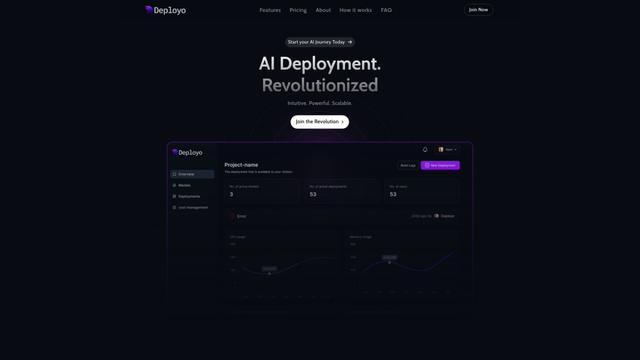
Deployo.ai is a comprehensive AI deployment platform that enables seamless model deployment, monitoring, and scaling with built-in ethical AI frameworks and cross-cloud compatibility.
CloudSoul
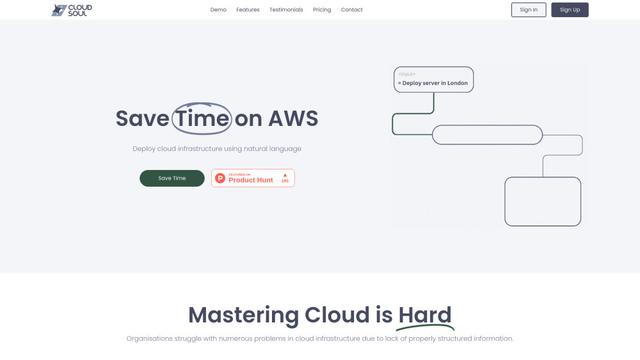
CloudSoul is an AI-powered SaaS platform that enables users to instantly deploy and manage cloud infrastructure through natural language conversations, making AWS resource management more accessible and efficient.
Devozy.ai
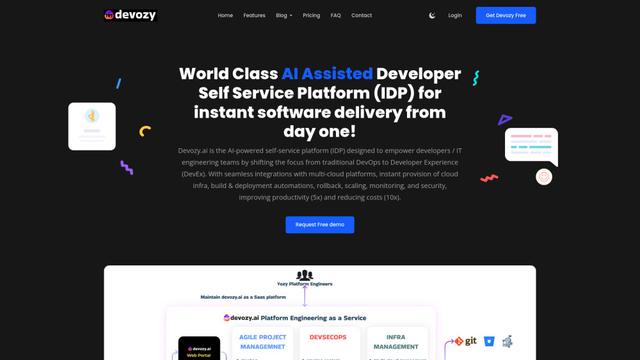
Devozy.ai is an AI-powered developer self-service platform that combines Agile project management, DevSecOps, multi-cloud infrastructure management, and IT service management into a unified solution for accelerating software delivery.
Popular AI Tools Like Wirable

A2A Protocol
A2A (Agent2Agent) Protocol is an open interoperability protocol developed by Google that enables seamless communication and collaboration between AI agents across different frameworks and vendors, regardless of their underlying architecture.
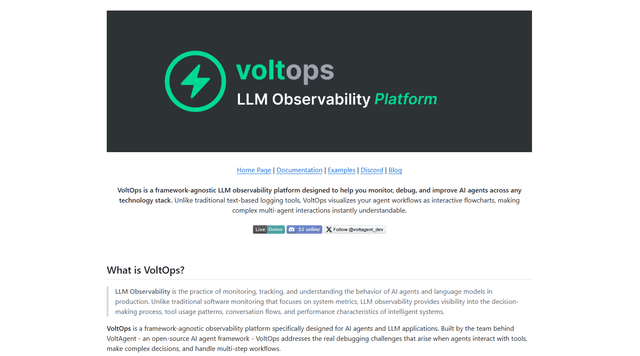
VoltOps
VoltOps is a framework-agnostic LLM observability platform that provides real-time visual monitoring, debugging, and optimization tools for AI agents across any technology stack.
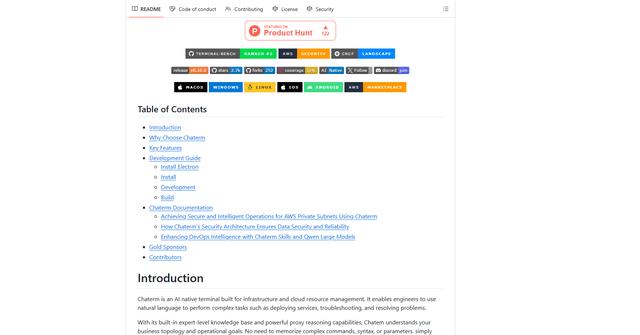
Chaterm
Chaterm is an open-source AI-native terminal and SRE copilot that enables engineers to manage complex infrastructure through natural language, automating deployment, troubleshooting, and operations without memorizing commands.
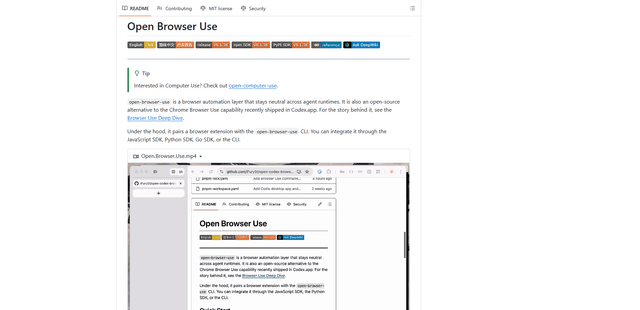
Open Browser Use
Open Browser Use is an open-source, agent-runtime-neutral browser automation layer that pairs a Chrome extension with a CLI/SDK/MCP to enable DOM-aware, CDP-powered tab control, navigation, and actions across different AI agent tools.