
Polygraph
Polygraph is a meta-harness that indexes all repos you can access, maps their package/API relationships, and preserves cross-session history so existing AI agents can work across repo boundaries with durable context.
https://trypolygraph.com/?ref=producthunt

Product Information
Updated:Jul 8, 2026
What is Polygraph
Polygraph is a developer tool that gives AI coding agents unified visibility across an organization’s codebase—even when it’s split across many private and open-source repositories. It automatically discovers and indexes the repositories you have access to, then builds a relationship graph based on how services, packages, and APIs depend on each other. In addition to cross-repo understanding, Polygraph also retains session history (including prior session descriptions, PRs, and traces), making it easier to resume work, debug issues, and collaborate without manually reconstructing context. Polygraph is positioned as infrastructure that works with the agents you already use, rather than being an agent itself.
Key Features of Polygraph
Polygraph is a meta-harness for AI coding agents that provides cross-repo visibility and persistent session memory. It indexes all repos you have access to (private and open source), builds a dependency/API relationship graph, and uses that context to help agents plan and execute work across repository boundaries—effectively turning a multi-repo codebase into a “synthetic monorepo.” It also preserves and resurfaces past sessions (descriptions, PRs, traces) so teams can continue work without re-discovering history, and integrates with common agent/dev tooling.
Cross-repo indexing and discovery: Automatically indexes every repository you can access (private + OSS) so agents can find relevant code without being told where to look.
Repo relationship graph (packages + APIs): Builds a graph of how repositories connect via package dependencies and API boundaries, enabling better planning and safer cross-service changes.
Synthetic monorepo context for agents: Gives agents unified visibility across many repos, making multi-repo work feel like operating in a single coherent codebase.
Persistent session history and recall: Lets you reference any past session; Polygraph brings back the session description plus related PRs and traces to reduce repeated context gathering.
Effortless sharing of work context: Makes it easier to share session outputs and context across teammates, improving continuity and collaboration.
Integrations with agent/dev tools: Works with agents you already use and integrates with tools like GitHub, Codex, and Claude Code (among others shown).
Use Cases of Polygraph
Shipping features across microservices: Plan and implement a single feature spanning multiple backend services by using the dependency/API graph to locate touchpoints and coordinate changes.
Backend–frontend contract updates: Update an API and automatically identify where the frontend(s) consume it, helping teams propagate contract changes across repos with fewer breakages.
Faster bug fixing with historical context: Resume investigation using prior session descriptions, PRs, and traces—reducing time spent digging through old threads, commits, and CI artifacts.
Onboarding and codebase navigation: Help new engineers (or new agents) understand how repositories relate and where key logic lives, without manual repo-by-repo exploration.
Platform engineering for multi-repo organizations: Provide a shared “map” of the organization’s code across repo boundaries to support governance, refactoring initiatives, and standardized workflows.
Pros
Improves agent autonomy by providing unified cross-repo visibility and relationship context.
Reduces repeated work by persisting and resurfacing session history (descriptions, PRs, traces).
Fits into existing workflows via integrations with common agent/dev tools.
Cons
Value depends on successful indexing and access to the relevant repositories (limited access limits usefulness).
Not an agent itself—teams still need to pair it with an agent/tooling to execute changes.
Maintaining accurate cross-repo graphs can be challenging in rapidly changing or poorly documented ecosystems.
How to Use Polygraph
1) Open Polygraph and start a new session: Go to https://trypolygraph.com/ and initiate a Polygraph session (the unit of work Polygraph records and can be resumed/referenced later).
2) Connect Polygraph to your GitHub (or source control) and authorize repo access: Link Polygraph to GitHub so it can see the repositories you have permission to access (private and OSS). This authorization is what enables automatic repo discovery and cross-repo planning.
3) Enable/confirm agent integrations you plan to use: In Polygraph, select the agent/tooling integration you’ll run work through (e.g., Codex, Claude Code, Open Code). Polygraph acts as a meta-harness around your existing agents.
4) Let Polygraph index your accessible repositories: Allow Polygraph to index repos and build a dependency/API graph across them. This creates a “synthetic monorepo” view so the agent can understand cross-repo relationships without you specifying where to look.
5) Create an initial working set (choose starting repos): Pick the repositories you want the session to begin with. Polygraph supports cross-repo sessions that can expand the working set as the task crosses repo boundaries.
6) Prompt your agent once with the end goal: Describe the change you want at a high level. Polygraph uses the repo graph to help the agent plan work across packages/APIs and identify which repos need edits.
7) Expand the working set as needed during execution: When the task touches additional repos, add them to the session (or let Polygraph guide discovery). This keeps cross-repo work coordinated in one place.
8) Make coordinated code changes across repos: Have the agent implement changes in each relevant repo (e.g., updating shared packages, adjusting API callers, and fixing downstream breakages) using Polygraph’s cross-repo visibility.
9) Open and link cross-repo PRs from the same session: Create pull requests for each affected repo and link/track them together. Polygraph is designed to coordinate related PRs across repositories as one logical change.
10) Coordinate CI and verify the multi-repo change: Run/monitor CI for each PR and ensure the combined change set is consistent across repos. Use Polygraph to track verification status across the linked PRs.
11) Use session history to resume or reference prior work: Later, reopen the session (or reference it from a new one). Polygraph brings back the session description, associated PRs, and traces so you can continue without reconstructing context.
12) Share the session with teammates for handoff: Share the Polygraph session so others can pick up the same cross-repo context and history, enabling resumability across people, machines, and even different agents.
13) (Optional) Add OSS repos for repros or upstream debugging: If your issue involves an external dependency, include relevant public OSS repos in the session to reproduce problems, validate integrations, or debug upstream behavior.
Polygraph FAQs
Polygraph is a developer tool that indexes every repository you have access to (private and open-source) and builds a graph of how they relate via packages and APIs, enabling cross-repo work and easier navigation across a codebase.
Polygraph Video
Popular Articles
Atoms: A Multi-Agent AI Platform That Transforms Ideas into Launch-Ready Products
May 22, 2026
Nano Banana SBTI: What It Is, How It Works, and How to Use It in 2026
Apr 15, 2026

Atoms Review — The AI Product Builder Redefining Digital Creation in 2026
Apr 10, 2026
Kilo Claw: How to Deploy and Use a True "Do‑It‑For‑You" AI Agent(2026 Update)
Apr 3, 2026
Latest AI Tools Similar to Polygraph
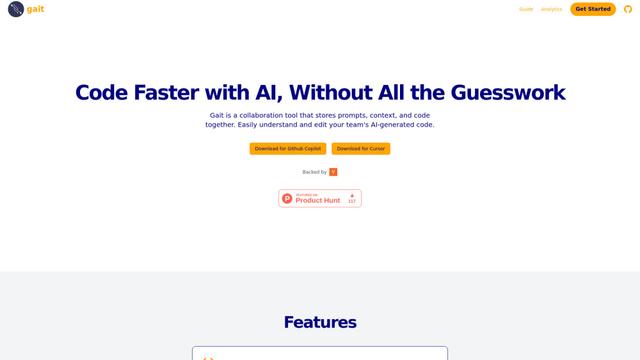
Gait
Gait is a collaboration tool that integrates AI-assisted code generation with version control, enabling teams to track, understand, and share AI-generated code context efficiently.
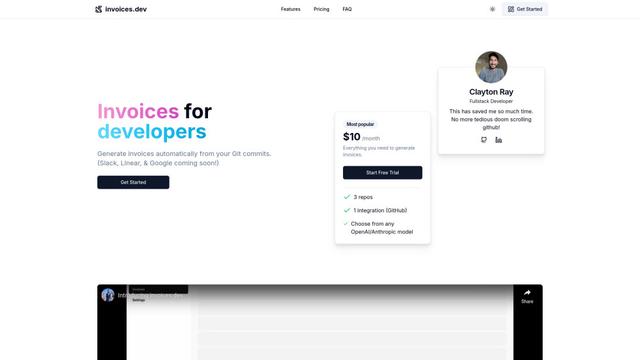
invoices.dev
invoices.dev is an automated invoicing platform that generates invoices directly from developers' Git commits, with integration capabilities for GitHub, Slack, Linear, and Google services.
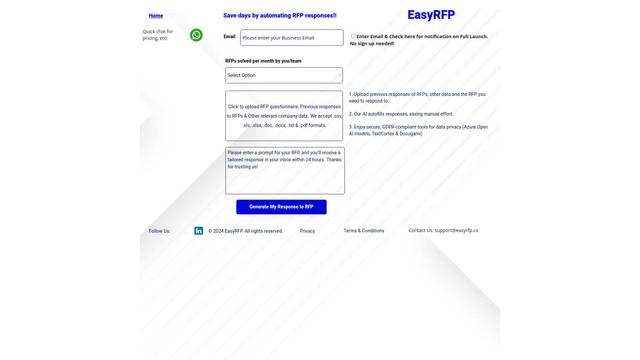
EasyRFP
EasyRFP is an AI-powered edge computing toolkit that streamlines RFP (Request for Proposal) responses and enables real-time field phenotyping through deep learning technology.

Cart.ai
Cart.ai is an AI-powered service platform that provides comprehensive business automation solutions including coding, customer relations management, video editing, e-commerce setup, and custom AI development with 24/7 support.
Popular AI Tools Like Polygraph

GitHub Copilot Chat
GitHub Copilot Chat is an AI-powered coding assistant that provides natural language interactions, real-time code suggestions, and contextual support directly within supported IDEs and GitHub.com.
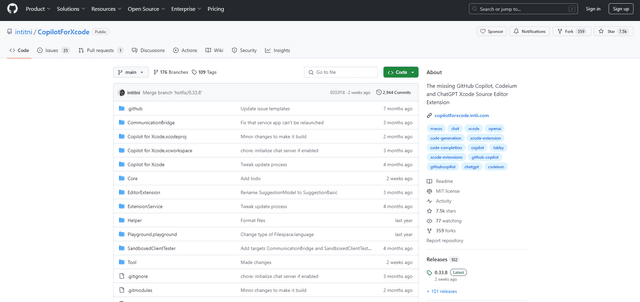
CopilotForXcode
CopilotForXcode is an Xcode Source Editor Extension that integrates GitHub Copilot, Codeium, and ChatGPT to provide AI-powered code suggestions, chat assistance, and prompt-to-code functionality within Xcode.
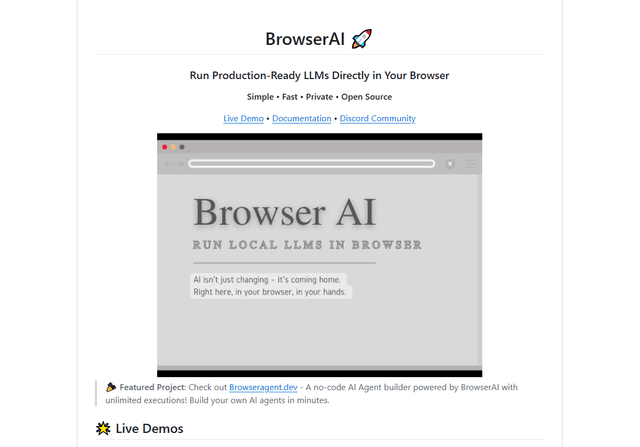
BrowserAI
BrowserAI is an open-source library that enables running local Large Language Models (LLMs) directly in web browsers with WebGPU acceleration, offering privacy-focused AI capabilities without requiring server infrastructure.
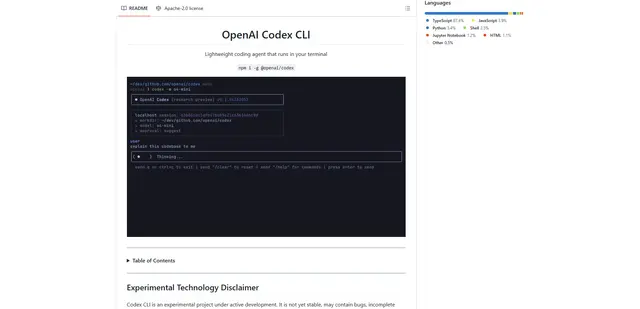
OpenAI Codex CLI
OpenAI Codex CLI is a lightweight, open-source coding agent that runs in your terminal, enabling developers to translate natural language into code execution while providing ChatGPT-level reasoning with the ability to run code, manipulate files, and iterate under version control.