
Plurai
Plurai is a vibe-training platform that helps teams build production-ready AI agents with automated simulation, high-accuracy evals, and real-time guardrails using fast, cost-efficient purpose-built models.
https://www.plurai.ai/launch?ref=producthunt

Product Information
Updated:May 18, 2026
What is Plurai
Plurai is a reliability and safety platform for conversational AI and agentic systems, designed to bridge the gap between prototypes and dependable production deployments. It focuses on trust, visibility, and control by providing tools to simulate realistic interactions, evaluate agent behavior against policies and goals, and enforce guardrails in real time. Plurai also offers flexible deployment options (including VPC/on‑prem) and supports workflows ranging from offline testing to continuous, large-scale monitoring in production.
Key Features of Plurai
Plurai is a production-focused platform for building reliable conversational AI by unifying simulation, evaluation, guardrails, and continuous optimization. It uses a “vibe-training” workflow where teams describe what an agent should and shouldn’t do, and Plurai generates tailored test data and evaluators—often powered by optimized small language models (SLMs)—to deliver low-latency, cost-efficient, high-coverage evals and real-time protections. It also offers open-source tooling (e.g., IntellAgent) for automated scenario generation and a Streamlit analytics dashboard to inspect simulation results, with options for VPC/on-prem deployment and privacy controls for usage tracking.
Vibe-training for evals & guardrails: Define desired and undesired agent behaviors in natural language; Plurai generates training/eval data, validates it, and produces tailored evaluators and guardrails without requiring labeled datasets.
Optimized SLM evaluators for real-time protection: Uses purpose-built small language models to run semantic checks (policy compliance, grounding validation, similarity, conversation evaluation) at low cost and <100ms latency, avoiding expensive LLM-as-judge at full coverage.
Simulation-first reliability workflow: Runs realistic synthetic interactions to stress-test agents, increase edge-case coverage, and diagnose failures before production, bridging prototype-to-production reliability.
Multi-agent scenario generation (IntellAgent): Open-source multi-agent framework to automate creation of diverse, policy-driven conversational scenarios for comprehensive evaluation of complex conversational systems.
Analytics dashboard for results inspection: Launches a Streamlit dashboard with detailed analytics and visualizations of simulation outcomes to help teams understand failure modes and performance trends.
Enterprise deployment & privacy controls: Supports deployment in a customer VPC for security/data control; collects basic usage metrics with an opt-out flag (PLURAI_DO_NOT_TRACK) and claims not to collect identifying company/user data.
Use Cases of Plurai
Customer support chatbot QA (SaaS/e-commerce): Simulate large volumes of customer conversations, detect policy violations and hallucinations, and deploy real-time guardrails to reduce escalations and inconsistent answers.
Regulated conversational AI compliance (healthcare/insurance): Continuously evaluate for policy compliance, safety constraints, and grounding requirements; use tailored classifiers/guardrails to prevent disallowed medical/claims guidance.
Banking and fintech agent governance: Validate that agents follow disclosure rules, avoid sensitive-data leakage, and stay within approved intents; run scalable evals using low-latency SLM-based checks.
Contact-center automation across channels (voice/SMS/webchat): Apply consistent evaluation and guardrails across multi-channel conversational experiences to maintain quality and safety while scaling automation.
Internal enterprise assistants (IT/helpdesk): Stress-test tool-using agents against edge cases (misconfigurations, ambiguous requests), then enforce guardrails to reduce risky actions and improve response consistency.
Agent development teams needing faster iteration: Replace manual test curation with automated scenario generation and dashboards, enabling quicker diagnosis, higher coverage, and faster deployment cycles.
Pros
End-to-end lifecycle approach (simulation → evals → guardrails → optimization) aimed at production reliability
Cost- and latency-efficient evaluators via optimized SLMs, enabling broader continuous coverage than LLM-as-judge
Works without labeled data by generating synthetic, task-specific datasets from high-level behavior descriptions
Offers open-source components (e.g., IntellAgent) and transparent opt-out for usage tracking
Cons
Accuracy and robustness may depend on the quality of the initial behavior descriptions (“vibe-training” inputs) and calibration process
Some capabilities and performance claims (e.g., failure-rate/cost reductions) may require validation on a user’s specific domain and workloads
Cookie/analytics tooling on the website and optional usage metrics may be undesirable for some organizations (though opt-out exists)
Enterprise requirements (VPC/on-prem, integration depth) may add operational complexity compared with purely hosted eval tools
How to Use Plurai
1) Choose what you want to build in Plurai: Decide whether you need an Eval (offline scoring), a Guardrail (real-time blocking/allowing), or a Classifier (semantic labeling). Plurai supports tasks like conversation evaluation, semantic similarity, grounding validation, and policy compliance.
2) Create an account and open the app: Go to http://app.plurai.ai/ and start a workspace (no credit card required per the site).
3) Describe your agent’s intended behavior (the “vibe-training” input): Write what your agent should do and should not do (policies, failure modes, and success criteria). This description is used for Plurai’s intent calibration process.
4) Select the target task type and coverage: Pick the semantic task you want the model to perform (e.g., policy compliance, grounding validation, conversation quality). Define what “pass/fail” (or score bands) means for your use case.
5) Generate a tailored test set (synthetic if needed): If you don’t have labeled or historical data, use Plurai’s synthetic data generation to create high-fidelity examples aligned to your policies and edge cases.
6) Train/produce the evaluator or guardrail model: Run Plurai’s workflow to produce a purpose-built small language model (SLM) evaluator/guardrail for your task (or choose an optimized LLM-based evaluator when you want maximum accuracy for sampled/offline evaluation).
7) Validate quality with the generated evaluation set: Evaluate the model against the generated testing set to confirm it consistently catches the nuanced failures that matter to your business (the site positions this as an alternative to expensive, inconsistent LLM-as-judge scoring).
8) Deploy for your intended mode (offline evals vs real-time guardrails): Use SLMs for large-scale testing or real-time guardrails (low latency/cost), and LLM-based evaluators for sampled/offline workflows. The site claims sub-100ms inference latency for their approach.
9) Integrate into your agent pipeline: Add the Plurai evaluator/guardrail into your production flow: run it continuously on conversations (for evals) or inline before responses reach users (for guardrails).
10) Iterate: refine policies and regenerate data/models: When you find new failure patterns, update the “should/should not” description, regenerate targeted examples, and re-train/re-deploy the evaluator/guardrail to improve coverage.
11) (Optional) Deploy in your own infrastructure: If you need maximum security/data control/latency, request an on-prem/VPC deployment via https://www.plurai.ai/contact-us.
12) (Optional, open-source) Use IntellAgent for simulation-based evaluation: If you want automated multi-turn simulations, use Plurai’s open-source IntellAgent framework: install Python >= 3.9, clone https://github.com/plurai-ai/intellagent, run a provided config (example: python run.py --output_path results/airline --config_path ./config/config_airline.yml), and visualize results with: streamlit run simulator/visualization/Simulator_Visualizer.py.
Plurai FAQs
Plurai is a platform for AI evals and guardrails, described as a “vibe-training” platform that builds real-time, tailored evaluators and guardrails for AI agents with high accuracy at lower cost.
Plurai Video
Popular Articles

Atoms: A Multi-Agent AI Platform That Transforms Ideas into Launch-Ready Products
May 22, 2026

Nano Banana SBTI: What It Is, How It Works, and How to Use It in 2026
Apr 15, 2026

Atoms Review — The AI Product Builder Redefining Digital Creation in 2026
Apr 10, 2026

Kilo Claw: How to Deploy and Use a True "Do‑It‑For‑You" AI Agent(2026 Update)
Apr 3, 2026
Latest AI Tools Similar to Plurai

Hapticlabs
Hapticlabs is a no-code toolkit that enables designers, developers and researchers to easily design, prototype and deploy immersive haptic interactions across devices without coding.
Deployo.ai
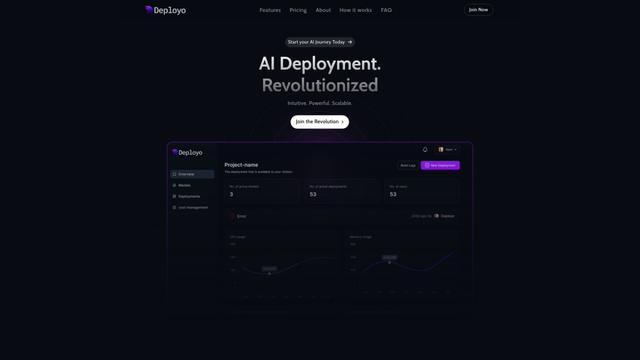
Deployo.ai is a comprehensive AI deployment platform that enables seamless model deployment, monitoring, and scaling with built-in ethical AI frameworks and cross-cloud compatibility.
CloudSoul
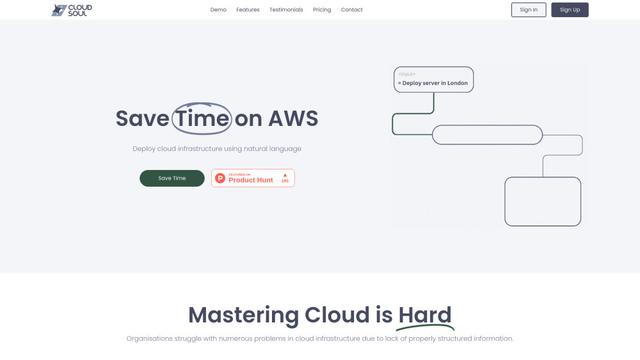
CloudSoul is an AI-powered SaaS platform that enables users to instantly deploy and manage cloud infrastructure through natural language conversations, making AWS resource management more accessible and efficient.
Devozy.ai
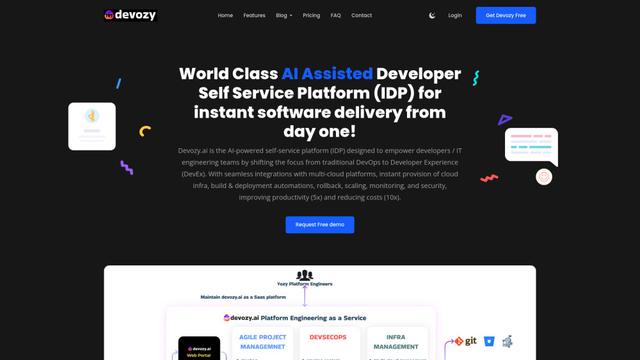
Devozy.ai is an AI-powered developer self-service platform that combines Agile project management, DevSecOps, multi-cloud infrastructure management, and IT service management into a unified solution for accelerating software delivery.
Popular AI Tools Like Plurai

A2A Protocol
A2A (Agent2Agent) Protocol is an open interoperability protocol developed by Google that enables seamless communication and collaboration between AI agents across different frameworks and vendors, regardless of their underlying architecture.
VoltOps
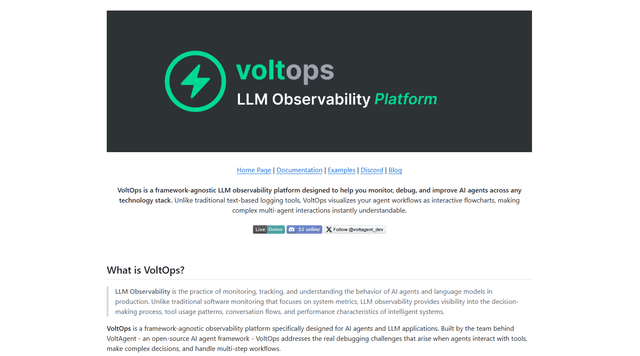
VoltOps is a framework-agnostic LLM observability platform that provides real-time visual monitoring, debugging, and optimization tools for AI agents across any technology stack.
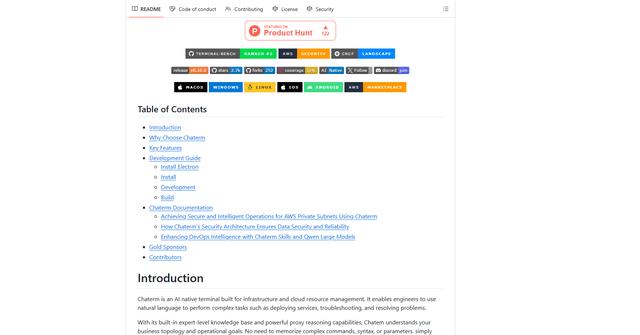
Chaterm
Chaterm is an open-source AI-native terminal and SRE copilot that enables engineers to manage complex infrastructure through natural language, automating deployment, troubleshooting, and operations without memorizing commands.
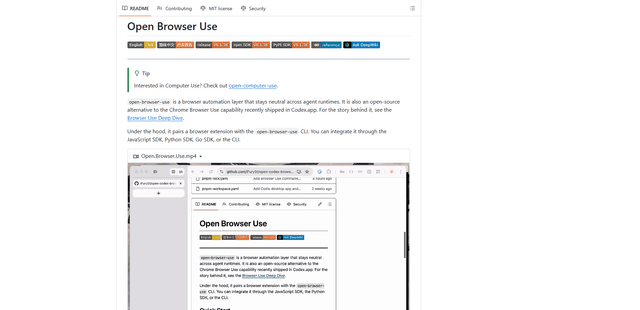
Open Browser Use
Open Browser Use is an open-source, agent-runtime-neutral browser automation layer that pairs a Chrome extension with a CLI/SDK/MCP to enable DOM-aware, CDP-powered tab control, navigation, and actions across different AI agent tools.