
Osloq
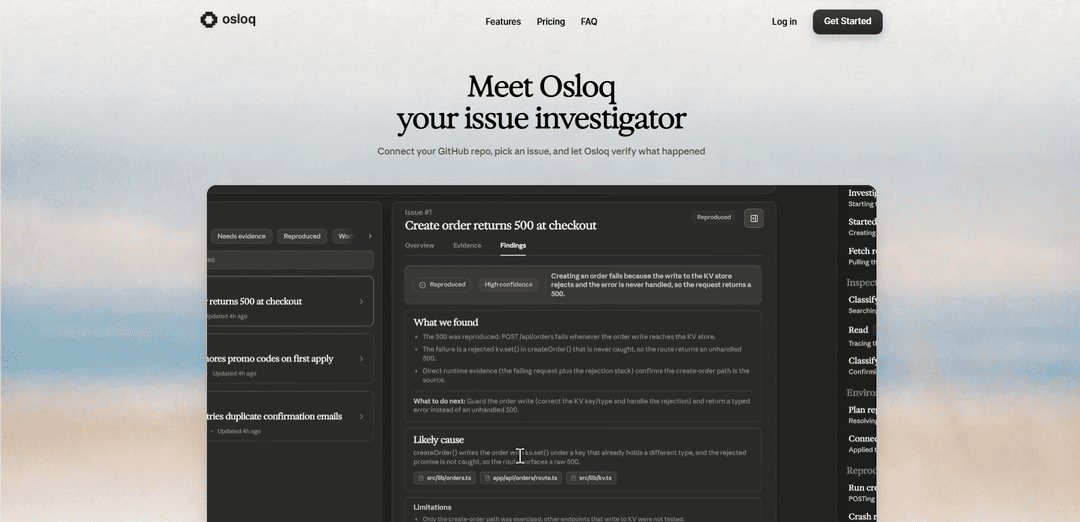
Osloq is an AI issue investigator that reproduces GitHub bugs in an isolated sandbox and returns verified, evidence-backed reports with logs, screenshots, and traced code paths.
https://osloq.com/?ref=producthunt
Product Information
Updated:Jul 8, 2026
What is Osloq
Osloq is a developer tool that helps teams move from “can’t reproduce” to “verified finding” by automatically reproducing GitHub issues. After you connect a repository and select an issue, Osloq traces the relevant code, commits, and runtime context, then runs the flow to see what actually happens. Instead of speculative analysis, it produces a clear report tied to concrete evidence (e.g., specific files/commits, runtime logs, and captured browser output), making it easier to understand the real cause of an issue and what to do next.
Key Features of Osloq
Osloq is an AI “issue investigator” that connects to your GitHub repository, reads a selected GitHub issue, traces the relevant code/commits/runtime context, and then attempts to reproduce the bug in an isolated sandbox before concluding. It produces evidence-backed findings (e.g., exact code paths, linked commits, logs, screenshots, and captured browser console/DOM) and turns the result into a clear report that can be posted back to the issue, helping teams verify what happened and what to change next.
GitHub issue investigation workflow: Connect a repo, pick an issue, and Osloq traces the repository (code + commits + runtime context) to build an evidence-based investigation trail tied directly to the issue.
Reproduces bugs before concluding: Runs the relevant flow in a sandbox and captures artifacts like logs, screenshots, errors, and (for web flows) browser console/DOM, then links outcomes back to the issue.
Evidence timeline with verified findings: Produces “verified findings” supported by concrete evidence links (e.g., specific files and commits) so developers can see exactly why the bug occurs.
Clear report generation for developer action: Summarizes what was reproduced, provides evidence links, and suggests next-step changes, structured so it can be posted as an issue comment without losing context.
Security and privacy controls: Uses a least-privilege, read-only GitHub App; runs code in a fresh sandbox destroyed after each investigation; does not store source code or train on it (only the report/evidence remain).
Secrets optional + multi-language support: Can reproduce with project secrets (model sees only secret names, not values) or bypass missing dependencies; designed for any language and currently runs JS/TS, Python, and Go (expanding).
Use Cases of Osloq
SaaS product engineering triage: Automatically reproduce customer-reported GitHub issues, attach logs/screenshots, and provide verified root-cause evidence to reduce time-to-fix and back-and-forth.
Open-source maintainer issue verification: Use the Free plan on public repos to validate incoming bug reports and produce reproducible evidence, improving issue quality and maintainer efficiency.
QA and release regression validation: Run investigations on suspected regressions to confirm behavior and pinpoint the commit/file path involved, supporting faster go/no-go decisions.
Team-based debugging operations: With Team features (shared history, RBAC, seats), organizations can centralize investigation results and standardize how bugs are reproduced and documented.
Security-conscious enterprise debugging: Investigate issues in isolated sandboxes with read-only repo access and optional secrets, aligning with stricter controls while still enabling reproducible diagnostics.
Pros
Evidence-backed reproduction (logs/screenshots/code-path links) reduces ambiguity compared to purely speculative AI debugging.
Strong security posture: sandboxed runs, no source retention/training, and least-privilege read-only GitHub App access.
Flexible execution: can work with or without secrets and supports multiple languages/frameworks (JS/TS, Python, Go today).
Clear reporting format that can be posted back to GitHub issues, improving team communication and handoffs.
Cons
Investigation quotas and plan limits (e.g., Free: 5/month; Pro: 50/month; Team: per-seat) may constrain heavy debugging workflows.
Private repository support requires a paid plan (Pro/Team).
Runtime support is still expanding; while designed for any language, execution currently emphasizes JS/TS, Python, and Go.
Some reproductions may be limited without providing secrets or a fully representative environment, even though Osloq can bypass certain dependencies.
How to Use Osloq
1) Start on Osloq: Go to https://osloq.com/ and click “Get Started” (or go directly to https://app.osloq.com/get-started).
2) Log in: In the Osloq web app, log in (the site provides a “Log in” link that routes to https://app.osloq.com/login).
3) Connect your GitHub repository via the GitHub App: Authorize Osloq through its GitHub App connection. Osloq states it uses least-privilege, read-only access to the repositories you authorize. Choose the scope you want (a single repo or an entire organization) and proceed with authorization.
4) Select a repository and pick a GitHub issue to investigate: Once connected, choose the repo you want, then select the specific GitHub issue you want Osloq to reproduce and investigate.
5) Run an investigation (reproduction-first workflow): Trigger the investigation. Osloq will run your repository in an isolated sandbox, trace relevant code/commits/runtime context, and attempt to reproduce the issue before concluding.
6) (Optional) Provide project secrets if your app needs them: If the issue requires real environment dependencies, you can provide project secrets. Osloq says it can also proceed without secrets by bypassing the dependency and still attempting reproduction. It also states the model only sees secret names, not values.
7) Review the evidence timeline: After the run, review the evidence-backed output: Osloq links relevant code paths (files/commits) and includes captured artifacts such as logs, screenshots, and errors that support its findings.
8) Read the verified finding and suggested next step: Osloq summarizes what it reproduced and provides a “verified finding” (a conclusion tied to evidence) plus a suggested change (next step) to address the issue.
9) Use the generated report (and issue-comment-ready summary): Use Osloq’s clear report to share internally or post back to the GitHub issue. The product page indicates it can prepare the result as an issue comment.
10) Manage access and permissions as needed: If you want to limit or remove access, adjust the GitHub App authorization scope or revoke access at any time (Osloq states you control scope and can revoke anytime).
11) Choose a plan and monitor investigation limits: Pick a plan based on your needs: Free (public repos only, 5 investigations/month), Pro (private repos, 50 investigations/month), or Team (60 investigations/seat, 3 seats included, shared repos/history, RBAC). Upgrade anytime and cancel anytime per the pricing page.
Osloq FAQs
Osloq reproduces a GitHub issue for you. It runs your repository in an isolated sandbox, traces the relevant code, and attempts to trigger the bug, then returns a verdict backed by logs, screenshots, and the exact code path.
Popular Articles

Vosko AI: Localize and Dub Videos for Global Audiences
Oct 14, 2026

Atoms: A Multi-Agent AI Platform That Transforms Ideas into Launch-Ready Products
Oct 13, 2026

Nano Banana SBTI: What It Is, How It Works, and How to Use It in 2026
Apr 15, 2026

Atoms Review — The AI Product Builder Redefining Digital Creation in 2026
Apr 10, 2026
Latest AI Tools Similar to Osloq
Gait
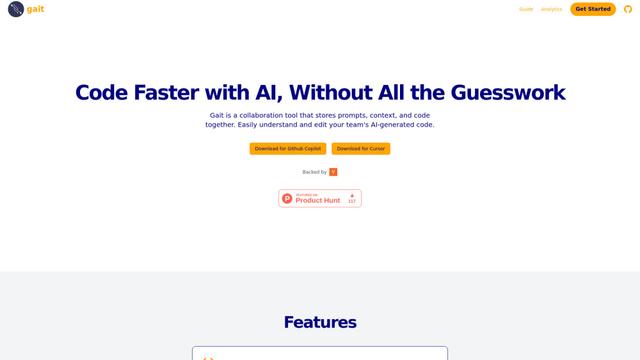
Gait is a collaboration tool that integrates AI-assisted code generation with version control, enabling teams to track, understand, and share AI-generated code context efficiently.
invoices.dev
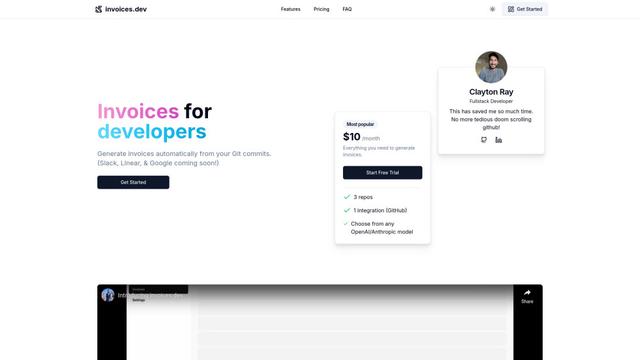
invoices.dev is an automated invoicing platform that generates invoices directly from developers' Git commits, with integration capabilities for GitHub, Slack, Linear, and Google services.
EasyRFP
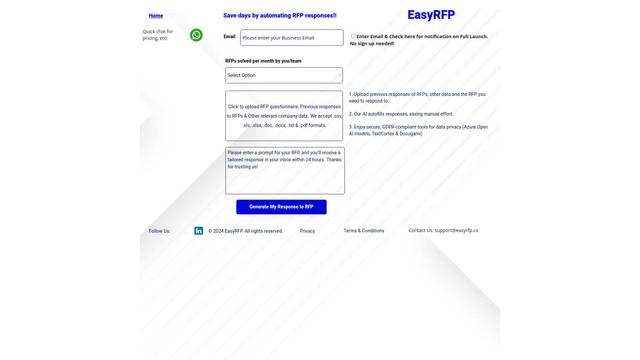
EasyRFP is an AI-powered edge computing toolkit that streamlines RFP (Request for Proposal) responses and enables real-time field phenotyping through deep learning technology.

Cart.ai
Cart.ai is an AI-powered service platform that provides comprehensive business automation solutions including coding, customer relations management, video editing, e-commerce setup, and custom AI development with 24/7 support.
Popular AI Tools Like Osloq

GitHub Copilot Chat
GitHub Copilot Chat is an AI-powered coding assistant that provides natural language interactions, real-time code suggestions, and contextual support directly within supported IDEs and GitHub.com.
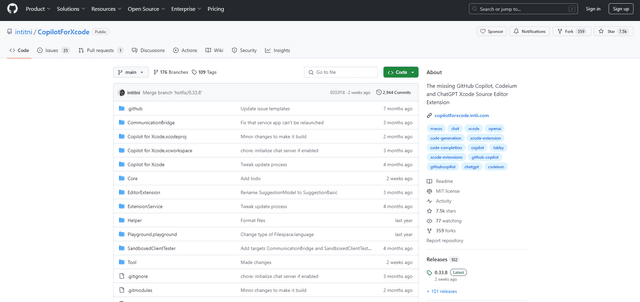
CopilotForXcode
CopilotForXcode is an Xcode Source Editor Extension that integrates GitHub Copilot, Codeium, and ChatGPT to provide AI-powered code suggestions, chat assistance, and prompt-to-code functionality within Xcode.
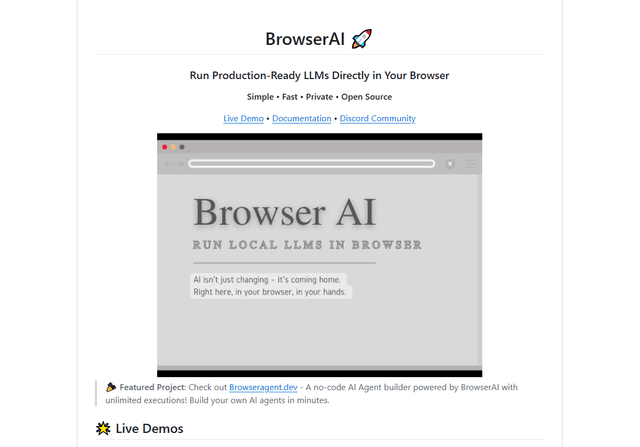
BrowserAI
BrowserAI is an open-source library that enables running local Large Language Models (LLMs) directly in web browsers with WebGPU acceleration, offering privacy-focused AI capabilities without requiring server infrastructure.
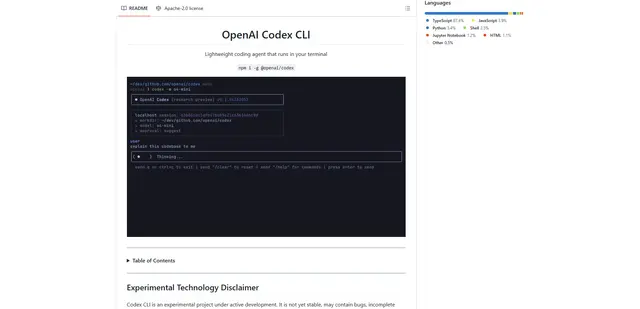
OpenAI Codex CLI
OpenAI Codex CLI is a lightweight, open-source coding agent that runs in your terminal, enabling developers to translate natural language into code execution while providing ChatGPT-level reasoning with the ability to run code, manipulate files, and iterate under version control.