
OpenMolt
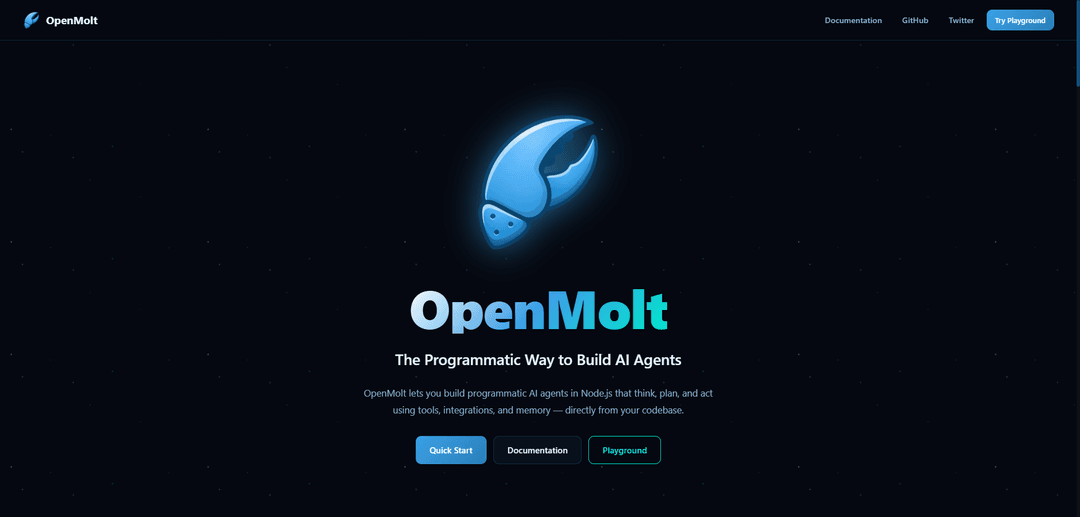
OpenMolt is an open-source platform for building programmatic AI agents that can think, plan, and act using tools, integrations, and memory capabilities in Node.js applications.
https://openmolt.dev/?ref=producthunt
Product Information
Updated:Mar 16, 2026
What is OpenMolt
OpenMolt is a developer-focused framework that enables the creation of autonomous AI agents capable of communicating and working with one another. Built on the OpenResponses Agentic Loop, it provides a modular and open architecture for developers to build, customize, and integrate AI agents flexibly. The platform moves beyond simple human-to-AI interactions to support more advanced AI ecosystems, including AI agent networks and social AI applications.
Key Features of OpenMolt
OpenMolt is a programmatic platform for building AI agents that can think, plan, and act autonomously. It provides a complete toolkit for developing production-grade AI agents with features like multi-provider LLM support, 30+ built-in integrations, structured output validation, scheduling capabilities, memory management, and secure credential handling. The platform enables AI agents to interact, collaborate, and perform complex tasks while maintaining security and scalability.
Secure Credential Management: Uses a scope-based permission model where API credentials are stored server-side and never exposed to the LLM, ensuring secure integration with various services
Multi-Provider LLM Support: Supports multiple LLM providers including OpenAI GPT-4, Anthropic Claude, and Google Gemini with a unified model string format for easy switching
Integrated Tool System: Offers 30+ built-in integrations including Gmail, Slack, GitHub, Notion, and more, with declarative tool definitions requiring minimal configuration
Memory Management: Provides both long-term and short-term memory stores with update callbacks, allowing agents to maintain context across multiple sessions
Use Cases of OpenMolt
Automated Reporting: Schedule agents to pull metrics from various sources, generate summaries, and distribute reports to different platforms automatically
Content Management: Create automated content pipelines where agents write content, generate images, and manage publishing across multiple platforms
Development Operations: Automate GitHub workflows including issue triaging, PR labeling, and changelog generation integrated with CI/CD pipelines
E-commerce Operations: Monitor orders, manage inventory, send customer communications, and generate business reports across multiple platforms
Pros
Comprehensive security features with zero-trust architecture
Extensive integration options with 30+ built-in services
Flexible and configurable agent system with multiple LLM provider support
Cons
Requires technical knowledge to implement and maintain
Potential security risks when running on local computers with file system access
How to Use OpenMolt
Install OpenMolt: Run 'npm install openmolt' in your Node.js project directory
Set up API Keys: Configure your LLM provider API keys (like OpenAI, Anthropic, or Google) as environment variables
Initialize OpenMolt: Create a new OpenMolt instance with your configured LLM providers in your code
Create an Agent: Use om.createAgent() to define your agent with a name, model, and instructions
Configure Permissions: Grant specific tool access permissions to your agent using the scope-based permission model
Set Up Memory (Optional): Configure long-term and short-term memory stores if your agent needs to maintain context across sessions
Add Integrations: Connect desired integrations from the 30+ available options (Gmail, Slack, GitHub, etc.)
Define Output Schema: Use Zod schema to specify the structure of your agent's output for validation
Schedule Tasks (Optional): Set up interval or cron-style scheduling if your agent needs to run automated tasks
Run the Agent: Use agent.run() with your input prompt to execute the agent's tasks
OpenMolt FAQs
OpenMolt is a programmatic way to build AI agents in Node.js. It's a platform that allows developers to create AI agents that can think, plan, and act using various tools, integrations, and memory capabilities directly from their codebase.
Popular Articles

Vosko AI: Localize and Dub Videos for Global Audiences
Oct 15, 2026

Atoms: A Multi-Agent AI Platform That Transforms Ideas into Launch-Ready Products
Oct 13, 2026

Nano Banana SBTI: What It Is, How It Works, and How to Use It in 2026
Apr 15, 2026

Atoms Review — The AI Product Builder Redefining Digital Creation in 2026
Apr 10, 2026
Latest AI Tools Similar to OpenMolt

Hapticlabs
Hapticlabs is a no-code toolkit that enables designers, developers and researchers to easily design, prototype and deploy immersive haptic interactions across devices without coding.
Deployo.ai
Deployo.ai is a comprehensive AI deployment platform that enables seamless model deployment, monitoring, and scaling with built-in ethical AI frameworks and cross-cloud compatibility.
CloudSoul
CloudSoul is an AI-powered SaaS platform that enables users to instantly deploy and manage cloud infrastructure through natural language conversations, making AWS resource management more accessible and efficient.
Devozy.ai
Devozy.ai is an AI-powered developer self-service platform that combines Agile project management, DevSecOps, multi-cloud infrastructure management, and IT service management into a unified solution for accelerating software delivery.
Popular AI Tools Like OpenMolt

A2A Protocol
A2A (Agent2Agent) Protocol is an open interoperability protocol developed by Google that enables seamless communication and collaboration between AI agents across different frameworks and vendors, regardless of their underlying architecture.
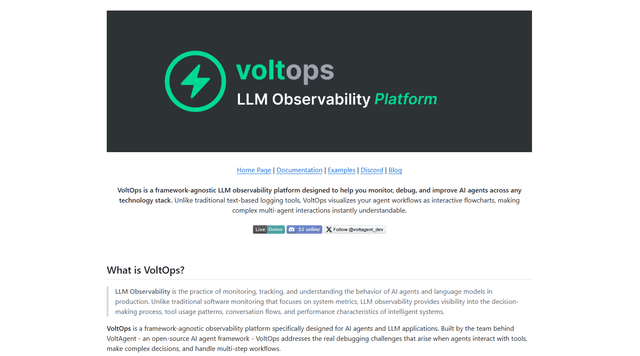
VoltOps
VoltOps is a framework-agnostic LLM observability platform that provides real-time visual monitoring, debugging, and optimization tools for AI agents across any technology stack.
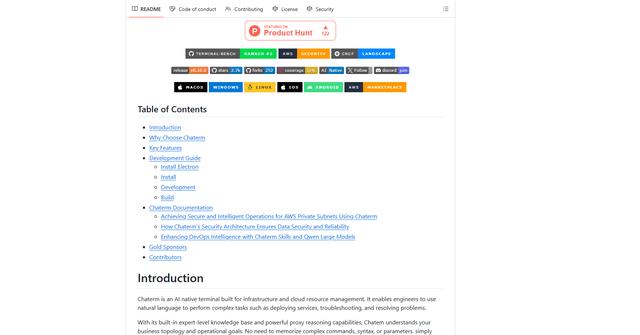
Chaterm
Chaterm is an open-source AI-native terminal and SRE copilot that enables engineers to manage complex infrastructure through natural language, automating deployment, troubleshooting, and operations without memorizing commands.
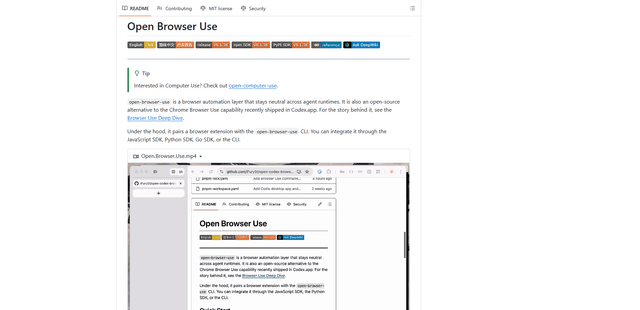
Open Browser Use
Open Browser Use is an open-source, agent-runtime-neutral browser automation layer that pairs a Chrome extension with a CLI/SDK/MCP to enable DOM-aware, CDP-powered tab control, navigation, and actions across different AI agent tools.