Metoro
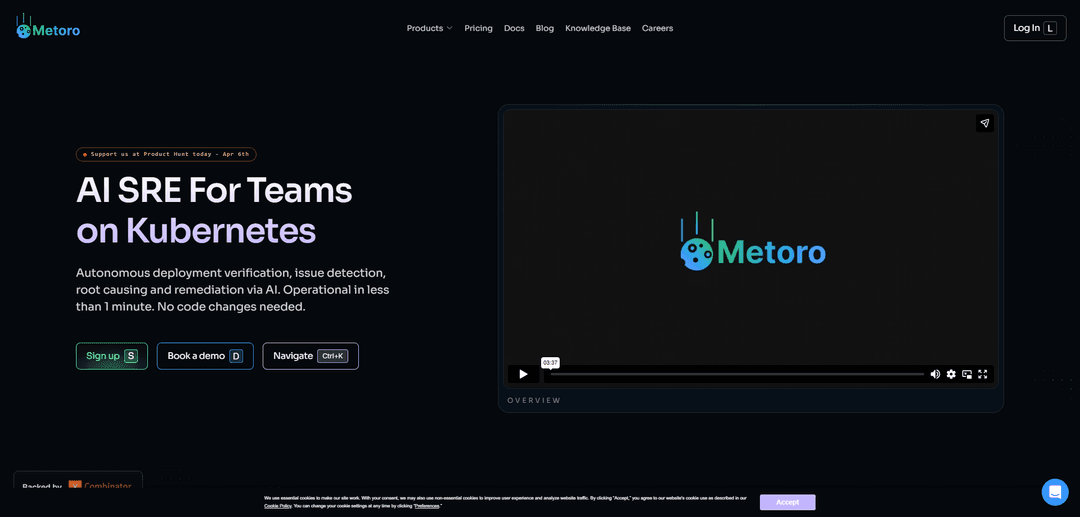
Metoro is an AI-powered SRE platform for Kubernetes that provides autonomous deployment verification, issue detection, root cause analysis, and remediation with zero code changes required.
https://metoro.io/?ref=producthunt
Product Information
Updated:Apr 10, 2026
What is Metoro
Metoro is a Kubernetes-native observability and AI SRE platform founded in 2023 and backed by Y Combinator (S23 batch). The platform is specifically designed for teams running on Kubernetes, offering autonomous production debugging and monitoring capabilities that can be operational in less than one minute. Headquartered in Wilmington, Delaware, Metoro leverages eBPF (extended Berkeley Packet Filter) technology to collect telemetry data at the kernel level, eliminating the need for manual instrumentation or code changes. The platform integrates AI-driven features including autonomous issue detection, deployment verification, alert investigation, and automatic fix generation, making it a comprehensive solution for modern DevOps and SRE teams seeking to streamline their production debugging workflows.
Key Features of Metoro
Metoro is an AI-powered SRE (Site Reliability Engineering) platform for Kubernetes that provides autonomous deployment verification, issue detection, root cause analysis, and remediation. Using eBPF technology, it operates at the kernel level to collect telemetry data without requiring any code changes or container restarts, becoming operational in less than one minute. The platform offers comprehensive Kubernetes observability including APM, log management, container profiling, infrastructure monitoring, and custom dashboards. Metoro's AI capabilities leverage OpenAI models to automatically detect anomalies, investigate alerts, verify deployments, and generate fixes with evidence, enabling engineering teams to debug production issues faster and maintain service reliability with minimal manual intervention.
eBPF-Based Zero-Code Instrumentation: Collects telemetry data at the kernel level using eBPF programs loaded into all Kubernetes cluster nodes, enabling comprehensive monitoring without code changes, manual instrumentation, or container restarts, with less than 1% CPU overhead.
AI-Powered Root Cause Analysis (Guardian): Automatically detects regressions from live traffic, pinpoints root causes across telemetry and code, and generates actionable fixes with evidence by combining real-time metrics, logs, traces, profiling, and events for accurate RCA.
Autonomous Deployment Verification: Verifies every rollout against production behavior using AI to catch regressions early, showing what changed and providing next steps, with notifications integrated into Slack and other communication tools.
AI Alert Investigation: Automatically investigates each alert, filters noise, and returns root cause analysis with next steps before on-call engineers need to dig in, reducing mean time to resolution (MTTR).
Comprehensive Kubernetes Observability: Provides full-stack monitoring including APM with request latencies (p50, p90, p99), error rates, log management, CPU profiling at 97Hz, custom dashboards, infrastructure metrics, and CronJob monitoring across multiple clusters.
Flexible Deployment Options: Offers three deployment models: fully managed Metoro Cloud, BYOC (Bring Your Own Cloud) managed by Metoro in your VPC, and On-Premises for air-gapped environments with complete isolation and offline updates.
Use Cases of Metoro
Production Incident Response: Engineering teams can leverage Metoro's AI-powered root cause analysis to automatically detect, investigate, and resolve production incidents faster, reducing MTTR and minimizing service disruptions without manual log diving.
Safe Deployment Pipelines: DevOps teams can use autonomous deployment verification to catch regressions before they impact users, automatically comparing new rollouts against production behavior and receiving instant Slack notifications about issues.
Multi-Cluster Kubernetes Management: Platform teams managing multiple Kubernetes clusters across different environments can use Metoro's unified dashboard to monitor infrastructure metrics, application performance, and CronJob health from a single pane of glass.
AI Agent Monitoring: Teams building AI applications can monitor prompts and responses for every AI agent request across languages and frameworks, capturing model traffic without SDK-specific hooks using kernel-level eBPF probes.
Compliance and Security Monitoring: Enterprises with strict compliance requirements can deploy Metoro On-Premises in air-gapped environments with complete isolation, maintaining SOC 2 Type II certified observability without external network connectivity.
Performance Optimization: Development teams can use continuous CPU profiling and right-sizing recommendations to identify performance bottlenecks, optimize resource utilization, and reduce cloud infrastructure costs across their Kubernetes workloads.
Pros
Zero-code instrumentation with eBPF eliminates the need for manual setup, code changes, or container restarts, becoming operational in under 1 minute
AI-powered autonomous features for deployment verification, issue detection, and root cause analysis significantly reduce MTTR and manual investigation time
Flexible deployment options (Cloud, BYOC, On-Premises) including air-gapped support for enterprises with strict security requirements
Competitive pricing at $20/node/month with 100GB included per node, significantly lower than traditional observability platforms ($50-100+ per host)
Cons
Currently limited to OpenAI models for AI features, which may raise concerns for organizations wanting provider choice or avoiding external AI dependencies
Linux kernel dependency through eBPF means it's specifically designed for Linux-based Kubernetes environments, potentially limiting cross-platform compatibility
Relatively new company (founded 2023) with only 3 employees, which may raise concerns about long-term support and feature development pace
Language support for CPU profiling is currently limited to C, C++, Rust, Golang, and Python, excluding other popular languages like Java or .NET
How to Use Metoro
1. Sign up for Metoro: Visit metoro.io and create a free account. No credit card is required for the Hobby tier (1 cluster, 2 nodes, 200GB ingested/month).
2. Choose your deployment option: Select from three deployment options: Metoro Cloud (fully managed), Metoro BYOC (hosted in your cloud, managed by Metoro), or Metoro On-Prem (complete isolation in your infrastructure).
3. Select your Kubernetes cluster: During setup, you'll be prompted to choose between installing on an existing Kubernetes cluster or creating a new one for testing purposes.
4. Install the Metoro Agent: Copy and paste the installation command provided in the Metoro interface into your terminal. Ensure your Kubernetes context is set to the correct cluster. The agent uses eBPF technology to collect telemetry data at the kernel level without requiring code changes or container restarts.
5. Wait for data collection to begin: It can take a couple of minutes for Metoro to receive your cluster's data. The node agents collect data from the Linux kernel and write to cluster local storage, then the cluster exporter aggregates and sends it to the Metoro backend.
6. Access the Metoro dashboard: Once data is flowing, navigate to the Metoro dashboard at us-east.metoro.io (or your region-specific URL) to view metrics, logs, traces, and Kubernetes resources.
7. Create custom dashboards (optional): Navigate to the dashboards view, click 'Create Dashboard', and use the chart creation wizard to add widgets. Search for metrics, select aggregations and filters, and customize chart appearances. You can also migrate existing Grafana dashboards with one click.
8. Set up AI-powered monitoring: Enable autonomous issue detection, deployment verification, and alert investigation features. Metoro's AI will automatically detect anomalies, perform root cause analysis, and suggest fixes based on your telemetry data.
9. Configure alerts and notifications: Set up alert rules and integrate with Slack or other notification channels to receive automated AI investigations when issues are detected or deployments are verified.
10. Use AI Guardian for investigations: When issues occur, ask Metoro's AI Guardian for help. It will surface relevant logs and metrics, perform root cause analysis, and suggest remediations by analyzing traces, metrics, and logs from your observability data.
11. Monitor deployments: Use the AI Deployment Verification feature to automatically verify every rollout against production behavior, catch regressions early, and see what changed with recommended next steps.
12. Send custom metrics (optional): Send your own metrics to the Metoro exporter endpoint using OTLP (OpenTelemetry Protocol). Metoro has a full OpenTelemetry-compatible API for custom spans and metrics.
13. Upgrade your plan as needed: When ready to scale beyond the free tier, upgrade to the Scale plan ($20/node/month with 100GB ingested per node) or contact sales for Enterprise options with custom SLAs and on-premises deployments.
Metoro FAQs
Metoro is an AI SRE platform for Kubernetes that provides autonomous deployment verification, issue detection, root cause analysis, and remediation. It offers observability solutions including APM, log management, container profiling, and infrastructure monitoring without requiring code changes or manual instrumentation.
Metoro Video
Popular Articles

Atoms: A Multi-Agent AI Platform That Transforms Ideas into Launch-Ready Products
May 22, 2026

Nano Banana SBTI: What It Is, How It Works, and How to Use It in 2026
Apr 15, 2026

Atoms Review — The AI Product Builder Redefining Digital Creation in 2026
Apr 10, 2026

Kilo Claw: How to Deploy and Use a True "Do‑It‑For‑You" AI Agent(2026 Update)
Apr 3, 2026
Latest AI Tools Similar to Metoro

Hapticlabs
Hapticlabs is a no-code toolkit that enables designers, developers and researchers to easily design, prototype and deploy immersive haptic interactions across devices without coding.
Deployo.ai
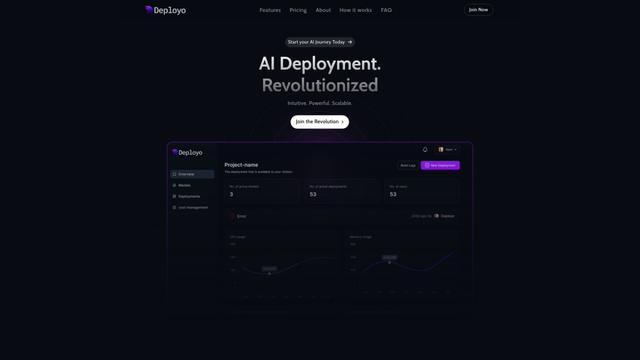
Deployo.ai is a comprehensive AI deployment platform that enables seamless model deployment, monitoring, and scaling with built-in ethical AI frameworks and cross-cloud compatibility.
CloudSoul
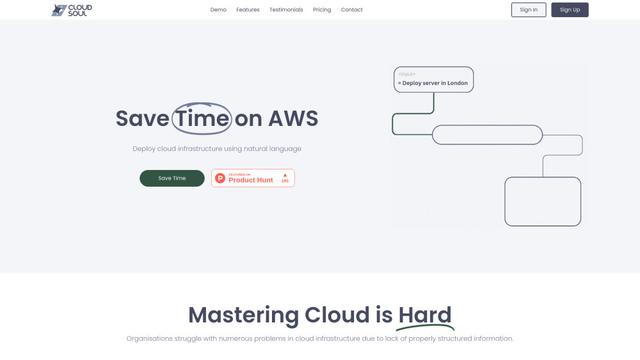
CloudSoul is an AI-powered SaaS platform that enables users to instantly deploy and manage cloud infrastructure through natural language conversations, making AWS resource management more accessible and efficient.
Devozy.ai
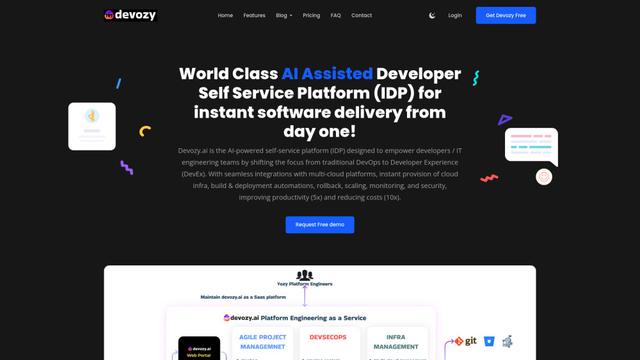
Devozy.ai is an AI-powered developer self-service platform that combines Agile project management, DevSecOps, multi-cloud infrastructure management, and IT service management into a unified solution for accelerating software delivery.
Popular AI Tools Like Metoro

A2A Protocol
A2A (Agent2Agent) Protocol is an open interoperability protocol developed by Google that enables seamless communication and collaboration between AI agents across different frameworks and vendors, regardless of their underlying architecture.
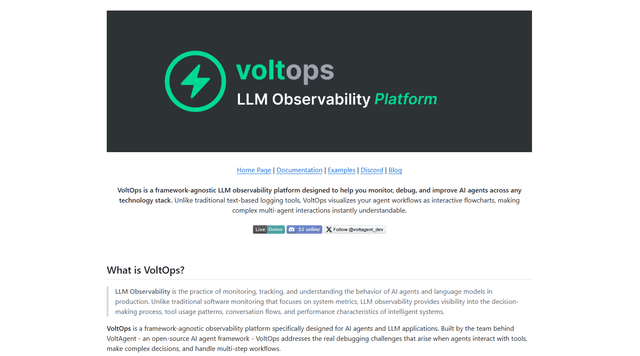
VoltOps
VoltOps is a framework-agnostic LLM observability platform that provides real-time visual monitoring, debugging, and optimization tools for AI agents across any technology stack.
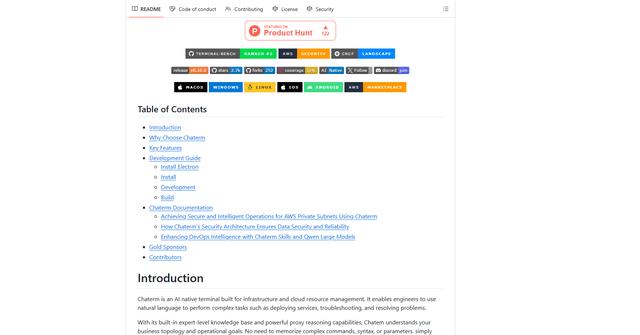
Chaterm
Chaterm is an open-source AI-native terminal and SRE copilot that enables engineers to manage complex infrastructure through natural language, automating deployment, troubleshooting, and operations without memorizing commands.
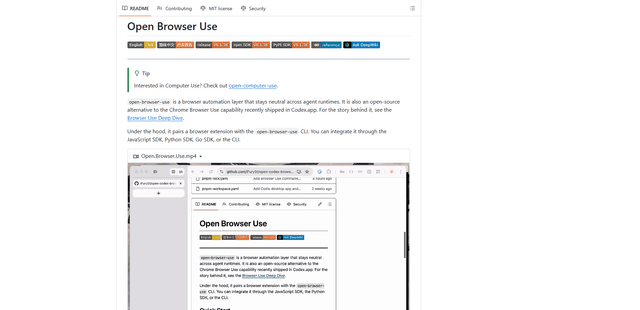
Open Browser Use
Open Browser Use is an open-source, agent-runtime-neutral browser automation layer that pairs a Chrome extension with a CLI/SDK/MCP to enable DOM-aware, CDP-powered tab control, navigation, and actions across different AI agent tools.