
Mailgent
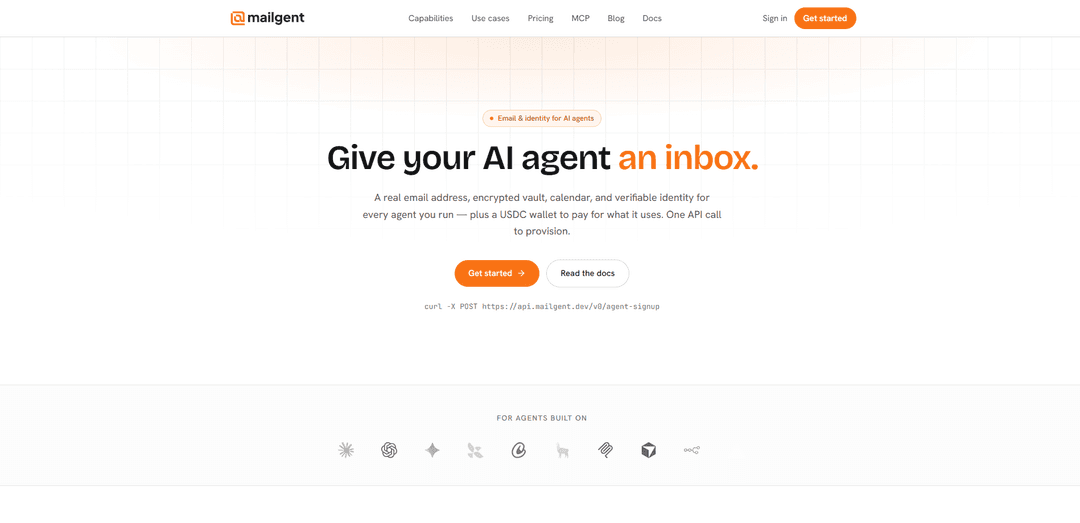
Mailgent provisions a full, verifiable AI-agent identity in one API call—giving each agent a real inbox, encrypted vault (with TOTP/2FA), calendar, DID-based signing, and a USDC wallet with scope-gated access via API/MCP.
https://mailgent.dev/?ref=producthunt
Product Information
Updated:Jul 8, 2026
What is Mailgent
Mailgent is an identity and communications infrastructure platform designed for AI agents to operate like real users on the internet. Instead of stitching together mailbox setup, credential storage, authentication flows, and scheduling, Mailgent provides a single provisioned “agent identity” that includes an email address, secure secret storage, two-factor code generation, calendar capabilities, and cryptographic identity. Developers can integrate it through a clean REST API, an MCP server, or SDK/CLI tooling to let agents send/receive and organize email, manage credentials safely, coordinate meetings, and prove who they are when interacting with external services.
Key Features of Mailgent
Mailgent provides identity infrastructure for AI agents, provisioning a real email inbox plus adjacent capabilities—an encrypted vault for credentials, TOTP/2FA code generation, calendar access, a verifiable DID-based identity with signing keys, and a USDC wallet—exposed via REST, SDK/CLI, and MCP tools. It’s designed to let agents send/receive/thread/label email with verified sending (e.g., DKIM), securely store and retrieve secrets with least-privilege scopes, coordinate scheduling, sign requests to prove identity, and even pay for metered APIs (x402) without human intervention.
Agent inbox via API/MCP: Provision a real address ([email protected]) and manage email end-to-end—send, receive, thread, and label messages through a clean API or MCP server designed for agent workflows.
Encrypted Vault for credentials: Securely store API keys, tokens, secrets, and backup codes; retrieve them per-scope with least-privilege access and without logging sensitive values.
Built-in 2FA / TOTP generation: Generate time-based one-time passwords and manage backup codes inside the vault so agents can complete 2FA-gated logins and flows.
Calendar operations: Create events, manage availability, and share iCal feeds so agents can schedule meetings and coordinate time like a human assistant.
Verifiable identity (DID) + request signing: Each agent can receive a did:web identity and Ed25519 keypair to sign requests and prove provenance—the root of trust for downstream actions.
USDC wallet for autonomous payments: A funded wallet on Base enables agents to pay per-call priced endpoints (x402) under spending mandates—no cards or manual checkout loops.
Use Cases of Mailgent
AI executive assistant for scheduling and inbox triage: An agent can read and organize inbound email, propose meeting times, create calendar events, and follow up with attendees—using vault-stored credentials and verified identity.
Customer support automation: Support agents can manage shared mailboxes programmatically: classify tickets, draft replies, label/route conversations, and maintain secure access to internal tools via the vault.
Sales outreach and follow-ups: Automate outbound email sequences and handle replies in-thread while maintaining deliverability and sender verification; store templates, tokens, and CRM credentials securely.
IT/SecOps workflow bots: Agents can authenticate to systems that require 2FA (via TOTP), sign requests for auditability, and communicate status updates or incident notifications through email.
Autonomous procurement of metered APIs/data: Agents can pay for x402-priced resources per request using the USDC wallet, enabling self-serve access to paid endpoints under controlled spending limits.
Pros
All-in-one agent “identity stack” (mail, vault, 2FA, calendar, DID, wallet) provisioned in one call
MCP-native tooling plus REST/SDK/CLI options makes it easy to integrate into common agent runtimes
Security-oriented design with encrypted vault and scope-gated access (least privilege)
Verifiable identity and request signing supports stronger trust and provenance for agent actions
Cons
Broad capability surface (mail + wallet + DID + 2FA) can increase operational complexity and governance requirements
Using autonomous payments (USDC/x402) may introduce compliance, accounting, and risk controls for some organizations
Reliance on a hosted identity/inbox provider may be a concern for teams with strict data residency or vendor lock-in constraints
How to Use Mailgent
1) Create a Mailgent account and get an API key: Go to console.mailgent.dev and create an API key. Store it securely because API keys may only be shown once at creation.
2) Provision an agent identity (email + DID + vault + calendar + wallet): Call the agent signup endpoint to create a full agent identity in one request (returns an email address, DID/signing key, encrypted vault, calendar, and USDC wallet):
curl -X POST https://api.mailgent.dev/v0/agent-signup
3) Connect Mailgent via MCP (recommended for agent tooling): Add the Mailgent MCP server to your MCP client configuration (e.g., Claude/Cursor/ChatGPT MCP config), then provide your API key via env:
{
"mcpServers": {
"mailgent": {
"command": "npx",
"args": ["-y", "mailgent-mcp"],
"env": {
"MAILGENT_API_KEY": "YOUR_API_KEY"
}
}
}
}
Mailgent can be used via hosted MCP (api.mailgent.dev/mcp) or run locally.
4) Use Mailgent tools from chat via the MCP server: In your MCP-enabled chat, invoke the server by name and ask it to perform actions. Example:
@Mailgent MCP Server check my inbox for recent messages and summarize the latest one
Continue issuing instructions to send, reply, organize, or label emails using the provided MCP tools (e.g., mail_send).
5) Send/receive and organize email through the Mail API: Use Mailgent’s mail capability to send, receive, thread, and label messages over the API or MCP. Mailgent supports verified senders and email authentication (e.g., DKIM) as part of the mail infrastructure.
6) Store and retrieve secrets in the encrypted Vault: Use the Vault capability to stash API keys/tokens/credentials your agent needs. Secrets are scope-gated by the agent key and designed to avoid being logged. Use MCP tools such as vault_store (and corresponding retrieval tools) to manage credentials.
7) Generate 2FA/TOTP codes when needed: Use the 2FA/TOTP capability to generate time-based one-time passwords and manage backup codes, stored inside the vault. This helps agents pass 2FA gates without exposing secrets.
8) Create and manage calendar events: Use the Calendar capability to create events, manage availability, and share an iCal feed so your agent can coordinate scheduling like a person would (via MCP tools such as calendar_create).
9) Use the agent’s DID to sign and prove identity: Use the Identity (DID) capability (did:web with an Ed25519 keypair) so the agent can sign requests and prove who it is. This is the root of trust for the other capabilities (via tools such as identity_sign).
10) Fund and use the USDC wallet for x402-priced APIs: Use the USDC wallet (on Base) to pay for x402-priced URLs per call under spending mandates you set—no cards or human approval required.
11) (Optional) Run the open-source Mailgent server locally for development: If you are self-hosting the open-source Mailgent (Cloudflare Workers) implementation, you can create API keys and inboxes locally:
# Create an API key
curl -X POST http://localhost:8787/v0/auth/api-keys \
-H "Content-Type: application/json" \
-d '{"name": "my-first-key"}'
# Create an inbox
curl -X POST http://localhost:8787/v0/inboxes \
-H "Authorization: Bearer YOUR_API_KEY" \
-H "Content-Type: application/json" \
-d '{"username": "my-agent", "domain": "example.com"}'
Follow the project SETUP.md for Cloudflare setup and note that API keys are only shown once at creation.
12) (Optional) Configure real-time notifications via webhooks: Configure webhook endpoints to receive events when emails are received, sent, bounced, or complained about, enabling real-time agent workflows.
Mailgent FAQs
Mailgent is an email and identity platform for AI agents. It provisions a real inbox plus additional capabilities—an encrypted vault, 2FA/TOTP, a calendar, a verifiable identity (DID), and a USDC wallet—so agents can operate with a real presence via API or MCP.
Mailgent Video
Popular Articles

Atoms: A Multi-Agent AI Platform That Transforms Ideas into Launch-Ready Products
May 22, 2026

Nano Banana SBTI: What It Is, How It Works, and How to Use It in 2026
Apr 15, 2026

Atoms Review — The AI Product Builder Redefining Digital Creation in 2026
Apr 10, 2026

Kilo Claw: How to Deploy and Use a True "Do‑It‑For‑You" AI Agent(2026 Update)
Apr 3, 2026
Latest AI Tools Similar to Mailgent

10xBeast
10xBeast is an AI-powered sales platform that helps businesses automate and personalize cold email outreach to convert leads into customers in just a few clicks.
Inbox AI
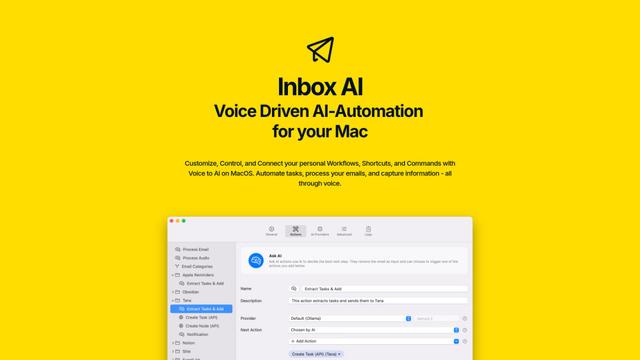
Inbox AI is a privacy-focused MacOS productivity app that combines voice-driven AI automation with email management capabilities, allowing users to create custom workflows and commands while offering both cloud-based and on-device AI options.

MailSense
MailSense is an AI-powered email assistant that filters, summarizes, and generates replies to emails through a Telegram bot interface to help users manage their inbox more efficiently.
Voltmailer
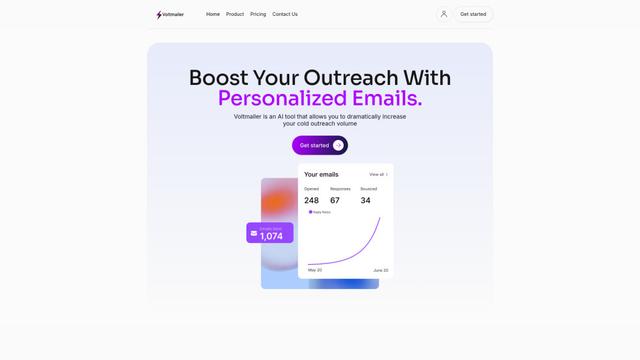
Voltmailer is an AI-powered email automation tool that helps businesses scale their cold outreach by generating personalized emails through website data scraping and automated personalization.
Popular AI Tools Like Mailgent
Mailmeteor AI for Gmail
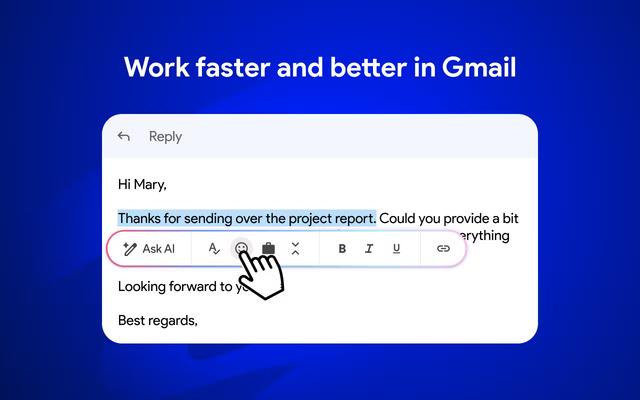
Mailmeteor is a powerful Gmail extension that combines AI email writing, mail merge, automated follow-ups, and email export capabilities to enhance productivity and email management within Gmail.
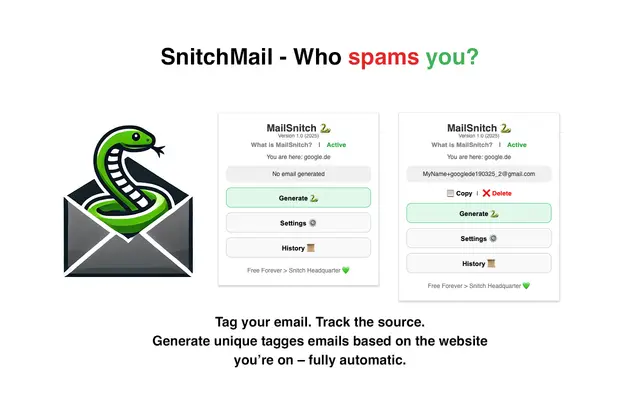
MailSnitch
MailSnitch is a free email tracking and anti-spam Chrome extension that helps users identify spam sources through automated email tagging and tracking system.
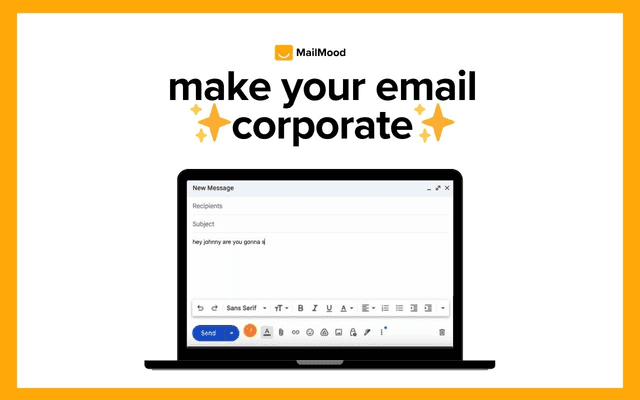
MailMood - AI Email Rewriter
MailMood is a Chrome extension that instantly transforms Gmail messages into professional, clean, and confident business language with three different tone options - corporate, casual, or assertive - all with just one click.

Apparent for Gmail
Apparent for Gmail is a Chrome extension that enhances Gmail's readability and usability by reorganizing conversations, simplifying layouts, and streamlining workflows while maintaining privacy and security.