
Hive
Hive is an open-source, terminal-first, async multi-agent coding pipeline that turns a rough idea into a merge-ready pull request using a transparent folder-based workflow, a background daemon, and a power-user TUI.
https://hivecli.sh/?ref=producthunt

Product Information
Updated:Jun 16, 2026
What is Hive
Hive (hive-cli) is a free, MIT-licensed tool that automates the end-to-end software delivery loop—from an initial idea to a ready-to-merge PR—directly from your terminal. It’s designed for developers who want autonomous, inspectable agent workflows without living in chat threads: you capture an idea, answer targeted questions in your editor, and Hive orchestrates the rest. Hive integrates with your existing Git/GitHub setup (e.g., authenticated gh) and can run different agent CLIs per stage (Claude by default, with options like Codex or Pi).
Key Features of Hive
Hive is an open-source, terminal-first, async multi-agent coding pipeline that turns a rough idea into a merge-ready pull request by moving each task through a transparent, folder-based workflow (brainstorm → plan → execute → review → finalize). It runs multiple agents in parallel in the background via a daemon, prompts you only when decisions are needed (answered in your editor), and produces durable markdown artifacts at every stage so the process is inspectable, editable, and handoff-friendly. Hive integrates with configurable agent CLIs (Claude by default, plus others like Codex/Pi), supports autonomous repo “patrol” and PR “babysitting,” and can be driven via a TUI or optionally through a Telegram bot for mobile approvals and idea capture.
Nine-stage idea-to-PR pipeline: Runs a structured workflow from inbox capture through brainstorm, plan, execution in an isolated worktree, PR creation, review hardening, artifact collection, and finalization to a ready-to-merge PR.
Folder-as-state transparency (artifact-driven): Each task is a folder whose location represents state; every stage outputs durable markdown artifacts (plans, reviews, PR metadata) that you can read, edit, or hand to another agent—no black-box database.
Async daemon + parallel task queue: Advances multiple tasks concurrently in the background; the TUI highlights only the tasks that need your input, enabling low-interruption, asynchronous development.
Configurable multi-agent execution: Stages run on configurable agent CLIs—Claude by default, with support for alternatives (e.g., Codex or Pi)—so you can choose different models/tools per stage.
PR babysitter and repo patrol automation: Opt-in automation can patrol a repo for candidate improvements and open PRs, and keep existing PRs green via bounded repair attempts and auto-rebases, handing off when stuck.
Terminal-first UX with optional Telegram bot: A power-user TUI/CLI workflow for capturing ideas and approving stage transitions, plus a Telegram bot for capturing inputs and approving work from a phone (including voice/photo/doc ingestion).
Use Cases of Hive
Product feature delivery for software teams: Convert loosely defined feature ideas into scoped plans, implemented code, and reviewed PRs with minimal synchronous coordination—useful for fast-moving product engineering.
Open-source maintenance and contributor workflows: Automate issue-to-PR pipelines, generate review artifacts, and use babysitter to keep PRs mergeable—helpful for maintainers managing many parallel contributions.
Internal developer platform / tooling teams: Standardize how internal tools and platform changes are proposed, planned, executed, and reviewed, leaving auditable artifacts for compliance and cross-team handoff.
DevOps and reliability automation: Use patrol/babysitter patterns to propose fixes (e.g., CI breakages, dependency bumps), open PRs, and keep them rebased and green while engineers approve decisions asynchronously.
Startup prototyping and rapid iteration: Run multiple experiments in parallel: capture ideas quickly, let agents draft implementation and PRs, and only step in for key product decisions or clarifications.
Mobile-first approvals for distributed teams: Capture ideas and approve task progression via Telegram while away from the workstation, enabling asynchronous progress across time zones.
Pros
Highly inspectable workflow: artifacts are plain files (markdown) and task state is visible via folders, improving trust and handoff.
Strong async/parallel execution: daemon-driven queue reduces babysitting and keeps multiple efforts moving concurrently.
Flexible agent/tool choice: integrates with different agent CLIs per stage, allowing optimization for cost/performance by task type.
End-to-end PR automation: includes execution in isolated worktrees, PR opening, review hardening, and PR upkeep (rebases/repairs).
Cons
Token-heavy by default: multi-agent stages can be expensive, making it less suitable for cost-sensitive users.
Terminal-first and daemon-based: requires comfort with TUI/CLI workflows and running a background daemon locally.
Requires external tooling setup: depends on Ruby, git, authenticated GitHub CLI, and the chosen agent CLIs (e.g., Claude/Codex).
How to Use Hive
Decide which “Hive” you mean (Apache Hive vs Hive CLI coding tool): The sources include both Apache Hive (data warehouse on Hadoop; commands like bin/hive, Beeline) and a separate product called Hive CLI (hivecli.sh) for multi-agent coding. Pick the one you intend to use before proceeding.
Apache Hive: Verify prerequisites: Ensure Hive is installed and HIVE_HOME is set. If you are on Hive 3+, plan to use Beeline (HiveServer2 client) rather than the deprecated Hive CLI.
Apache Hive: Start an interactive session (legacy Hive CLI): Run: $HIVE_HOME/bin/hive. If run without -e or -f, it enters interactive shell mode; terminate statements with a semicolon (;).
Apache Hive: Run a query from the command line (non-interactive): Use -e for inline SQL: $HIVE_HOME/bin/hive -e 'select ...;'. This is useful for one-shot commands or scripting.
Apache Hive: Run an HQL script file (non-interactive): Use -f to execute SQL from a file: $HIVE_HOME/bin/hive -f /path/to/script.hql. This is the standard way to run saved scripts.
Apache Hive: Initialize a session with a startup SQL file: Use -i to run initialization SQL automatically before other commands: hive -i /path/to/init.sql (can be combined with -e or -f).
Apache Hive: Pass configuration properties at runtime: Use --hiveconf (or -hiveconf) to set properties: hive --hiveconf hive.exec.scratchdir=/opt/my/hive_scratch --hiveconf mapred.reduce.tasks=1 -e 'select ...;'.
Apache Hive: Reduce output noise for scripting: Use silent mode (-S) so only data is emitted in interactive shell contexts: hive -S (or combine where supported).
Apache Hive: Enable more logging for debugging: Override logging via hiveconf, e.g.: $HIVE_HOME/bin/hive --hiveconf hive.root.logger=INFO,console. Default logging often goes to /tmp/$USER/hive.log at WARN.
Apache Hive (recommended): Use Beeline (HiveServer2 client): Beeline is the JDBC-based CLI for HiveServer2 and is recommended/required in newer Hive distributions. Start Beeline and connect to HiveServer2 using a JDBC URL (exact URL depends on your cluster setup). Then run queries or scripts similarly via Beeline options.
Apache Hive: Example DDL/DML workflow in the shell: In an interactive session, you can create databases/tables, load data, and query. Example: LOAD DATA INPATH '/user/myname/kv2.txt' OVERWRITE INTO TABLE invites PARTITION (ds='2008-08-15');
Hive CLI (hivecli.sh): Install on macOS via Homebrew: Run: brew install ivankuznetsov/hive/hive.
Hive CLI (hivecli.sh): Install on Arch Linux via AUR: Run: yay -S hive-bin.
Hive CLI (hivecli.sh): Install on Linux via install script: Run the provided installer: tmpdir="$(mktemp -d)" && trap 'rm -rf "$tmpdir"' EXIT && curl -fsSL https://raw.githubusercontent.com/ivankuznetsov/hive/v0.3.0/install.sh -o "$tmpdir/hive-install.sh" && bash "$tmpdir/hive-install.sh".
Hive CLI (hivecli.sh): Prepare prerequisites: Ensure Ruby 3.4, git, authenticated gh, and the agent CLIs you plan to use (e.g., claude, codex) are installed.
Hive CLI (hivecli.sh): Initialize Hive in a repository: From your project directory: cd ~/Dev/your-project; then run: hive init . (choose launch/permission mode and enroll the daemon).
Hive CLI (hivecli.sh): Open the TUI dashboard: Run: hive tui. Use the dashboard to manage tasks; press 'n' to capture a new idea.
Hive CLI (hivecli.sh): Understand the stage-based workflow: Each task is a folder that moves through stages: inbox → brainstorm → plan → execute → open-pr → review → artifacts → finalize → done. Moving the folder forward is the approval gesture; each stage leaves markdown artifacts.
Hive CLI (hivecli.sh): Let the daemon run tasks asynchronously: Hive advances multiple tasks in parallel in the background; you typically only need to answer questions in the generated docs, then approve by moving the task to the next stage.
Hive FAQs
Hive is an open-source (MIT) terminal-first tool that turns a rough idea into a merge-ready pull request by running it through an async multi-agent pipeline (brainstorm, plan, execute, review, finalize). It advances tasks in parallel in the background and uses a TUI where you answer questions in markdown docs.
Hive Video
Popular Articles

Vosko AI: Localize and Dub Videos for Global Audiences
Oct 15, 2026

Atoms: A Multi-Agent AI Platform That Transforms Ideas into Launch-Ready Products
Oct 13, 2026

Nano Banana SBTI: What It Is, How It Works, and How to Use It in 2026
Apr 15, 2026

Atoms Review — The AI Product Builder Redefining Digital Creation in 2026
Apr 10, 2026
Latest AI Tools Similar to Hive

Gait
Gait is a collaboration tool that integrates AI-assisted code generation with version control, enabling teams to track, understand, and share AI-generated code context efficiently.
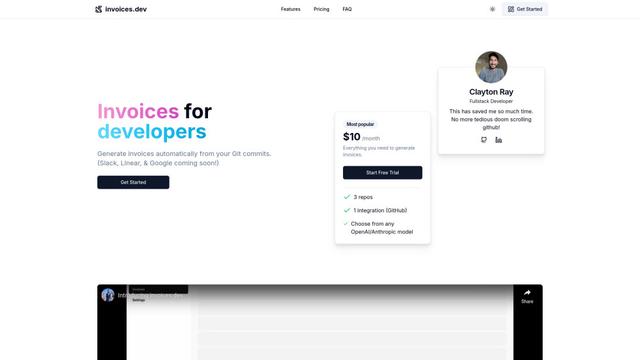
invoices.dev
invoices.dev is an automated invoicing platform that generates invoices directly from developers' Git commits, with integration capabilities for GitHub, Slack, Linear, and Google services.
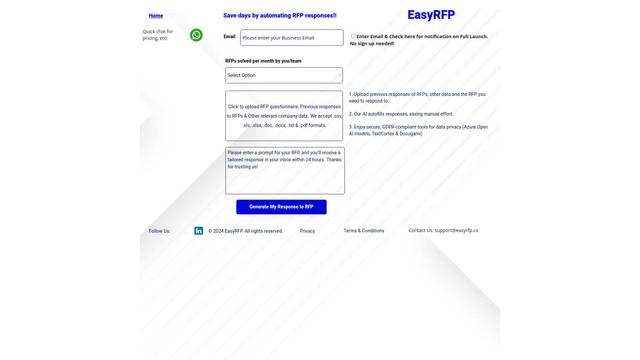
EasyRFP
EasyRFP is an AI-powered edge computing toolkit that streamlines RFP (Request for Proposal) responses and enables real-time field phenotyping through deep learning technology.

Cart.ai
Cart.ai is an AI-powered service platform that provides comprehensive business automation solutions including coding, customer relations management, video editing, e-commerce setup, and custom AI development with 24/7 support.
Popular AI Tools Like Hive

GitHub Copilot Chat
GitHub Copilot Chat is an AI-powered coding assistant that provides natural language interactions, real-time code suggestions, and contextual support directly within supported IDEs and GitHub.com.
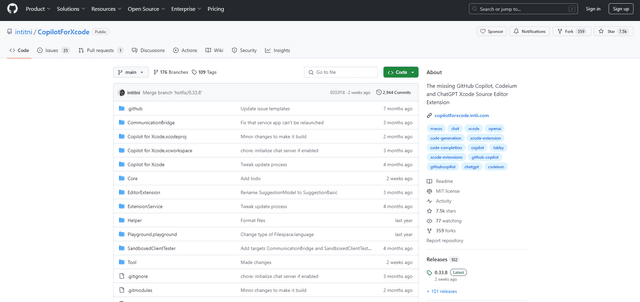
CopilotForXcode
CopilotForXcode is an Xcode Source Editor Extension that integrates GitHub Copilot, Codeium, and ChatGPT to provide AI-powered code suggestions, chat assistance, and prompt-to-code functionality within Xcode.
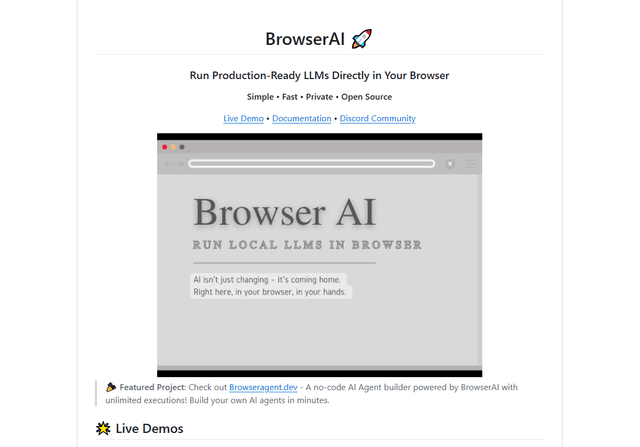
BrowserAI
BrowserAI is an open-source library that enables running local Large Language Models (LLMs) directly in web browsers with WebGPU acceleration, offering privacy-focused AI capabilities without requiring server infrastructure.
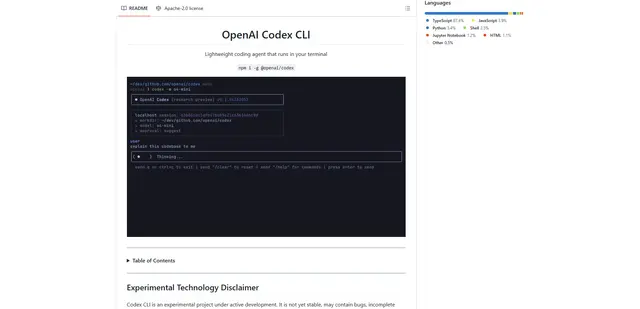
OpenAI Codex CLI
OpenAI Codex CLI is a lightweight, open-source coding agent that runs in your terminal, enabling developers to translate natural language into code execution while providing ChatGPT-level reasoning with the ability to run code, manipulate files, and iterate under version control.