
General Compute
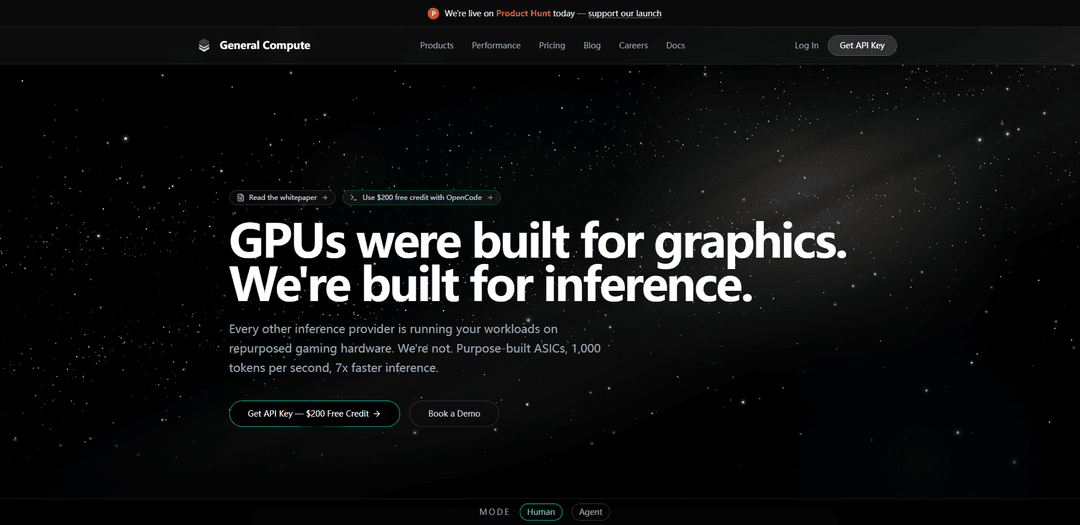
General Compute is an AI inference cloud that serves OpenAI-compatible APIs on purpose-built ASIC accelerators to deliver dramatically faster, more energy-efficient LLM inference than GPU-based providers.
https://generalcompute.com/?ref=producthunt
Product Information
Updated:Jun 8, 2026
What is General Compute
General Compute is a specialized inference platform designed to run large language model workloads faster than traditional GPU clouds by using purpose-built AI accelerators rather than repurposed graphics hardware. It provides OpenAI-compatible endpoints so teams can integrate quickly—often by simply changing the base URL and API key—while supporting everything from quick prototyping to production deployments. General Compute also offers options for dedicated infrastructure with SLAs and capacity planning, as well as “bring your own model” deployments for running custom weights on its optimized hardware.
Key Features of General Compute
General Compute is an AI inference cloud designed specifically for serving large language models and agentic workloads, using purpose-built AI accelerators (ASICs) rather than GPUs. It exposes OpenAI-compatible REST endpoints so teams can switch by changing the base URL and API key, and it emphasizes high-throughput inference (marketed as up to ~1,000 tokens/sec and “7x faster” than GPU-based setups) with infrastructure optimized by separating prefill and decode stages for independent scaling. The platform also highlights operational efficiency (lower rack power, air cooling) and options ranging from instant API access to dedicated deployments and bring-your-own-model hosting.
Purpose-built inference ASICs: Runs inference on custom AI accelerators instead of general-purpose GPUs, targeting higher throughput and lower overhead for serving models.
OpenAI-compatible API endpoints: Provides OpenAI-style REST APIs so existing applications can migrate with minimal code changes (primarily base URL + API key).
Prefill/decode split architecture: Separates prefill and decode inference stages, enabling each stage to scale independently based on workload patterns (useful for agents with many tool calls).
High-throughput, low-latency inference focus: Positioned for fast generation and responsive serving (marketing claims include ~1,000 tokens/sec and very low time-to-first-token, varying by model and geography).
Multiple deployment modes: Supports shared API access for quick starts, plus dedicated infrastructure with SLAs/capacity guarantees and bring-your-own-model deployments with customer weights.
Operational efficiency claims: Highlights lower power per rack (e.g., 17kW vs. higher GPU racks), air cooling, and low-cost energy sourcing as part of its cost/performance pitch.
Use Cases of General Compute
AI agent backends at scale: Serve agents that perform high volumes of LLM calls and tool invocations, benefiting from high throughput and independent scaling of prefill vs. decode.
Customer support and enterprise chat: Power real-time chat assistants and helpdesk automation where latency and cost per response matter, using OpenAI-compatible integration.
Code generation and developer copilots: Run coding assistants for IDEs or internal tools that need fast iterative completions and strong concurrency for many developers.
High-volume content generation pipelines: Generate product descriptions, marketing copy, summaries, and localization at scale where tokens/sec and cost efficiency drive throughput.
Bring-your-own-model inference for regulated or proprietary models: Host custom or fine-tuned weights on dedicated infrastructure for organizations that want performance benefits without using a fully managed closed model.
Pros
Designed specifically for inference (ASIC-based) rather than repurposed GPU hardware, aiming for better throughput/cost for serving.
OpenAI-compatible API makes migration and experimentation straightforward (change base URL/key).
Supports both quick-start API usage and dedicated/BYO-model deployments for production needs.
Cons
Performance claims (e.g., tokens/sec, TTFT) are stated to vary by model and geography and may differ from real-world workloads.
Ecosystem/tooling and availability may be less mature or less broadly compatible than major GPU cloud providers for edge cases.
Dedicated deployments and capacity guarantees likely require sales engagement and may not fit all budgets or small-scale users.
How to Use General Compute
1) Create a General Compute account: Go to https://app.generalcompute.com/ and sign up/log in so you can access the dashboard.
2) Generate an API key: In the General Compute app, create an API key (the site indicates you can get a key in seconds). Keep it secure like any other secret.
3) Point your OpenAI-compatible client to General Compute: General Compute provides OpenAI-compatible endpoints. In your OpenAI SDK (or any OpenAI-compatible client), set the base URL to https://api.generalcompute.com and set the API key to your General Compute key.
4) Make a first chat completion request (Python example): Use the OpenAI SDK with a custom base_url. Example from the provided snippet:
from openai import OpenAI
client = OpenAI(
base_url="https://api.generalcompute.com",
api_key="your-api-key",
)
response = client.chat.completions.create(
model="gpt-oss-120b",
messages=[{"role": "user", "content": "Hello!"}],
stream=True,
)
Iterate over the stream to read tokens as they arrive.
5) Switch an existing OpenAI integration in ~30 seconds: If you already have code working with OpenAI-compatible APIs, you typically only need to (a) swap the base URL to https://api.generalcompute.com and (b) replace your API key with the General Compute key. Your existing request/response code should otherwise remain the same.
6) (Optional) Connect OpenClaw to General Compute: If you use OpenClaw, follow the official guide: https://docs.generalcompute.com/openclaw. It walks you through obtaining a General Compute API key and swapping OpenClaw’s inference provider over to General Compute.
7) Validate performance with a simple benchmark: Run the same prompt/model (for example, GPT OSS 120B as referenced on the site) through your previous provider and through General Compute, then compare metrics like time-to-first-token and tokens/second.
8) Move from prototype to production: For standard usage, keep using the REST/OpenAI-compatible API with your single key. For dedicated infrastructure, SLAs, custom scaling, or guaranteed capacity, use the site’s ‘Custom Deployments’ / contact sales flow at https://generalcompute.com/ (contact section).
9) (Optional) Bring your own model (BYOM): If you need to deploy your own weights, use the ‘Bring Your Own Model’ option described on the General Compute site (same optimized infrastructure, your weights). Follow the provider’s BYOM onboarding process from their documentation/contact flow.
General Compute FAQs
General Compute is a multi-cloud operations solution platform that provides public cloud technology solutions, and it also offers an AI inference service positioned as “purpose-built” for inference with OpenAI-compatible API access.
General Compute Video
Popular Articles
Atoms: A Multi-Agent AI Platform That Transforms Ideas into Launch-Ready Products
May 22, 2026

Nano Banana SBTI: What It Is, How It Works, and How to Use It in 2026
Apr 15, 2026

Atoms Review — The AI Product Builder Redefining Digital Creation in 2026
Apr 10, 2026

Kilo Claw: How to Deploy and Use a True "Do‑It‑For‑You" AI Agent(2026 Update)
Apr 3, 2026
Latest AI Tools Similar to General Compute
Gait
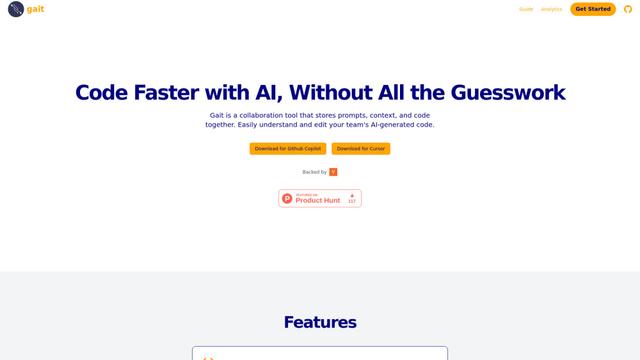
Gait is a collaboration tool that integrates AI-assisted code generation with version control, enabling teams to track, understand, and share AI-generated code context efficiently.
invoices.dev
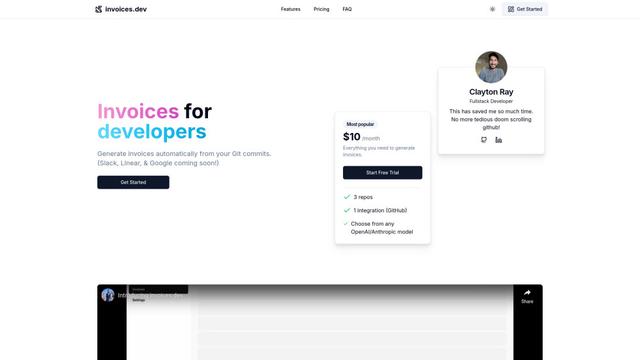
invoices.dev is an automated invoicing platform that generates invoices directly from developers' Git commits, with integration capabilities for GitHub, Slack, Linear, and Google services.
EasyRFP
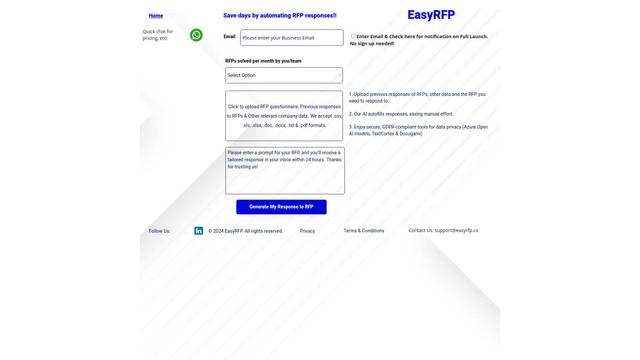
EasyRFP is an AI-powered edge computing toolkit that streamlines RFP (Request for Proposal) responses and enables real-time field phenotyping through deep learning technology.

Cart.ai
Cart.ai is an AI-powered service platform that provides comprehensive business automation solutions including coding, customer relations management, video editing, e-commerce setup, and custom AI development with 24/7 support.
Popular AI Tools Like General Compute

GitHub Copilot Chat
GitHub Copilot Chat is an AI-powered coding assistant that provides natural language interactions, real-time code suggestions, and contextual support directly within supported IDEs and GitHub.com.
CopilotForXcode
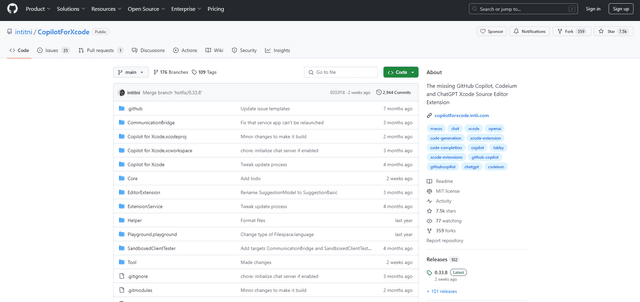
CopilotForXcode is an Xcode Source Editor Extension that integrates GitHub Copilot, Codeium, and ChatGPT to provide AI-powered code suggestions, chat assistance, and prompt-to-code functionality within Xcode.
BrowserAI
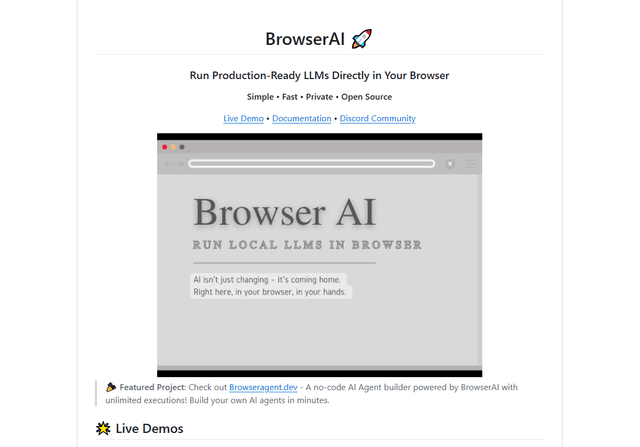
BrowserAI is an open-source library that enables running local Large Language Models (LLMs) directly in web browsers with WebGPU acceleration, offering privacy-focused AI capabilities without requiring server infrastructure.
OpenAI Codex CLI
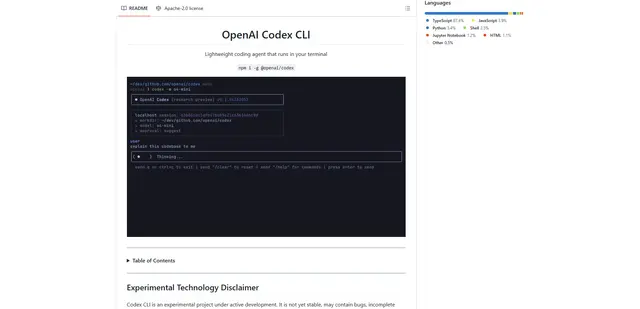
OpenAI Codex CLI is a lightweight, open-source coding agent that runs in your terminal, enabling developers to translate natural language into code execution while providing ChatGPT-level reasoning with the ability to run code, manipulate files, and iterate under version control.