
Forward
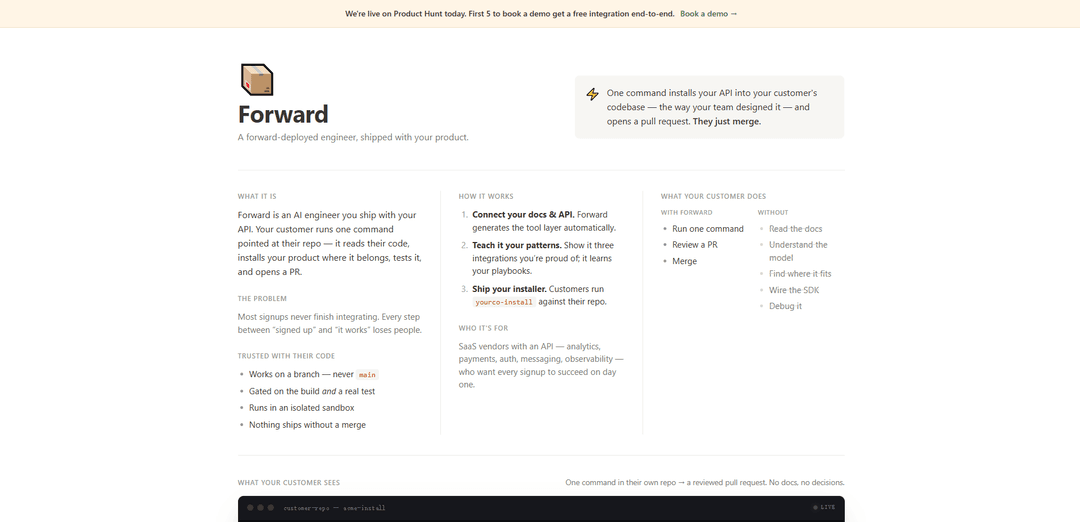
Forward is a forward-deployed AI engineer you ship with your API that installs your product into a customer’s repo via a single command, runs tests/builds in a safe branch-based workflow, and opens a ready-to-merge pull request.
https://forward.codeongrass.com/?ref=producthunt
Product Information
Updated:Jun 8, 2026
What is Forward
Forward is an “AI engineer, shipped with your product” designed for SaaS vendors who offer an API and want customers to successfully integrate on day one. Instead of requiring new users to read documentation, decide where code should go, wire SDKs, and debug integration issues, Forward lets customers run one command against their own repository and receive a pull request that implements the integration the way your team intended. It’s positioned to reduce the drop-off that happens between signup and a working integration by making installation feel like a guided, automated code change inside the customer’s existing codebase.
Key Features of Forward
Forward is an “AI forward-deployed engineer” that SaaS/API vendors can ship with their product to help customers integrate successfully. A customer runs a single command against their own repository; Forward reads the codebase, installs the vendor’s API/SDK in the right place following the vendor’s preferred patterns, runs builds and real tests, and then opens a pull request for the customer to review and merge. It’s designed to reduce integration drop-off between signup and first success while keeping changes safe through branch-based workflows, sandboxed execution, and merge-gated shipping.
One-command repo installer: Customers run a single vendor-branded command (e.g., `yourco-install`) that performs the end-to-end integration inside their codebase and produces a ready-to-merge PR.
PR-based, reviewable changes: All modifications are delivered as a pull request so teams can inspect diffs, request changes, and merge on their own timeline—nothing is silently applied.
Safety by default (no main writes): Forward works on a separate branch rather than `main`, reducing risk and aligning with standard engineering workflows.
Build + real-test gating: Integrations are gated on both the build and an actual test, helping ensure the installation works in the customer’s environment before they merge.
Sandboxed execution: Runs in an isolated sandbox to limit blast radius and increase trust when operating on customer code.
Docs + playbook learning: Vendors connect docs and API so Forward can generate the tool layer, then teach it preferred integration patterns by providing a few exemplary integrations.
Use Cases of Forward
Payments API onboarding: Payment providers can ship Forward to automatically add SDK setup, webhook handlers, environment variables, and tested payment flows, accelerating time-to-first-transaction.
Analytics and event tracking rollout: Analytics vendors can have Forward instrument key events across web/mobile/server repos, add configuration, and open a PR with tests to validate tracking.
Auth/identity integration: Auth platforms can automate adding middleware, routes/callbacks, session handling, and configuration updates, reducing setup errors and support tickets.
Messaging/notifications enablement: Email/SMS/push providers can install templates, client initialization, and example send flows while ensuring the customer’s build/test suite stays green.
Observability instrumentation: Logging/APM vendors can auto-wire tracing/logging SDKs, configure exporters, and add smoke tests so teams can see telemetry immediately after merge.
Pros
Reduces integration friction by turning docs-heavy setup into a one-command, PR-based workflow.
Trust and safety features (branch-only changes, sandboxing, and build/test gates) align with standard engineering practices.
Vendor-controlled “best practice” integrations via playbooks can improve consistency and time-to-value across customers.
Cons
Requires vendor enablement effort (connecting docs/API and providing exemplar integrations) to work well.
Effectiveness may vary across diverse customer stacks and repo conventions, potentially needing iteration to cover edge cases.
Some customers may have security/compliance constraints that limit running automated tooling against their repositories.
How to Use Forward
1. Confirm Forward is a fit for your product: Use Forward if you’re a SaaS vendor with an API (e.g., analytics, payments, auth, messaging, observability) and you want customers to integrate via a single command that produces a pull request they can review and merge.
2. Prepare the inputs Forward needs: Gather (a) your API + integration documentation and (b) three real integrations you’re proud of (these serve as examples/playbooks for how your team wants the integration done).
3. Get early access / book a demo: Go to https://forward.codeongrass.com/ and use the “Book a demo” link to schedule a call. Bring your docs and the three example integrations so Forward can be configured around your patterns.
4. Connect your docs and API: During setup, connect your documentation and API details so Forward can generate the “tool layer” automatically (the integration knowledge it uses to make correct code changes).
5. Teach Forward your integration patterns: Provide the three example integrations to train Forward on your preferred playbooks (where the SDK should live, how configuration is done, naming conventions, testing expectations, etc.).
6. Ship your installer command: Create and distribute a customer-facing installer command (e.g., `yourco-install`) that customers can run against their repository to trigger an automated integration PR.
7. Customer runs the installer in their repo: Your customer executes your installer command from within their own codebase (example shown: `acme-install --api-key adm_••••`). Forward reads their code and determines where your product belongs.
8. Forward performs the integration safely on a branch: Forward makes changes on a non-`main` branch, in an isolated sandbox, and wires your API/SDK into the customer’s codebase according to your taught patterns.
9. Forward validates the change with build + real tests: Forward gates the integration on both the build and a real test, so the PR is backed by verification rather than untested edits.
10. Forward opens a pull request: Forward creates a PR in the customer’s repository containing the integration changes, ready for review.
11. Customer reviews and merges: The customer’s workflow is: run one command → review the PR → merge. Nothing ships without the customer explicitly merging the PR.
Forward FAQs
Forward is an AI “forward-deployed engineer” that you ship with your API. A customer runs one command against their repo; Forward reads their code, installs your product where it belongs, runs tests, and opens a pull request for them to review and merge.
Forward Video
Popular Articles

Vosko AI: Localize and Dub Videos for Global Audiences
Oct 15, 2026

Atoms: A Multi-Agent AI Platform That Transforms Ideas into Launch-Ready Products
Oct 13, 2026

Nano Banana SBTI: What It Is, How It Works, and How to Use It in 2026
Apr 15, 2026

Atoms Review — The AI Product Builder Redefining Digital Creation in 2026
Apr 10, 2026
Latest AI Tools Similar to Forward
Gait
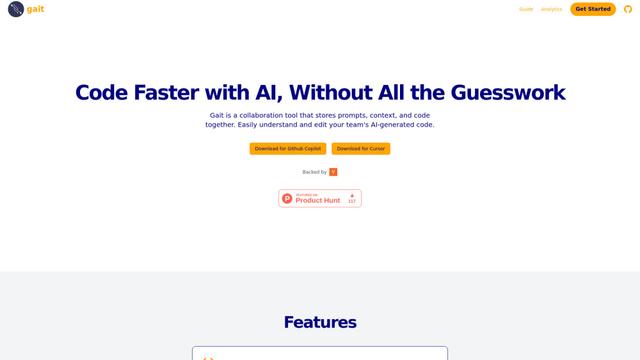
Gait is a collaboration tool that integrates AI-assisted code generation with version control, enabling teams to track, understand, and share AI-generated code context efficiently.
invoices.dev
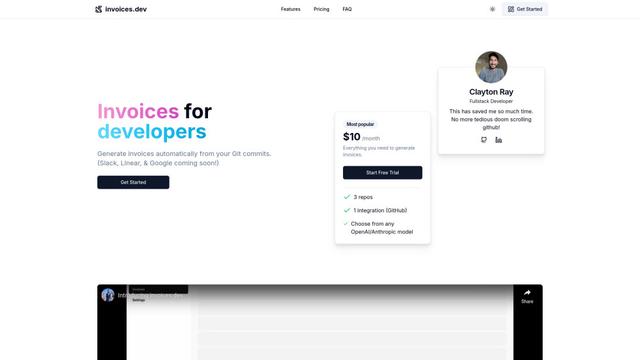
invoices.dev is an automated invoicing platform that generates invoices directly from developers' Git commits, with integration capabilities for GitHub, Slack, Linear, and Google services.
EasyRFP
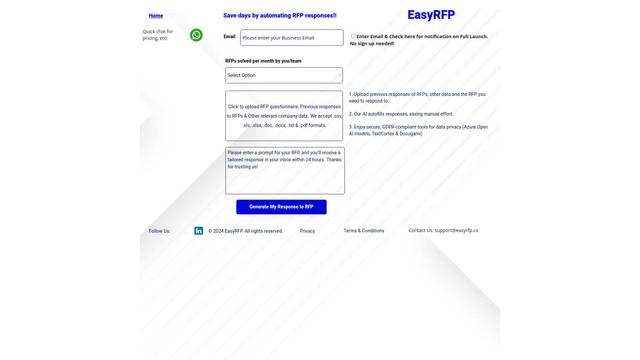
EasyRFP is an AI-powered edge computing toolkit that streamlines RFP (Request for Proposal) responses and enables real-time field phenotyping through deep learning technology.

Cart.ai
Cart.ai is an AI-powered service platform that provides comprehensive business automation solutions including coding, customer relations management, video editing, e-commerce setup, and custom AI development with 24/7 support.
Popular AI Tools Like Forward

GitHub Copilot Chat
GitHub Copilot Chat is an AI-powered coding assistant that provides natural language interactions, real-time code suggestions, and contextual support directly within supported IDEs and GitHub.com.
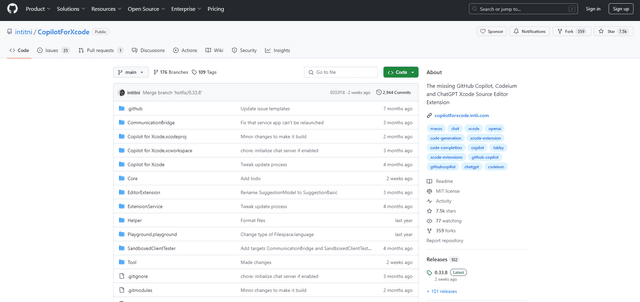
CopilotForXcode
CopilotForXcode is an Xcode Source Editor Extension that integrates GitHub Copilot, Codeium, and ChatGPT to provide AI-powered code suggestions, chat assistance, and prompt-to-code functionality within Xcode.
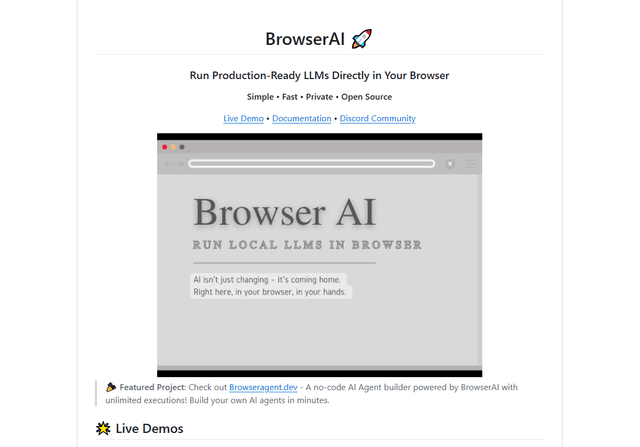
BrowserAI
BrowserAI is an open-source library that enables running local Large Language Models (LLMs) directly in web browsers with WebGPU acceleration, offering privacy-focused AI capabilities without requiring server infrastructure.
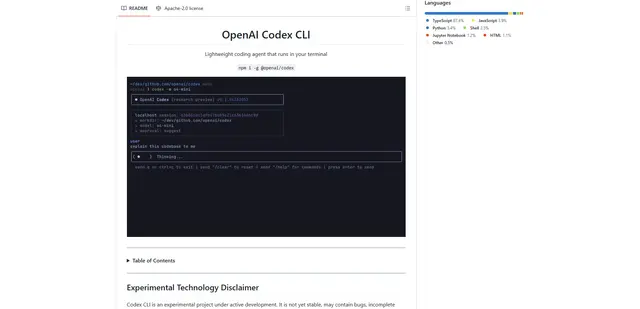
OpenAI Codex CLI
OpenAI Codex CLI is a lightweight, open-source coding agent that runs in your terminal, enabling developers to translate natural language into code execution while providing ChatGPT-level reasoning with the ability to run code, manipulate files, and iterate under version control.