
CartAI
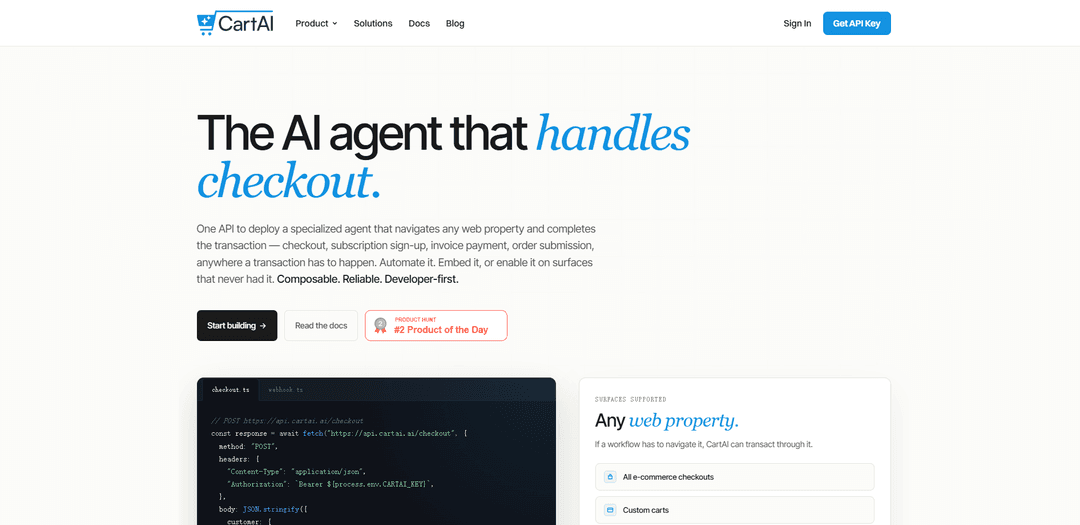
CartAI is a developer-first API and agentic checkout platform that reliably navigates any web property to complete transactions end-to-end, combining composable browser workflows with a PCI-compliant payment stack and cooperative bot-mitigation.
https://cartai.ai/?ref=producthunt
Product Information
Updated:Aug 8, 2026
What is CartAI
CartAI is an “execution layer” for agentic commerce: one API that deploys a specialized agent to complete real transactions anywhere a payment or order submission must clear—e-commerce checkouts, subscription sign-ups, invoice payments, procurement portals, and other login-gated or custom web flows. Unlike general browser automation tools that optimize for broad web tasks, CartAI is purpose-built for transactional reliability, fusing AI-driven browser execution with integrated payment infrastructure so applications, agents, publishers, and marketplaces can embed or automate checkout without redirects or manual steps.
Key Features of CartAI
CartAI is a developer-first API and tooling layer that deploys a specialized AI agent to navigate virtually any web property and reliably complete transactions end-to-end (checkout, subscription sign-up, invoice payment, order submission). It combines AI-driven browser execution with a PCI-compliant payments stack, composable workflow primitives (branching, retries, idempotency), and cooperative bot-mitigation via signed agent identity (e.g., Web Bot Auth, KYA integrations) so transactions are more likely to clear on real merchant and portal surfaces. CartAI can be shipped as a direct API integration, plugged into AI agents via an MCP server, or embedded as a hosted drop-in cart component.
One API for end-to-end transactions: A single /checkout-style API that can navigate a target site and complete the full transactional flow (product/variant selection, shipping, payment, confirmation) across many web properties.
Composable, reliable workflows: Workflow steps adapt to the shape of each transaction (login/no login, shipping/no shipping, 3DS/no 3DS) with conditional branching plus idempotent, retry-safe execution for transactional reliability.
PCI-compliant payments & vaulting: Built-in secure card intake, tokenized vaulting, and payment infrastructure designed for agentic payments so agents can pay on behalf of users safely.
Cooperative bot-mitigation and signed identity: Works within modern trust infrastructure (signed agent identity, KYA integrations) to reduce flagging and improve successful checkouts rather than trying to “evade” bot protections.
Async execution with status tracking: Checkouts run asynchronously with status updates and webhooks for state transitions, enabling production-grade monitoring and orchestration.
Multiple shipping modes (API, MCP, Hosted Cart): Use the programmable API directly, expose CartAI capabilities as tools to MCP-compatible agents (Claude/Cursor/VS Code), or embed a white-label hosted cart for turnkey checkout.
Use Cases of CartAI
E-commerce checkout automation: Automate purchasing across retail sites (product selection, variants, shipping, payment) for internal procurement, concierge buying, or consumer-facing agent experiences.
Publisher & affiliate “buy without redirects”: Enable instant purchase flows directly on editorial/content surfaces to reduce redirect drop-off while preserving attribution and improving conversion.
Invoice and bill payment via portals: Log into vendor/utility/healthcare billing portals, select invoices, submit payment, and confirm completion—useful for finance ops and consumer bill-pay assistants.
B2B procurement & PO submission: Automate order submission and procurement workflows in vendor portals (often login-gated), including cases where payment is optional or handled separately.
Subscription sign-ups and renewals: Handle subscription workflows across diverse portals (sign-up, plan changes, renewals) where flows vary and often require authentication and multi-step forms.
AI agent tooling via MCP in developer environments: Give AI assistants structured tools to search products, estimate totals, authorize payments, and execute checkout autonomously within MCP hosts like Claude Desktop or Cursor.
Pros
Specialized for transactions that must clear (execution + payments + reliability primitives) rather than generic web automation.
Built-in PCI-compliant payment intake/vaulting and agentic payment support reduces security/compliance burden for developers.
Cooperative approach to bot-mitigation (signed identity/KYA) can improve success rates on protected merchant surfaces.
Flexible deployment options (API, MCP server, hosted drop-in cart) fit both developer integrations and turnkey embedding.
Cons
Not a general-purpose browser automation tool; it is optimized for transactional workflows, which may limit fit for non-transaction tasks.
Real-world checkout variability (3DS, logins, merchant changes) can still introduce integration complexity and operational edge cases.
Async, webhook-driven execution may require additional orchestration/monitoring infrastructure in the customer’s system.
Coverage and productization can vary by sector/workflow, potentially requiring consultation or customization for specific industries.
How to Use CartAI
1) Choose your CartAI integration mode: Pick the way you want to use CartAI based on your product surface: (a) API (full control in your app), (b) MCP Server (plug CartAI tools into an MCP host like Claude Desktop/Code/Cursor/VS Code), or (c) Hosted Cart (drop-in checkout component/iframe for a surface that never had checkout).
2) Get access and an API key: Create access to CartAI and obtain an API key for authenticated requests. You will use this key as a Bearer token in the Authorization header when calling CartAI endpoints.
3) Decide the transactional workflow you want to clear: Identify the exact transaction you want CartAI to complete (e.g., e-commerce checkout, subscription sign-up, invoice payment, order submission). Collect the target URL(s) and any required inputs (variant choices, shipping details, payment details, login requirements if applicable).
4) Prepare customer identity fields: Create the customer object you will pass to CartAI (e.g., email and name). This is used to associate the workflow with the buyer/customer context.
5) Prepare shipping and payment profiles: Create structured profiles for shipping address and payment method. In the example, these are referenced as files like "./buyer.json" (shipping profile) and "./card.json" (payment profile). CartAI supports PCI-compliant card intake/vaulting and tokenized payment handling.
6) Create a checkout task payload: Define one or more tasks. Each task includes: (a) target: the web property URL to transact on, (b) variant: any product options (e.g., color), (c) shipping: the shipping profile reference, and (d) payment: the payment profile reference. Tasks are composable and can be shaped to the flow (some may not need shipping or payment).
7) Start in sandbox mode (recommended): Set options.sandbox = true while testing. This lets you validate payload structure and workflow behavior before moving to production.
8) Call the CartAI Checkout API: Send a POST request to https://api.cartai.ai/checkout with headers Content-Type: application/json and Authorization: Bearer <YOUR_CARTAI_KEY>. Include your customer, tasks, and options in the JSON body.
9) Example request (from CartAI official site): POST https://api.cartai.ai/checkout with a JSON body like: { customer: { email: "[email protected]", name: "Jane Doe" }, tasks: [{ target: "bestbuy.com/site/sony-wh-1000xm5/6505727.p", variant: { color: "black" }, shipping: { profile: "./buyer.json" }, payment: { profile: "./card.json" } }], options: { sandbox: true } }
10) Capture the async response (taskId + status): CartAI runs execution asynchronously. The immediate response returns a taskId (e.g., "task_abc123") and a status (e.g., "queued"). Store the taskId for tracking.
11) Track execution to completion via webhooks: Listen for webhook events for state transitions until the workflow completes. CartAI provides webhooks for every state transition so you can update your UI, trigger downstream actions, and confirm when the transaction has cleared.
12) Handle retries safely (idempotent design): If your system needs to retry requests (network failures, timeouts), use CartAI’s idempotent, retry-safe approach so you don’t accidentally duplicate transactions.
13) Move from sandbox to production: Once your workflow reliably clears in sandbox, switch to production settings (disable sandbox) and ensure your webhook handling, logging, and customer support flows are ready for real orders/payments.
14) (Alternative) Use CartAI via MCP Server in an AI host: If you want an agent to run checkout directly from an MCP-compatible environment, install and connect the CartAI MCP server. This exposes CartAI Catalog, Payments, and Checkout APIs as tools inside hosts like Claude Desktop/Code, Cursor, or VS Code, enabling product search, cost estimates, payment authorization, and autonomous checkout with status tracking.
15) (Alternative) Use Hosted Cart for drop-in checkout: If you’re adding checkout to a surface that never had one (e.g., editorial pages, recommendation feeds), embed CartAI Hosted Cart as a drop-in component/iframe. It includes variant selection, address collection, payment, and confirmation, powered by the same underlying CartAI transaction primitive.
CartAI FAQs
CartAI is an API (plus MCP server and hosted cart) that deploys a specialized AI agent to navigate web properties and complete transactions end-to-end—checkout, subscription sign-up, invoice payment, and order submission—anywhere a transaction has to clear.
CartAI Video
Popular Articles

Atoms: A Multi-Agent AI Platform That Transforms Ideas into Launch-Ready Products
May 22, 2026

Nano Banana SBTI: What It Is, How It Works, and How to Use It in 2026
Apr 15, 2026

Atoms Review — The AI Product Builder Redefining Digital Creation in 2026
Apr 10, 2026

Kilo Claw: How to Deploy and Use a True "Do‑It‑For‑You" AI Agent(2026 Update)
Apr 3, 2026
Latest AI Tools Similar to CartAI
Jorpex
Jorpex is a comprehensive tender notification platform that aggregates and delivers instant tender alerts from across European countries directly to Slack, helping businesses never miss opportunities.
Leadsmrt
Leadsmrt is a lead generation tool that helps businesses scrape, verify and personalize targeted business leads from Google Maps with AI-powered personalization capabilities.
Omnial AI
Omnial AI is a data intelligence platform that leverages AI agents to transform web prompts into structured, actionable data insights backed by Afore Capital.

SERPrecon
SERPrecon is an advanced SEO tool that leverages vectors, machine learning, and natural language processing to help users analyze and outrank competitors by using the same methods as modern search engines.
Popular AI Tools Like CartAI
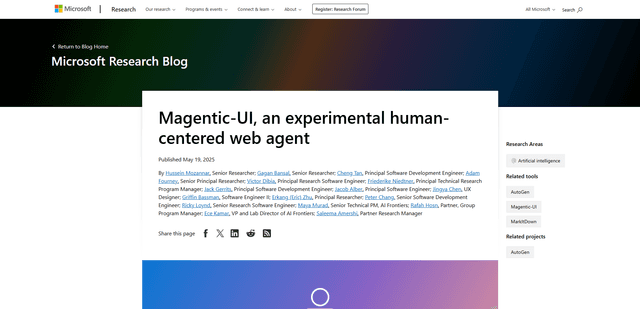
Magentic-UI
Magentic-UI is an open-source, human-centered web agent prototype by Microsoft Research that enables collaborative planning and execution of complex web-based tasks through transparent interaction between humans and AI agents.
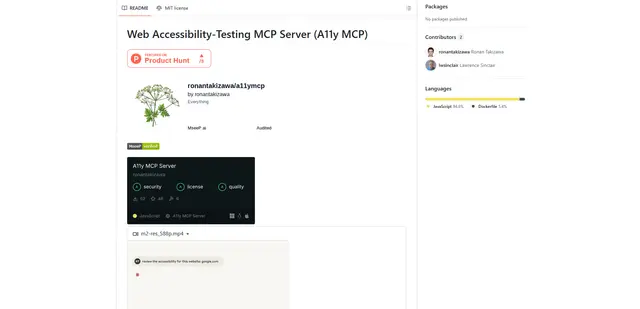
Web Accessibility Testing MCP
A11y MCP is a Model Context Protocol server that enables AI language models to perform automated web accessibility testing by integrating with Deque's Axe-core API and Puppeteer to analyze web content for WCAG compliance.
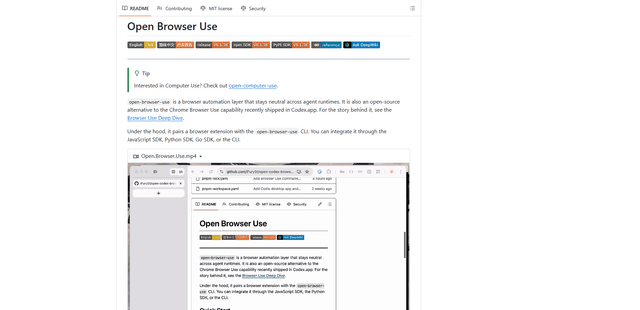
Open Browser Use
Open Browser Use is an open-source, agent-runtime-neutral browser automation layer that pairs a Chrome extension with a CLI/SDK/MCP to enable DOM-aware, CDP-powered tab control, navigation, and actions across different AI agent tools.
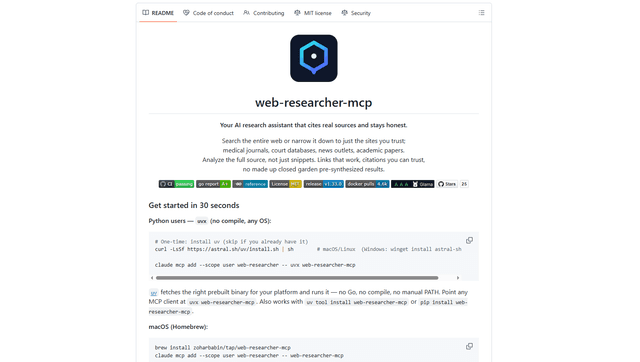
Web Researcher MCP
Web Researcher MCP is a local, production-grade MCP server that lets AI assistants search the web (optionally restricted to trusted “search lenses”), read full sources (including JS-rendered pages, PDFs, and YouTube transcripts), and return verifiable citations with multi-provider failover. [Source: https://github.com/zoharbabin/web-researcher-mcp?ref=producthunt]