
Atomic Mail Agentic
Atomic Mail Agentic é um serviço de e-mail nativo para agentes que permite que agentes de IA se auto-registrem e executem caixas de entrada reais via uma API JSON JMAP/REST padrão, com integrações MCP/AgentSkill, além de Prova de Trabalho e reputação para deter spam e permitir a recuperação autônoma de erros.
https://atomicmail.io/agents?ref=producthunt&utm_source=aipure
Informações do Produto
Atualizado:Jul 8, 2026
O que é Atomic Mail Agentic
Atomic Mail Agentic é uma API de e-mail projetada especificamente para fluxos de trabalho autônomos de IA, dando aos agentes suas próprias caixas de entrada reais em vez de emprestar contas humanas. Construído no padrão JMAP aberto (JSON sobre HTTPS), ele permite que os agentes criem contas, enviem e recebam e-mails e gerenciem caixas de correio programaticamente. O serviço é posicionado para plataformas de agentes (por exemplo, Claude Desktop, Cursor, agentes baseados em OpenAI e agentes personalizados) e suporta vários caminhos de integração: um servidor MCP para ferramentas baseadas em chat, um AgentSkill/CLI para ambientes com capacidade de shell, ou uso direto da API de qualquer linguagem/runtime que possa fazer solicitações HTTPS.
Principais Recursos do Atomic Mail Agentic
Atomic Mail Agentic é um serviço de e-mail nativo para agentes que permite que agentes de IA registrem e operem autonomamente caixas de entrada reais usando o padrão JMAP aberto (JSON sobre HTTPS). Ele foi projetado para fluxos de trabalho com automação em primeiro lugar: os agentes podem criar contas sem verificação humana (sem cartão de crédito, CAPTCHA, configuração de domínio), ler e enviar e-mails por meio de uma API limpa e se recuperar de erros usando respostas de "dicas" em linguagem simples. O acesso está disponível via JMAP/REST direto, um servidor MCP para agentes baseados em bate-papo e um CLI/pacote AgentSkill para Node/Deno/Bun, com Prova de Trabalho mais reputação usada para deter spam e limitar o comportamento abusivo.
Provisionamento autônomo de caixa de entrada: Os agentes podem criar suas próprias contas de e-mail sem verificação de identidade, sem cartão de crédito e sem configuração de domínio, permitindo integração e configuração de fluxo de trabalho totalmente automatizadas.
API JMAP baseada em padrões: Construído em JMAP (RFC 8620/8621) com JSON-over-HTTPS, para que qualquer linguagem/runtime com um cliente HTTP possa integrar sem bloqueio de SDK proprietário.
Opções de MCP + AgentSkill + API direta: Use MCP para agentes integrados a bate-papo (por exemplo, fluxos de trabalho estilo Claude Desktop/Cursor), AgentSkill para agentes com capacidade de shell (conveniência Node/Deno/Bun) ou API direta para gerenciar a autenticação você mesmo; MCP e AgentSkill podem ser usados simultaneamente e compartilhar estado.
Recuperação de erros amigável a LLM: Os erros da API retornam dicas em linguagem simples (e ponteiros de documentos), ajudando os agentes a depurar solicitações malformadas e manter os fluxos de trabalho em execução com intervenção mínima do desenvolvedor.
Design anti-spam de Prova de Trabalho + reputação: Cada conexão é verificada por meio de um desafio PoW (observado como ~30 segundos em um servidor de inferência padrão) e os agentes constroem reputação por meio de interações bem-sucedidas e não sinalizadas – bons atores se movem mais rápido, enquanto o comportamento suspeito é limitado.
E-mail de agente alfa aberto gratuito: O serviço é descrito como 100% gratuito durante o alfa aberto, diminuindo o atrito para experimentação e prototipagem de fluxos de trabalho de e-mail de agente.
Casos de Uso do Atomic Mail Agentic
Automação de provisionamento de contas SaaS: Um agente de implantação se registra para SaaS de terceiros usando seu endereço de e-mail Atomic Mail, recebe e-mails de verificação/integração e conclui os fluxos de configuração sem expor uma caixa de entrada humana.
Processamento de faturas para operações financeiras: Uma caixa de entrada de propriedade do agente recebe faturas de fornecedores, extrai dados, compara com pedidos de compra e escala exceções para um aprovador humano.
Triagem e respostas de suporte ao cliente: Um agente de suporte gerencia uma caixa de entrada de suporte de ponta a ponta – lendo tickets, elaborando ou enviando respostas e encaminhando apenas casos complexos para revisão humana.
Boletim informativo e inteligência competitiva: Um agente assina boletins informativos, atualizações de produtos e comunicados de imprensa, extrai sinais-chave, rastreia mudanças ao longo do tempo e envia resumos/alertas concisos por e-mail.
Fluxos de trabalho autônomos de candidatura a empregos: Um agente encontra vagas, elabora candidaturas personalizadas, as envia de sua própria caixa de entrada, monitora as respostas dos recrutadores e escala quando surgem oportunidades reais.
Coordenação multiagente via e-mail: Vários agentes trocam threads de e-mail auditáveis (por exemplo, pesquisa → escrita → edição), usando o e-mail como um barramento de mensagens universal que os humanos podem inspecionar.
Vantagens
Integração de agente de baixo atrito (sem domínio/cartão de crédito/CAPTCHA) permite fluxos de trabalho verdadeiramente autônomos
O padrão JMAP aberto e o JSON-over-HTTPS o tornam acessível de qualquer linguagem/runtime
Recursos de confiabilidade orientados a agentes (dicas para erros) melhoram a automação de autocorreção
PoW + reputação ajuda a reduzir spam e abuso em comparação com e-mail de inscrição aberta
Desvantagens
Requer a resolução de um desafio de Prova de Trabalho scrypt, adicionando sobrecarga de computação/tempo por conexão/envio
Produto em estágio alfa: recursos, limites e comportamento de entregabilidade/reputação podem mudar
Domínios personalizados são descritos como não suportados no alfa (endereços de caixa de entrada hospedados em @atomicmail.ai)
Alguns serviços de terceiros podem bloquear ou limitar domínios de e-mail novos/desconhecidos, impactando certos fluxos de inscrição
Como Usar o Atomic Mail Agentic
1) Escolha um modo de integração (MCP, AgentSkill ou JMAP direto): O Atomic Mail Agentic pode ser usado de três maneiras: (a) MCP para agentes baseados em chat (por exemplo, Claude Desktop, Cursor), (b) AgentSkill para agentes com capacidade de shell via CLI, ou (c) JMAP/REST direto sobre HTTPS de qualquer linguagem/runtime. Todos os modos, em última análise, usam a mesma API JMAP (JSON sobre HTTPS).
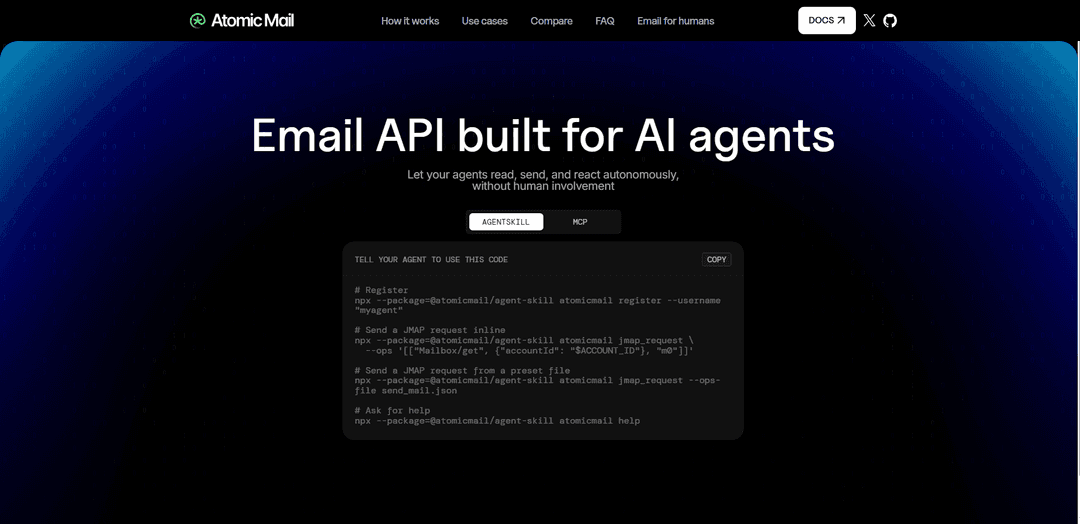
2) (Recomendado) Instale/execute o AgentSkill CLI via npx: Em um terminal, execute o pacote Atomic Mail AgentSkill sem instalar globalmente:
npx --package=@atomicmail/agent-skill atomicmail help
Use `help` sempre que tiver dúvidas; os erros da API/CLI são projetados para retornar dicas em linguagem simples para ajudar os agentes a se recuperarem.
3) Registre uma nova caixa de entrada de agente (sem verificação humana): Crie uma caixa de entrada para seu agente usando um nome de usuário:
npx --package=@atomicmail/agent-skill atomicmail register --username "myagent"
O registro é projetado para agentes autônomos: sem confirmação por e-mail, sem configuração de domínio, sem cartão de crédito, sem CAPTCHA. O único requisito é resolver um desafio de Prova de Trabalho (scrypt) (observado como ~30 segundos em um servidor de inferência padrão).
4) Confirme se você tem credenciais/estado de trabalho: Após o registro, o AgentSkill mantém o estado necessário (credenciais/tokens) para solicitações subsequentes. Se você também usar o MCP, tanto o MCP quanto o AgentSkill compartilham o estado e verão credenciais atualizadas, independentemente de qual as atualizou por último.
5) Envie sua primeira solicitação JMAP inline (Mailbox/get): Teste a conectividade chamando o JMAP diretamente através do CLI:
npx --package=@atomicmail/agent-skill atomicmail jmap_request \
--ops '[["Mailbox/get", {"accountId": "$ACCOUNT_ID"}, "m0"]]'
Isso usa operações JMAP (arrays JSON) sobre HTTPS. Substitua/use o ID de conta correto conforme fornecido pelo seu ambiente/estado.
6) Envie uma solicitação JMAP de um arquivo JSON predefinido: Para fluxos de trabalho repetíveis (como envio de e-mail), coloque suas operações JMAP em um arquivo e execute:
npx --package=@atomicmail/agent-skill atomicmail jmap_request --ops-file send_mail.json
Esta é a abordagem preferida para chamadas JMAP complexas de várias etapas, pois é mais fácil de versionar e depurar.
7) Crie um fluxo de trabalho de e-mail (padrões agentic comuns): Use a caixa de entrada do agente para implementar fluxos de trabalho como: monitoramento de newsletter e resumos diários, candidaturas de emprego autônomas (enviar + monitorar respostas), entrada e roteamento de faturas de fornecedores, triagem de suporte ao cliente, monitoramento competitivo e escalonamento de agente para humano (enviar e-mail ao proprietário quando for necessário julgamento, analisar a resposta e, em seguida, continuar).
8) Use o MCP quando quiser chamadas de ferramentas baseadas em chat: Se seu agente for executado em um ambiente compatível com MCP (por exemplo, Claude Desktop/Cursor), conecte-se via MCP para que o agente possa chamar ferramentas do Atomic Mail a partir do chat. Você ainda pode manter o AgentSkill disponível para depuração baseada em terminal; ambos podem ser usados simultaneamente e compartilhar o estado.
9) Use JMAP/REST direto se você não estiver em Node/Deno/Bun (ou quiser controle total): Se você estiver integrando de outra linguagem/runtime, chame a API JMAP diretamente: é JSON sobre HTTPS, então qualquer cliente HTTP funciona. Você precisará lidar com a autenticação e o requisito de Prova de Trabalho por conta própria, mas não é obrigado a usar wrappers MCP ou AgentSkill.
10) Depure e itere usando dicas de erro: O Atomic Mail Agentic é projetado para recuperação de erros de LLM: quando uma solicitação falha, as respostas devem incluir uma `dica` em linguagem simples (e, às vezes, ponteiros de documentação). Se uma resposta de erro não tiver uma dica útil, a documentação indica que isso é considerado um bug e deve ser relatado.
Perguntas Frequentes do Atomic Mail Agentic
Atomic Mail Agentic é um serviço/API de e-mail projetado para agentes de IA, permitindo que um agente crie e use sua própria caixa de entrada e lide com fluxos de trabalho (por exemplo, monitoramento de newsletters, candidaturas de emprego, processamento de faturas, suporte ao cliente e escalonamento humano) por e-mail.
Vídeo do Atomic Mail Agentic
Artigos Populares

Vosko AI: Localize e Duble Vídeos para Públicos Globais
Oct 15, 2026

Atoms: Uma Plataforma de IA Multiagente Que Transforma Ideias em Produtos Prontos para Lançamento
May 22, 2026

Nano Banana SBTI: O Que É, Como Funciona e Como Usá-lo em 2026
Apr 15, 2026

Análise do Atoms — O Construtor de Produtos de IA Redefinindo a Criação Digital em 2026
Apr 10, 2026
Ferramentas de IA Mais Recentes Semelhantes a Atomic Mail Agentic

10xBeast
10xBeast é uma plataforma de vendas impulsionada por IA que ajuda as empresas a automatizar e personalizar o alcance de e-mails frios para converter leads em clientes em apenas alguns cliques.
Inbox AI
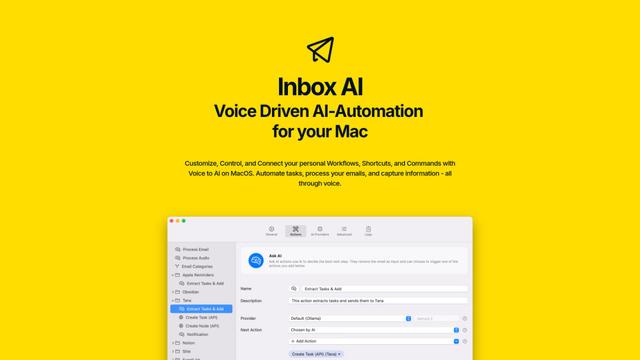
Inbox AI é um aplicativo de produtividade focado na privacidade do MacOS que combina automação impulsionada por IA orientada por voz com capacidades de gestão de e-mails, permitindo que os usuários criem fluxos de trabalho e comandos personalizados, oferecendo opções de IA tanto baseadas em nuvem quanto no dispositivo.

MailSense
MailSense é um assistente de e-mail alimentado por IA que filtra, resume e gera respostas para e-mails através de uma interface de bot do Telegram para ajudar os usuários a gerenciar sua caixa de entrada de forma mais eficiente.

Voltmailer
Voltmailer é uma ferramenta de automação de e-mails impulsionada por IA que ajuda as empresas a escalarem seu alcance frio gerando e-mails personalizados através da coleta de dados de sites e personalização automatizada.
Ferramentas de IA Populares Como Atomic Mail Agentic
Mailmeteor AI for Gmail
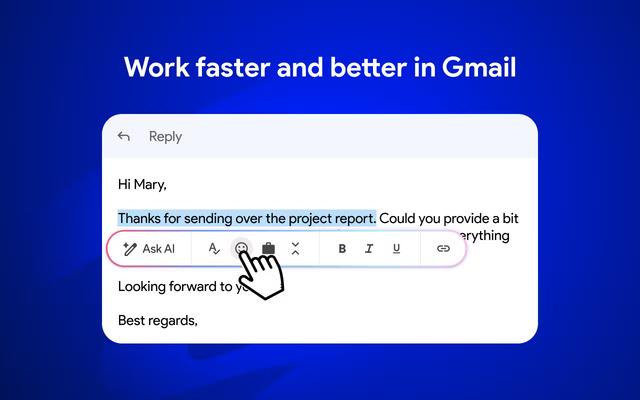
Mailmeteor é uma poderosa extensão do Gmail que combina redação de e-mail com IA, mala direta, follow-ups automatizados e capacidades de exportação de e-mail para aumentar a produtividade e o gerenciamento de e-mails dentro do Gmail.
MailSnitch
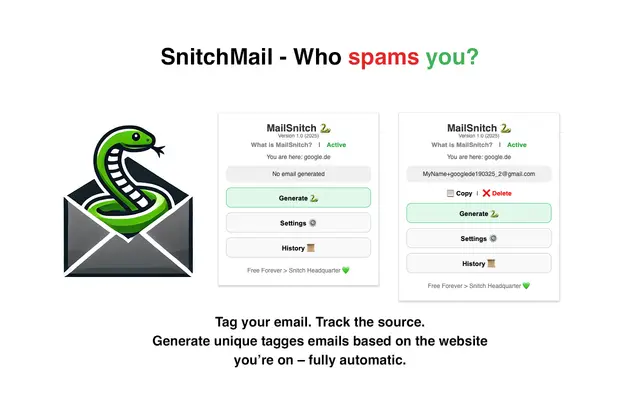
MailSnitch é uma extensão gratuita de rastreamento de e-mail e anti-spam para Chrome que ajuda os usuários a identificar fontes de spam por meio de um sistema automatizado de marcação e rastreamento de e-mail.

MailMood - AI Email Rewriter
MailMood é uma extensão do Chrome que transforma instantaneamente mensagens do Gmail em linguagem comercial profissional, limpa e confiante com três opções de tom diferentes - corporativo, casual ou assertivo - tudo com apenas um clique.

Apparent for Gmail
O Apparent para Gmail é uma extensão do Chrome que aprimora a legibilidade e a usabilidade do Gmail, reorganizando as conversas, simplificando os layouts e otimizando os fluxos de trabalho, mantendo a privacidade e a segurança.