
Rova AI
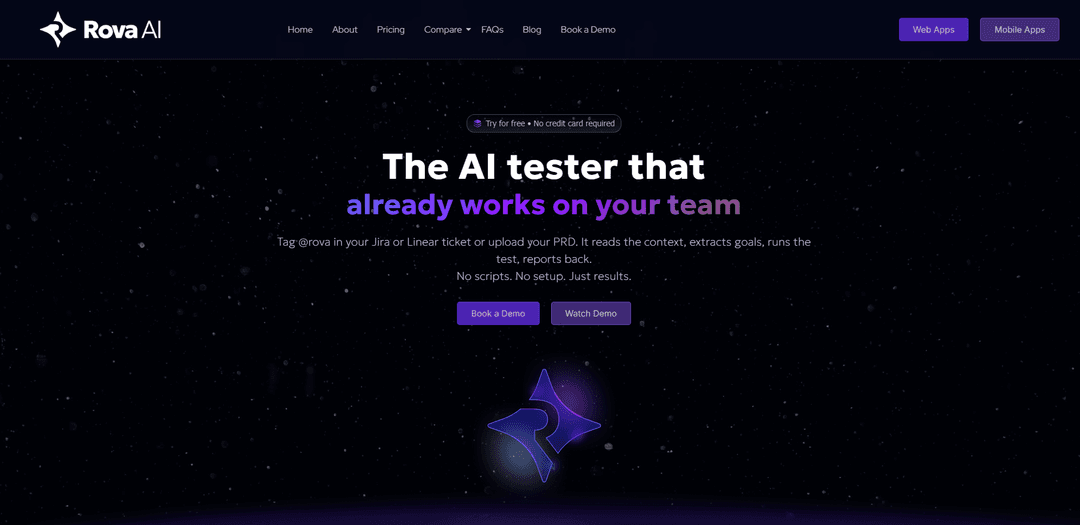
Rova AI is an agentic, autonomous software testing platform that creates, executes, and maintains web and mobile tests from intent (URLs, PRDs, or tickets), then logs results, flags bugs, and syncs reports to your QA tools.
https://rova.qa/?ref=producthunt
Product Information
Updated:May 18, 2026
What is Rova AI
Rova AI is an autonomous software testing agent built to help teams validate web and mobile applications without writing scripts or maintaining fragile selectors. Instead of traditional test automation workflows, Rova AI focuses on outcomes: you provide context such as a URL, a PRD, or a Jira/Linear ticket, and it generates structured test plans and scenarios tailored to your goals. It then runs those tests, documents findings with detailed logs and evidence, and shares results back into the tools your team already uses.
Key Features of Rova AI
Rova AI is an agentic, autonomous software testing platform for web and mobile apps that turns intent and context (URLs, Jira/Linear tickets, PRDs, test docs, or plain prompts) into structured, editable test plans, then executes them continuously and reports results with actionable artifacts. It focuses on outcome-based validation rather than scripted steps, adapts as the UI changes to reduce maintenance, explores applications like a human tester to generate scenarios automatically, and integrates into sprint workflows by posting findings back to tools like Jira, Linear, Slack, and GitHub with exports for sharing and traceability.
Intent-based autonomous testing: You describe what success looks like (goals/outcomes), and Rova AI figures out how to verify it—reducing reliance on brittle scripted steps and selectors.
Multi-modal inputs (URL, tickets, PRDs, prompts): Ingests a web URL, Jira/Linear issues, PRDs, or test documentation to extract goals and automatically generate tailored test scenarios and plans.
Structured, editable test plan generation: Creates detailed test plans and steps that teams can review, adjust, and approve before execution to keep humans in control.
Continuous execution across web and mobile: Runs ongoing validations of user journeys on web apps and on real mobile devices for iOS/Android builds, helping catch regressions quickly.
Adaptive maintenance and exploration: Explores different paths like a human tester and evolves tests when the application changes, aiming to reduce breakage from UI updates.
Comprehensive reporting + workflow integrations: Logs results, flags bugs, attaches screenshots/logs, and posts back to Jira/Slack (and other tools); can export artifacts (e.g., Excel) and hand off stable tests to regression suites.
Use Cases of Rova AI
Sprint-ready QA via Jira/Linear tagging: Engineering and product teams trigger tests by tagging @rova in a ticket; Rova reads the context, runs validations, and comments results back for fast iteration.
Startup lean QA coverage expansion: Founders/lean teams use Rova to explore apps and generate scenarios automatically, increasing coverage without hiring dedicated automation engineers.
Regression validation for fast-shipping web products: Teams drop a URL and specify critical journeys (signup, checkout, settings) to continuously validate core flows as releases roll out.
Mobile release confidence on real devices: Mobile teams upload iOS/Android builds to test key journeys on real devices, receiving logs and screenshots to speed up triage.
Outcome-based testing from PRDs/specs: Product and QA teams upload PRDs or feature specs so Rova can derive acceptance-style checks and generate an executable plan aligned to requirements.
QA triage and handoff workflow: After execution, teams use Rova’s classification (stable vs failed) to decide what to automate into regression suites and what needs deeper manual investigation.
Pros
No-script, low-setup workflow (URL/PRD/ticket-driven) that fits existing sprint tools like Jira/Linear/Slack/GitHub.
Autonomous exploration and adaptive behavior can reduce flaky/brittle tests caused by UI/selector changes.
Human-in-the-loop approvals via editable test plans help maintain control and alignment with requirements.
Rich reporting artifacts (logs/screenshots/exports) support faster debugging and sharing/traceability.
Cons
Outcome-based autonomous agents may still require careful goal definition and review to avoid testing the wrong behaviors.
Integration and CI/CD claims may vary by environment; teams may need validation of fit for their stack and compliance needs.
Autonomous exploration can produce noisy or overly broad scenarios without strong constraints and prioritization.
Platform appears to be gated by access/waitlist in some contexts, which may limit immediate adoption.
How to Use Rova AI
1) Choose your entry point (Web or Mobile): Decide what you want to test: a web app or a mobile app. For web, you can start from a URL. For mobile, you’ll use an iOS/Android build and run on real devices.
2) Provide context to Rova AI (multi-modal input): Give Rova AI what it needs to understand the feature and success criteria. You can: (a) drop a URL, (b) link Jira tickets, (c) upload PRDs/test docs, or (d) write a plain-text prompt describing the goal (what “success” looks like). You can mix these inputs.
3) Trigger Rova from your workflow tools (optional): If you use Jira or Linear, tag @rova in the ticket to trigger testing from where your team already works. Rova AI can also integrate with Slack and GitHub for sharing results and workflow handoffs.
4) Let Rova generate an editable test plan: Rova AI analyzes the provided context and automatically generates a structured test plan (scenarios, steps, and checks) tailored to your goals. The plan is editable so you can refine scope, add constraints, or adjust steps.
5) Review and approve the plan (you stay in control): Before execution, review the generated plan. Edit any steps, add missing scenarios, or remove irrelevant ones. Approve the plan when it matches what you want validated.
6) Run tests autonomously: Start execution (e.g., hit “Run”). Rova AI then executes the approved tests end-to-end, exploring flows like a human tester while validating the outcomes you defined.
7) Monitor evidence and logs during execution: As tests run, Rova AI records what happened and collects artifacts. For mobile testing, it reports back with screenshots and logs from real-device runs.
8) Review the results and bug flags: After execution, Rova AI produces a detailed report of passes/failures and flags bugs encountered, with actionable details to help your team reproduce and fix issues.
9) Classify outcomes for handoff: Use Rova AI’s smart handoff approach: stable tests can be flagged for automation/regression, while failed tests can be routed for deeper QA investigation.
10) Export or sync results back to your tools: Share results without copy-paste by exporting to Excel or posting results as Jira comments. You can also send results to Slack, and use available CI/CD integration to plug autonomous testing into your delivery pipeline.
Rova AI FAQs
Rova AI is an autonomous (agentic) software testing tool for web and mobile apps that can plan, execute, and improve tests. It can ingest a URL, PRDs, issue tickets, test docs, or prompts, generate editable test plans, run tests autonomously, and report results with actionable bug findings.
Rova AI Video
Popular Articles

Atoms: A Multi-Agent AI Platform That Transforms Ideas into Launch-Ready Products
May 22, 2026

Nano Banana SBTI: What It Is, How It Works, and How to Use It in 2026
Apr 15, 2026

Atoms Review — The AI Product Builder Redefining Digital Creation in 2026
Apr 10, 2026
Kilo Claw: How to Deploy and Use a True "Do‑It‑For‑You" AI Agent(2026 Update)
Apr 3, 2026
Latest AI Tools Similar to Rova AI
ExoTest
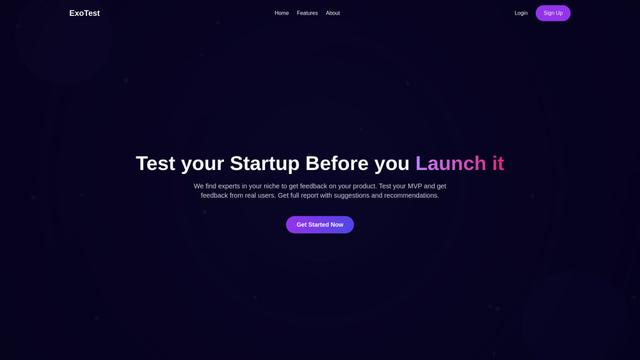
ExoTest is an AI-driven product testing platform that connects startups with expert testers in their specific niche to provide comprehensive feedback and actionable insights before product launch.
AI Dev Assess
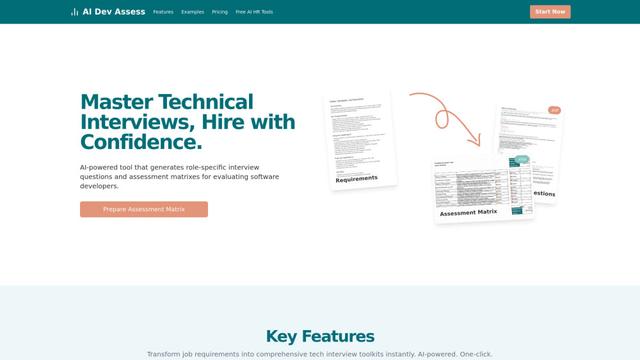
AI Dev Assess is an AI-powered tool that automatically generates role-specific interview questions and assessment matrices to help HR professionals and technical interviewers evaluate software developer candidates efficiently.
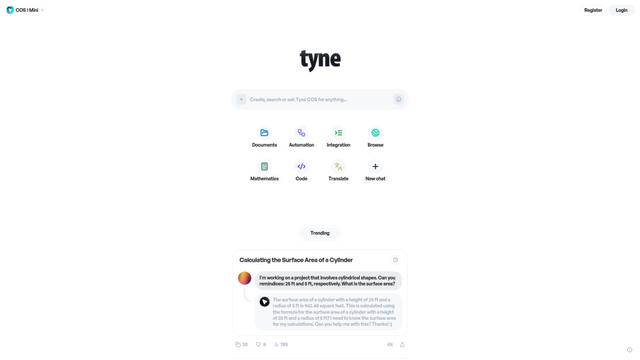
Tyne
Tyne is a professional AI-powered software and consulting company that helps businesses streamline their everyday needs through data analysis, yield improvement systems, and AI solutions.
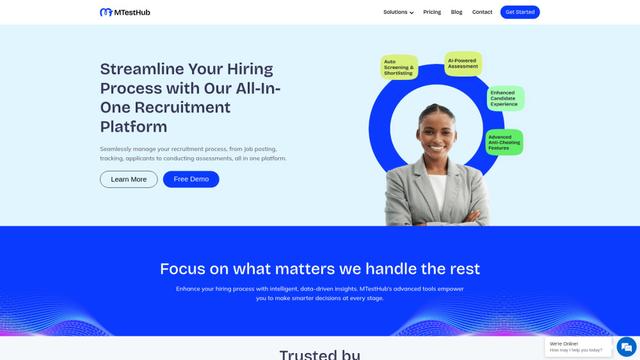
MTestHub
MTestHub is an all-in-one AI-powered recruitment and assessment platform that streamlines hiring processes with automated screening, skill evaluations, and advanced anti-cheating measures.
Popular AI Tools Like Rova AI
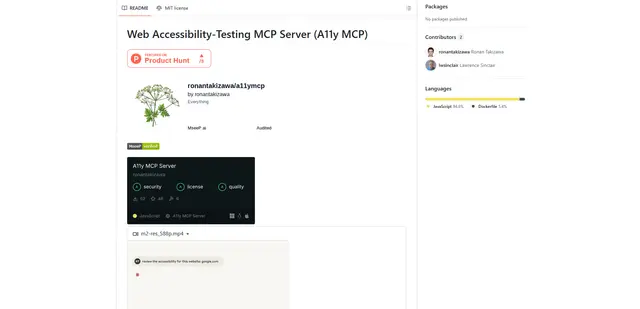
Web Accessibility Testing MCP
A11y MCP is a Model Context Protocol server that enables AI language models to perform automated web accessibility testing by integrating with Deque's Axe-core API and Puppeteer to analyze web content for WCAG compliance.
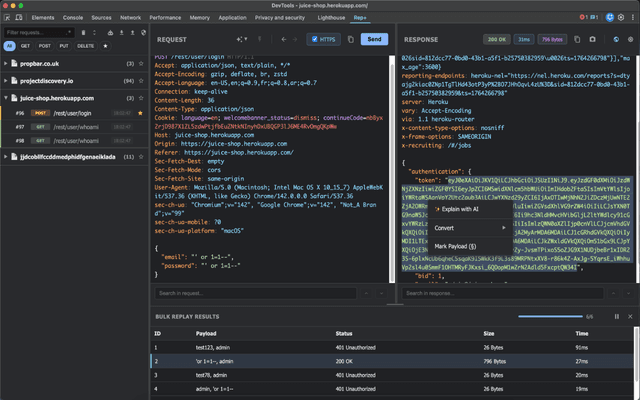
rep+
rep+ is a powerful Chrome DevTools extension that brings Burp Suite Repeater functionality directly into your browser, enabling HTTP request testing, security analysis, and AI-powered attack suggestions without proxy setup.
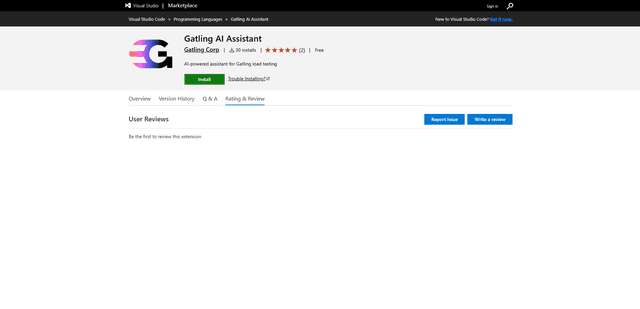
Gatling AI Assistant for VS Code
Gatling AI Assistant is an AI-powered extension for Visual Studio Code that helps developers create and manage load testing scenarios using Gatling's load testing framework.
KaneAI
KaneAI is the world's first end-to-end AI-powered software testing agent that enables users to create, debug, and evolve tests using natural language.