
Pazi
Pazi is an AI agent platform that builds and manages a dedicated “AI team” to move business ideas and recurring operations forward end-to-end across your existing tools and channels (like Slack and HubSpot), with a central dashboard for visibility and control.
https://pazi.ai/?ref=producthunt

Product Information
Updated:Jul 16, 2026
What is Pazi
Pazi is a platform designed to help individuals and teams turn ideas into real, executed work by deploying AI agents that can plan, coordinate, and carry out multi-step workflows. Positioned as a “team ops” layer, it connects directly to the tools businesses already use (e.g., Slack and common marketing/sales stacks) and helps users go from an initial goal—like launching a product, growing a brand, or automating weekly processes—to a structured roadmap of tasks and opportunities. Pazi emphasizes that the user stays in charge while the system continuously supports execution and momentum through always-on agents and a unified view of progress.
Key Features of Pazi
Pazi is an AI agent platform for building and managing a 24/7 “AI team” that can plan and execute multi-step business workflows across your existing tool stack (especially Slack and other team channels). You describe a goal or idea, Pazi proposes a roadmap and opportunities, then runs tasks end-to-end with an oversight loop that keeps you in control via confirmations for sensitive actions, progress check-ins, and a central “Business Pulse” dashboard that tracks what’s done, in progress, and waiting on you.
AI team builder for roles and goals: Create agents for specific positions (e.g., developer, DevOps, SDR, social media manager) and assign goals; agents generate plans, execute tasks, and report progress.
Business Pulse dashboard: A centralized view that keeps projects, opportunities, and AI tasks in sync—showing status (done/in progress/needs you) so you can steer execution without micromanaging.
End-to-end autonomous workflows (judgment + execution): Designed for recurring, multi-step operations that go beyond single-rule automation—agents can coordinate tool usage, apply judgment rules, and move work forward continuously.
Channel-native operations (Slack-first): Deploy and run workflows inside team channels (not just a separate dashboard), surfacing outputs and routing handoffs where teams already collaborate.
Tool-stack integrations for ops execution: Connect agents to common business tools (examples cited include Slack plus marketing tools like HubSpot, Ahrefs, Buffer) to execute tasks across the stack.
Permission-based safety and human-in-the-loop controls: Requires explicit permission for access; warns and asks for confirmation on potentially irreversible actions (e.g., purchases/account deletion) and emphasizes transparency.
Use Cases of Pazi
Customer support resolution loops: Agents can handle tickets end-to-end by checking history, applying business rules, escalating on defined conditions, and maintaining 24/7 coverage through shared team channels.
Sales operations and SDR workflows: Automate lead research, follow-up sequencing, CRM updates, and internal reporting—freeing reps to spend more time selling while agents coordinate work in Slack.
Marketing production and growth ops: Run content production, email nurturing, social scheduling, and analytics reporting as recurring workflows; agents coordinate across marketing tools and keep momentum week to week.
Founder launch playbooks (e.g., first 100 users): Turn an idea into an execution plan with suggested opportunities like defining an MVP, building a landing page, creating a waitlist, posting daily, and launching on Product Hunt.
Dev/DevOps operational automation: Use dedicated agents for engineering and DevOps-style tasks (e.g., monitoring and execution across tools) to reduce manual coordination and keep work moving.
Cross-functional ops workflows (finance/CS/sales): Operations teams can run shared, recurring workflows spanning multiple functions and channels, with routing, retries/error surfacing, and oversight handled by the platform.
Pros
Built for team-wide, parallel agent work (not just a single personal assistant), especially in shared channels like Slack.
End-to-end workflow ownership (planning through execution) with centralized visibility via Business Pulse.
Permission-based safeguards and confirmations for sensitive/irreversible actions help reduce operational risk.
Strong fit for recurring, multi-step ops across functions (CS, sales, marketing, DevOps) rather than one-off prompts.
Cons
Autonomous agents still carry hallucination/incorrect-action risk, requiring oversight and well-defined rules.
Best value appears tied to channel/tool integrations (e.g., Slack-first); teams outside those environments may see less benefit.
May be more than needed for individuals seeking a personal inbox/calendar assistant rather than team operations workflows.
How to Use Pazi
1) Open Pazi and start a new idea: Go to https://pazi.ai/ (or the Product Hunt referral page) and click “Let’s Start” (or “Sign Up” if you’re new).
2) Sign up / log in: Create an account via “Sign Up”, or use “Log In” if you already have one, so Pazi can save your roadmap, tasks, and progress.
3) Describe your business idea (or goal): In the “Describe your business idea” prompt, type what you’re trying to accomplish (examples shown: “I built an app and I want to get my first 100 users”, “I want to finish and publish my book”, “I want to open my own coffee shop”). You can also use “Surprise Me” to generate an idea/starting point.
4) Let Pazi generate your path (roadmap + opportunities): After you submit your idea, Pazi creates a personalized roadmap and a set of “Opportunities” tailored to your goal (your idea’s ‘own path’).
5) Review your Business Pulse dashboard: Open “Business Pulse” to see everything in one place: projects, opportunities, and AI tasks—what’s done, what’s in progress, and what needs your input.
6) Choose which opportunities to pursue: In the Opportunities section, select the items you want Pazi to help you achieve. The site shows examples like: “Define your MVP”, “Build a high-converting landing page”, “Create your waitlist and collect emails”, “Post daily to attract users”, and “Launch on Product Hunt.”
7) Take an opportunity to turn it into action: Click “Take the Opportunity” on the items you choose. This converts the opportunity into concrete work that Pazi can track and move forward.
8) Track tasks and timing in Tasks & Calendar: Use the “Tasks & Calendar” area to see what’s scheduled, what’s currently being worked on, and what’s next so you can keep momentum.
9) Collaborate using Pazi’s ‘you stay in charge’ loop: Work through the built-in collaboration pattern described on the site: you provide the idea and make the choices that matter; Pazi creates the path, finds opportunities when you’re stuck, and moves selected work forward—while you confirm direction and celebrate progress.
10) Explore docs for deeper guidance: If you need product guidance, open the documentation via “How it works” or “Docs” (https://pazi.ai/docs/welcome) to understand the workflow and available capabilities.
11) (Optional) Use templates like Tech Team: If your use case fits, open “Tech Team” (https://pazi.ai/tech-team-template) to start from a pre-built setup rather than configuring everything from scratch.
12) Review Security and Pricing before scaling up: Check “Security” (https://pazi.ai/security) to understand permissioning/controls, and “Pricing” (https://pazi.ai/pricing) to pick a plan once you’re ready to run more agents or higher volume.
Pazi FAQs
Pazi is an AI agent/workflow platform designed to help turn an idea into execution. You describe what you’re building (e.g., a book, shop, app), and Pazi builds a path/roadmap, creates tasks, and moves work forward with AI agents while keeping you in control.
Pazi Video
Popular Articles

Vosko AI: Localize and Dub Videos for Global Audiences
Oct 15, 2026

Atoms: A Multi-Agent AI Platform That Transforms Ideas into Launch-Ready Products
Oct 13, 2026

Nano Banana SBTI: What It Is, How It Works, and How to Use It in 2026
Apr 15, 2026

Atoms Review — The AI Product Builder Redefining Digital Creation in 2026
Apr 10, 2026
Latest AI Tools Similar to Pazi

Plani.ai
Plani.ai is an AI-powered business planning tool that generates customized strategies, tasks, and actionable plans to help entrepreneurs, startups, and small businesses achieve their business goals.

Tendery.ai
Tendery.ai is an AI-powered platform that transforms EU public procurement by providing automated tender discovery, intelligent matching, and enhanced proposal creation capabilities.
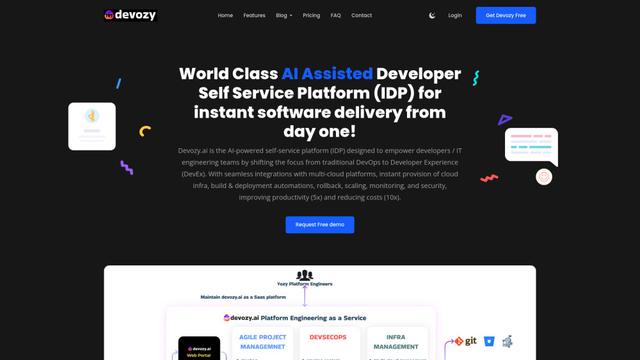
Devozy.ai
Devozy.ai is an AI-powered developer self-service platform that combines Agile project management, DevSecOps, multi-cloud infrastructure management, and IT service management into a unified solution for accelerating software delivery.
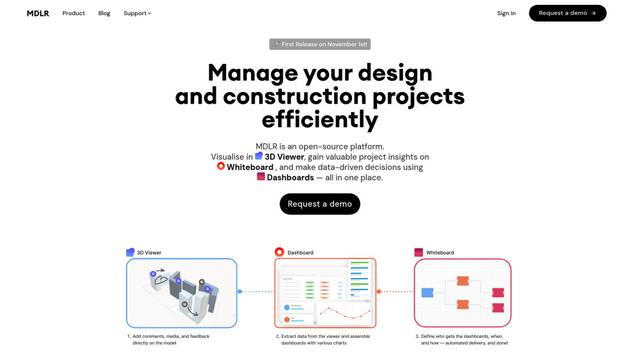
MDLR
MDLR is an open-source AI-powered platform that streamlines design and construction project management through integrated 3D viewing, real-time dashboards, and interactive whiteboards.
Popular AI Tools Like Pazi
ChatGPT Work
ChatGPT Work is an agent mode inside ChatGPT that can run multi-step projects for hours, pull context from your connected apps and files, and produce finished outputs like docs, slides, sheets, and interactive Sites—while keeping you in control with approvals and enterprise governance.
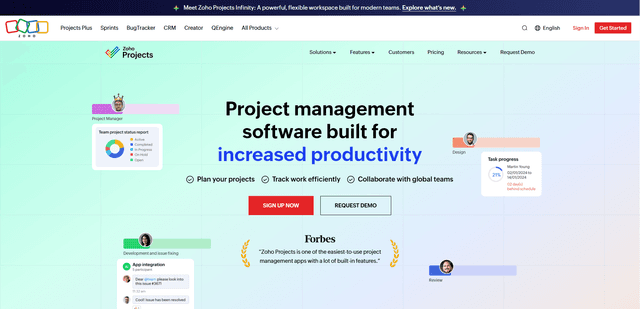
Zoho Projects
Zoho Projects is a cloud-based project management software that helps teams plan, track, and collaborate on projects with features like Gantt charts, task automation, time tracking, and comprehensive reporting tools.

Zoho Tables
Zoho Tables is a modern spreadsheet-database hybrid that helps teams organize data with relational links, build views and dashboards, collaborate in real time, and automate workflows with no-code and AI assistance.
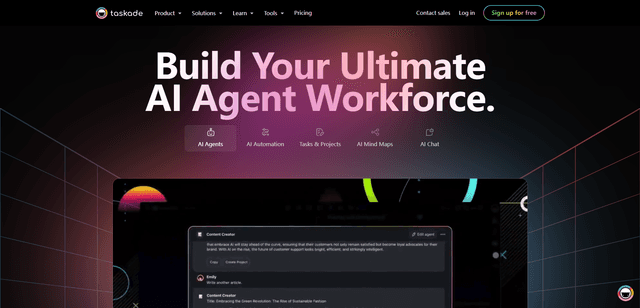
Taskade
Taskade is an AI-powered productivity platform that combines task management, real-time collaboration, and AI automation in one unified workspace for teams and individuals.