
MiniMax M2.7
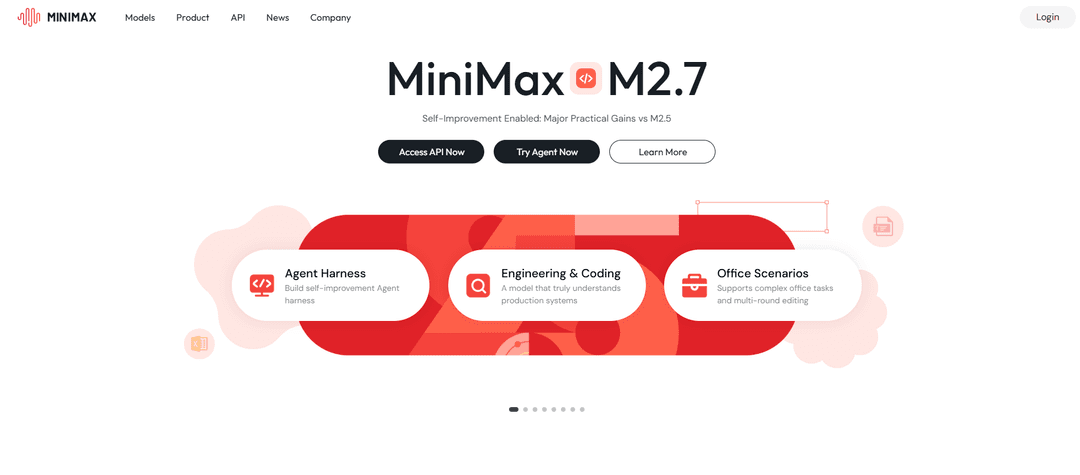
MiniMax M2.7 is a large language model with enhanced capabilities for building complex Agents, featuring industry-leading coding and reasoning abilities, self-improvement capabilities, and excellent performance in software engineering and professional office tasks.
https://www.minimax.io/
Product Information
Updated:Jul 31, 2026
MiniMax M2.7 Monthly Traffic Trends
MINIMAX achieved 824K visits with a 27.4% growth in July. The release of MiniMax-M1, which outperforms DeepSeek's R1-0528 model in various benchmarks and offers superior efficiency, likely contributed to this growth. The company's planned Hong Kong IPO and enhanced AI reasoning capabilities also drew significant attention.
What is MiniMax M2.7
MiniMax M2.7 is the latest iteration in the M2-series models, and notably the first model to deeply participate in its own evolution. It demonstrates significant improvements over its predecessor M2.5, particularly in complex software engineering tasks, office productivity scenarios, and agent-based operations. With a focus on practical applications, M2.7 achieves an ELO score of 1495 on GDPval-AA, the highest among open-source models, while maintaining a 97% skill adherence rate on complex skills cases.
Key Features of MiniMax M2.7
MiniMax M2.7 is a next-generation large language model designed for autonomous, real-world productivity that can build complex agent harnesses and complete elaborate tasks. It features self-improvement capabilities through reinforcement learning, excellent performance in software engineering tasks, and strong abilities in office productivity scenarios. The model demonstrates significant improvements in multi-agent collaboration, complex skill execution, and dynamic tool search, while maintaining high reliability and accuracy across knowledge-based and coding tasks.
Self-Improving Agent Harness: Capable of building and optimizing its own reinforcement learning harnesses, executing over 100 iterative cycles of analyzing, planning, modifying, and evaluating improvements autonomously
Advanced Multi-Agent Collaboration: Supports complex Agent Teams and maintains a 97% skill adherence rate across 40+ complex skills, enabling sophisticated task coordination and execution
Comprehensive Software Engineering: Excels in end-to-end project delivery across Web, Android, iOS platforms, with strong performance in repo-level code generation (55.6% on VIBE-Pro) and system-level comprehension
Enhanced Office Productivity: Advanced capabilities in handling complex office tasks including multi-turn modifications and high-fidelity edits in Excel, PPT, and Word
Use Cases of MiniMax M2.7
Software Development: Complete end-to-end software projects from system design to testing, covering full-stack development across multiple platforms
Research and Development: Automate and optimize research processes with minimal human intervention through autonomous debugging and research agent harnesses
Office Task Automation: Handle complex financial modeling, presentation creation, and document editing tasks with high accuracy and consistency
System Analysis: Perform log analysis for bug hunting, code security assessments, and machine learning tasks with deep system-level understanding
Pros
Exceptional reliability with 100% success rate across benchmarks
Strong performance in knowledge-based and coding tasks
Competitive pricing (31st percentile in cost)
Cons
Slower processing times (18th percentile for speed)
Longer response times compared to competitors
Limited to text-based interactions (lacks native image input capability)
How to Use MiniMax M2.7
Clear Environment Variables: Before configuring, ensure you clear any OpenAI-related environment variables to avoid conflicts with MiniMax API
Set Base URL: Set GROK_BASE_URL based on your location: use https://api.minimax.io/v1 for international users, or https://api.minimaxi.com/v1 for users in China
Access API Platform: Go to platform.minimax.io and login to access the API platform
Select Model: Return to the Agent panel and click 'Select a Model' in the bottom right corner to select the MiniMax-M2.7 model
Configure API: Set up API access by choosing between two versions: standard M2.7 or M2.7-highspeed (same results but faster speed)
Enable Cache: No configuration needed for cache support as it's automatically enabled
Start Development: Begin using MiniMax-M2.7 for AI-assisted development through the API or Agent interface
Optional: Deploy Locally: For local deployment, it's recommended to use vLLM or SGLang to achieve optimal performance
MiniMax M2.7 FAQs
MiniMax M2.7 has three main capabilities: 1) Building complex agent harnesses with 97% skill adherence rate on complex skills, 2) Excellent performance in real-world software engineering including end-to-end project delivery, log analysis and code security, 3) Enhanced office task capabilities with support for complex multi-round editing in Office Suite (Excel/PPT/Word)
MiniMax M2.7 Video
Popular Articles

Vosko AI: Localize and Dub Videos for Global Audiences
Oct 15, 2026
Atoms: A Multi-Agent AI Platform That Transforms Ideas into Launch-Ready Products
Oct 13, 2026
Nano Banana SBTI: What It Is, How It Works, and How to Use It in 2026
Apr 15, 2026
Atoms Review — The AI Product Builder Redefining Digital Creation in 2026
Apr 10, 2026
Latest AI Tools Similar to MiniMax M2.7
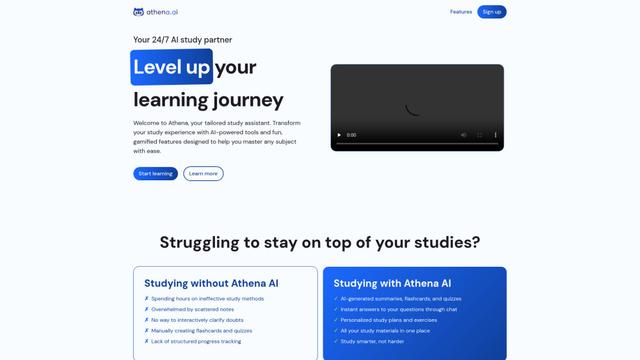
Athena AI
Athena AI is a versatile AI-powered platform offering personalized study assistance, business solutions, and life coaching through features like document analysis, quiz generation, flashcards, and interactive chat capabilities.
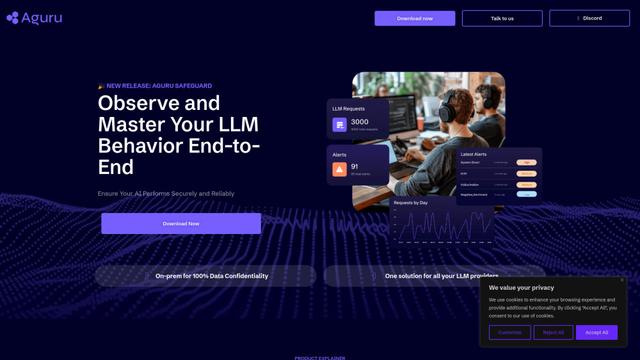
Aguru AI
Aguru AI is an on-premises software solution that provides comprehensive monitoring, security, and optimization tools for LLM-based applications with features like behavior tracking, anomaly detection, and performance optimization.
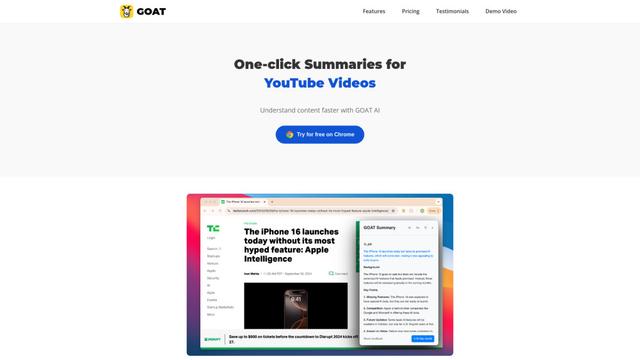
GOAT AI
GOAT AI is an AI-powered platform that provides one-click summarization capabilities for various content types including news articles, research papers, and videos, while also offering advanced AI agent orchestration for domain-specific tasks.
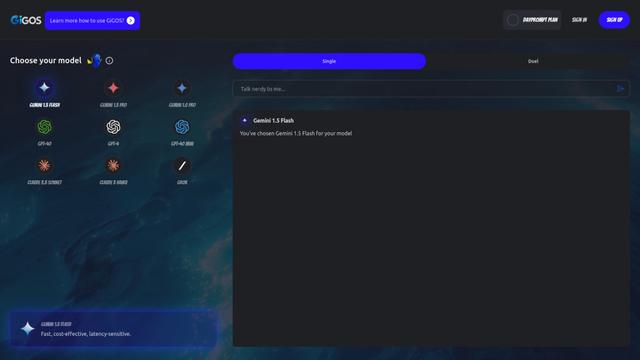
GiGOS
GiGOS is an AI platform that provides access to multiple advanced language models like Gemini, GPT-4, Claude, and Grok with an intuitive interface for users to interact with and compare different AI models.
Popular AI Tools Like MiniMax M2.7
GPT‑5.5 | ChatGPT Official
GPT‑5.5 in ChatGPT is OpenAI’s latest work-focused model designed to understand complex goals, use tools effectively, check its work, and carry multi-step tasks (coding, research, documents, spreadsheets) through to completion with stronger safeguards.
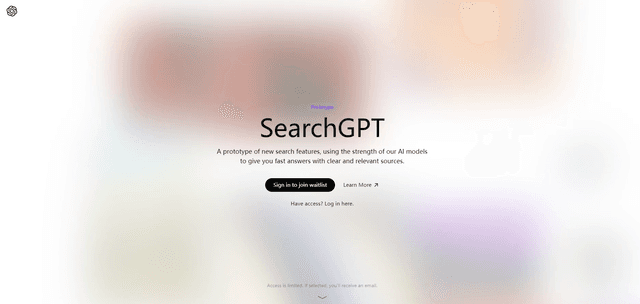
SearchGPT
SearchGPT is an AI-powered search prototype by OpenAI that provides fast, conversational answers with clear sources using GPT models.
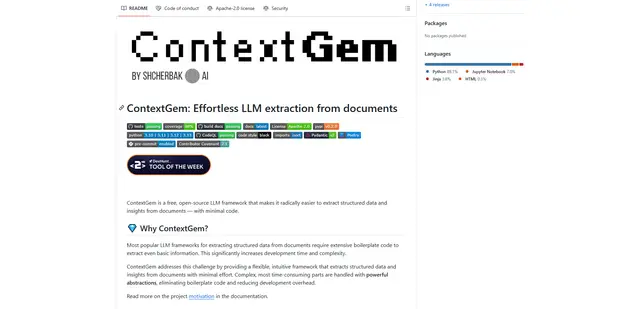
ContextGem
ContextGem is a free, open-source LLM framework that simplifies structured data and insights extraction from documents with minimal code through powerful built-in abstractions and automated features.
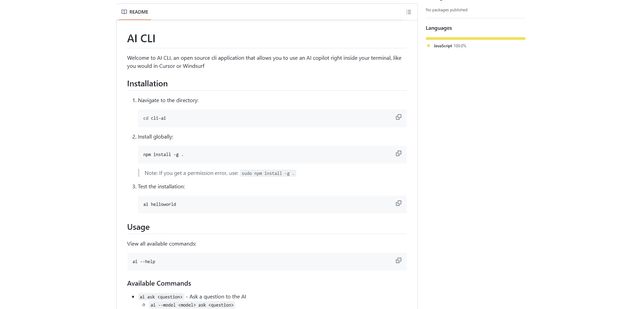
AI CLI
AI CLI is an open-source command-line interface tool that brings AI capabilities directly to your terminal, allowing you to interact with various AI models like OpenAI's GPT and Anthropic's Claude through simple commands.