
GitHired
GitHired is an AI-powered hiring platform that analyzes real GitHub activity (including private repos) to score and rank developers by proof of work—code complexity, project depth, and shipping ability—instead of resumes and keywords.
https://www.githired.tech/?ref=producthunt

Product Information
Updated:May 18, 2026
What is GitHired
GitHired is a technical recruiting and candidate-evaluation platform built to help teams hire developers who can actually ship production-ready code. Rather than relying on resumes, self-reported skills, or keyword matching, it generates one-page developer profiles from real GitHub contributions, highlighting true tech stack usage, project depth, and contribution authenticity. It’s designed for founders, engineering managers, recruiters, and staffing teams who want faster, more objective shortlisting based on what candidates have built.
Key Features of GitHired
GitHired is an AI-powered technical hiring platform that evaluates and ranks developers based on real GitHub proof-of-work rather than resumes or keyword matching. It analyzes repositories and contribution patterns to surface signals like tech stack usage, project depth/complexity, and shipping capability, and can generate one-page candidate profiles (“live portfolios”). Teams can search a vetted developer pool, bring their own candidates, and extend sourcing via GitHub/LinkedIn scraping; GitHired also supports private repo access when candidates grant it, and offers either self-serve seats or a pay-per-hire recruiting service.
Proof-of-work scoring from GitHub activity: Evaluates candidates using real repository signals (e.g., code complexity, project depth, and evidence of shipping production-ready work) instead of resume claims.
Ranked candidate shortlists: Turns a job description or requirements into a ranked list of matching developer profiles, prioritizing demonstrated skills over keyword matches.
One-page “live portfolio” profiles: Generates a concise candidate profile summarizing real tech stack usage, notable projects, and contribution depth for faster screening.
Private repository access (candidate-granted): Supports secure analysis of private projects when applicants opt in, enabling evaluation beyond open-source footprints.
Sourcing via GitHub + LinkedIn signals: If the internal pool is insufficient, GitHired can surface additional candidates across the web using GitHub/LinkedIn scraping and hireability signals.
Autonomous application forms: Lets teams create application forms that automatically analyze submissions and rank applicants based on what they’ve actually built.
Use Cases of GitHired
Startup engineering hiring without heavy technical screens: Early-stage teams can quickly shortlist developers who have demonstrated shipping ability, reducing time spent on resume screening and initial assessments.
High-volume applicant triage for in-house recruiting: Engineering managers and recruiters can auto-rank inbound applicants by real contribution quality, accelerating shortlisting for fast-growing orgs.
Staffing agencies sourcing for niche stacks: Agencies can search by demonstrated stack usage and project complexity to find credible specialists (e.g., backend, infra, or full-stack) beyond keyword filters.
Hiring for production-focused roles (DevOps/Platform/Backend): Teams can prioritize candidates with evidence of shipping and maintaining real systems, using repository depth and contribution patterns as signals.
University/early-career recruiting based on projects: Programs and employers can evaluate candidates with limited work history by emphasizing actual code and projects rather than resume polish.
Pros
More signal than resumes/keywords by using real GitHub proof-of-work
Speeds up screening with ranked lists and one-page candidate profiles
Can evaluate beyond open source via candidate-granted private repo access
Flexible go-to-market: self-serve seats or pay-per-hire recruiting support
Cons
Less effective for strong engineers with minimal GitHub presence or proprietary-only work history
Private repo analysis depends on candidate consent and may raise privacy/security concerns for some applicants
GitHub activity can be an imperfect proxy for collaboration, system design, and non-coding impact
Reliance on scraping/automated signals may introduce false positives/negatives without human review
How to Use GitHired
1) Choose your hiring mode: Decide whether you want to use GitHired as a self-serve platform ($250/seat/month) or have GitHired recruiters run the process for you ($10k/hire, pay only on a successful hire).
2) Open the GitHired app: Go to app.githired.tech to start the end-to-end workflow (source → analyze → engage).
3) Paste your job description: Paste your JD into GitHired so it can understand the role requirements and generate matches based on real GitHub activity rather than resume keywords.
4) Search by real skills (not keywords): Describe the engineer you need and run a search that uses GitHub activity signals (projects, commits, stack usage) to find matching developers.
5) Review the ranked list of candidates: GitHired returns a ranked list of profiles that best match your requirements, surfacing candidates based on proof-of-work signals.
6) Open a candidate’s one-page profile: Inspect the candidate’s generated profile to see their real tech stack usage, project depth/complexity, and contribution activity.
7) Use proof-of-work scoring to evaluate shipping ability: Compare candidates using GitHired’s scoring signals (e.g., code complexity, project depth, shipping capabilities) to identify strong builders.
8) Factor in private repo analysis (when available): For candidates who grant access, include private repository signals to evaluate work beyond open source (GitHired emphasizes secure, read-only access and analyzing only what users allow).
9) Filter out low-signal activity: Use GitHired’s commit authenticity/fake-commit filtering to reduce false positives from superficial contribution patterns.
10) Expand sourcing if your pool is insufficient: If you can’t find the right candidate in the vetted pool, use GitHired’s GitHub + LinkedIn scraping capability to surface additional developers across the web.
11) (Optional) Bring your own candidate database: If you already have candidates, import/use your own database so GitHired can evaluate them using GitHub/LinkedIn signals rather than relying on outdated resumes.
12) Engage and progress candidates: Move forward with outreach and scheduling using the platform’s engage stage, using the ranked shortlist to prioritize who to contact first.
13) (Optional) Use GitHired-managed recruiting: If you chose the $10k/hire option, GitHired’s dedicated talent partner sources, screens, and schedules candidates for you and delivers a ranked shortlist; you pay only upon a successful hire (with a replacement guarantee).
14) Manage seats and ongoing usage (self-serve): If you’re on the $250/seat/month plan, continue running unlimited searches across the vetted pool and reuse the workflow for new roles as needed.
GitHired FAQs
GitHired is an AI-powered hiring platform that helps companies find and shortlist developers based on proof of work by analyzing real GitHub activity (projects, commits, and code quality), rather than relying on resumes or keyword matching.
GitHired Video
Popular Articles

Atoms: A Multi-Agent AI Platform That Transforms Ideas into Launch-Ready Products
May 22, 2026

Nano Banana SBTI: What It Is, How It Works, and How to Use It in 2026
Apr 15, 2026

Atoms Review — The AI Product Builder Redefining Digital Creation in 2026
Apr 10, 2026

Kilo Claw: How to Deploy and Use a True "Do‑It‑For‑You" AI Agent(2026 Update)
Apr 3, 2026
Latest AI Tools Similar to GitHired
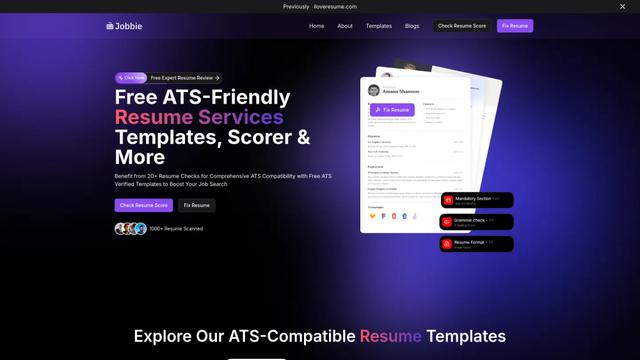
Jobbie
Jobbie is a comprehensive online platform offering free ATS-friendly resume services including resume checking, scoring, templates, and AI-powered optimization tools to help job seekers create professional resumes that pass through Applicant Tracking Systems.

Hiring Studio by Metaview
Hiring Studio by Metaview is a free AI-powered tool that helps recruiting teams generate customized interview questions with follow-up suggestions and detailed answer rubrics.
JOBO
JOBO is an AI-powered career assistant that revolutionizes job hunting by automatically searching and applying for jobs on your behalf while you sleep.
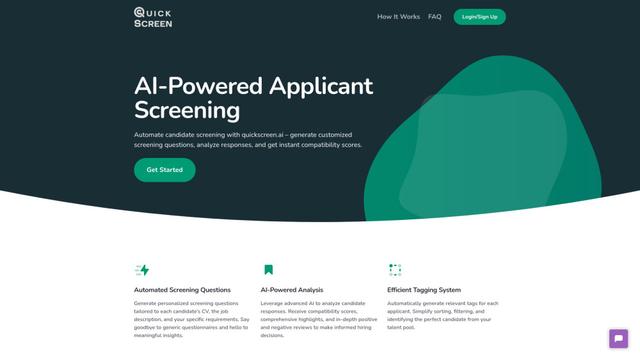
QuickScreen.AI
QuickScreen.AI is an automated candidate screening platform that leverages AI to generate customized screening questions, analyze responses, and provide instant compatibility scores for job applicants.
Popular AI Tools Like GitHired
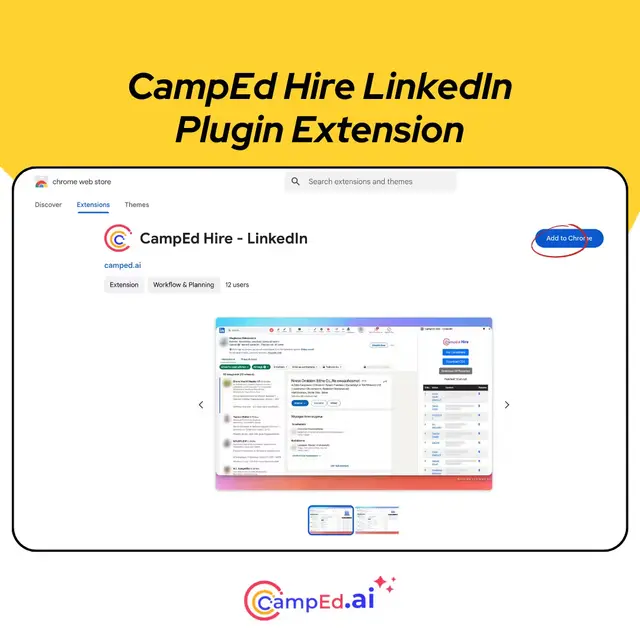
CampEd Hire
CampEd Hire is a powerful Chrome extension that streamlines recruitment by automatically collecting and organizing job applicant data from LinkedIn job posts, with features like automated data collection, CSV export, and batch resume downloads.
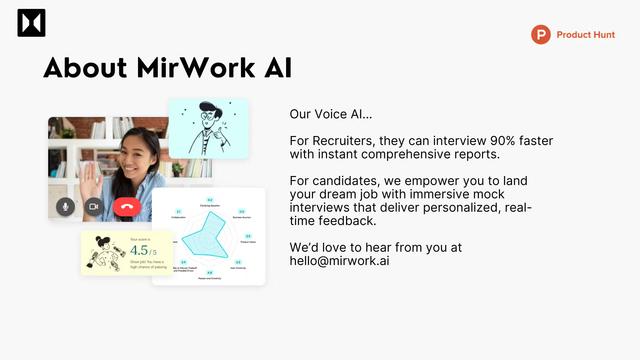
Quick Mock - AI interviewer for Any Job
Quick Mock is an AI-powered interview preparation tool that enables users to extract job descriptions from leading platforms and instantly conduct realistic mock interviews with real-time voice AI technology and comprehensive feedback.
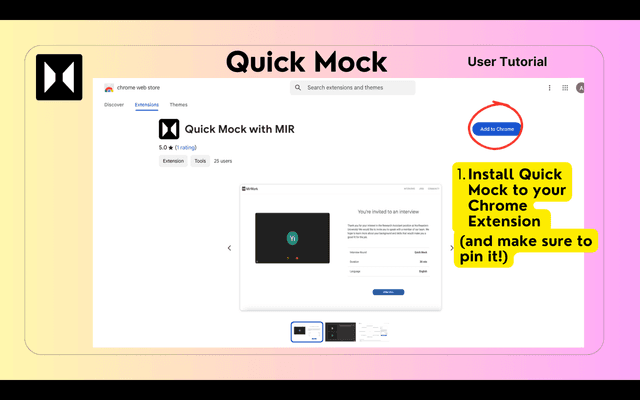
QuickMock 2.0 – AI for Hot Interviews
QuickMock 2.0 is an AI-powered interview preparation tool that instantly converts LinkedIn job descriptions into tailored mock interviews with real-time feedback and a comprehensive question bank from top companies.
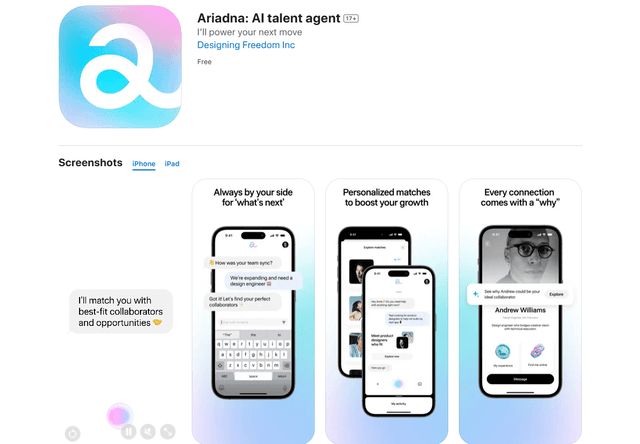
Ariadna
FreeAI Recruiting
Ariadna is the world's first AI talent agent that provides personalized career guidance, connects professionals with perfect-fit collaborators, and offers AI-driven insights to navigate career growth.