
Clyro
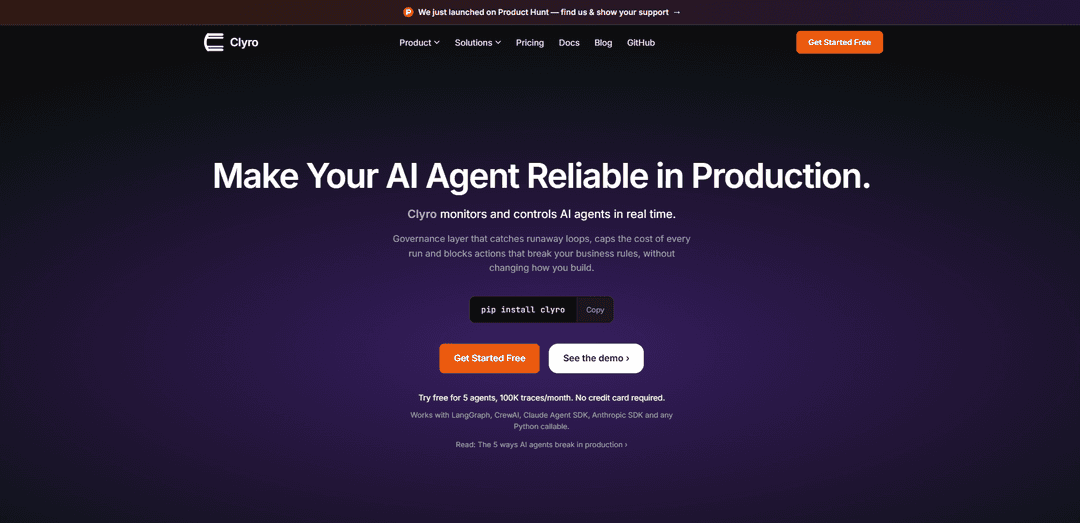
Clyro is a runtime governance layer for AI agents that prevents failures in production with real-time loop detection, cost and step limits, and policy enforcement—working across frameworks like LangGraph, CrewAI, and the Claude/Anthropic SDKs.
https://clyro.dev/?ref=producthunt
Product Information
Updated:Jul 8, 2026
What is Clyro
Clyro is a production reliability and governance platform for AI agents that monitors and controls agent execution in real time. Instead of only providing after-the-fact observability, it is designed to stop common agent failure modes before they escalate—such as infinite loops, runaway costs, and unsafe or non-compliant tool actions. It integrates as a lightweight Python SDK (e.g., via a simple “wrap your agent” pattern) and supports popular agent frameworks and SDKs, including LangGraph, CrewAI, Claude Agent SDK, and the Anthropic SDK, as well as any Python-callable agent.
Key Features of Clyro
Clyro is a runtime governance layer for AI agents that monitors and controls agent execution in real time to prevent common production failures. It adds preventive controls—like loop detection, per-run cost caps, step limits, and business-rule/policy enforcement—without requiring you to change how you build agents, and it works across popular agent frameworks (e.g., LangGraph, CrewAI, Claude Agent SDK, Anthropic SDK) and MCP-connected tool ecosystems. Clyro also provides audit-grade logging of tool calls (with context, decisions, and costs) to improve traceability, compliance readiness, and debugging when incidents occur.
Runtime execution bounds: Enforces max steps and per-session cost ceilings (with pre-call budget checks) to keep autonomous runs predictable and prevent runaway execution.
Loop detection and auto-stop: Detects repeated tool-call patterns (e.g., identical calls within a sliding window) and stops the run before it spirals into infinite loops and large bills.
Policy enforcement before tool calls: Evaluates business rules on tool parameters (allowlists, max values, equals checks, etc.) before execution to block unsafe or non-compliant actions in real time.
Append-only audit logging: Logs every tool call with full execution context, governance decisions, cost, and outcomes, supporting audit trails with sensitive-field redaction.
MCP governance (default-deny tooling): Designed for agents connected to tools via MCP, enabling controlled tool access with enforcement and auditability for security-sensitive environments.
Drop-in SDK wrapping for popular frameworks: Install and wrap existing agents (LangGraph, CrewAI, Claude Agent SDK, or any Python callable) to activate governance controls with minimal code changes.
Use Cases of Clyro
Customer support agents with strict business rules: Prevent unsafe actions like excessive refunds or off-policy responses by enforcing parameter limits, topic controls, and escalation rules before tools execute.
Autonomous DevOps / SRE automation: Bound infrastructure or operational agents with step limits, loop detection, and cost caps to reduce risk from runaway remediation loops and uncontrolled tool usage.
Security governance for tool-connected agents (MCP): Apply default-deny access and policy checks to tool calls (e.g., file, network, admin actions) while maintaining detailed audit logs for investigations.
Compliance-focused deployments (EU AI Act / NIST / OWASP-aligned evidence): Use traceable, append-only logs and enforced runtime controls to produce operational evidence and reduce risk in regulated environments.
E-commerce and ordering automation: Avoid erroneous high-impact orders (e.g., incorrect quantities) by validating tool parameters and enforcing guardrails before checkout or order submission.
Production reliability monitoring and drift detection workflows: Track execution paths and failures over time, using traces and governance decisions to spot quality regressions and investigate incidents faster.
Pros
Prevents failures proactively (loops, runaway costs, policy violations) rather than only observing them after the fact
Works across multiple agent frameworks and can wrap existing agents with minimal integration effort
Strong traceability via detailed tool-call logging with governance decisions and cost tracking
Cons
Requires defining and maintaining policies/thresholds (e.g., YAML rules, cost ceilings) to match your business logic
Some advanced enterprise needs (e.g., SSO, custom residency) appear gated behind higher-tier plans
Governance controls may block or interrupt runs, which can require tuning to avoid over-restricting legitimate agent behavior
How to Use Clyro
1) Create a Clyro account and get an API key: Sign up at https://app.clyro.dev/signup to obtain an API key (shown in the docs snippet as cly_live_...).
2) Install the Clyro SDK: In your Python environment, install the package: `pip install clyro`.
3) Configure Clyro in your code: Initialize the SDK with a config that includes your API key and an agent name, e.g. `clyro.configure(clyro.ClyroConfig(api_key="cly_live_...", agent_name="my-first-agent"))`.
4) Wrap your agent with Clyro (one-line integration): Wrap any supported agent (LangGraph, CrewAI, Claude Agent SDK, Anthropic SDK, or any Python callable) using `wrapped = clyro.wrap(your_agent)`.
5) (Optional) Set runtime execution controls (bounds + prevention): Provide `ClyroConfig` with `ExecutionControls` to enforce step limits, cost ceilings, loop detection, and policy enforcement, e.g. `controls=clyro.ExecutionControls(max_steps=50, max_cost_usd=10.0, enable_loop_detection=True, enable_policy_enforcement=True)`.
6) Run your agent through the wrapped interface: Invoke your agent via the wrapper so governance is enforced at runtime, e.g. `result = wrapped.invoke(inputs)`.
7) Add policy guardrails for tool calls (business rules): Define rules that are evaluated before every tool call (PolicyEvaluator). Configure policies in YAML or manage them from the dashboard; Clyro can block violations or log decisions for audit trails.
8) Use loop detection to stop runaway repeated tool calls: Enable loop detection (LoopDetector) to stop repeated identical tool-call patterns before costs spiral (described as detecting repeated calls within a sliding window using signature matching).
9) Enforce per-session budgets to cap spend: Enable cost tracking (CostTracker) and set a maximum cost per session (the site describes a default ceiling of $10/session with pre-call budget checks and post-call reconciliation).
10) Rely on audit logging for traceability and compliance: Use the AuditLogger to keep an append-only record of every tool call with execution context, governance decisions, cost, and outcomes; logs are stored as append-only JSONL with sensitive field redaction.
11) Connect safely in MCP-based tool ecosystems (if applicable): If your agent connects to tools via MCP, use Clyro’s MCP governance compatibility (noted as default-deny tool governance for MCP-connected agents and compatibility with MCP frameworks).
12) Validate results and monitor drift over time: Use Clyro’s tracing/monitoring to keep decisions traceable and detect quality drift (the site describes monitoring execution paths, failures, and drift in real time).
Clyro FAQs
Clyro is a runtime governance layer for AI agents that monitors and controls agent behavior in real time. It is designed to prevent common production failures like runaway loops, excessive costs, and unsafe or rule-breaking actions.
Clyro Video
Popular Articles
Atoms: A Multi-Agent AI Platform That Transforms Ideas into Launch-Ready Products
May 22, 2026

Nano Banana SBTI: What It Is, How It Works, and How to Use It in 2026
Apr 15, 2026

Atoms Review — The AI Product Builder Redefining Digital Creation in 2026
Apr 10, 2026
Kilo Claw: How to Deploy and Use a True "Do‑It‑For‑You" AI Agent(2026 Update)
Apr 3, 2026
Latest AI Tools Similar to Clyro

Hapticlabs
Hapticlabs is a no-code toolkit that enables designers, developers and researchers to easily design, prototype and deploy immersive haptic interactions across devices without coding.
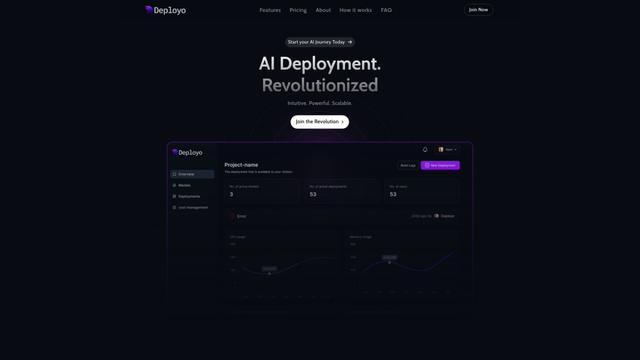
Deployo.ai
Deployo.ai is a comprehensive AI deployment platform that enables seamless model deployment, monitoring, and scaling with built-in ethical AI frameworks and cross-cloud compatibility.
CloudSoul
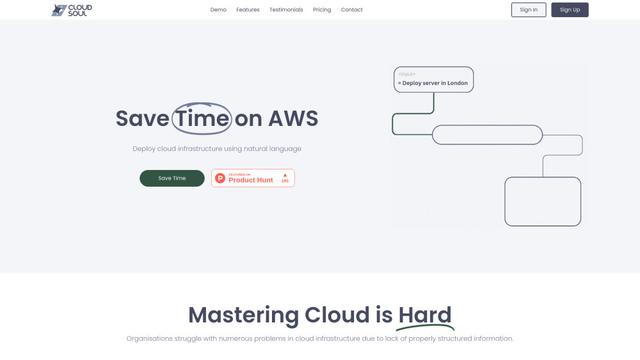
CloudSoul is an AI-powered SaaS platform that enables users to instantly deploy and manage cloud infrastructure through natural language conversations, making AWS resource management more accessible and efficient.
Devozy.ai
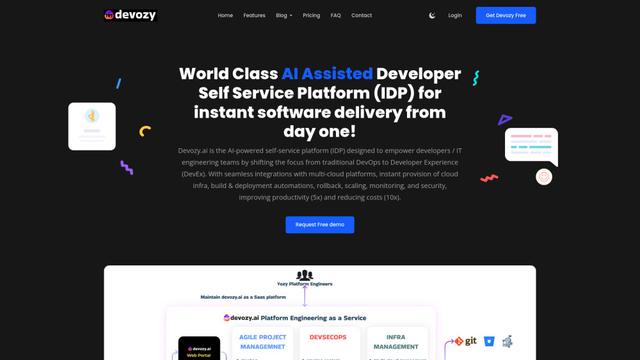
Devozy.ai is an AI-powered developer self-service platform that combines Agile project management, DevSecOps, multi-cloud infrastructure management, and IT service management into a unified solution for accelerating software delivery.
Popular AI Tools Like Clyro

A2A Protocol
A2A (Agent2Agent) Protocol is an open interoperability protocol developed by Google that enables seamless communication and collaboration between AI agents across different frameworks and vendors, regardless of their underlying architecture.
VoltOps
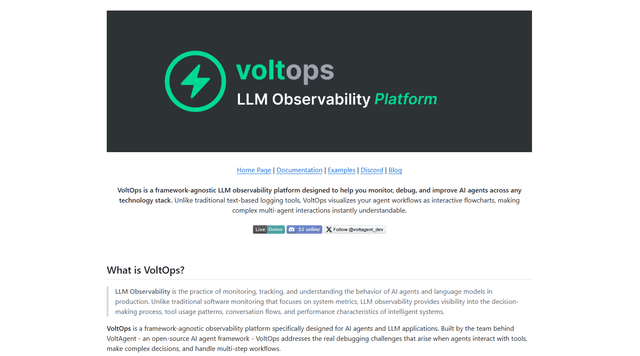
VoltOps is a framework-agnostic LLM observability platform that provides real-time visual monitoring, debugging, and optimization tools for AI agents across any technology stack.
Chaterm
Chaterm is an open-source AI-native terminal and SRE copilot that enables engineers to manage complex infrastructure through natural language, automating deployment, troubleshooting, and operations without memorizing commands.
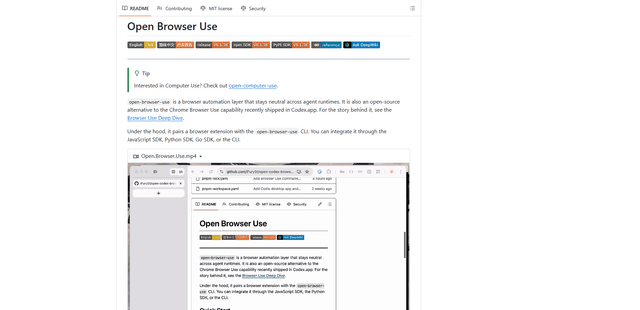
Open Browser Use
Open Browser Use is an open-source, agent-runtime-neutral browser automation layer that pairs a Chrome extension with a CLI/SDK/MCP to enable DOM-aware, CDP-powered tab control, navigation, and actions across different AI agent tools.