
Browserbase
Browserbase is a browser-as-a-service platform that lets AI agents reliably run and scale real headless browser sessions on the web, with agent-friendly primitives like Search and Fetch plus tooling for automation and monitoring.
https://browserbase.com/?ref=producthunt

Product Information
Updated:Jun 9, 2026
What is Browserbase
Browserbase is a cloud platform built to help developers and teams build, deploy, and operate AI agents and automations that browse and interact with websites like humans. Instead of running fragile browser farms yourself, Browserbase provides managed, isolated headless browser infrastructure designed for agent workloads—supporting dynamic pages, authentication flows, and complex UI interactions. It positions the web as a programmable surface (similar to APIs) by combining scalable browser sessions with developer tooling (like the open-source Stagehand SDK) and ready-to-use templates for common workflows.
Key Features of Browserbase
Browserbase is a serverless “browser-as-a-service” platform that lets developers and AI agents run and manage fleets of cloud-hosted headless Chromium sessions at scale, using familiar automation tools (Playwright, Puppeteer, Selenium) or its Stagehand SDK. It focuses on making real-world web interaction reliable in production with built-in observability (live view, session inspector/replay), session/state management, and automation hardening features like stealth mode, proxy support, and CAPTCHA handling—so agents can navigate logins, dynamic pages, and unpredictable UIs the way humans do, without teams maintaining browser infrastructure.
Browser-as-a-Service at scale: Spin up and run large numbers of fully managed, isolated headless browser sessions in the cloud without maintaining your own browser grid or servers.
Native automation compatibility: Works with common frameworks like Playwright, Puppeteer, and Selenium, enabling teams to adopt Browserbase with minimal changes to existing automation code.
Agent-friendly web primitives (Search + Fetch): Provides APIs for agent-oriented web search and for converting URLs into structured context (HTML/JSON/Markdown) to feed downstream workflows.
Observability and debugging: Includes session visibility tools such as Live View and session inspection/replay to troubleshoot failures and audit agent behavior.
Stealth, proxying, and CAPTCHA handling: Helps automations stay reliable on bot-protected sites with stealth mode capabilities, proxy options (including residential), and automated CAPTCHA handling.
Persistent contexts and advanced browser features: Supports storing and reusing browser state (cookies/cache/login) across runs and enables advanced needs like file downloads, uploads, custom extensions, and long-running sessions.
Use Cases of Browserbase
AI agents for login-gated workflows: Automate tasks behind authentication (portals, dashboards, vendor sites) by persisting sessions/contexts and navigating multi-step flows that APIs can’t reach.
E-commerce and market monitoring: Track prices, inventory, and competitor changes across many sites in parallel, with resilience to UI changes and bot defenses.
Continuous product QA and synthetic monitoring: Run always-on agents that click through critical user journeys and alert when a checkout, signup, or payment flow breaks.
KYC/AML and business verification: Collect and verify information from business registries and government or compliance sites that require interactive browsing.
High-volume web research and lead ops: Scale research tasks (finding sources, extracting structured context, organizing results) by running many concurrent sessions and using Fetch/Search primitives.
Form automation in regulated/enterprise workflows: Automate repetitive submissions (applications, internal tools, procurement/vendor forms) including file uploads/downloads and auditable session logs.
Pros
Eliminates browser infrastructure overhead while supporting familiar automation stacks (Playwright/Puppeteer/Selenium).
Production-grade reliability features (observability, stealth/proxy/CAPTCHA handling, long-running sessions) designed for real web conditions.
Scales to many concurrent sessions, enabling parallel research, monitoring, and automation workloads.
Cons
Long-running or high-concurrency workloads may be constrained by plan limits (e.g., session duration/concurrency), requiring higher tiers for heavy usage.
Some advanced capabilities may be gated or on waitlists for lower-tier users (per third-party reports).
Stealth/proxy-based automation can still be affected by evolving bot detection and site policy restrictions, requiring ongoing tuning and compliance review.
How to Use Browserbase
1) Create a Browserbase account and open a project: Sign up/log in to Browserbase, then click into a project. The Overview dashboard is the first page you’ll see and is useful for discovering available pages and features before you start building.
2) Choose the right Browserbase primitive for your task: Pick the API based on what you need: Search API (agent-friendly web search), Fetch API (convert a URL into HTML/JSON/markdown for quick context), or Browser-as-a-Service (a real browser for interactive flows like logins, forms, dynamic sites). If you’re unsure which framework to use for browser automation, Stagehand is recommended (built and maintained by Browserbase).
3) Set environment variables (API keys and project ID): Configure credentials in your environment: BROWSERBASE_PROJECT_ID=your_project_id and BROWSERBASE_API_KEY=your_api_key. If you use Stagehand with an LLM, also set OPENAI_API_KEY (optional) and/or ANTHROPIC_API_KEY (optional).
4) Start with Stagehand for browser automation (recommended): Write a Stagehand script to control a real browser like a human—navigate pages, handle dynamic content, and complete multi-step UI flows. This is the best fit for tasks involving authentication, unpredictable UI, or complex interactions.
5) Create a browser session (Browser-as-a-Service): Use Browserbase to spin up a browser instance (a session) in the cloud. This session is the runtime your Stagehand/Playwright/Puppeteer/Selenium code will drive.
6) Connect your model (for agentic control): Attach an LLM to the session (commonly via Stagehand) so it can interpret page state, decide next actions, and execute steps autonomously.
7) Execute your first end-to-end workflow: Run a simple flow: open a site, navigate to a target page, extract information, and take an action (e.g., fill a form, click through a flow, download/upload a file).
8) Use human-in-the-loop Live View when the agent gets stuck: If the workflow hits MFA, CAPTCHA, or an unexpected prompt, Browserbase can provide a Live View URL so a user can complete the step in the same session, then the automation continues.
9) Use Fetch API for fast page context extraction: When you don’t need full browser interaction, use Fetch API to turn any URL into HTML/JSON/markdown for quick extraction and downstream processing (summaries, structured data, etc.).
10) Use Search API to find relevant sites/pages for your agent: When your agent needs discovery, use Search API to find relevant websites from a single query, then pass resulting URLs into Fetch or a browser session depending on complexity.
11) Integrate with existing automation frameworks if needed: If you already use Playwright, Puppeteer, or Selenium, you can integrate Browserbase without changing your overall approach—direct your setup to use Browserbase-hosted browsers instead of self-managed infrastructure.
12) Consider Browserbase Functions for running automation in one place: If you want a single place to run both the browser and the code that drives it (instead of maintaining separate infrastructure to keep scripts alive), initialize and deploy using Browserbase Functions.
13) Scale up: run many concurrent sessions for production workloads: Once a workflow is stable, scale by running multiple concurrent browser sessions for use cases like continuous QA checks, large-scale research, monitoring sites for changes, or automating internal tools.
14) Use templates, playbooks, and examples to accelerate: Leverage Browserbase templates and the open-source playbook/examples to jumpstart common workflows (e.g., monitoring trends, KYC registry checks, job applications, enabling coding agents to use the web).
15) Get help and support: If you get stuck, consult the Browserbase documentation and examples, or contact support at [email protected].
Browserbase FAQs
Browserbase is a browser-as-a-service platform that helps developers run, manage, and monitor headless browsers at scale, making the web more reliable and programmable for AI agents.
Browserbase Video
Popular Articles
Atoms: A Multi-Agent AI Platform That Transforms Ideas into Launch-Ready Products
May 22, 2026

Nano Banana SBTI: What It Is, How It Works, and How to Use It in 2026
Apr 15, 2026

Atoms Review — The AI Product Builder Redefining Digital Creation in 2026
Apr 10, 2026

Kilo Claw: How to Deploy and Use a True "Do‑It‑For‑You" AI Agent(2026 Update)
Apr 3, 2026
Latest AI Tools Similar to Browserbase

Hapticlabs
Hapticlabs is a no-code toolkit that enables designers, developers and researchers to easily design, prototype and deploy immersive haptic interactions across devices without coding.
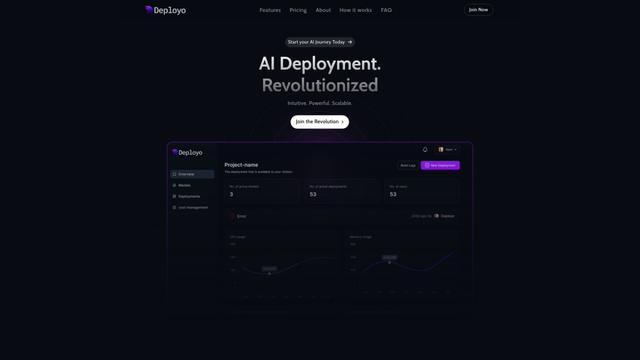
Deployo.ai
Deployo.ai is a comprehensive AI deployment platform that enables seamless model deployment, monitoring, and scaling with built-in ethical AI frameworks and cross-cloud compatibility.
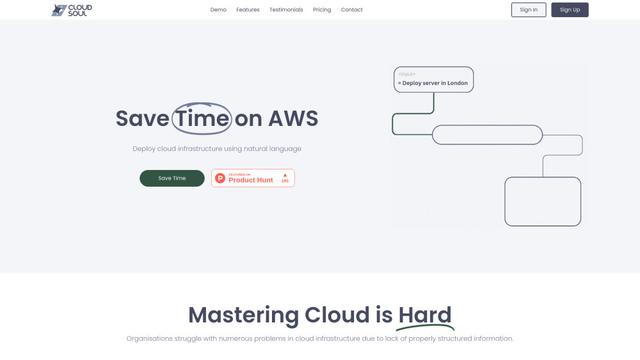
CloudSoul
CloudSoul is an AI-powered SaaS platform that enables users to instantly deploy and manage cloud infrastructure through natural language conversations, making AWS resource management more accessible and efficient.
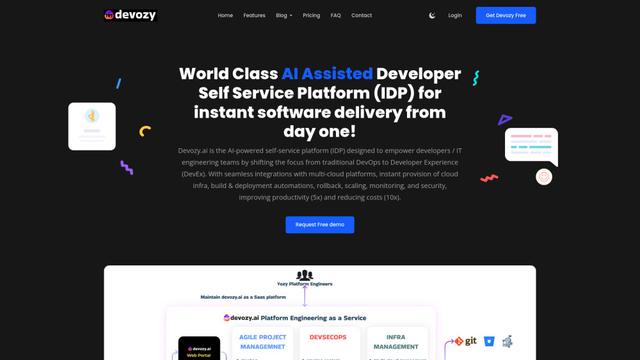
Devozy.ai
Devozy.ai is an AI-powered developer self-service platform that combines Agile project management, DevSecOps, multi-cloud infrastructure management, and IT service management into a unified solution for accelerating software delivery.
Popular AI Tools Like Browserbase

A2A Protocol
A2A (Agent2Agent) Protocol is an open interoperability protocol developed by Google that enables seamless communication and collaboration between AI agents across different frameworks and vendors, regardless of their underlying architecture.
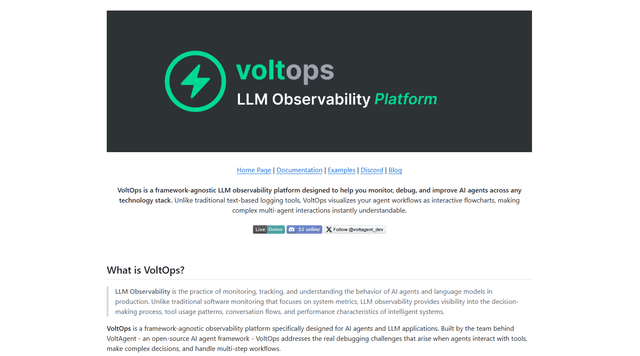
VoltOps
VoltOps is a framework-agnostic LLM observability platform that provides real-time visual monitoring, debugging, and optimization tools for AI agents across any technology stack.
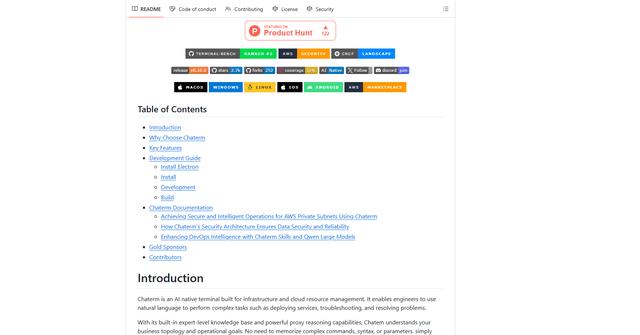
Chaterm
Chaterm is an open-source AI-native terminal and SRE copilot that enables engineers to manage complex infrastructure through natural language, automating deployment, troubleshooting, and operations without memorizing commands.
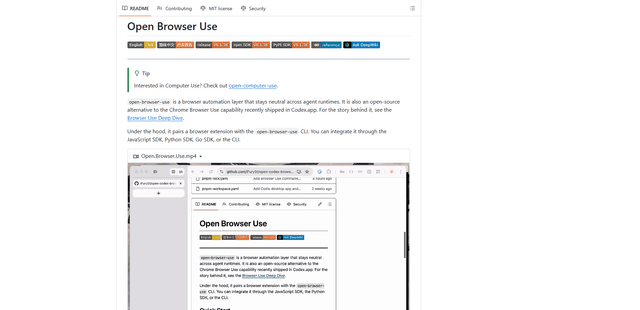
Open Browser Use
Open Browser Use is an open-source, agent-runtime-neutral browser automation layer that pairs a Chrome extension with a CLI/SDK/MCP to enable DOM-aware, CDP-powered tab control, navigation, and actions across different AI agent tools.