
box
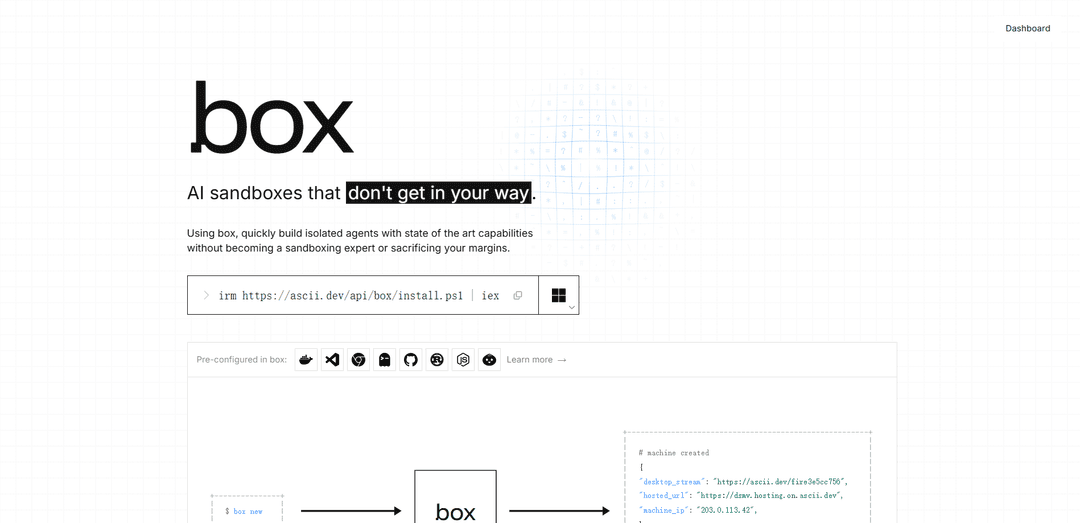
box by ASCII provides persistent Ubuntu VMs built for AI agents with SSH/SCP, Docker-in-VM, dedicated IPv4, snapshot/fork workflows, a 60fps desktop, and per-second billing (with a $20/month minimum).
https://box.ascii.dev/?ref=producthunt
Product Information
Updated:Aug 8, 2026
What is box
box (box.ascii.dev) is a cloud sandbox product from ASCII designed to run long-running, stateful agent workloads on full Linux machines rather than constrained ephemeral sandboxes. Each “box” is a persistent Ubuntu virtual machine that you can access via SSH and SCP, run Docker inside, and even use through a high-frame-rate virtual desktop. Boxes come pre-configured with common developer tooling (e.g., Docker, VS Code, Chrome, GitHub CLI, Rust, Node.js, Bun), so you can bring your preferred agent tooling (such as Claude Code, Codex, or OpenCode) and start quickly without building your own sandboxing stack.
Key Features of box
box (by ASCII) provides persistent Ubuntu virtual machines designed as sandboxes for AI agents and automation. Each box supports SSH/SCP access, Docker inside the VM, a dedicated IPv4 address, snapshotting with fast disk-level forking, and an optional 60fps virtual desktop. Common developer tools and languages (e.g., Docker, VS Code, Chrome, GitHub CLI, Rust, Node.js, Bun) come pre-installed, and boxes can be created and managed via a CLI (with JSON output for scripting) or via an HTTP API and SDKs. Pricing is per-second while running, with stop/resume snapshotting to pause billing, under a simple $20/month minimum that converts into a pool of VM-seconds usable across many boxes.
Persistent Ubuntu VMs for agents: Each box is a full Linux machine (Ubuntu) that keeps filesystem state across stop/resume, enabling long-running or stateful agent workflows without rebuilding environments.
SSH/SCP + Docker-in-VM: Connect with standard SSH/SCP and run Docker inside the VM, making it compatible with typical devops workflows, containerized toolchains, and existing automation scripts.
Snapshots and fast forking: Stop a box to snapshot it (pausing billing), then resume quickly; fork from snapshots to clone environments efficiently for parallel tasks or reproducible runs.
Dedicated IPv4 per machine: Each box includes its own IPv4 address, simplifying networking for services, callbacks/webhooks, and integration tests that require stable addressing.
Pre-installed devtools and languages: Comes ready with tools like Docker, VS Code, Chrome, Ghostty, GitHub CLI, Rust, Node.js, and Bun, reducing setup time for agent or developer environments.
CLI, API, and SDK automation: Use `box new`, `box ssh`, `box fork`, `box stop`, etc., with `--json` for scripting, or integrate directly via HTTP API plus Python/TypeScript SDKs for product-grade orchestration.
Use Cases of box
Agent factories and long-running assistants: Run durable, stateful agent workers that can be stopped/resumed with snapshots, keeping project files and installed dependencies for ongoing tasks.
CI/automation workers for engineering teams: Spin up isolated VMs per job or per branch, run Docker-based builds/tests, then snapshot or fork golden environments to speed up pipelines.
SaaS product sandboxing for customer workloads: Provision boxes for end users (optionally without inheriting your secrets) to safely run customer-specific code, integrations, or data processing in isolation.
Browser-based QA and web automation: Use the included Chrome and optional virtual desktop to run UI testing, scraping, or RPA-style workflows that need a real browser environment.
Reproducible research and data experiments: Capture snapshots of configured environments and fork them for parallel experiments, ensuring consistent dependencies and reducing environment drift.
Pros
Cost-efficient per-second billing with a simple $20/month minimum that converts into pooled VM time across many boxes
Full-VM capabilities (Ubuntu + Docker + SSH) with persistent state, making it flexible for real-world dev/agent workloads
Fast snapshot/stop/resume and forking enable reproducible environments and easy parallelization
Automation-friendly via CLI (`--json`), HTTP API, and Python/TypeScript SDKs
Cons
Region availability is currently EU-focused (e.g., Germany, Finland, France), which may not fit data residency or latency needs elsewhere
Default box TTL is 1 hour (though overrideable), requiring attention for truly long-lived unattended workloads
On stop/resume, hand-run processes don’t persist and must be restarted (only files/packages/systemd services survive)
How to Use box
1) Install the Box CLI: macOS/Linux: run `curl -fsSL https://ascii.dev/api/box/install | sh`. Windows (PowerShell): run `irm https://ascii.dev/api/box/install.ps1 | iex`.
2) Finish onboarding / authenticate: After install, complete the CLI’s onboarding/auth flow when prompted so the CLI can create and manage boxes in your account.
3) Create your first box (a persistent Ubuntu VM): Run `box new` to spin up a new persistent Ubuntu VM (“box”).
4) List boxes and find the one you want to use: Run `box list` to see all boxes in your account and confirm your new box is running.
5) Connect over SSH (interactive terminal): Run `box ssh` to open an SSH session into the box from your terminal.
6) Copy files in/out with SCP: Run `box scp` to transfer files between your machine and the box using SCP.
7) Use the built-in desktop when you need a GUI: Run `box desktop` to open the box’s 60fps virtual desktop for GUI workflows.
8) Run an agent inside the box (Claude/Codex): Run `box prompt` to run Claude or Codex inside the box (useful for agent workflows that need a real VM environment).
9) Snapshot + pause billing when you’re done for now: Run `box stop` to snapshot the box and pause billing; your files, installed packages, and enabled systemd services persist across stop/resume.
10) Fork a box from a snapshot to branch work: Run `box fork` to clone a box from a snapshot (fast disk-level fork) so you can create parallel environments from a known state.
11) Automate CLI usage with stable JSON output (optional): Add `--json` to any CLI command to get stable JSONL output for scripting/automation.
12) Prefer the HTTP API/SDKs for product/CI integrations (optional): If you’re building Box into a product, CI system, hosted worker, or agent platform, use the HTTP API and SDKs instead of shelling out to the CLI: API docs at `https://docs.ascii.dev/box/api/v1`, SDK overview at `https://docs.ascii.dev/box/sdks/overview`.
box FAQs
box is a product by ASCII. A box is a persistent Ubuntu (Linux) virtual machine designed for agents, with SSH/SCP access, Docker support inside the VM, a dedicated IPv4 per machine, a 60fps virtual desktop, and fast disk-level forking from a snapshot.
box Video
Popular Articles

Atoms: A Multi-Agent AI Platform That Transforms Ideas into Launch-Ready Products
May 22, 2026

Nano Banana SBTI: What It Is, How It Works, and How to Use It in 2026
Apr 15, 2026

Atoms Review — The AI Product Builder Redefining Digital Creation in 2026
Apr 10, 2026

Kilo Claw: How to Deploy and Use a True "Do‑It‑For‑You" AI Agent(2026 Update)
Apr 3, 2026
Latest AI Tools Similar to box
Gait
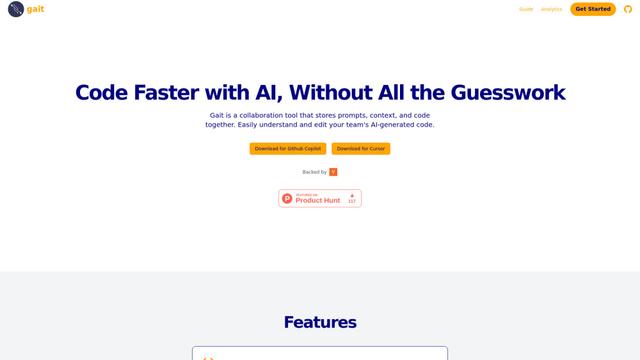
Gait is a collaboration tool that integrates AI-assisted code generation with version control, enabling teams to track, understand, and share AI-generated code context efficiently.
invoices.dev
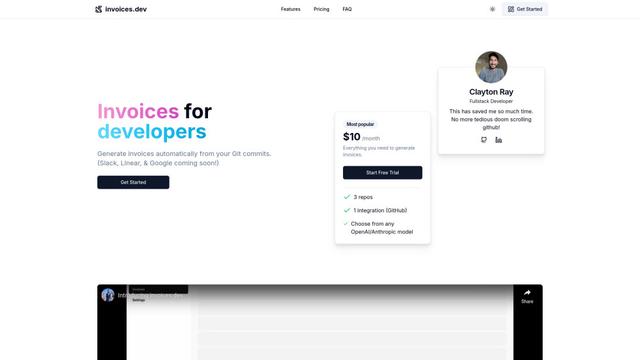
invoices.dev is an automated invoicing platform that generates invoices directly from developers' Git commits, with integration capabilities for GitHub, Slack, Linear, and Google services.
EasyRFP
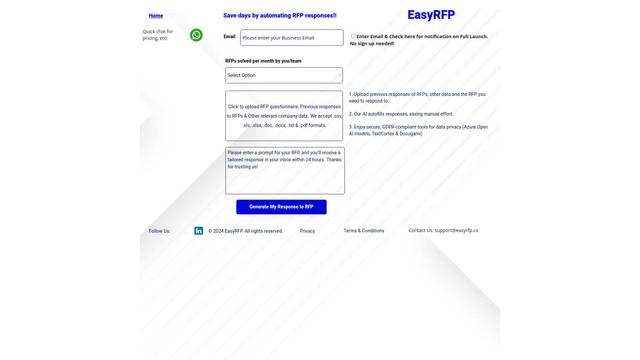
EasyRFP is an AI-powered edge computing toolkit that streamlines RFP (Request for Proposal) responses and enables real-time field phenotyping through deep learning technology.

Cart.ai
Cart.ai is an AI-powered service platform that provides comprehensive business automation solutions including coding, customer relations management, video editing, e-commerce setup, and custom AI development with 24/7 support.
Popular AI Tools Like box

GitHub Copilot Chat
GitHub Copilot Chat is an AI-powered coding assistant that provides natural language interactions, real-time code suggestions, and contextual support directly within supported IDEs and GitHub.com.
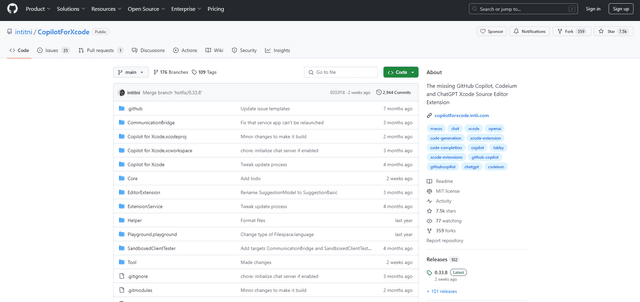
CopilotForXcode
CopilotForXcode is an Xcode Source Editor Extension that integrates GitHub Copilot, Codeium, and ChatGPT to provide AI-powered code suggestions, chat assistance, and prompt-to-code functionality within Xcode.
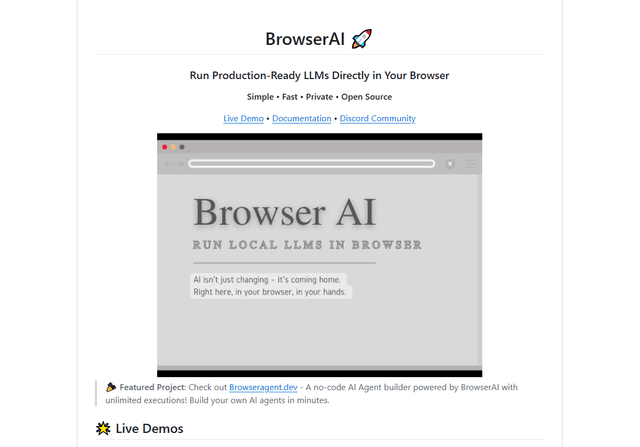
BrowserAI
BrowserAI is an open-source library that enables running local Large Language Models (LLMs) directly in web browsers with WebGPU acceleration, offering privacy-focused AI capabilities without requiring server infrastructure.
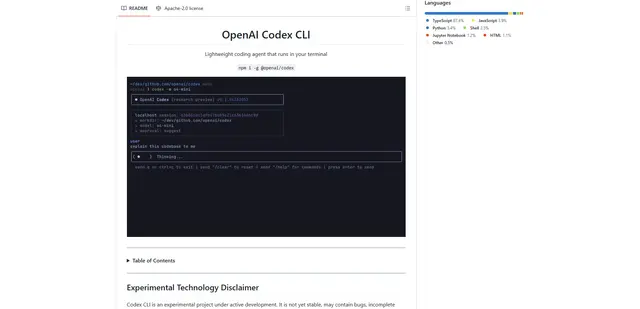
OpenAI Codex CLI
OpenAI Codex CLI is a lightweight, open-source coding agent that runs in your terminal, enabling developers to translate natural language into code execution while providing ChatGPT-level reasoning with the ability to run code, manipulate files, and iterate under version control.