Aegisora
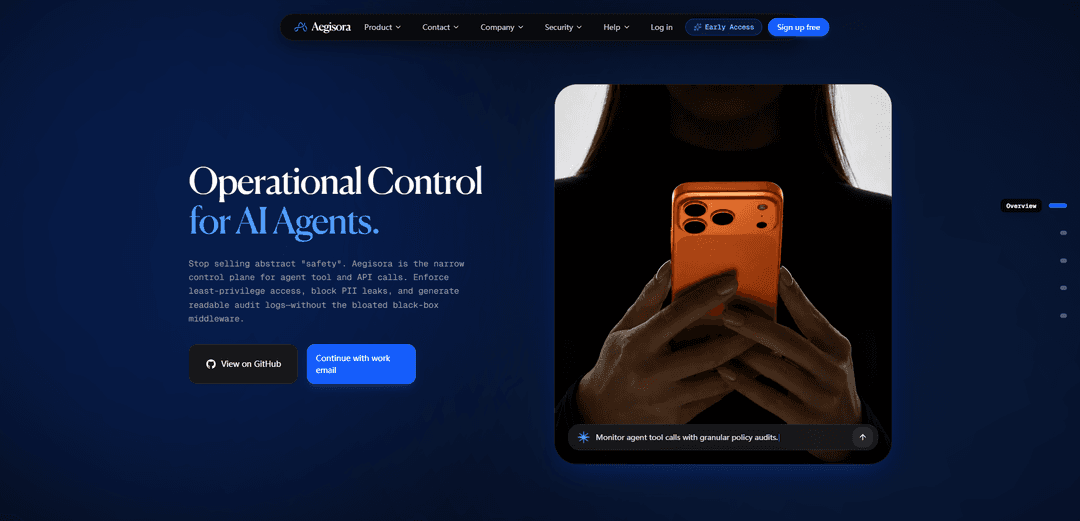
Aegisora is a narrow runtime control plane for AI agents that intercepts tool/API calls to enforce least-privilege access, prevent PII leakage, and generate immutable, human-readable audit logs with fail-closed security.
https://aegisora-ai.vercel.app/?ref=producthunt
Product Information
Updated:Aug 8, 2026
What is Aegisora
Aegisora is an operational control and governance layer designed to let organizations see what their AI agents actually do—and to control it in real time. Instead of offering abstract “safety,” it focuses on runtime enforcement for agent tool and API calls, helping teams block unauthorized actions, reduce prompt-injection risk, and maintain compliance-ready visibility. Built for strict enterprise security reviews, Aegisora emphasizes zero external leakage, readable audit trails, and a deployment model that keeps sensitive payloads inside your perimeter.
Key Features of Aegisora
Aegisora is a narrow, zero-trust operational control plane for AI agents that intercepts and governs tool/API calls at runtime. Deployed as a lightweight sidecar proxy inside a customer’s secure perimeter, it prevents unauthorized actions, blocks or masks PII leakage, and produces structured, human-readable, immutable audit logs for security reviews and compliance. It emphasizes fail-closed enforcement, swarm-level visibility, and real-time telemetry/alerts to enterprise tools, enabling organizations to move from passive monitoring to active runtime governance of agentic systems.
Local VPC sidecar proxy: Runs as a lightweight proxy inside your secure perimeter so raw payloads and sensitive data don’t touch third-party infrastructure, supporting a “zero external leakage” posture.
Runtime interception & policy enforcement: Actively intercepts agent tool calls and reasoning traces to enforce least-privilege access and block unauthorized tool/API usage in real time.
Fail-closed compliance controls: Defaults to strict fail-closed behavior for critical security violations or disruptions, preventing unverified execution when governance cannot be assured.
PII leakage prevention (masking/blocking): Detects and prevents sensitive data exposure by masking PII vectors and stopping risky payloads before they leave the runtime boundary.
Immutable, readable audit logs: Records every tool call, payload interception, and policy decision into structured audit trails designed to speed up SOC 2/ISO-style reviews and investigations.
Swarm command center & real-time telemetry: Provides centralized oversight for multiple agents (“swarms”), including tool usage tracking and context-aware alerts via integrations like Slack, Microsoft Teams, and PagerDuty.
Use Cases of Aegisora
Enterprise agent governance for SecOps: Security teams can monitor and enforce runtime policies across many agents, receive real-time violation alerts, and maintain immutable evidence for incident response.
Regulated industries (finance/healthcare) compliance logging: Organizations can retain structured, immutable decision and tool-call logs to support audits and demonstrate controls around sensitive data handling and automated actions.
Preventing prompt-injection-driven tool misuse: When agents face malicious instructions, Aegisora can intercept and block unauthorized tool calls, reducing the blast radius of prompt injection attempts.
Least-privilege control for internal copilots: For internal assistants that connect to databases, ticketing, or admin APIs, Aegisora enforces granular permissions so agents only access approved tools and scopes.
Multi-agent orchestration oversight (agent swarms): Teams running multiple specialized agents can track tool usage and decisions centrally, ensuring consistent policy enforcement and visibility across the swarm.
Pros
Strong security posture: local sidecar deployment helps keep raw payloads inside the perimeter and supports zero-trust designs.
Active runtime enforcement (not just monitoring), including fail-closed behavior for critical violations.
Immutable, human-readable audit logs designed for strict security reviews and compliance workflows.
Operational integrations (e.g., Slack/Teams/PagerDuty) enable real-time response to policy violations.
Cons
Requires deployment/operation of a sidecar proxy within customer infrastructure, which can add integration and maintenance overhead.
Tight enforcement and fail-closed defaults may interrupt workflows if policies are misconfigured or too strict.
Some advanced capabilities appear tiered (e.g., managed proxy, advanced detection, enterprise SIEM/SSO), potentially limiting full value to higher plans.
How to Use Aegisora
1) Choose your Aegisora deployment tier: Pick the option that matches your environment and security needs: (a) Developer Sandbox (open source, free forever) for local testing and basic guardrails, (b) Design Partner Priority Access for cloud-managed governance and swarm oversight, or (c) Enterprise VPC Custom for dedicated/on-prem deployments with advanced compliance, RBAC/SSO, and SIEM integrations.
2) Deploy Aegisora inside your secure perimeter (sidecar proxy): Install Aegisora as a lightweight sidecar proxy in your local VPC / secure network boundary so raw payloads and PII remain inside your perimeter. This is the core architecture Aegisora uses to prevent external leakage while intercepting agent tool/API calls at runtime.
3) Enable fail-closed enforcement: Configure runtime policies so that if the proxy or network is disrupted, Aegisora defaults to fail-closed for critical security violations—blocking unverified execution rather than allowing potentially unsafe tool calls to proceed.
4) Connect your agent(s) to route tool/API calls through Aegisora: Point your AI agent’s tool and API traffic to the Aegisora sidecar proxy so Aegisora can intercept requests, evaluate them against policies, and either allow, block, or mask sensitive content before execution.
5) Start with the built-in local guardrails (Developer Sandbox): In the open-source Developer Sandbox, turn on the included capabilities for local engineering exploration: Local Agent Monitoring, Basic Runtime Logs, Prompt Interception, Local Zero-Trust Proxy, and Rule-based Blocking.
6) Configure least-privilege access for agent tools: Define which tools and APIs each agent is allowed to call (and under what conditions). Use Aegisora’s runtime governance approach to enforce least-privilege permissions and block unauthorized tool calls.
7) Add PII protection rules (masking + leak prevention): Set policies to detect and prevent PII leakage during tool calls and payload handling. Aegisora is designed to block PII leaks and (in higher tiers) apply PII masking while keeping raw payloads inside your perimeter.
8) Run an agent workflow and observe real-time enforcement: Execute your agent tasks and watch Aegisora intercept tool calls in real time—blocking unauthorized actions, preventing PII leakage, and producing readable runtime decisions as the agent operates.
9) Review immutable audit logs for compliance and debugging: Use Aegisora’s structured, human-readable, immutable audit trails to review every tool call, payload interception, and policy decision. These logs are intended to support SOC2/ISO-style reviews and operational debugging.
10) Use the Runtime Governance Console / Command Center for swarm oversight: For multi-agent environments, use Aegisora’s governance console to monitor swarms, track tool usage, and view decision timelines. This moves from passive monitoring to active runtime governance across many agents.
11) Integrate SecOps alerting (Slack / Teams / PagerDuty): Connect Aegisora telemetry to your enterprise workflows so security teams receive instant alerts for zero-trust policy violations, masked PII vectors, and runtime prompt injection attempts.
12) Expand to enterprise integrations as needed (Azure OpenAI / Bedrock / SIEM): If you need broader provider coverage and compliance operations, move to Enterprise VPC Custom to integrate with Azure OpenAI, AWS Bedrock, and custom SIEM pipelines, plus advanced governance features like multi-tier approvals and RBAC/SSO (SAML).
Aegisora FAQs
Aegisora is an operational control plane for AI agents that intercepts agent tool and API calls at runtime to enforce least-privilege access, block PII leakage, and generate readable, structured audit logs—positioned as a narrow, non–black-box governance layer.
Aegisora Video
Popular Articles

Vosko AI: Localize and Dub Videos for Global Audiences
Oct 15, 2026

Atoms: A Multi-Agent AI Platform That Transforms Ideas into Launch-Ready Products
Oct 13, 2026

Nano Banana SBTI: What It Is, How It Works, and How to Use It in 2026
Apr 15, 2026

Atoms Review — The AI Product Builder Redefining Digital Creation in 2026
Apr 10, 2026
Latest AI Tools Similar to Aegisora

Hapticlabs
Hapticlabs is a no-code toolkit that enables designers, developers and researchers to easily design, prototype and deploy immersive haptic interactions across devices without coding.
Deployo.ai
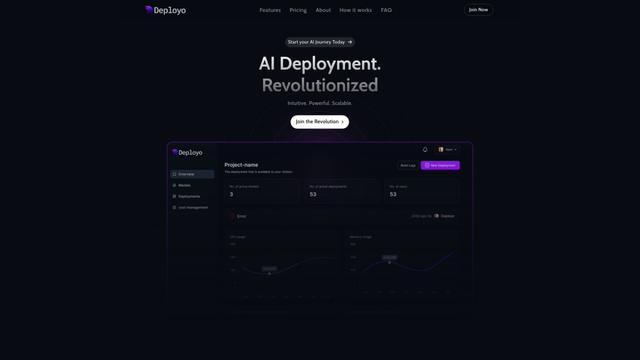
Deployo.ai is a comprehensive AI deployment platform that enables seamless model deployment, monitoring, and scaling with built-in ethical AI frameworks and cross-cloud compatibility.
CloudSoul
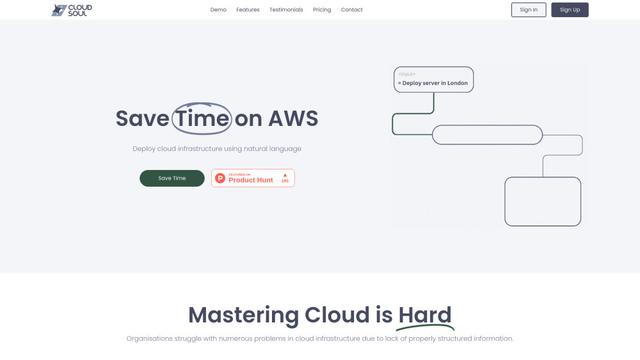
CloudSoul is an AI-powered SaaS platform that enables users to instantly deploy and manage cloud infrastructure through natural language conversations, making AWS resource management more accessible and efficient.
Devozy.ai
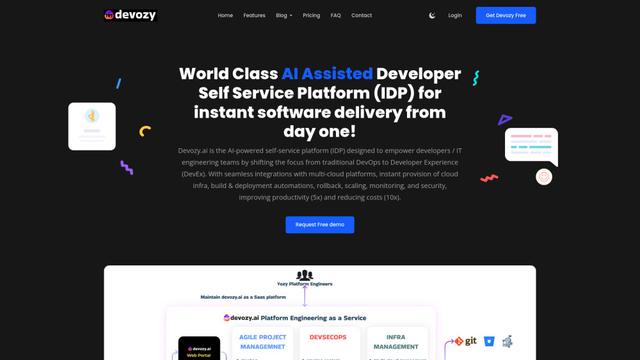
Devozy.ai is an AI-powered developer self-service platform that combines Agile project management, DevSecOps, multi-cloud infrastructure management, and IT service management into a unified solution for accelerating software delivery.
Popular AI Tools Like Aegisora

A2A Protocol
A2A (Agent2Agent) Protocol is an open interoperability protocol developed by Google that enables seamless communication and collaboration between AI agents across different frameworks and vendors, regardless of their underlying architecture.
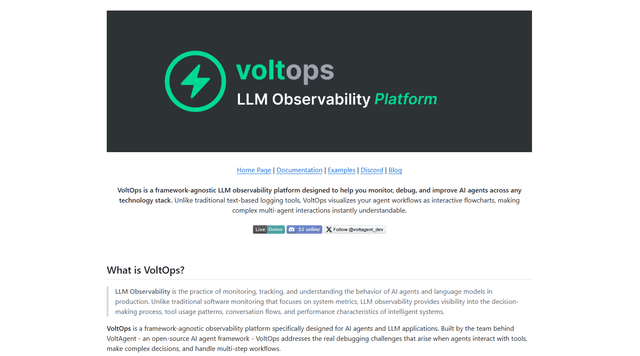
VoltOps
VoltOps is a framework-agnostic LLM observability platform that provides real-time visual monitoring, debugging, and optimization tools for AI agents across any technology stack.
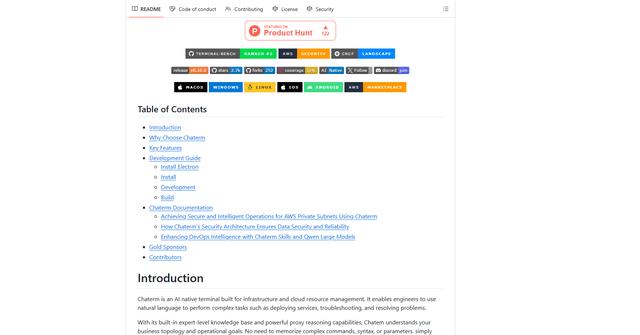
Chaterm
Chaterm is an open-source AI-native terminal and SRE copilot that enables engineers to manage complex infrastructure through natural language, automating deployment, troubleshooting, and operations without memorizing commands.
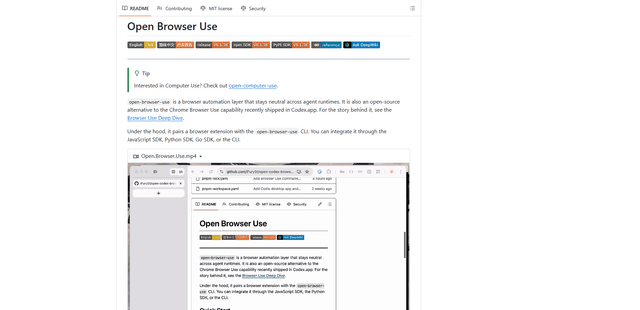
Open Browser Use
Open Browser Use is an open-source, agent-runtime-neutral browser automation layer that pairs a Chrome extension with a CLI/SDK/MCP to enable DOM-aware, CDP-powered tab control, navigation, and actions across different AI agent tools.