
CRML
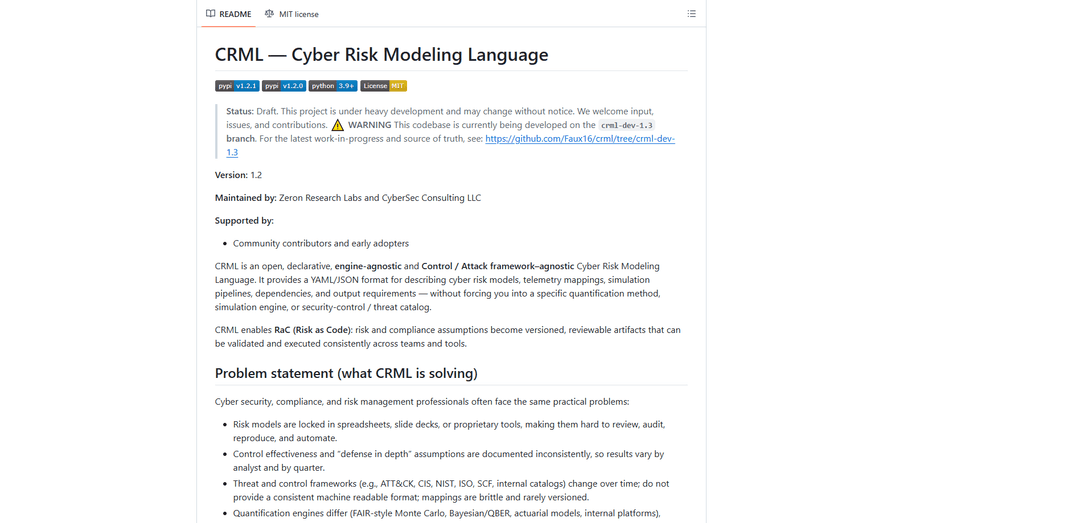
CRML is an open, declarative, implementation-agnostic language for expressing cyber risk models that enables organizations to standardize, validate and automate their risk assessment processes through code.
https://github.com/Faux16/crml?ref=producthunt
Informações do Produto
Atualizado:Feb 15, 2026
O que é CRML
CRML (Cyber Risk Modeling Language) is a specialized language designed to address the challenges in cyber security risk management. It provides a YAML/JSON format for describing cyber risk models, telemetry mappings, simulation pipelines, dependencies, and output requirements without forcing users into specific quantification methods, simulation engines, or security-control frameworks. Developed and maintained by Zeron Research Labs and CyberSec Consulting LLC, CRML enables 'Risk as Code' (RaC), where risk and compliance assumptions become versioned, reviewable artifacts that can be validated and executed consistently across teams and tools.
Principais Recursos do CRML
CRML (Cyber Risk Modeling Language) is an open-source, declarative language designed for expressing and standardizing cyber risk models. It provides a YAML/JSON format for describing risk models, telemetry mappings, simulation pipelines, dependencies, and output requirements without being tied to specific quantification methods or security frameworks. The language enables Risk as Code (RaC), making risk and compliance assumptions versioned, reviewable artifacts that can be consistently validated and executed across different teams and tools.
Control Effectiveness Modeling: Allows quantification of how security controls reduce risk, including defense-in-depth scenarios and effectiveness parameters
Framework Agnostic Integration: Supports multiple security frameworks (ATT&CK, CIS, NIST, ISO, SCF) with flexible mapping capabilities and version control
Multi-Currency Support: Enables modeling across different currencies with automatic conversion functionality
Validation and Reproducibility: Provides strict JSON Schema validation and ensures models are reproducible across different tools and teams
Casos de Uso do CRML
Security Investment Analysis: Compare and justify security spending by modeling risk scenarios with and without specific security controls or investments
Regulatory Compliance: Create audit-ready documentation and evidence of risk calculations for regulatory requirements and compliance reporting
Enterprise Risk Management: Standardize risk assessment across different business units and integrate cyber risk with enterprise risk planning
Insurance and Financial Planning: Model potential cyber risks and their financial impacts for insurance coverage decisions and financial planning
Vantagens
Implementation-agnostic design allows flexibility in choosing simulation engines
Human-readable YAML format makes it easy to review and audit
Standardized approach enables consistent risk modeling across organization
Desvantagens
Project is still under heavy development and may change without notice
Requires technical expertise to implement and maintain
Limited to organizations with mature risk management practices
Como Usar o CRML
Install CRML packages: Install either the full CLI package with 'pip install crml-engine' or just the language library with 'pip install crml-lang'. For SCF support, use 'pip install "crml-lang[scf]"'
Create CRML YAML model file: Create a YAML file defining your cyber risk model with required fields like crml_scenario version, meta information, and scenario details including frequency and severity parameters
Validate CRML file: Use the CLI command 'crml-lang validate <your-file.yaml>' or Python code 'from crml_lang import validate; report = validate("your-file.yaml", source_kind="path")' to validate your YAML model
Run simulation: Execute simulation using CLI with 'crml simulate <your-file.yaml> --runs 10000' or Python code 'from crml_engine.runtime import run_simulation; result = run_simulation("your-file.yaml", n_runs=10000)'
Use CRML Studio (optional): For visual interface: 1) Install with 'pip install crml-engine', 2) Navigate to web/ directory, 3) Run 'npm install', 4) Start with 'npm run dev', 5) Open http://localhost:3000
Import external frameworks (optional): Import security frameworks like SCF using CLI command 'crml-lang scf-import-catalog path/to/SCF_file.xlsx output-catalog.yaml'
Review and iterate: Check simulation results, validate outputs, and refine model parameters as needed. Use version control to track changes to your CRML files
Perguntas Frequentes do CRML
CRML (Cyber Risk Modeling Language) is an open, declarative, engine-agnostic language for expressing cyber risk models, telemetry mappings, simulation pipelines, dependencies, and output requirements. It provides a YAML/JSON format for describing cyber risk models without forcing specific quantification methods or security frameworks.
Artigos Populares

Atoms: Uma Plataforma de IA Multiagente Que Transforma Ideias em Produtos Prontos para Lançamento
May 22, 2026

Nano Banana SBTI: O Que É, Como Funciona e Como Usá-lo em 2026
Apr 15, 2026

Análise do Atoms — O Construtor de Produtos de IA Redefinindo a Criação Digital em 2026
Apr 10, 2026

Kilo Claw: Como Implementar e Usar um Verdadeiro Agente de IA "Faça Você Mesmo" (Atualização de 2026)
Apr 3, 2026
Ferramentas de IA Mais Recentes Semelhantes a CRML
Gait
O Gait é uma ferramenta de colaboração que integra a geração de código assistida por IA com controle de versão, permitindo que as equipes rastreiem, entendam e compartilhem o contexto do código gerado por IA de forma eficiente.
invoices.dev
invoices.dev é uma plataforma de faturamento automatizada que gera faturas diretamente dos commits do Git dos desenvolvedores, com capacidades de integração para GitHub, Slack, Linear e serviços do Google.
EasyRFP
EasyRFP é um kit de ferramentas de computação de borda alimentado por IA que agiliza as respostas a RFP (Pedido de Proposta) e possibilita fenotipagem de campo em tempo real por meio de tecnologia de aprendizado profundo.

Cart.ai
O Cart.ai é uma plataforma de serviços impulsionada por IA que fornece soluções abrangentes de automação de negócios, incluindo codificação, gerenciamento de relações com clientes, edição de vídeo, configuração de e-commerce e desenvolvimento de IA personalizado com suporte 24/7.
Ferramentas de IA Populares Como CRML

GitHub Copilot Chat
O GitHub Copilot Chat é um assistente de codificação alimentado por IA que fornece interações em linguagem natural, sugestões de código em tempo real e suporte contextual diretamente dentro de IDEs suportadas e GitHub.com.
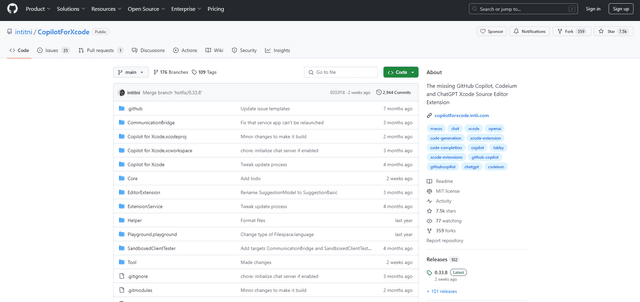
CopilotForXcode
O CopilotForXcode é uma Extensão do Editor de Código do Xcode que integra GitHub Copilot, Codeium e ChatGPT para fornecer sugestões de código impulsionadas por IA, assistência por chat e funcionalidade de prompt-para-código dentro do Xcode.
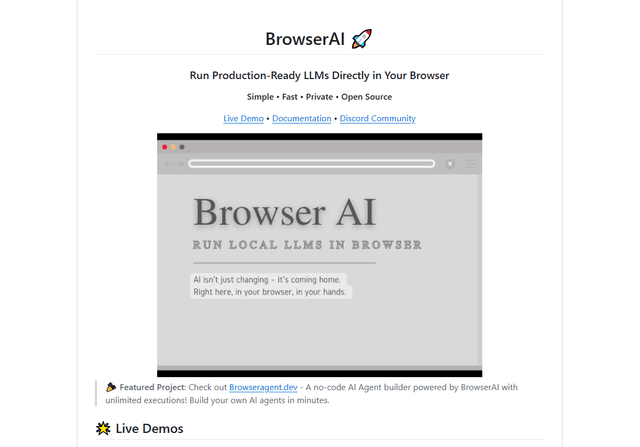
BrowserAI
BrowserAI é uma biblioteca de código aberto que permite executar Modelos de Linguagem Grandes (LLMs) locais diretamente em navegadores da web com aceleração WebGPU, oferecendo recursos de IA focados na privacidade sem exigir infraestrutura de servidor.
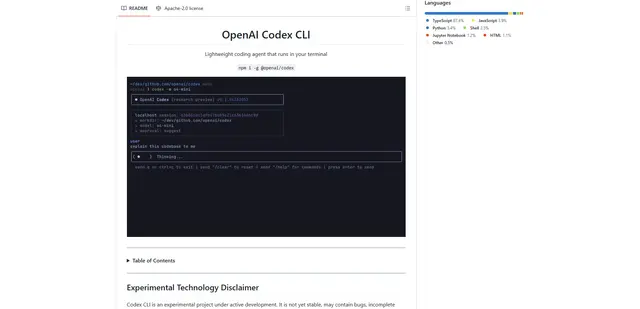
OpenAI Codex CLI
OpenAI Codex CLI é um agente de codificação leve e de código aberto que é executado no seu terminal, permitindo que os desenvolvedores traduzam linguagem natural em execução de código, ao mesmo tempo em que fornece raciocínio em nível de ChatGPT com a capacidade de executar código, manipular arquivos e iterar sob controle de versão.