At AIPURE, we are always on the hunt for the next frontier in artificial intelligence. Recently, we’ve found a new trend: AI is migrating from the palm of your hand directly into your line of sight.
With CES 2026 (Jan 6-9) currently unfolding in Las Vegas, it is clear that AI is no longer just an app you "open"—it’s something you "wear." We are entering the era of AI Smart Glasses 2026, where technology becomes a natural extension of your senses. However, at AIPURE, we believe the hardware is simply the vessel. The true revolution lies in the software architecture—the Large Language Models (LLMs) like GPT-5 and DeepSeek, and the Agentic frameworks that give these devices their "brain."

By analyzing user feedback from X, Reddit, and YouTube on AI Smart Glasses, we’ve identified how the integration of Real-time Translation AI and multimodal models is doing more than just looking cool—it’s fundamentally redefining daily productivity and the travel experience.
The Functional Evolution: Why the Software Matters
The primary utility of these devices in 2026 stems from their ability to process environmental context in real-time. This is achieved through three main software pillars:
1. Contextual Vision & Knowledge Retrieval
Devices like the Sekoda AI Smart Glasses utilize multimodal vision models to act as a hands-free "See-and-Know" interface. From an editorial standpoint, the efficiency here isn't just in the camera quality, but in the low-latency retrieval of data. Users can identify objects or even ask the AI to estimate the caloric content of a meal simply by looking at it, bypassing the need for manual input in fitness or search apps.
2. Advanced Linguistic Engines
The core appeal for travelers and international professionals is the Real-time Translation AI. The software now supports bone-conduction audio and AR text overlays. Whether navigating the streets of Tokyo or Rome, the focus is on "Zero-Friction" communication—where the AI interprets local dialects and projects heads-up navigation arrows directly into the user’s field of vision.
3. Seamless Media Interpretation
For entertainment, the integration of high-tier LLMs like GPT-5 allows for live audio-to-subtitle generation. This is particularly transformative for consuming global content on platforms like YouTube or in foreign cinemas, where the software provides perfectly synchronized, localized subtitles with minimal latency.

Comparative Analysis: 2026 Core AI Wearables
To provide a clearer picture of how these devices compare from a software perspective, our editorial team at AIPURE has compiled the information below.

| Product Name | AI Software Architecture | Primary Software Feature | Release Status |
| Sekoda AI Glasses | Multi-LLM / Custom Agent | Health & Object Recognition | Available |
| Quark AI Glasses | Qwen LLM | Price Recognition & Search Sync | Available |
| Oakley Meta Vanguard | Meta AI | Athletic Performance Analytics | Available |
| Rokid AI Glasses | GPT-5 Integration | Real-time Subtitles (89 Languages) | Available |
| Lenovo AI Glasses (Concept) | Qira Platform | Meeting Summary Agent | Concept Only |
Editorial Deep-Dive: Software Configurations
1. Sekoda AI Smart Glasses: The Encyclopedic Agent
The Sekoda software stack is optimized for rapid identification. Its "See. Tap. Understand." workflow is powered by an AI engine capable of instant landmark and botanical recognition. From a technical perspective, its IP65 rating supports the hardware, but the true strength is the speed at which it processes 32MP visual data into actionable information.

2. Quark AI Glasses: The Search-Centric Utility
The Quark AI Glasses are essentially a wearable extension of Alibaba's Quark search engine. Powered by the Shenyuan Large Language Model, the software excels at "Q&A mode." It is designed for students and travelers who need to scan text for study notes or use instant price recognition while shopping.

3. Oakley Meta Vanguard: Data-Driven Performance
The software strategy for the Oakley Meta Vanguard is specialized for "Athletic Intelligence." By integrating Meta AI with Garmin and Strava APIs, the glasses provide a voice-activated dashboard. The AI processes real-time biometric data and overlays performance stats directly onto 3K POV video clips.

4. Rokid AI Glasses: The GPT-5 Powered Experience
The Rokid AI Glasses leverage the GPT-5 engine to handle high-complexity linguistic tasks. This configuration allows for:
- Deep Linguistic Processing: Supporting 89 online languages with a focus on zero-latency translation.
- GPT-5 AI Glasses Compatibility: In certain regions, the integration of GPT-5 tech allows for faster localized responses and highly accurate movie subtitles, making it the premier choice for media consumption.

5. Lenovo AI Glasses: The Professional Concept
The Lenovo AI Glasses remain a concept focused on the Qira Platform. The software is designed as a "Personal AI Super Agent" that follows the user across devices. Its standout software feature is the "Catch Me Up" mode, which uses AI to summarize missed meetings and display bullet points privately.

Conclusion: A Software-Defined Future
The transition to AI Smart Glasses 2026 marks the end of the "app-fumbling" era. As an editor at AIPURE, we observe that the winning products are those whose software disappears into the background, providing the user with exactly what they need through sound and vision.
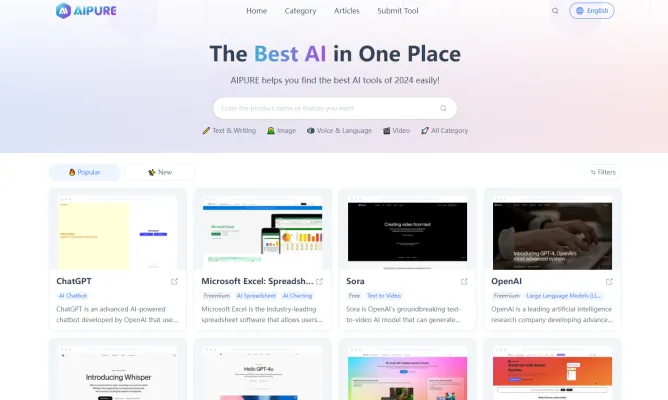
For those using devices that support third-party integrations, you can explore our directory of over 10,000 tools at AIPURE.ai to further customize your wearable AI experience. The future isn't about the frames you wear; it's about the intelligence they carry.