
Routebase
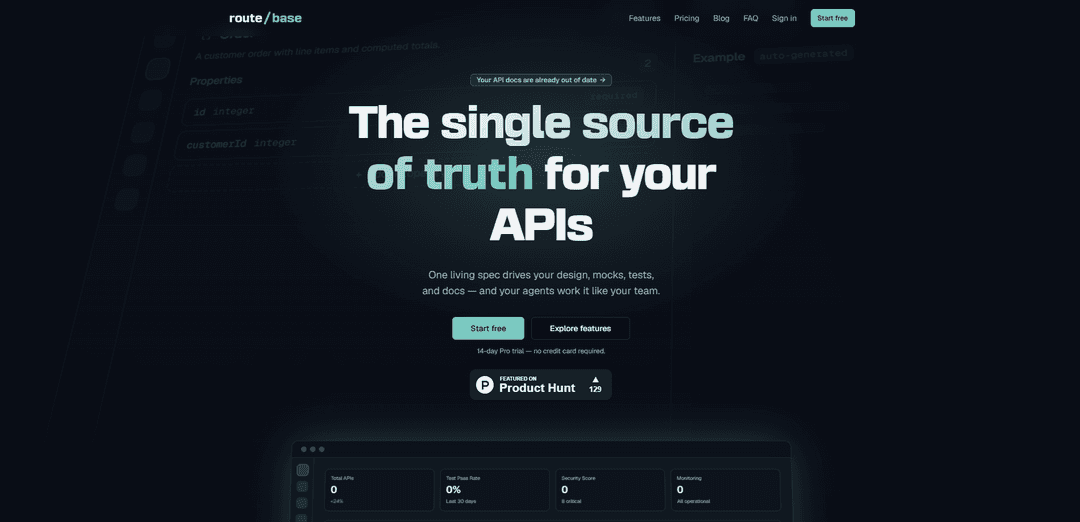
Routebase adalah platform manajemen siklus hidup API yang menggunakan satu spesifikasi OpenAPI yang hidup untuk mendorong desain, dokumentasi, maket, pengujian, tata kelola, dan pemantauan penyimpangan berkelanjutan, dengan server MCP bawaan sehingga agen AI dapat beroperasi pada alur kerja yang sama dengan tim Anda.
https://routebase.dev/?ref=producthunt&utm_source=aipure
Informasi Produk
Diperbarui:Aug 8, 2026
Apa itu Routebase
Routebase adalah platform "sumber kebenaran tunggal" untuk mengelola seluruh siklus hidup API di sekitar satu spesifikasi yang hidup. Alih-alih menyebarkan pekerjaan API di seluruh alat yang terputus untuk desain, dokumentasi, pengujian, dan pemantauan, Routebase memusatkan semuanya pada spesifikasi Anda sehingga perubahan menyebar secara konsisten. Ini mendukung impor API yang ada (misalnya, OpenAPI, Postman, Insomnia), menawarkan opsi residensi data ruang kerja (UE atau AS di Microsoft Azure), dan menyediakan alur kerja terstruktur bagi tim untuk berkolaborasi pada spesifikasi dengan proses tinjauan dan persetujuan.
Fitur Utama Routebase
Routebase adalah platform manajemen siklus hidup API yang memperlakukan spesifikasi OpenAPI sebagai satu-satunya sumber kebenaran, sehingga desain, dokumentasi, mock, pengujian, tata kelola, dan pemantauan semuanya tetap selaras. Ini menambahkan alur kerja asli AI melalui server MCP bawaan yang mengekspos banyak alat yang dapat digunakan agen untuk mendesain, membersihkan, dan menguji API, dan mendukung kolaborasi "spec-first" dengan percabangan, permintaan penggabungan, dan pemeriksaan perubahan yang merusak. Ini juga terus-menerus memvalidasi respons API langsung terhadap spesifikasi untuk mendeteksi penyimpangan (bidang yang hilang/tambahan, ketidakcocokan tipe) dengan perbedaan tingkat bidang, dengan opsi residensi data EU/US di Azure.
Satu spesifikasi langsung sebagai sumber kebenaran: Satu spesifikasi mendorong desain API, dokumentasi, mock, pengujian, dan pemantauan, mengurangi fragmentasi di seluruh alat dan menjaga tim tetap selaras.
Server MCP asli AI (alat agen): Server MCP bawaan memungkinkan agen (misalnya, Claude/Cursor) berinteraksi dengan antarmuka siklus hidup yang sama dengan manusia—mendesain titik akhir, membersihkan spesifikasi, dan menjalankan rangkaian pengujian—dengan 80+ alat MCP.
Tata kelola API berkelanjutan & deteksi penyimpangan: Monitor terjadwal memvalidasi respons nyata terhadap spesifikasi dan menandai perbedaan seperti bidang yang hilang, penambahan yang tidak terdokumentasi, dan ketidakcocokan tipe, termasuk perbedaan tingkat bidang dan sinyal perubahan yang merusak.
Percabangan spesifikasi, tinjauan, dan permintaan penggabungan: Alur kerja seperti Git untuk spesifikasi API: cabang untuk perubahan, buka permintaan penggabungan, dan tangkap konflik atau perubahan yang merusak sebelum digabungkan.
Klasifikasi perubahan yang merusak dan divergensi: Secara otomatis mengklasifikasikan perbedaan antara spesifikasi dan perilaku langsung (bidang ekstra/hilang, tipe yang tidak cocok) untuk membantu tim memprioritaskan perbaikan dan mengelola kompatibilitas.
Residensi data di Azure: Ruang kerja dapat dihosting di wilayah EU atau AS, mendukung kepatuhan dan persyaratan organisasi.
Kasus Penggunaan Routebase
Tata kelola API Fintech/Perbankan: Pertahankan kepatuhan kontrak yang ketat untuk API yang diatur dengan terus-menerus memvalidasi respons produksi terhadap spesifikasi OpenAPI dan menangkap perubahan yang merusak sebelum memengaruhi mitra.
Platform SaaS dengan API publik yang bergerak cepat: Gunakan cabang spesifikasi dan permintaan penggabungan untuk meninjau perubahan API, sementara pemantauan penyimpangan mendeteksi penambahan yang tidak terdokumentasi atau ketidakcocokan kontrak saat tim berulang dengan cepat.
Standardisasi API internal perusahaan: Pusatkan banyak tim di sekitar alur kerja berbasis spesifikasi tunggal, menggunakan aturan tata kelola dan linting/pengujian otomatis untuk mengurangi inkonsistensi di seluruh layanan mikro.
Integrasi mitra dan portal pengembang: Jaga agar dokumen dan kontrak yang menghadap mitra tetap sinkron dengan API aktual dengan menambatkan dokumentasi dan validasi ke spesifikasi langsung yang sama.
Alur kerja pengembangan API yang dibantu AI: Memungkinkan agen untuk membuat titik akhir, membersihkan spesifikasi, dan menjalankan rangkaian pengujian melalui server MCP, mempercepat tugas siklus hidup yang berulang dan meningkatkan konsistensi.
Kelebihan
Alur kerja satu spesifikasi mengurangi penyebaran alat dan menjaga dokumen/pengujian/pemantauan tetap selaras
Deteksi penyimpangan berkelanjutan dengan perbedaan tingkat bidang membantu menangkap perubahan yang merusak atau tidak terdokumentasi lebih awal
Model kolaborasi yang kuat untuk spesifikasi (cabang/tinjau/gabungkan) dengan pemeriksaan perubahan yang merusak
Integrasi MCP asli AI mempermudah otomatisasi dan delegasi tugas siklus hidup kepada agen
Kekurangan
Nilai tergantung pada pemeliharaan spesifikasi OpenAPI berkualitas tinggi; spesifikasi yang buruk dapat membatasi manfaat
Tim mungkin menghadapi biaya adopsi untuk memigrasikan alur kerja/alat yang ada ke dalam proses "spec-first"
Alat agen memperkenalkan pertimbangan tata kelola/keamanan (izin, kontrol perubahan) meskipun terintegrasi
Cara Menggunakan Routebase
1) Buat ruang kerja Routebase dan mulai uji coba gratis: Buka https://app.routebase.dev/signup dan buat akun. Setiap akun baru dimulai dengan uji coba Pro 14 hari (tidak perlu kartu kredit). Selama pendaftaran, pilih wilayah residensi data Anda (UE atau AS); data ruang kerja Anda tetap berada di wilayah tersebut (dihosting di Microsoft Azure).
2) Buat (atau impor) spesifikasi API Anda sebagai satu-satunya sumber kebenaran: Di Routebase, buat proyek/spesifikasi baru atau impor definisi API yang ada. Routebase mendukung impor spesifikasi OpenAPI secara langsung, dan Anda juga dapat membawa koleksi dari Postman atau Insomnia. Tujuannya adalah menjadikan satu spesifikasi yang hidup sebagai sumber otoritatif untuk desain, dokumen, maket, pengujian, dan pemantauan.
3) Rancang dan kembangkan API Anda dengan mengedit spesifikasi yang hidup: Perbarui titik akhir, skema, dan perilaku dalam spesifikasi. Routebase dirancang agar perubahan pada spesifikasi mendorong sisa siklus hidup (dokumentasi, maket, pengujian, dan tata kelola) tanpa memerlukan alat yang terpisah dan terputus.
4) Gunakan percabangan spesifikasi untuk iterasi yang aman: Buat cabang spesifikasi untuk mengisolasi pekerjaan yang sedang berlangsung. Lakukan perubahan pada cabang sehingga Anda dapat berulang tanpa memengaruhi spesifikasi utama. Ini mendukung alur kerja yang mirip dengan kode: draf perubahan, jaga agar tetap terkandung, dan siapkan untuk ditinjau.
5) Buka permintaan penggabungan untuk meninjau perubahan spesifikasi: Ketika cabang Anda siap, buka permintaan penggabungan. Routebase mendukung alur tinjauan dan persetujuan untuk spesifikasi, membantu tim berkolaborasi dalam perubahan API sebelum dikirim.
6) Jalankan pemeriksaan perubahan yang merusak dan konflik sebelum menggabungkan: Gunakan deteksi konflik dan perubahan yang merusak bawaan Routebase untuk mengidentifikasi perubahan berisiko sebelum masuk ke spesifikasi utama. Ini membantu mencegah perubahan yang merusak secara tidak sengaja mencapai konsumen.
7) Hubungkan agen AI melalui server MCP bawaan: Aktifkan dan gunakan server MCP bawaan ruang kerja sehingga agen (misalnya, Claude atau Cursor) dapat menemukan kemampuan Routebase sebagai alat. Routebase menyediakan 80+ alat MCP yang mencakup siklus hidup API, memungkinkan agen untuk merancang titik akhir, melinting spesifikasi, dan menjalankan rangkaian pengujian melalui antarmuka dan izin yang sama yang digunakan tim Anda.
8) Lint dan kelola spesifikasi Anda secara berkelanjutan: Gunakan Routebase untuk melinting spesifikasi API Anda dan menegakkan tata kelola. Routebase dapat menghasilkan aturan tata kelola langsung dari spesifikasi Anda, membantu menstandardisasi desain dan mengurangi penyimpangan di seluruh tim dan layanan.
9) Validasi perilaku API nyata dengan pemantauan penyimpangan terjadwal: Siapkan pemantau terjadwal yang memvalidasi respons API langsung terhadap spesifikasi Anda. Routebase menandai perbedaan seperti bidang yang hilang, penambahan ekstra/tidak terdokumentasi, dan ketidakcocokan tipe, serta melaporkan perubahan yang merusak dengan perbedaan tingkat bidang.
10) Berulang: perbarui spesifikasi, periksa ulang, dan pantau ulang: Ketika penyimpangan atau perubahan yang merusak terdeteksi, perbarui spesifikasi (atau perbaiki implementasi) dan ulangi siklus hidup: cabang, tinjau, gabungkan, linting, uji, dan pantau—menjaga spesifikasi sebagai satu-satunya sumber kebenaran.
11) Kelola perubahan rencana setelah uji coba: Pada akhir uji coba Pro 14 hari, ruang kerja Anda secara otomatis beralih ke paket Gratis; tidak ada yang dihapus (proyek, spesifikasi, dan riwayat dipertahankan). Tingkatkan kapan saja untuk mendapatkan kembali fitur berbayar.
12) (Opsional) Aktifkan fitur Enterprise jika diperlukan: Jika Anda memerlukan kemampuan Enterprise, Routebase menawarkan paket Enterprise swalayan (mulai dari 25 kursi) yang mencakup SAML SSO, SCIM, dan ekspor log audit. Anda dapat berlangganan langsung di aplikasi dan membatalkan kapan saja; paket Anda tetap aktif hingga periode penagihan berakhir, kemudian diturunkan ke Gratis dengan data dipertahankan.
FAQ Routebase
Routebase adalah produk manajemen siklus hidup API yang menggunakan spesifikasi API tunggal sebagai "sumber kebenaran tunggal" untuk mendorong desain, mock, pengujian, dan dokumen.
Video Routebase
Artikel Populer

Atoms: Platform AI Multi-Agen yang Mengubah Ide menjadi Produk Siap Diluncurkan
May 22, 2026

Nano Banana SBTI: Apa Itu, Bagaimana Cara Kerjanya, dan Cara Menggunakannya di Tahun 2026
Apr 15, 2026

Ulasan Atoms — Pembuat Produk AI yang Mendefinisikan Ulang Kreasi Digital di Tahun 2026
Apr 10, 2026

Kilo Claw: Cara Menerapkan dan Menggunakan Agen AI "Lakukan-Untuk-Anda" Sejati (Pembaruan 2026)
Apr 3, 2026
Alat AI Terbaru Serupa dengan Routebase
Mediatr
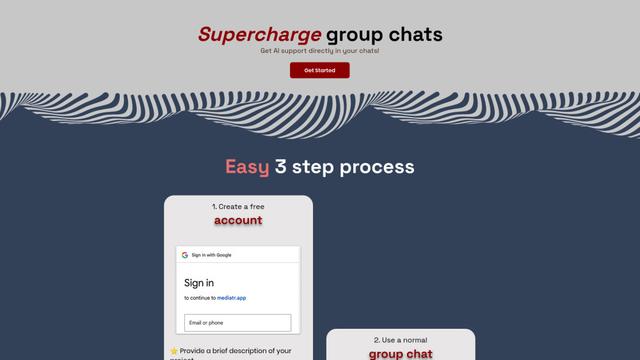
MediatR adalah perpustakaan .NET sumber terbuka yang populer yang menerapkan pola Mediator untuk menyediakan penanganan permintaan/response, pemrosesan perintah, dan notifikasi acara yang sederhana dan fleksibel sambil mempromosikan pengikatan longgar antara komponen aplikasi.
UsageGuard
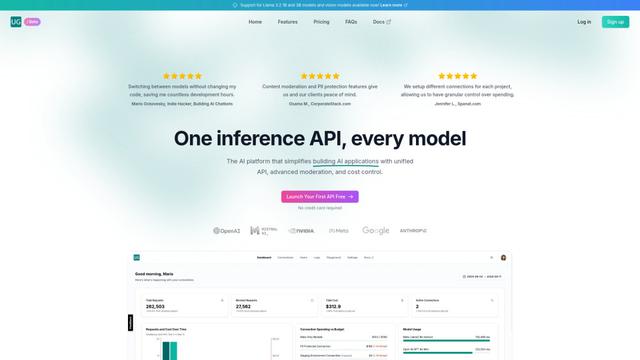
UsageGuard adalah platform AI yang aman yang menyediakan akses API terpadu ke beberapa penyedia LLM dengan perlindungan bawaan, moderasi, dan fitur kontrol biaya.
APIPark
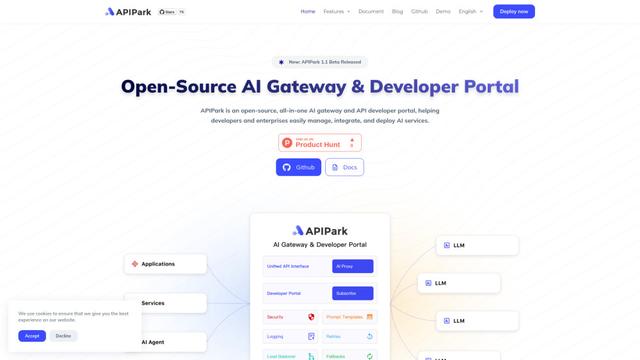
APIPark adalah gerbang AI open-source serba ada dan portal pengembang API yang memungkinkan organisasi untuk dengan cepat membangun portal API internal, mengelola beberapa model AI, dan menyederhanakan manajemen siklus hidup API dengan fitur keamanan dan tata kelola tingkat perusahaan.
API Fabric
API Fabric adalah generator aplikasi bertenaga AI yang membantu membuat API dan frontend dengan mendeskripsikan kebutuhan aplikasi melalui prompt bahasa alami.
Alat AI Populer Seperti Routebase

A2A Protocol
Protokol A2A (Agent2Agent) adalah protokol interoperabilitas terbuka yang dikembangkan oleh Google yang memungkinkan komunikasi dan kolaborasi tanpa batas antara agen AI di berbagai kerangka kerja dan vendor, terlepas dari arsitektur yang mendasarinya.
Product Hunt MCP
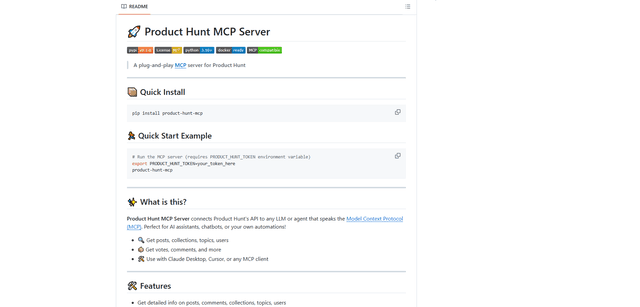
Product Hunt MCP Server adalah server plug-and-play secepat kilat yang menghubungkan API Product Hunt ke LLM atau agen AI mana pun melalui Model Context Protocol (MCP), memungkinkan akses tanpa batas ke posting, koleksi, topik, pengguna, suara, dan komentar.
GenAI API for Apple Shortcuts
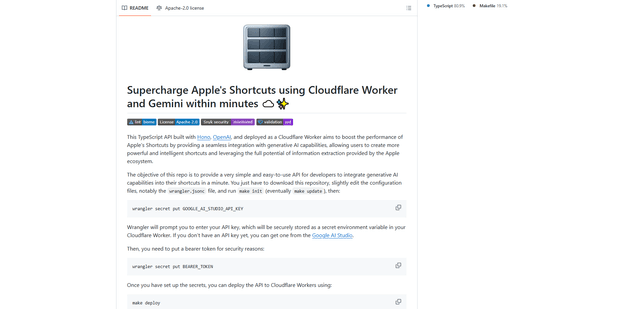
API TypeScript yang memperkuat Shortcuts Apple dengan mengintegrasikan Cloudflare Workers dengan model Gemini AI Google untuk mengaktifkan kemampuan AI yang kuat dalam hitungan menit dan gratis (hingga 1.500 permintaan per hari).
Agent Starter Pack
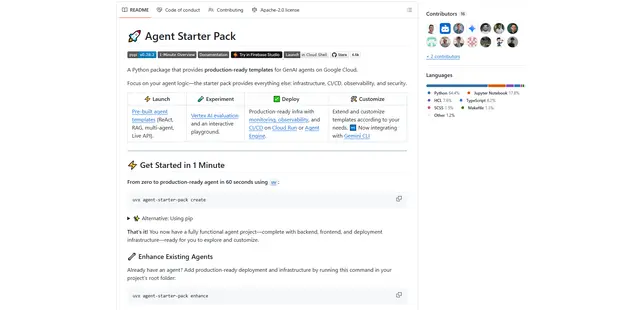
Agent Starter Pack adalah paket Python yang menyediakan templat siap produksi untuk membangun agen GenAI di Google Cloud dengan infrastruktur bawaan, CI/CD, observabilitas, dan fitur keamanan.