
Robynn AI
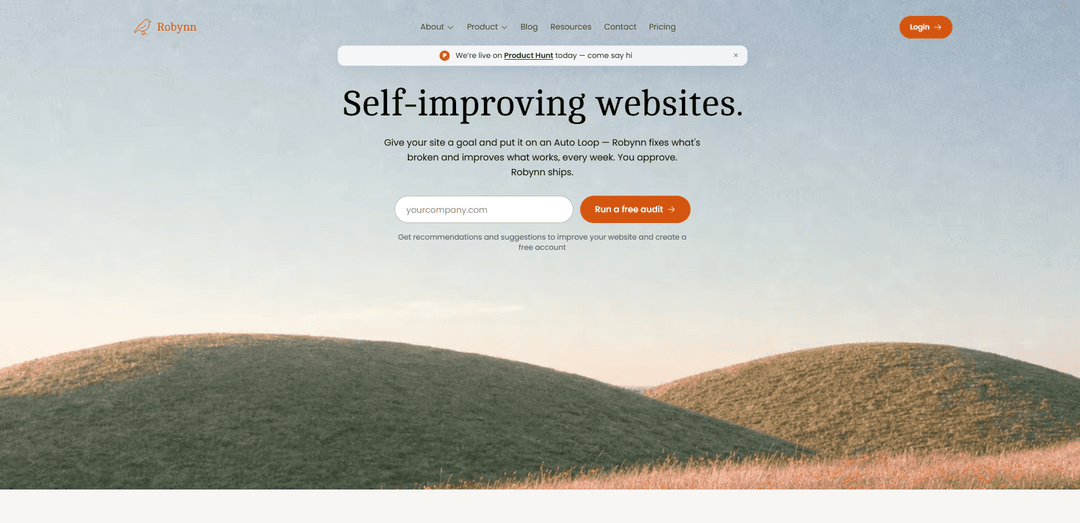
Robynn AI is an agentic marketing platform that turns your website into an auto-improving growth engine by auditing pages, recommending evidence-backed fixes, publishing only with approval, and iterating weekly against measurable goals using your analytics.
https://robynn.ai/?ref=producthunt
Product Information
Updated:Aug 8, 2026
What is Robynn AI
Robynn AI is built to help marketing teams continuously improve their website and campaigns without rebuilding or migrating. It positions itself as a “self-improving website” system: you set a measurable goal for a specific page (e.g., organic traffic, sign-ups, conversions), and Robynn connects to your live site and analytics to diagnose issues and propose changes that move the metric. The platform coordinates specialist AI agents (research, writing, analysis) powered by a shared memory layer called the Growth Cortex, which learns and enforces your brand context so outputs stay consistent and on-brand across channels.
Key Features of Robynn AI
Robynn AI is an agentic marketing operating system built around “self-improving websites.” You install it with a small script (no rebuild/migration), connect analytics and GTM tools, and set a measurable goal per page (e.g., organic traffic, sign-ups, conversions). Robynn continuously audits pages against your Brand DNA, ICP, competitors, keywords, and real visitor questions, then proposes evidence-backed changes. Nothing publishes without approval; once approved, Robynn ships updates, measures impact in your analytics, and iterates weekly via its Auto Loop while coordinating multiple specialized marketing agents across inbound, outbound, and always-on work—accessible via web studio and Slack.
Auto Loop goal-based iteration: Set a measurable goal on any page (traffic, conversions, sign-ups); Robynn recommends one change with a reason, you approve, it publishes, then re-measures and repeats every seven days until the goal is hit.
Continuous website auditing (SEO + GEO/AI visibility): Crawls and diagnoses pages for issues like broken links, stale content, slipping rankings, and being “invisible” in AI assistants (e.g., ChatGPT/Claude), producing specific fixes rather than generic checklists.
Brand DNA + Growth Cortex memory: Maintains a living brand system that learns and enforces voice, positioning, and rules (e.g., “never compare us to X”), so every agent output stays on-brand and improves with each audit and campaign.
Multi-agent marketing org in one platform: Coordinates specialist agents (research, planning, writing, analysis, publishing—marketed as 19 agents) for inbound content/SEO, outbound ABM, and always-on marketing tasks from a shared Brand Hub.
Approval-first publishing with rollback: Agents stage edits, you approve before anything goes live; changes are measured in analytics, wins get reinforced, and regressions can be rolled back.
Fast install + tool and workflow integrations: Installs via two lines of JavaScript and works with common CMSs (WordPress, Webflow, Next.js, Framer, Shopify); connects read-only to tools like Google Analytics, HubSpot, Salesforce, Notion, Drive, and works in Slack.
Use Cases of Robynn AI
B2B SaaS landing-page conversion lift: Set a conversion goal for a product or launch landing page; Robynn audits messaging vs ICP and competitors, proposes copy/structure changes, publishes on approval, and iterates weekly to improve form-fills and sign-ups.
E-commerce category and PDP optimization: For Shopify or CMS-based stores, run Auto Loop on category/product pages to improve organic traffic and add-to-cart conversions through ongoing content freshness, internal linking, and on-brand positioning updates.
Content sites adapting to AI-search referrals: Publishers can audit pages for AI discoverability (GEO) alongside traditional SEO, then iteratively adjust content to better match the questions AI assistants summarize—without rebuilding the site.
ABM outbound personalization for sales teams: Build and enrich target account lists, generate prospect-level openers and multi-touch sequences using shared brand context, and run signal-based plays for enterprise outreach.
Small marketing teams reducing backlog: Use Robynn as “engineering muscle” to continuously find and fix site issues, maintain brand voice, generate weekly content calendars, and keep competitive intel current—while humans retain approval and judgment.
Multi-channel marketing ops via Slack: Teams collaborate in Slack threads with Robynn/Rory to draft assets (e.g., LinkedIn posts, launch pages), store brand rules, and approve site changes quickly—keeping decisions and execution in one loop.
Pros
Goal-driven, measurable iteration tied to analytics with a weekly optimization cadence (Auto Loop).
Low-friction deployment (script install) and broad CMS/tool support without requiring a rebuild or migration.
Approval-first workflow reduces risk while still enabling rapid publishing and continuous improvement.
Shared brand memory (Brand DNA/Growth Cortex) helps keep outputs consistent and compounding over time.
Cons
Requires connecting site and analytics/tools; organizations with strict security/compliance may need extra review even with read-only access claims.
Weekly iteration cadence may feel slow for teams needing daily experimentation or rapid-fire A/B testing.
Effectiveness depends on quality of brand/ICP inputs and approval decisions; poor inputs can lead to suboptimal recommendations.
Some capabilities (e.g., AI-search/GEO visibility measurement) may be harder to validate than standard SEO metrics, depending on available data and attribution.
How to Use Robynn AI
1) Create a Robynn account: Go to robynn.ai and choose “Start free” / “Get started” to create a free account (no credit card required for the free audit).
2) Connect your website (install the script): Install Robynn Website Studio by adding the provided <script src="…"> snippet to your site (two lines of JavaScript). This works with WordPress, Webflow, Next.js, Framer, and most CMSs—no rebuild or migration required.
3) Connect your analytics and GTM tools (read-only): In Robynn, connect tools like Google Analytics (and optionally HubSpot, Salesforce, Notion, Drive). Robynn uses these connections to measure performance and recommend evidence-backed changes.
4) Let Robynn learn your brand (Growth Cortex): Allow Growth Cortex to build a shared memory of your brand and goals (typically within ~24 hours). This context is used by all agents so drafts and fixes stay on-brand.
5) Run a free website audit: Use Website Studio to run an initial audit of your real pages. You should see top findings in minutes, with deeper auditing continuing (e.g., overnight) across pages.
6) Choose a page and set one measurable goal (Auto Loop): Pick a single page and set one goal such as organic traffic, conversions, or sign-ups. Robynn will optimize that page toward the goal on a weekly iteration cycle.
7) Review Robynn’s recommendation (one change + reason): Robynn reads the page, measures against your analytics, and proposes a specific change with an explanation for why it should improve the goal.
8) Approve the change (nothing ships without you): Approve (or reject) the proposed iteration. Robynn only publishes updates after your approval.
9) Publish to your live site: Once approved, Robynn ships the change live in seconds via Website Studio.
10) Measure results and repeat weekly: Robynn measures performance again, shows proof, and repeats the Auto Loop every seven days until the goal is hit (one goal per page, one iteration per week).
11) Set brand rules once so future work stays consistent: Add rules like “keep hero copy under two lines,” “never compare us to X,” or “always write in this style.” Robynn applies these rules across future audits, drafts, and fixes.
12) Use Robynn where your team works (optional): Use Robynn in Slack threads for collaborative workflows and approvals, or use the web studio for deep work. Your team can hand off tasks to the same agent without losing context.
13) Expand beyond the website (optional): Use Robynn’s agents for Inbound (SEO/GEO, landing pages, lifecycle nurture, attribution), Outbound (account research, list building, multi-touch sequences), and Always-on work (competitive intel, content calendars, brand book maintenance).
14) Connect via MCP for external clients (optional): If you want to use Robynn from Claude Desktop/claude.ai or another remote MCP client, connect using Robynn’s production MCP URL. If a direct endpoint is required, use the /mcp endpoint. If tool calls fail, test with robynn_status first to confirm the connector is live.
Robynn AI FAQs
No. Robynn installs with two lines of JavaScript and approved improvements render at page load (similar to an A/B testing platform). Native publishing is available for WordPress, Strapi, and GraphQL-based CMSs like Sanity, and you can also export HTML or markdown.
Robynn AI Video
Popular Articles

Vosko AI: Localize and Dub Videos for Global Audiences
Oct 15, 2026
Atoms: A Multi-Agent AI Platform That Transforms Ideas into Launch-Ready Products
Oct 13, 2026

Nano Banana SBTI: What It Is, How It Works, and How to Use It in 2026
Apr 15, 2026

Atoms Review — The AI Product Builder Redefining Digital Creation in 2026
Apr 10, 2026
Latest AI Tools Similar to Robynn AI
GPT Easy Web
GPT Easy Web is a user-friendly AI-powered platform that enables users to easily build, customize and manage websites through natural language interactions and automated tools without requiring coding knowledge.
AI Website Tool
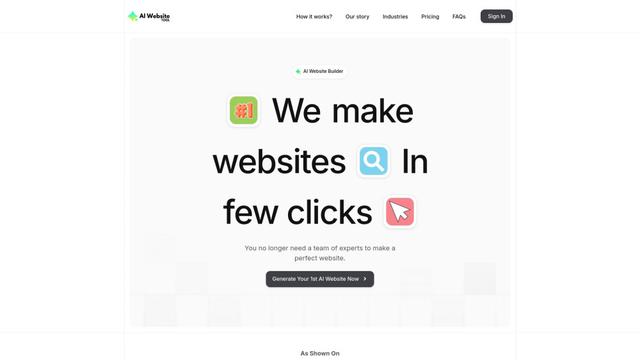
AI Website Tool is an AI-powered website builder that creates professional websites in minutes by automatically generating business-focused copy, custom visuals, and responsive designs with just a few clicks.
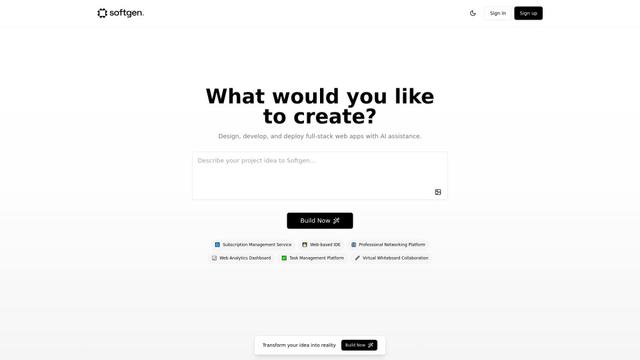
Softgen
Softgen.ai is an AI-powered full-stack project generator platform that enables users to transform their ideas into functional web applications without coding requirements.
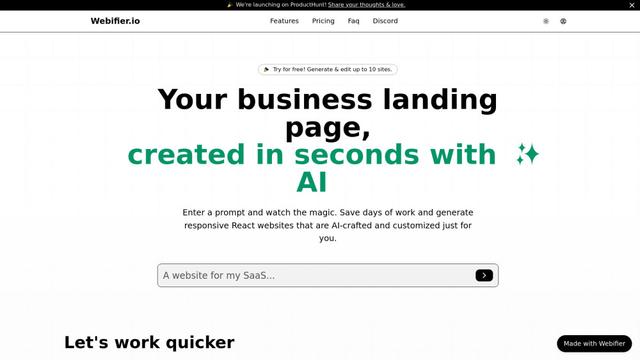
Webifier
Webifier is an AI-powered tool that transforms text prompts into fully functional React landing pages with clean, exportable code using NextJS14, TailwindCSS, and Shadcn components.
Popular AI Tools Like Robynn AI
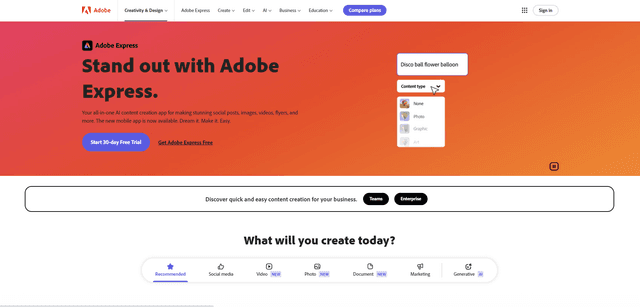
Adobe Express
Adobe Express is an all-in-one AI-powered content creation app for easily making stunning social posts, images, videos, flyers, and more with professionally designed templates and assets.
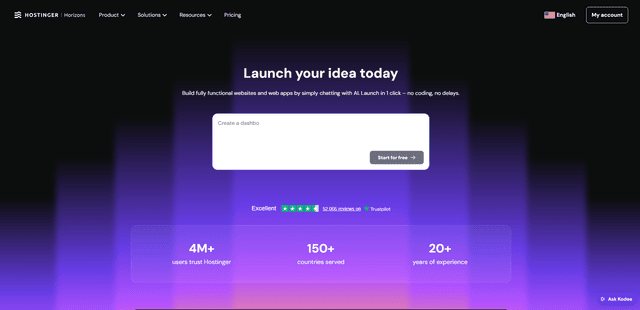
Hostinger
Hostinger is a web hosting and domain service provider offering AI-powered tools like Horizons that enables anyone to build, edit, and publish custom web apps and websites without coding through a simple chat interface.
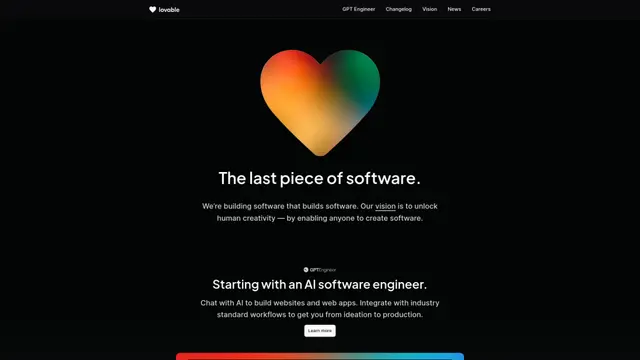
GPT Engineer
GPT Engineer is an AI-powered software development tool that enables anyone to build web applications by chatting with an AI engineer.
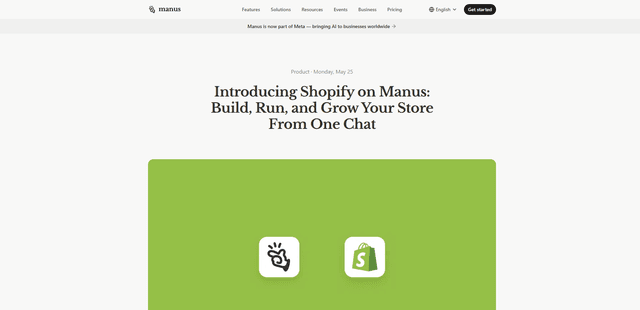
Manus Shopify Connector
Manus Shopify Connector lets you build a Shopify-backed storefront, manage your catalog, and generate data-driven campaigns from a single chat—using Shopify APIs with OAuth-scoped access and Shopify checkout.