
Revolte
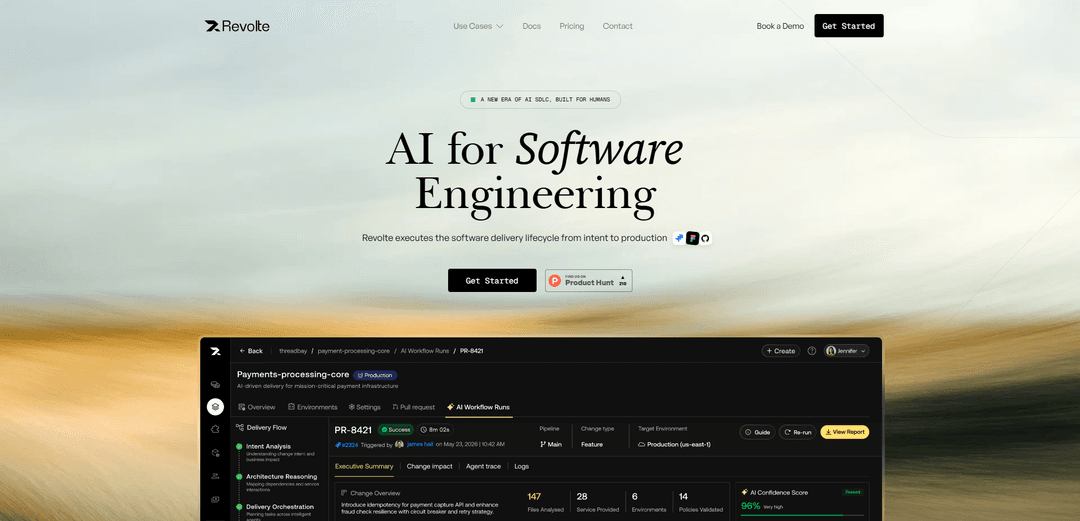
Revolte is an AI-native software delivery platform that automates development, testing, deployment, and production operations with platform-as-code workflows, built-in observability, and delivery intelligence.
http://revolte.ai/?utm_source=ph&utm_medium=ph&utm_campaign=visitwebsite&ref=producthunt
Product Information
Updated:Jun 8, 2026
What is Revolte
Revolte is an AI platform for software engineering designed to execute the end-to-end software delivery lifecycle—from intent to production. It targets teams building new applications, modernizing legacy systems, and operating complex production environments by unifying key parts of the developer journey (code, CI/CD, infrastructure, and runtime operations) into a single system. Rather than acting as just a coding assistant or another DevOps tool, Revolte focuses on consistent, governed execution of delivery workflows while keeping engineers in control through reviewable, auditable changes.
Key Features of Revolte
Revolte is an AI-native software engineering platform that executes the software delivery lifecycle from intent to production. It automates development workflows (planning, code generation, testing, CI/CD, and deployments) and extends into production operations with unified observability (logs, metrics, traces), delivery intelligence (DORA/flow metrics), and agent-driven monitoring, triage, and remediation—while keeping engineers in control through reviewable, “platform-as-code” workflows and a developer-in-the-loop CLI.
End-to-end AI SDLC execution: Runs development, testing, deployment, and runtime operations as a connected workflow rather than isolated tooling, helping teams ship faster with consistency and control.
Agentic workflow orchestration: AI agents coordinate planning and code generation, validate changes against tests, and drive delivery steps with context from your stack and past delivery events.
Developer-in-the-loop governance (CLI + review): Engineers define requirements/intent and approve outcomes; actions remain visible and can be inspected, modified, overridden, and reviewed before deployment.
Platform-as-Code & managed environments: Uses a YAML-driven “agent harness” to translate platform requirements into executable workflows that provision infrastructure, services, and environments needed to build and run apps.
Active observability with predictive signals: Unifies telemetry (logs, traces, metrics) and continuously learns from deploys, rollbacks, and incidents to surface real-time anomaly detection and early warnings before impact.
Delivery intelligence & performance insights: Provides dashboards for DORA and flow metrics plus delivery insights to help teams improve software delivery performance and reduce production incidents.
Use Cases of Revolte
Build new applications (startup/SaaS): Accelerate greenfield product delivery by letting Revolte execute development, testing, and deployment workflows from the start, reducing pipeline setup and operational overhead.
Migrate legacy applications (enterprise modernization): Automate refactoring, dependency mapping, migration testing, and deployment workflows across existing codebases to modernize systems with less manual effort and risk.
Operate production systems (SRE/DevOps): Monitor system health, triage alerts, correlate telemetry, and resolve incidents with AI agents that can support rollback/alerting and keep delivery workflows continuously maintained.
Evolve existing products (continuous delivery at scale): Ship features faster by automating routine development workflows (code changes, test validation, PR readiness, deployments) so engineers focus on product decisions.
Predictive observability for high-uptime services (fintech/e-commerce): Detect subtle regressions (e.g., unusual memory allocation patterns after deploy) by correlating weak signals across logs/metrics/traces to prevent customer-facing incidents.
Pros
Covers the full lifecycle (dev → deploy → runtime ops) instead of only code generation or CI/CD.
Strong governance model: engineers stay in control with reviewable, overrideable actions and a developer-in-loop CLI.
Unified telemetry plus continuous learning enables proactive anomaly detection and faster incident response.
YAML-driven platform requirements and managed environments can reduce brittle scripts and DevOps bottlenecks.
Cons
Adopting an AI-orchestrated, end-to-end platform may require process change and integration work with existing tooling and policies.
Automation quality depends on correct permissions/configuration and the platform’s learned context; teams may need time to build trust and tune workflows.
As with many managed services, availability and reliance on a vendor platform can introduce operational dependency (per typical service terms/disclaimers).
How to Use Revolte
1) Create a Revolte account: Go to https://console.revolte.ai/auth/signup and create an account, then sign in to access the Revolte console.
2) Start with a clear delivery goal (intent): Decide what you want Revolte to execute across the SDLC (e.g., build a new app, migrate a legacy app, evolve an existing app, or operate a production system). Revolte is designed to execute from intent to production.
3) Connect your existing stack and repository: Link your Git repository (e.g., GitHub/GitLab) so Revolte can generate code changes and commit/merge them in Git. Revolte is built to work with existing tools (e.g., Jira, Git, Kubernetes, Terraform, Slack, observability tools).
4) Define your platform requirements in one YAML (Platform-as-Code): Create a single YAML file that describes your platform requirements. Revolte converts this YAML into executable workflows and automatically provisions the infrastructure, services, and environments needed to build and run your application.
5) Enable the Agent Harness to execute workflows: Use Revolte’s Agent Harness to turn your YAML-defined requirements into orchestrated workflows that cover development, testing, deployment, and runtime operations.
6) Run an agentic workflow for development and code generation: Trigger Revolte’s AI agents to plan and generate code changes. Revolte will commit generated code to your Git repo as part of the workflow.
7) Use the developer-in-the-loop CLI to review and govern actions: Use the Revolte CLI to stay in control: inspect what the agents propose, approve outcomes, and override or modify actions before they proceed. Revolte emphasizes that changes remain visible and reviewable.
8) Assure, test, and merge changes in Git: Have Revolte validate changes against tests and assurance steps, then merge approved changes into the target branch in Git as part of the delivery workflow.
9) Deploy to managed environments (preview/test/production): Use Revolte-managed environments to deploy your application. Revolte supports review and release flows, including preview/test deployments and production deployment.
10) Monitor runtime with observability and operate production systems: For production operations, use Revolte to monitor system health, triage alerts, and resolve incidents. Revolte’s agents can continuously maintain delivery workflows and help update runbooks and notify stakeholders.
11) Use Delivery Intelligence to improve delivery performance: Open Revolte’s built-in dashboards to track delivery insights such as DORA metrics and flow metrics, and use those insights to continuously improve your SDLC performance.
12) Customize agents for org-specific workflows and integrations: Create custom agents to automate internal workflows, policies, and integrations so Revolte matches how your engineering organization ships and operates software.
13) Get help or deeper configuration guidance from official docs/support: Use the documentation at https://docs.revolte.ai/ for configuration, integration, and deployment guidance. If you run into issues, contact [email protected] with a brief description and your project name (if available).
Revolte FAQs
Revolte is an AI platform for software engineering that executes the software delivery lifecycle from intent to production, including development, testing, deployment, and runtime operations.
Revolte Video
Popular Articles

Vosko AI: Localize and Dub Videos for Global Audiences
Oct 15, 2026

Atoms: A Multi-Agent AI Platform That Transforms Ideas into Launch-Ready Products
Oct 13, 2026

Nano Banana SBTI: What It Is, How It Works, and How to Use It in 2026
Apr 15, 2026

Atoms Review — The AI Product Builder Redefining Digital Creation in 2026
Apr 10, 2026
Latest AI Tools Similar to Revolte
Gait
Gait is a collaboration tool that integrates AI-assisted code generation with version control, enabling teams to track, understand, and share AI-generated code context efficiently.
invoices.dev
invoices.dev is an automated invoicing platform that generates invoices directly from developers' Git commits, with integration capabilities for GitHub, Slack, Linear, and Google services.
EasyRFP
EasyRFP is an AI-powered edge computing toolkit that streamlines RFP (Request for Proposal) responses and enables real-time field phenotyping through deep learning technology.

Cart.ai
Cart.ai is an AI-powered service platform that provides comprehensive business automation solutions including coding, customer relations management, video editing, e-commerce setup, and custom AI development with 24/7 support.
Popular AI Tools Like Revolte

GitHub Copilot Chat
GitHub Copilot Chat is an AI-powered coding assistant that provides natural language interactions, real-time code suggestions, and contextual support directly within supported IDEs and GitHub.com.
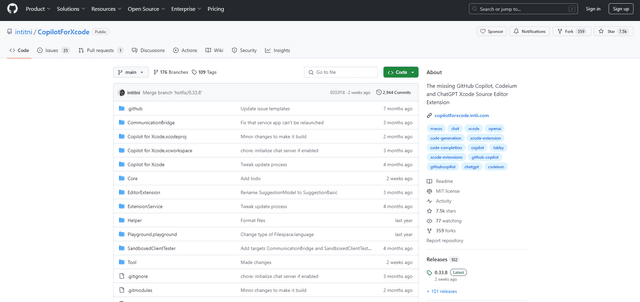
CopilotForXcode
CopilotForXcode is an Xcode Source Editor Extension that integrates GitHub Copilot, Codeium, and ChatGPT to provide AI-powered code suggestions, chat assistance, and prompt-to-code functionality within Xcode.
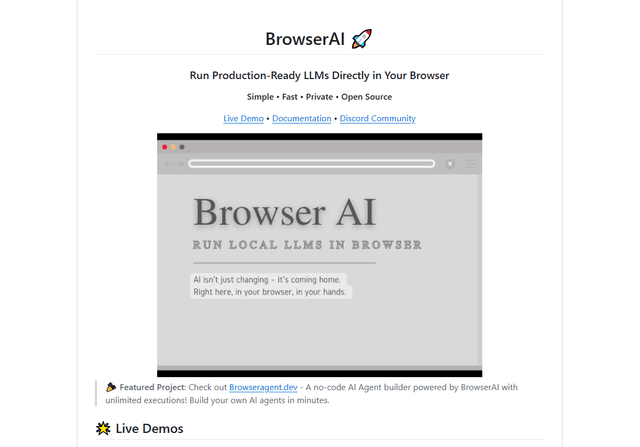
BrowserAI
BrowserAI is an open-source library that enables running local Large Language Models (LLMs) directly in web browsers with WebGPU acceleration, offering privacy-focused AI capabilities without requiring server infrastructure.
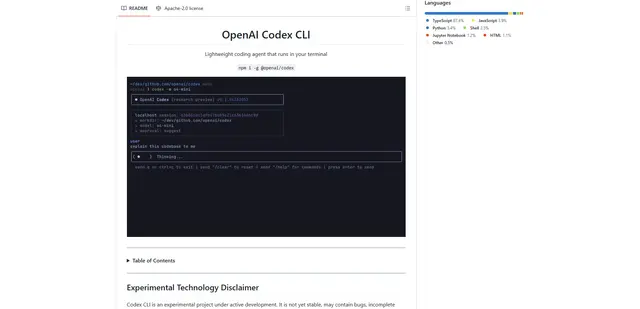
OpenAI Codex CLI
OpenAI Codex CLI is a lightweight, open-source coding agent that runs in your terminal, enabling developers to translate natural language into code execution while providing ChatGPT-level reasoning with the ability to run code, manipulate files, and iterate under version control.