
Poth Labs
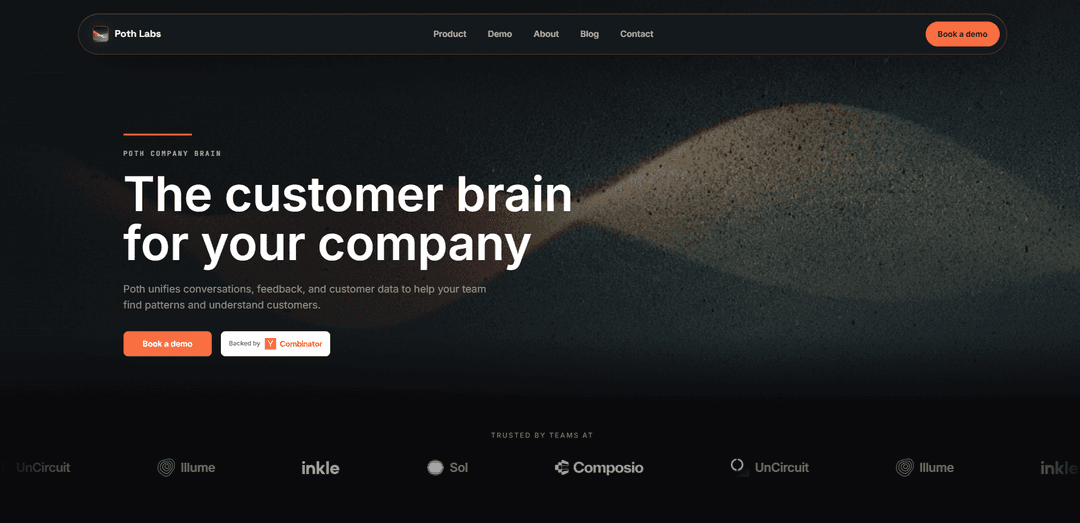
Poth Labs is an agentic customer research platform that unifies feedback, conversations, and customer data into a searchable “customer brain,” delivering prioritized insights with evidence, root-cause hypotheses, and recommended actions.
https://pothlabs.com/?ref=producthunt
Product Information
Updated:Aug 8, 2026
What is Poth Labs
Poth Labs (Poth Technologies) is a “company brain” focused on helping teams understand what customers are experiencing and why. It connects scattered customer knowledge—calls, support tickets, CRM notes, Slack threads, surveys/NPS, docs, in-app chat, and product analytics—into a single system so product, growth, and leadership can detect patterns without digging through multiple tools. Built around the idea that customer knowledge is a network of relationships (not isolated documents), Poth is designed to answer cross-source questions like what’s driving churn, which features are being requested, and why users adopt or abandon features.
Key Features of Poth Labs
Poth Labs is an agentic customer-research and insights platform that unifies scattered customer feedback (calls, support tickets, CRM notes, Slack threads, surveys, docs, and product analytics) into a searchable “customer brain.” It lets teams ask questions across all connected sources, surfaces prioritized themes with evidence, and goes beyond summarization by modeling relationships between customers/accounts/features/behaviors to perform root-cause analysis. When existing data is insufficient, it generates targeted follow-up questions and surveys to validate hypotheses and close insight gaps with new evidence.
Unified customer data connectors: Ingests and connects feedback from tools like call transcripts (e.g., Fireflies), support systems, CRMs, Slack, surveys/NPS, in-app chat, docs (e.g., Confluence), and product analytics to eliminate siloed insights.
Searchable “customer brain” Q&A: Ask a question in natural language and Poth searches across all customer data, returning answers grounded in the underlying sources rather than isolated summaries.
Prioritized insights with evidence: Extracts patterns and themes, then ranks insights (e.g., onboarding friction, missing integrations) and attaches supporting evidence/segments so teams can act with confidence.
Relationship-based reasoning model: Builds a living model that links customers, accounts, features, behaviors, and conversations, enabling cross-source reasoning (e.g., tying complaints to cohorts or behaviors).
Root-cause analysis via hypothesis engine: Generates and tests hypotheses by comparing qualitative feedback against product, operational, and behavioral data, helping teams move from “what happened” to “why it’s happening.”
Targeted follow-ups and gap closure: When data is missing, Poth creates targeted interview questions and surveys designed to validate specific hypotheses and fill evidence gaps.
Use Cases of Poth Labs
B2B SaaS product discovery and roadmap: Aggregate feature requests and pain points from tickets, calls, and CRM notes; identify top themes by segment (SMB vs. enterprise) and prioritize roadmap items with concrete evidence.
Churn and retention investigation: Connect churn signals and behavioral/product analytics with qualitative feedback to identify drivers of churn (e.g., onboarding breakdowns, perceived ROI gaps) and recommend targeted fixes.
Customer support and operations quality: Find recurring support issues and operational bottlenecks across tickets, chat, and internal threads; perform root-cause analysis to reduce ticket volume and improve resolution workflows.
Growth, activation, and onboarding optimization: Detect onboarding friction patterns across cohorts and correlate with activation metrics; generate recommended actions (e.g., day-3 nudges) and validate via targeted follow-ups.
Voice-of-customer for leadership reporting: Provide leadership with a single, continuously updated view of what customers are experiencing—backed by citations—without manual synthesis across multiple tools.
Research augmentation for customer insights teams: Accelerate research cycles by having Poth propose hypotheses and automatically generate interview/survey questions to test them, reducing time from signal to validated insight.
Pros
Centralizes fragmented feedback into one searchable system, reducing time spent hunting across tools.
Evidence-backed, prioritized insights help teams act confidently rather than relying on anecdotal summaries.
Root-cause and hypothesis-driven approach can connect qualitative complaints to operational/product drivers.
Gap-filling via targeted follow-ups/surveys helps validate uncertain insights instead of guessing.
Cons
Value depends on quality and breadth of integrations and the completeness of connected customer data.
Requires organizational alignment on data access/governance since it unifies sensitive conversations and customer records.
Hypothesis and recommendation outputs may still need human review to fit context and constraints.
Potential setup and change-management overhead to connect sources and operationalize insights across teams.
How to Use Poth Labs
1) Book a demo / get access: Go to https://pothlabs.com/ and click “Book a demo”. Provide your name and work email to start onboarding and get access to Poth.
2) Connect your customer-feedback sources: During onboarding, connect the tools where feedback and customer context live (examples mentioned: Fireflies calls, Slack threads, support tickets, CRM notes, surveys/NPS, in-app chat, docs/Confluence, product analytics). The goal is to unify scattered feedback into one searchable “customer brain.”
3) Let Poth unify and model your customer knowledge: After connecting sources, Poth builds a living model that links customers/accounts, conversations, behaviors, features, and operational context so it can reason across everything your company already knows (not just summarize one source at a time).
4) Ask a question in Ask Poth: Use the “Ask a question → Poth searches all customer data → returns prioritized insights with evidence and recommended actions” workflow. Ask product/growth/leadership questions like what’s driving churn, what features are most requested, or where onboarding is breaking down.
5) Review prioritized insights with evidence: Inspect the returned insights list, which is described as “live · updating,” and includes: the insight, supporting evidence (e.g., mentions/tickets/surveys), the segment/cohort affected, and a recommended action (e.g., activation nudge, accelerate connector build, success metrics rollout).
6) Use thematic analysis for the cohort/dashboard you need: Adjust your analysis to the cohort or segment you care about (e.g., SMB vs enterprise) and use Poth’s thematic analysis capability to see patterns and themes across unified feedback.
7) Run root-cause analysis (move from “what” to “why”): Use Poth’s root-cause approach by comparing feedback against product, operational, and behavioral data. This is intended to investigate why issues happen, not just summarize complaints.
8) Evaluate the hypothesis engine outputs: Review Poth’s “live hypotheses,” which can be validated or rejected with confidence levels. Use these hypotheses to focus investigation on the most likely causes.
9) Generate targeted follow-up questions to validate hypotheses: For each hypothesis, use Poth’s generated questions designed to test one specific explanation (e.g., clarifying what “dirty” means, timing, what was empty/overflowing, whether it’s recurring).
10) Close gaps with targeted surveys and customer follow-ups: When existing data isn’t enough, use Poth to create targeted surveys and follow-ups to collect the missing evidence needed to confirm or refute hypotheses and “close the loop between hypothesis and evidence.”
11) Act on recommended actions and track outcomes: Implement the recommended actions surfaced alongside insights (e.g., onboarding nudges, building/accelerating integrations, rolling out success metrics). Re-ask questions over time to see updated, live insights as new feedback and data arrive.
12) Use Poth to find where feedback is getting stuck: Bring a specific workflow problem (e.g., feedback scattered across tools, unclear churn drivers, adoption drop-offs) and use Poth’s unified search + hypothesis validation to identify bottlenecks and root causes, then iterate with additional questions and follow-ups.
Poth Labs FAQs
Poth Labs is a product that unifies conversations, feedback, and customer data into a searchable “customer brain” so teams can find patterns and understand what customers are experiencing.
Poth Labs Video
Popular Articles

Vosko AI: Localize and Dub Videos for Global Audiences
Oct 15, 2026

Atoms: A Multi-Agent AI Platform That Transforms Ideas into Launch-Ready Products
Oct 13, 2026

Nano Banana SBTI: What It Is, How It Works, and How to Use It in 2026
Apr 15, 2026

Atoms Review — The AI Product Builder Redefining Digital Creation in 2026
Apr 10, 2026
Latest AI Tools Similar to Poth Labs
Ticknotes
Ticknotes is an AI-powered meeting assistant that automatically records, transcribes, and generates personalized meeting summaries, action items, and key insights from audio, video, and text content.
Feta
Feta is an AI-powered meeting tool that helps product and engineering teams run efficient meetings by capturing discussions, automating tasks, and providing actionable insights through smart summaries and integrations.
Aimeet
Aimeet is a comprehensive AI-powered communication platform that combines real-time translation, transcription, screen sharing, and unlimited meeting capabilities for effective virtual collaboration.
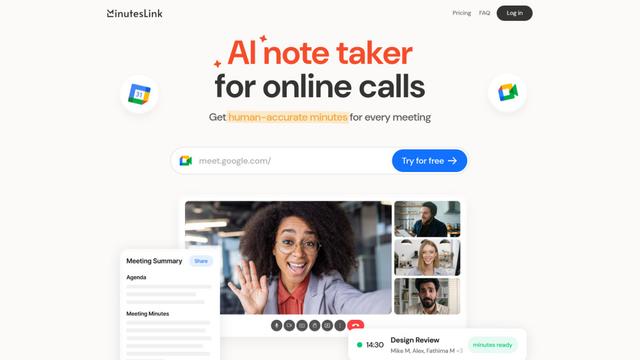
MinutesLink
MinutesLink is an advanced AI-powered note-taking assistant that automatically records, transcribes, summarizes and organizes virtual meetings while building personalized digital avatars from meeting data.
Popular AI Tools Like Poth Labs
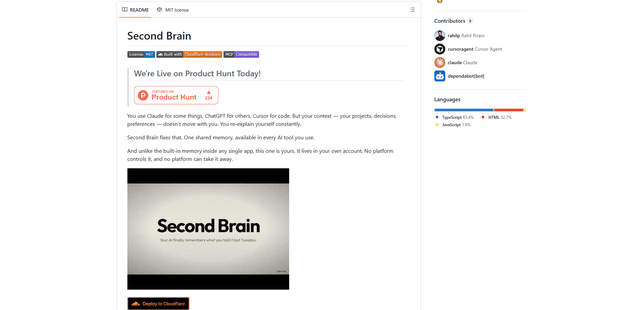
Second Brain for AI
Second Brain for AI is a self-hosted, MCP-compatible persistent memory layer on Cloudflare that lets Claude, ChatGPT, Cursor, and other AI clients store and semantically recall shared context across sessions.
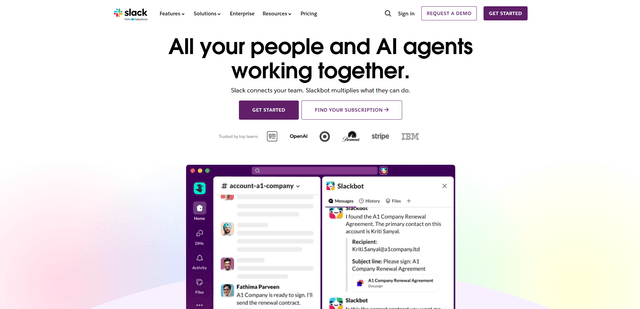
Slack
Slack is an AI-powered work platform that brings team communication, channels, files, automation, and app integrations into one conversational workspace.
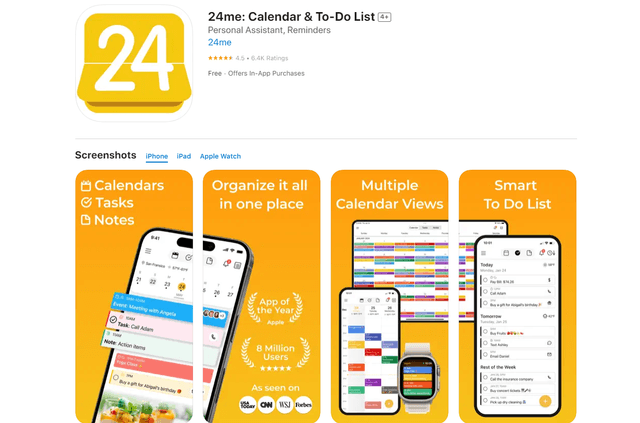
24me Smart Personal Assistant
24me is an award-winning smart personal assistant app that combines calendar, to-do lists, notes, and personal accounts in one unified platform to help boost productivity and time management.
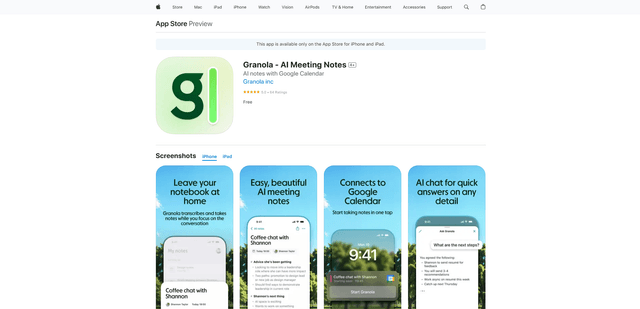
Granola for iOS
Granola for iOS is an AI-powered notepad app that helps users effortlessly capture, transcribe and summarize meeting conversations through intelligent note-taking and one-tap recording capabilities.