
Ploy.ai
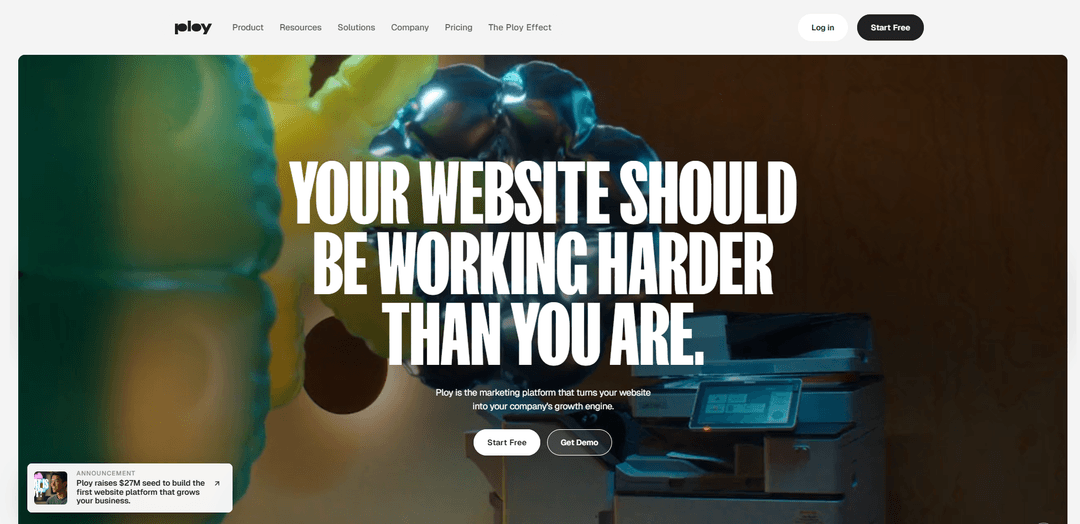
Ploy.ai is an AI-native marketing website platform that builds and ships on-brand pages, monitors SEO/traffic/competitors, identifies visitors, and continuously optimizes for conversion and AI-search visibility.
https://ploy.ai/?ref=producthunt
Product Information
Updated:Jul 8, 2026
What is Ploy.ai
Ploy.ai is a marketing platform designed to turn a company’s website into a self-improving growth engine. Built for marketing teams, startups, enterprises, and agencies, it combines an AI website builder with built-in analytics, SEO and technical auditing, account-based marketing (ABM) workflows, visitor identification, and Answer Engine Optimization (AEO) for modern AI search experiences. Instead of stopping at page creation, Ploy keeps operating after launch—tracking performance, spotting gaps and drops, and proposing or drafting changes that teams can review and publish.
Key Features of Ploy.ai
Ploy.ai is an AI-native marketing website platform that builds, hosts, and continuously optimizes a company’s dotcom and growth motions. It can import an existing site quickly, generate on-brand landing and programmatic pages, and then keep improving performance using built-in analytics, SEO/AEO monitoring, competitor tracking, and automated rewrites/experiments. Ploy also adds growth tooling like visitor identification and CRM syncing, and it ships pages with technical SEO essentials (schema/JSON-LD, sitemap, internal linking, Core Web Vitals) designed to earn visibility in both Google and AI answer engines (ChatGPT/Perplexity/Gemini/AI Overviews).
AI website builder + fast site import: Drafts and ships Webflow-grade marketing pages in your brand voice, and can “slurp” an existing site from a URL to start from what you already have rather than rebuilding from scratch.
Continuous optimization agents (Monitor → Act → Surface): Watches traffic, rankings, conversions, and competitor changes; then proposes or auto-executes fixes like content rewrites, new counter-pages, CRO experiments, and performance improvements with clear summaries of what changed and why.
Built-in SEO + technical foundations: Automatically maintains core technical SEO elements (title/meta, OpenGraph, sitemap, internal linking suggestions, Core Web Vitals), and supports cutovers with routing/redirects, robots, and sitemap hygiene.
Answer Engine Optimization (AEO) + citation tracking: Formats pages to be quotable by AI engines (direct-answer first paragraphs, FAQ blocks) and ships structured data by default (e.g., Article, FAQPage, SoftwareApplication, BreadcrumbList), while tracking where you’re cited and recommending updates to regain/boost mentions.
Visitor identification + ABM workflows: De-anonymizes website visitors into named accounts with firmographics/intent, syncs signals into CRM, and supports account-based marketing pages and outreach prioritization.
Multi-engine growth suite (Web, Grow, Ads): Combines site building/optimization (Web), identification and outreach enablement (Grow), and ad creative/attribution intelligence (Ads) so each module can trigger actions based on the others’ findings.
Use Cases of Ploy.ai
Startup launch and iterative growth: Founders can ship a polished site quickly, then let Ploy continuously improve SEO, AEO visibility, and conversion rates without hiring a full marketing team.
B2B SaaS ABM and pipeline acceleration: Identify high-intent company visits to key pages (e.g., pricing), generate tailored ABM landing pages at scale, and push intent signals into the CRM for timely sales follow-up.
Agency multi-client website operations: Agencies can manage many client sites from one dashboard, white-label outputs, run repeatable “PloyBooks” playbooks across accounts, and deliver real-time reporting without manual work.
Programmatic SEO for large content libraries: Generate and maintain hundreds of keyword/vertical/comparison pages, keep them technically sound (schema, internal linking, sitemap), and refresh underperforming pages based on live analytics.
Competitive response and comparison-page strategy: When competitors change positioning or launch new pages, Ploy can detect it and draft “vs/alternatives/best-of” pages engineered for AI citations and search capture.
Marketing site cutover and domain go-live: Support a clean launch or migration with routing/reverse-proxy rules, redirects, robots/sitemap setup, and ongoing monitoring to prevent SEO regressions post-launch.
Pros
All-in-one dotcom growth stack: site building, analytics, SEO/AEO, visitor identification, and optimization loops in one platform.
Designed for AI search visibility: default schema + direct-answer formatting and citation tracking across major answer engines.
Continuous, agent-driven improvements: turns insights into concrete rewrites/fixes/experiments instead of static dashboards.
Cons
Automation-heavy workflow may require strong review/approval processes to avoid unwanted copy or SEO changes on sensitive pages.
Best fit appears focused on marketing/dotcom use cases; teams needing complex product-app behavior may still rely on an existing stack and routing/proxying.
How to Use Ploy.ai
1) Create an account and workspace: Go to https://ploy.ai/auth/sign-up, create your account, then enter your workspace from the dashboard (Log in → Workspaces).
2) Start by importing (“slurping”) your existing site: In your workspace, plug in your current website URL and run Ploy’s “slurp your site in 60 seconds” flow to ingest your pages and baseline structure so you can iterate without a full rebuild.
3) Choose what you want Ploy to operate (Web, Grow, Ads): Decide which engine(s) you’ll use first: Web (site building + SEO/AEO + performance), Grow (visitor identification + ABM/outreach + CRM sync), Ads (creative + campaign management + attribution).
4) Build or edit pages with the AI Website Builder: Use Ploy Web to draft or revise key pages (e.g., homepage, pricing, campaign landing pages, /vs competitor pages). Review the generated copy and layout, then iterate until it matches your brand and goals.
5) Run a technical SEO go-live checklist before publishing: Before shipping, validate technical SEO basics referenced in Ploy materials: routing and redirects, robots directives, sitemap coverage, and any cutover vs greenfield go-live plan for your domain.
6) Connect your custom domain: Use the “Connect your own domain to your Ploy site” documentation flow to point your domain to Ploy hosting (Cloudflare SSL is built in per the sources).
7) Use Route Rules for migrations or hybrid hosting: If you’re migrating gradually, configure Route Rules to reverse-proxy specific paths on your domain to Ploy pages or to external origins (e.g., Webflow), and optionally proxy unmatched routes to your former hosting provider during cutover.
8) Publish with approvals and versioning: Ship your site using Ploy’s publish/approval workflow: route changes through your team’s review, publish only what’s approved, and manage versions as you roll out updates.
9) Enable analytics connections (GA4 + GSC) and track outcomes: Connect Google Analytics 4 (GA4) and Google Search Console (GSC) so Ploy can read traffic, impressions, and engagement signals and recommend what to fix next.
10) Turn on AEO (AI-search visibility) for citation-friendly pages: Use Ploy’s AEO approach described in the sources: ensure pages have direct-answer first paragraphs, FAQ formatting where relevant, and rely on Ploy’s automatic structured data (e.g., FAQPage, Article, BreadcrumbList, SoftwareApplication) to improve citations in ChatGPT/Perplexity/Gemini.
11) Launch programmatic SEO and comparison pages: Create “/vs” and “alternatives” pages and topic clusters using Ploy’s built-in keyword research/topic clustering workflow, then publish at scale to compound search and AI-search traffic.
12) Use on-page keyword gap improvements to lift performance: Apply Ploy’s workflow to find keywords already earning impressions but missing from the copy, then weave them into the page to improve CTR and rankings (as described in the sources).
13) Set up visitor identification and ABM (Grow): Enable Grow to de-anonymize visitors into named accounts with firmographics/intent, then push those signals into your CRM (Attio, HubSpot, or Salesforce) as a daily action queue.
14) Automate outreach based on intent signals: Use Grow’s automated personalized outreach capabilities to follow up with high-intent accounts identified from key page paths (e.g., pricing page spikes).
15) Use Ads for creative, campaign execution, and attribution: In Ads, generate ad creatives at scale, manage Meta campaigns, and use full-funnel attribution (impression → close) to connect spend to pipeline and closed deals.
16) Run PloyBooks (pre-built growth strategies) on a schedule or triggers: Select PloyBooks to automate recurring work (e.g., SEO refreshes, AEO audits, landing page launches). Configure them to run on a schedule, trigger from events, or let Ploy decide when to execute.
17) Monitor daily insights and approve recommended fixes: Review Ploy’s ongoing monitoring outputs (rankings, traffic anomalies, conversion drops, competitor changes). Approve proposed rewrites, SEO fixes, and experiments so improvements ship continuously without manual audits.
Ploy.ai FAQs
Ploy is an AI-powered marketing platform that turns your website into a growth engine by monitoring performance, surfacing opportunities, and using agents to draft content and fix issues.
Ploy.ai Video
Popular Articles

Vosko AI: Localize and Dub Videos for Global Audiences
Oct 15, 2026
Atoms: A Multi-Agent AI Platform That Transforms Ideas into Launch-Ready Products
Oct 13, 2026

Nano Banana SBTI: What It Is, How It Works, and How to Use It in 2026
Apr 15, 2026

Atoms Review — The AI Product Builder Redefining Digital Creation in 2026
Apr 10, 2026
Latest AI Tools Similar to Ploy.ai
GPT Easy Web
GPT Easy Web is a user-friendly AI-powered platform that enables users to easily build, customize and manage websites through natural language interactions and automated tools without requiring coding knowledge.
AI Website Tool
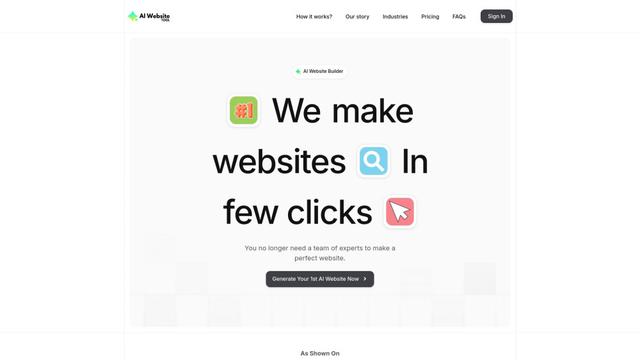
AI Website Tool is an AI-powered website builder that creates professional websites in minutes by automatically generating business-focused copy, custom visuals, and responsive designs with just a few clicks.
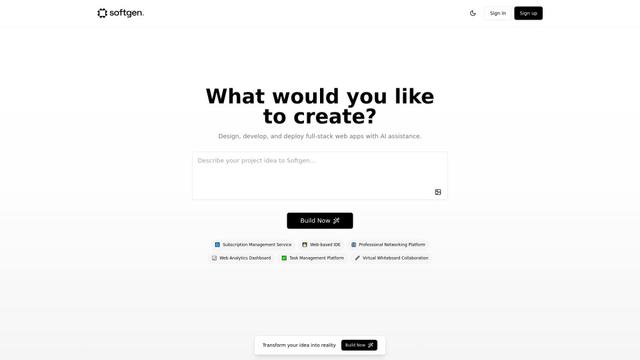
Softgen
Softgen.ai is an AI-powered full-stack project generator platform that enables users to transform their ideas into functional web applications without coding requirements.
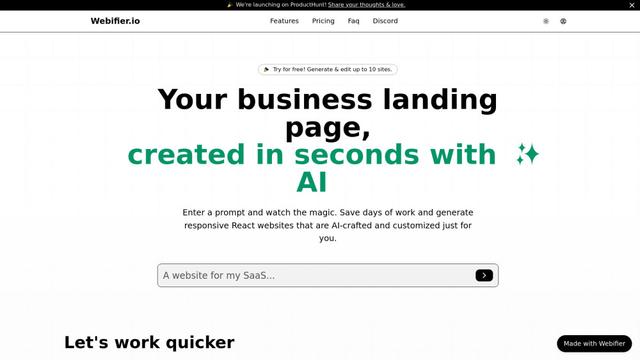
Webifier
Webifier is an AI-powered tool that transforms text prompts into fully functional React landing pages with clean, exportable code using NextJS14, TailwindCSS, and Shadcn components.
Popular AI Tools Like Ploy.ai
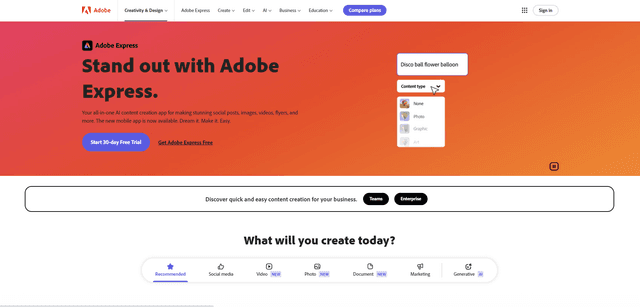
Adobe Express
Adobe Express is an all-in-one AI-powered content creation app for easily making stunning social posts, images, videos, flyers, and more with professionally designed templates and assets.
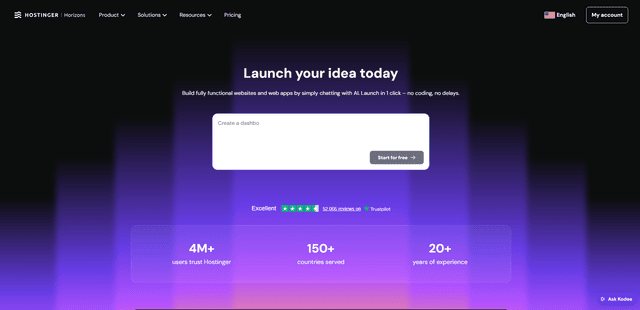
Hostinger
Hostinger is a web hosting and domain service provider offering AI-powered tools like Horizons that enables anyone to build, edit, and publish custom web apps and websites without coding through a simple chat interface.

GPT Engineer
GPT Engineer is an AI-powered software development tool that enables anyone to build web applications by chatting with an AI engineer.
Manus Shopify Connector
Manus Shopify Connector lets you build a Shopify-backed storefront, manage your catalog, and generate data-driven campaigns from a single chat—using Shopify APIs with OAuth-scoped access and Shopify checkout.