
Oxlo.ai
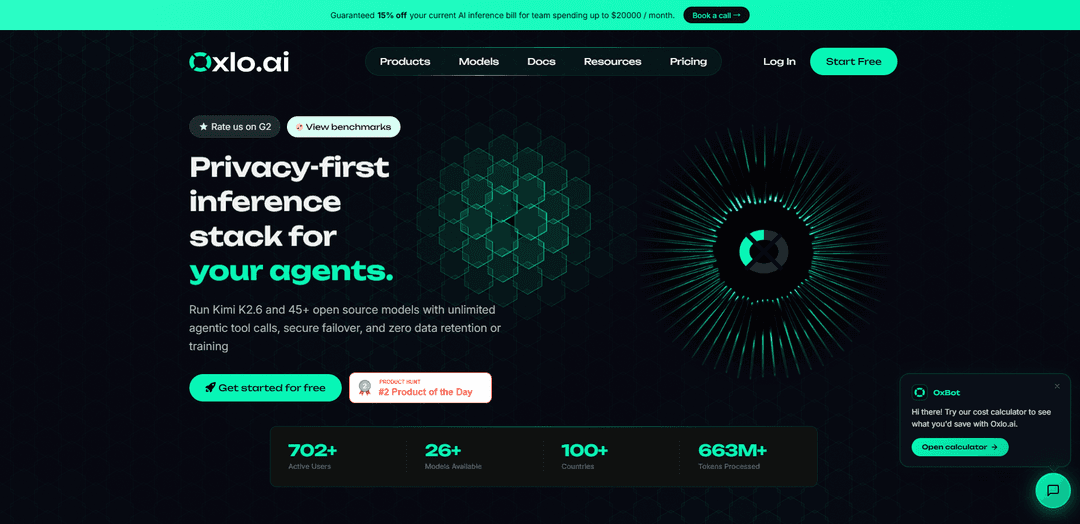
Oxlo.ai is a privacy-first AI inference platform that lets you run 40+ frontier open models through an OpenAI-compatible API with predictable request-based (tokenless) pricing, streaming/tool calling support, and production-grade reliability.
https://www.oxlo.ai/?ref=producthunt
Product Information
Updated:Jul 8, 2026
What is Oxlo.ai
Oxlo.ai is a developer-first AI infrastructure and inference API designed to make integrating and scaling AI in real applications simple, predictable, and affordable. Instead of token-based billing, it offers request-based pricing with clear usage limits, so teams can avoid token math and surprise bills—especially for long-context and agentic workloads. Through one unified API, developers can access a curated catalog of models across multiple modalities (text/chat, coding, vision, image generation, audio, embeddings, and detection), including options like Kimi K2.6, DeepSeek, Qwen, Llama, Mistral, Whisper, SDXL, BGE-Large, and YOLO.
Key Features of Oxlo.ai
Oxlo.ai is a privacy-first AI inference platform that provides access to 40+ curated open-source and frontier-grade models through an OpenAI-compatible API, with predictable request-based pricing (flat cost per API call regardless of prompt/response length). It supports production features like streaming, function calling/tools, JSON mode, vision, embeddings, image generation, and audio (STT/TTS), plus batch/async workflows and reliability features such as secure failover. Oxlo.ai positions itself as a cost-efficient alternative to token-billed providers for long-context and agentic workloads, while committing to zero training on prompts and not selling user data.
Request-based pricing (not per-token): Flat cost per API request regardless of input/output token length, making spend predictable and often cheaper for long-context tasks like RAG, document analysis, and agentic workflows.
OpenAI-compatible API & SDK support: Works with OpenAI Python/Node SDKs; switching typically requires changing only the base_url to https://api.oxlo.ai/v1 and updating the API key, while keeping streaming and tool/function calling intact.
Broad model catalog across modalities: Access 40+ models across text/chat, code, vision, image generation, audio (Whisper STT, Kokoro TTS), embeddings (BGE-Large/E5-Large), and detection (YOLOv9/v11).
Agentic & tool-friendly inference: Designed for agents with unlimited tool calls and support for function calling/JSON mode, enabling structured outputs and multi-step workflows.
Batch/async processing for scale: Supports high-throughput processing patterns (async/batch) to handle large volumes of inference requests efficiently without managing GPUs or orchestration.
Privacy-first posture: States it does not sell user data and does not train on prompts/outputs, emphasizing user ownership of inputs and responses.
Use Cases of Oxlo.ai
Customer support & internal assistants: Deploy chatbots for support, HR, IT, or internal knowledge workflows using chat models (e.g., Llama/Qwen/DeepSeek), with predictable per-request costs.
Document Q&A / RAG for enterprises: Build long-context document analysis pipelines (PDFs, policies, contracts) using embeddings (BGE/E5) plus reasoning models, benefiting from flat pricing for large prompts.
Coding copilots and automated code review: Integrate code-focused models (e.g., Qwen Coder, DeepSeek Coder) into developer tools for generation, refactoring, and bug-fixing.
Vision understanding and object detection: Analyze images for classification, visual Q&A, or detection using vision models and YOLO detectors—useful in retail, security, and manufacturing QA.
Speech workflows (transcription & voice): Power call/meeting transcription with Whisper and generate speech via TTS for voice agents, accessibility features, or media production pipelines.
Large-scale batch content processing: Run summarization, extraction, enrichment, or moderation across large datasets using batch/async workflows—ideal for data teams and content platforms.
Pros
Predictable, request-based billing that avoids token math and can reduce costs for long-context workloads
OpenAI-compatible API makes integration and migration straightforward (base_url swap)
Wide selection of models across text, vision, audio, embeddings, and detection in one platform
Privacy-first claims: no selling data and no training on prompts/outputs
Cons
Flat monthly plans with request/day limits may be less cost-efficient for low-volume or bursty usage compared to pure pay-as-you-go per-token options
Model performance and availability can vary by open-source model choice; teams may need benchmarking/tuning per use case
Some benchmark comparisons reference third-party reports and may not reflect real-world latency, reliability, or domain-specific performance
How to Use Oxlo.ai
1) Create an Oxlo.ai account: Go to https://www.oxlo.ai/ and sign up via the Oxlo.ai Portal/Dashboard. The free tier does not require a credit card.
2) (If applicable) Join Early Access: If the dashboard indicates the product is in Early Access, enter the promo code "OXZ9YQLYHI" during signup/onboarding to unlock access.
3) Open the dashboard and review plans/limits: In the Oxlo.ai dashboard, review the request-based limits for your plan (e.g., Free tier daily request limits; Pro and Premium higher daily request limits). Oxlo.ai pricing is request-based (flat per API call), not token-based.
4) Generate an API key: From the dashboard, generate a secure API key to authenticate requests to Oxlo.ai.
5) Choose a model from the Model Registry: Browse the Model Registry and pick an open-source model that matches your use case (Text/Chat, Code, Vision, Image Gen, Audio, Embeddings, Detection). Examples mentioned include Kimi K2.6, DeepSeek R1/V3.2, Qwen 3, Llama 3.3 70B, Whisper Large v3, Kokoro TTS, BGE-Large, SDXL, YOLOv11.
6) Connect using an OpenAI-compatible SDK (recommended): Oxlo.ai is compatible with the OpenAI Python and Node.js SDKs. To switch from OpenAI/Together/Fireworks/OpenRouter, change only the base_url to "https://api.oxlo.ai/v1" and use your Oxlo.ai API key. Other code can remain the same, including streaming, function calling, JSON mode, vision, embeddings, and image generation.
7) Send your first request (chat/text): Make a chat/text completion request to the Oxlo.ai API using your chosen model. Because billing is request-based, the cost of a request is independent of prompt/response length.
8) Use streaming and tool/function calling if needed: If your app needs real-time output or agent workflows, enable streaming and use function calling/tool calls as you would with other OpenAI-compatible providers; Oxlo.ai supports these features.
9) Add embeddings for RAG/document Q&A: For retrieval-augmented generation, call an embeddings model (e.g., BGE-Large or E5-Large) to embed documents/queries, then use a text/reasoning model (e.g., DeepSeek R1) to answer questions over retrieved context.
10) Use audio models for speech workflows: For speech-to-text, call Whisper (e.g., Whisper Large v3). For text-to-speech, call Kokoro TTS. These are available as Audio models through the same unified API.
11) Use vision/detection/image generation when relevant: For image understanding, use supported vision models (e.g., Gemma 3 27B). For object detection, use YOLO models (e.g., YOLOv9/YOLOv11). For image generation, use models like SDXL or Oxlo Image Pro via the unified API.
12) Monitor usage and scale predictably: Track your daily request usage in the dashboard. Upgrade plans when needed (e.g., Pro for higher daily requests; Premium for production-scale daily requests). Oxlo.ai emphasizes predictable costs because pricing is based on API calls rather than tokens.
13) Validate savings with the cost calculator (optional): Use Oxlo.ai’s cost calculator on the website to compare your current token-based inference spend against Oxlo.ai’s flat, request-based pricing.
14) Review privacy posture (optional but recommended): Read the Oxlo.ai privacy policy from the site. Oxlo.ai states it does not sell your data and does not use prompts/outputs to train models, with zero data retention or training claims highlighted on the homepage.
Oxlo.ai FAQs
Oxlo.ai is an AI inference API that provides access to a curated set of 40+ open models through a unified, OpenAI-compatible HTTP API, with request-based (flat per-API-call) pricing.
Oxlo.ai Video
Popular Articles
Atoms: A Multi-Agent AI Platform That Transforms Ideas into Launch-Ready Products
May 22, 2026

Nano Banana SBTI: What It Is, How It Works, and How to Use It in 2026
Apr 15, 2026

Atoms Review — The AI Product Builder Redefining Digital Creation in 2026
Apr 10, 2026

Kilo Claw: How to Deploy and Use a True "Do‑It‑For‑You" AI Agent(2026 Update)
Apr 3, 2026
Latest AI Tools Similar to Oxlo.ai
Gait
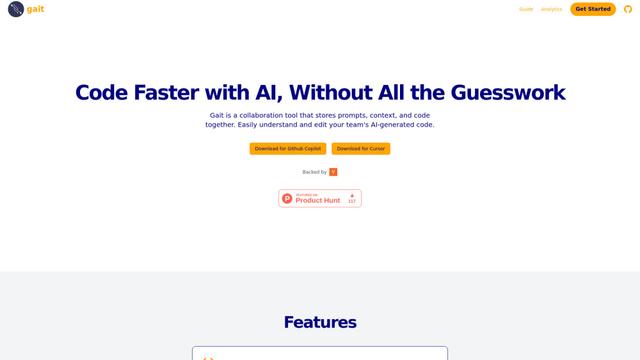
Gait is a collaboration tool that integrates AI-assisted code generation with version control, enabling teams to track, understand, and share AI-generated code context efficiently.
invoices.dev
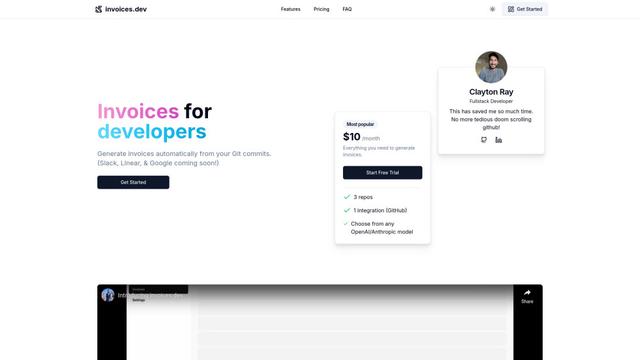
invoices.dev is an automated invoicing platform that generates invoices directly from developers' Git commits, with integration capabilities for GitHub, Slack, Linear, and Google services.
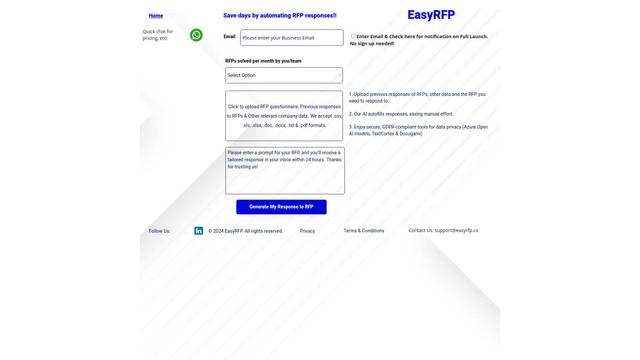
EasyRFP
EasyRFP is an AI-powered edge computing toolkit that streamlines RFP (Request for Proposal) responses and enables real-time field phenotyping through deep learning technology.

Cart.ai
Cart.ai is an AI-powered service platform that provides comprehensive business automation solutions including coding, customer relations management, video editing, e-commerce setup, and custom AI development with 24/7 support.
Popular AI Tools Like Oxlo.ai

GitHub Copilot Chat
GitHub Copilot Chat is an AI-powered coding assistant that provides natural language interactions, real-time code suggestions, and contextual support directly within supported IDEs and GitHub.com.
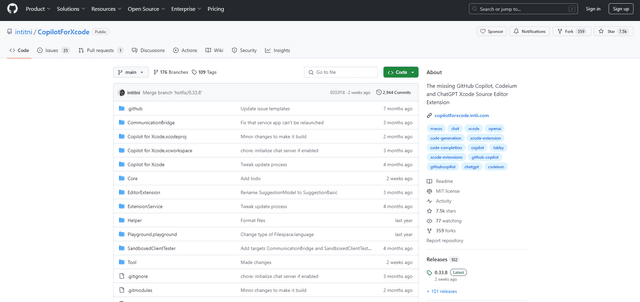
CopilotForXcode
CopilotForXcode is an Xcode Source Editor Extension that integrates GitHub Copilot, Codeium, and ChatGPT to provide AI-powered code suggestions, chat assistance, and prompt-to-code functionality within Xcode.
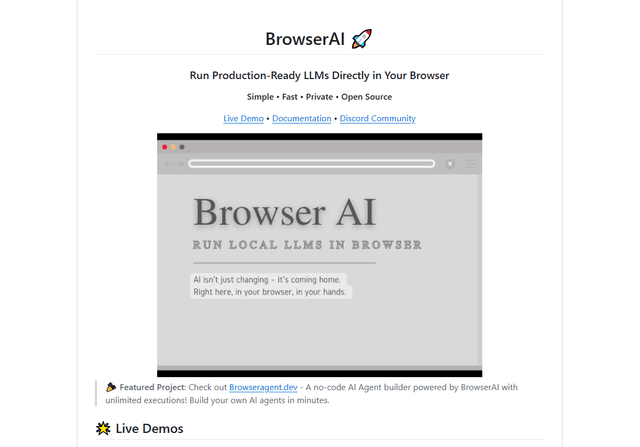
BrowserAI
BrowserAI is an open-source library that enables running local Large Language Models (LLMs) directly in web browsers with WebGPU acceleration, offering privacy-focused AI capabilities without requiring server infrastructure.
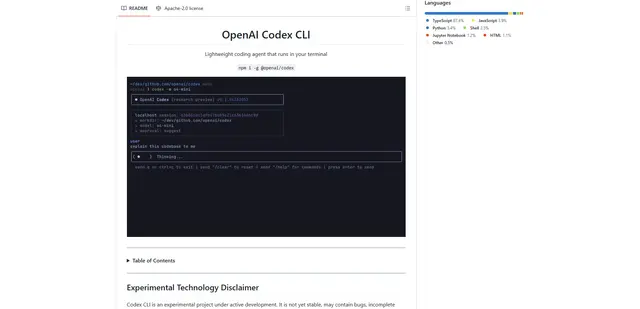
OpenAI Codex CLI
OpenAI Codex CLI is a lightweight, open-source coding agent that runs in your terminal, enabling developers to translate natural language into code execution while providing ChatGPT-level reasoning with the ability to run code, manipulate files, and iterate under version control.