
Opper AI
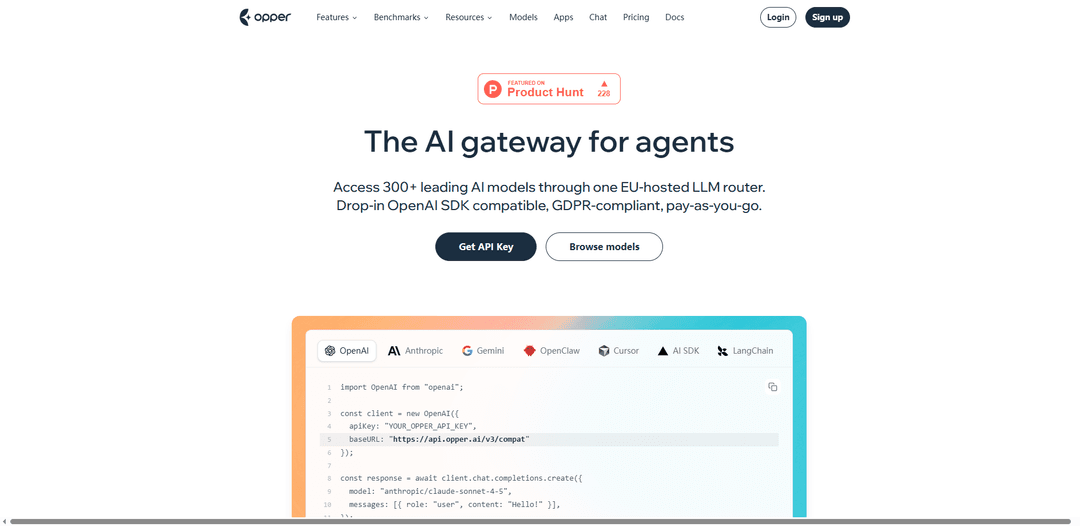
Opper AI is an EU-hosted, GDPR-compliant AI gateway and control plane that lets developers access 300+ leading models through one OpenAI-compatible API with built-in routing, observability, and guardrails.
https://opper.ai/?ref=producthunt
Product Information
Updated:Jul 15, 2026
What is Opper AI
Opper AI is a unified API platform—positioned as “the European AI gateway for agents”—that routes application requests to a wide range of frontier and specialized AI models across providers (OpenAI, Anthropic, Google, and many others). It’s designed to help teams ship production AI features without building and operating their own model gateway infrastructure, while keeping inference and data residency in the EU by default (hosted in AWS Stockholm) and supporting enterprise governance needs. Opper emphasizes drop-in compatibility with existing OpenAI SDK code, pay-as-you-go usage, and a broader control plane for tracing, compliance, and reliability as you scale.
Key Features of Opper AI
Opper AI is an EU-hosted AI gateway and control plane for building and running agents and LLM-powered features across 300+ models via a single API. It provides drop-in compatibility with the OpenAI SDK (and works with existing OpenAI/Anthropic/Google-style integrations), plus built-in observability (tracing/audit logs), routing and fallback across providers/regions, and governance features like PII masking, allowlists, budget caps, and configurable retention. Opper emphasizes GDPR alignment, EU data residency (hosted in AWS Stockholm by default), encryption in transit/at rest, and a simplified compliance posture by acting as a single AI sub-processor for multiple upstream model providers.
Unified gateway to 300+ models: Route requests to 300+ leading AI models across modalities (text, image, voice, video) through one API, with the ability to switch models/providers without rewriting application code.
Drop-in OpenAI SDK compatibility: Use the OpenAI SDK against Opper’s compat endpoint (baseURL) so existing chat/completions code can run with provider/model identifiers like "anthropic/claude-sonnet-4-5".
EU data residency & compliance posture: Designed for GDPR-oriented deployments with EU-hosted routing options and security controls; positioned as a single sub-processor to reduce DPA/sub-processor management when adding new models.
Observability and tracing on AI calls: Built-in tracing/visibility into AI interactions (tokens, latency, sessions) and exportable audit trails to help debug, evaluate, and operate AI features in production.
Intelligent routing, fallback, and governance controls: Infrastructure-layer controls such as region/provider routing, model allowlists per workload, rate limiting, budget caps, and real-time compliance enforcement to run agents more reliably.
Agent tooling ecosystem (SDK/CLI/Skills): Agent SDKs and an Agent CLI to run popular coding/agent apps on Opper, plus “skills” packages that integrate with coding agents (e.g., Claude Code, Cursor, Codex) for faster setup.
Use Cases of Opper AI
Enterprise EU-compliant AI features: Teams in regulated environments (e.g., finance, healthcare, public sector) can keep inference and governance aligned with EU residency needs while maintaining audit trails and retention controls.
Production agent platforms and SaaS copilots: SaaS companies can ship agents that automate workflows (support, operations, analysis) with routing/fallback and observability, reducing reliability issues from single-model dependence.
Multi-model experimentation and cost/performance optimization: Product and ML teams can A/B test models behind one integration, swap providers quickly, and apply budget caps to control spend while tuning quality for different tasks.
RAG and knowledge-backed assistants: Use semantic indexes and structured outputs to build retrieval-augmented generation features with citations and predictable schemas for apps like internal knowledge search or documentation assistants.
AI governance for large organizations: Centralize model access with allowlists, audit logs, and policy controls so different teams can safely use AI while security/compliance maintains oversight.
Developer tooling and coding agents at scale: Run coding agents (e.g., Claude Code/Codex/OpenCode) through a single EU-hosted gateway, enabling organizations to standardize access and observability across developer AI tools.
Pros
Single integration for many models/providers, reducing vendor lock-in and integration overhead
EU-hosted positioning with governance features (audit trails, budget caps, allowlists, PII masking) supports regulated deployments
Drop-in OpenAI SDK compatibility makes adoption fast for existing codebases
Built-in observability/tracing improves production debugging and reliability
Cons
Adds an additional infrastructure layer (gateway) that may introduce dependency and operational coupling to Opper’s availability
Some advanced controls (e.g., full control-plane capabilities, retention options) may require additional configuration or higher-tier features depending on needs
Model availability and exact performance/cost characteristics still depend on upstream providers and selected regions
How to Use Opper AI
1) Create an Opper account: Go to https://opper.ai/sign-up/free and sign up (for yourself or your company).
2) Create an API key: Log in to the Opper platform (https://platform.opper.ai) and create a new API key (top-right menu). API keys are associated with a project; consider creating separate projects for different apps/environments.
3) (Optional) Add credits or bring your own provider keys: Top up credits to use any model/provider through Opper, or configure your own provider keys depending on your setup and needs.
4) Set the API key in your environment: Export your key as an environment variable named OPPER_API_KEY (never hardcode it in code).
5) Make your first call using the OpenAI SDK (drop-in compatibility): Use your existing OpenAI SDK code, but point baseURL to Opper’s compat endpoint (https://api.opper.ai/v3/compat) and pass a provider/model string (e.g., anthropic/claude-sonnet-4-5).
6) Example (TypeScript) — OpenAI SDK with Opper compat endpoint: Install and run code like: import OpenAI from "openai"; const client = new OpenAI({ apiKey: process.env.OPPER_API_KEY, baseURL: "https://api.opper.ai/v3/compat" }); const response = await client.chat.completions.create({ model: "anthropic/claude-sonnet-4-5", messages: [{ role: "user", content: "Hello!" }] });
7) Use provider/model naming for routing: When selecting models, pass them as provider/model strings (e.g., openai/gpt-5, anthropic/claude-opus-4-7). Browse available models at https://opper.ai/models or in the docs.
8) (Alternative) Use OpenAI-compatible endpoint with explicit header (compat/openai): If using the OpenAI SDK with Opper’s OpenAI-compatible endpoint, set base_url to https://api.opper.ai/compat/openai and include header x-opper-api-key with your OPPER_API_KEY; ensure the OpenAI api_key field is not blank.
9) Add Opper to a coding agent via Skills (agent-assisted setup): To let coding agents (Claude Code, Cursor, Codex, etc.) auto-configure Opper, follow the agent-assisted setup instructions at https://skills.opper.ai or install the skill pack with: npx skills add opper-ai/opper-skills
10) Use the Agent SDK when building autonomous agents (optional): For tool-calling agents, MCP integration, span tracing, and multi-agent composition, use Opper’s Agent SDK (Python or TypeScript). Start from https://docs.opper.ai/agents.
11) Use structured outputs with schemas (optional): For reliable, typed responses, use schema/structured output features (e.g., Pydantic in Python) as described in https://docs.opper.ai/build/task/calls.
12) Add RAG/semantic retrieval with Indexes (optional): Upload documents/objects and retrieve them in LLM calls using Opper Indexes for chunking/reranking-managed RAG. See https://docs.opper.ai/capabilities/indexes.
13) Enable observability and governance with the Control Plane (optional): As you scale, use the AI Control Plane to observe calls/tokens/sessions, route across providers/regions, steer with context engineering, guard (PII masking/content filtering), and comply (budget caps/audit trails). Explore: https://opper.ai/ai-control-plane
14) Review compliance and data retention options (optional): Opper is EU-hosted (AWS Stockholm) with GDPR-focused controls; prompts are not stored by default (metadata for analytics), and enterprise options can enable zero retention. See https://opper.ai/ai-compliance
Opper AI FAQs
Opper AI is an EU-hosted AI gateway (LLM router) for agents that lets you access 300+ AI models through a single API. It is designed to be drop-in compatible with existing OpenAI/Anthropic/Google SDKs and is positioned as GDPR-compliant and pay-as-you-go.
Popular Articles

Vosko AI: Localize and Dub Videos for Global Audiences
Oct 15, 2026
Atoms: A Multi-Agent AI Platform That Transforms Ideas into Launch-Ready Products
Oct 13, 2026

Nano Banana SBTI: What It Is, How It Works, and How to Use It in 2026
Apr 15, 2026

Atoms Review — The AI Product Builder Redefining Digital Creation in 2026
Apr 10, 2026
Latest AI Tools Similar to Opper AI
Gait
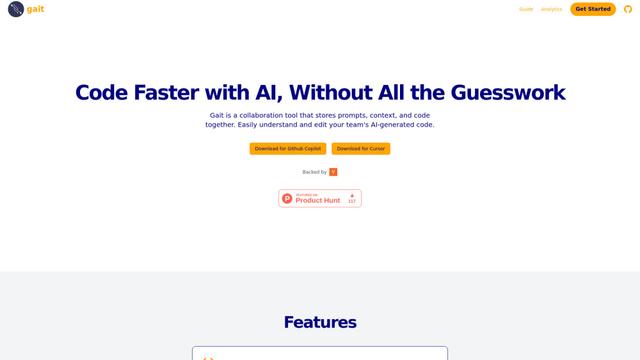
Gait is a collaboration tool that integrates AI-assisted code generation with version control, enabling teams to track, understand, and share AI-generated code context efficiently.
invoices.dev
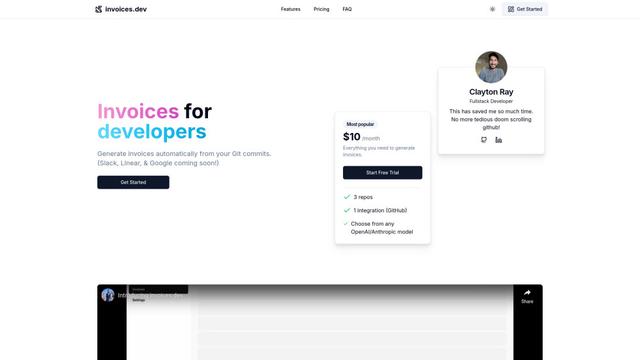
invoices.dev is an automated invoicing platform that generates invoices directly from developers' Git commits, with integration capabilities for GitHub, Slack, Linear, and Google services.
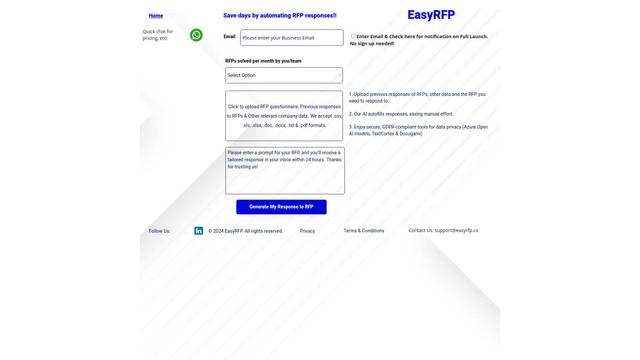
EasyRFP
EasyRFP is an AI-powered edge computing toolkit that streamlines RFP (Request for Proposal) responses and enables real-time field phenotyping through deep learning technology.

Cart.ai
Cart.ai is an AI-powered service platform that provides comprehensive business automation solutions including coding, customer relations management, video editing, e-commerce setup, and custom AI development with 24/7 support.
Popular AI Tools Like Opper AI

GitHub Copilot Chat
GitHub Copilot Chat is an AI-powered coding assistant that provides natural language interactions, real-time code suggestions, and contextual support directly within supported IDEs and GitHub.com.
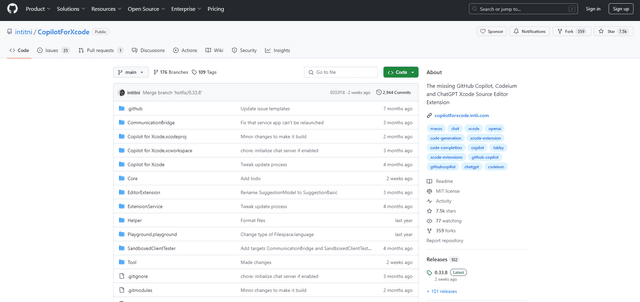
CopilotForXcode
CopilotForXcode is an Xcode Source Editor Extension that integrates GitHub Copilot, Codeium, and ChatGPT to provide AI-powered code suggestions, chat assistance, and prompt-to-code functionality within Xcode.
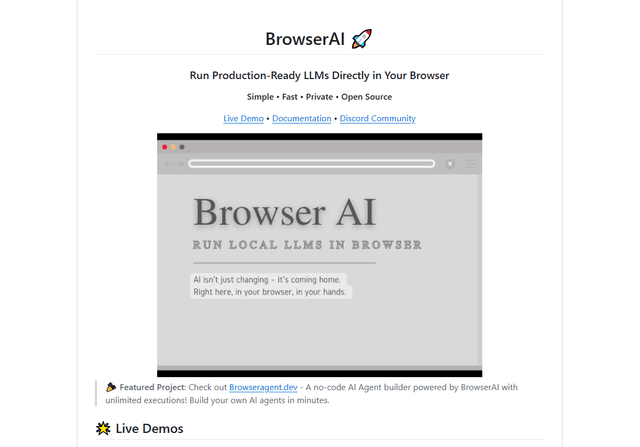
BrowserAI
BrowserAI is an open-source library that enables running local Large Language Models (LLMs) directly in web browsers with WebGPU acceleration, offering privacy-focused AI capabilities without requiring server infrastructure.
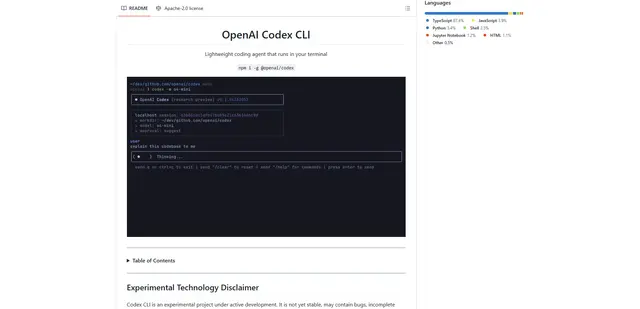
OpenAI Codex CLI
OpenAI Codex CLI is a lightweight, open-source coding agent that runs in your terminal, enabling developers to translate natural language into code execution while providing ChatGPT-level reasoning with the ability to run code, manipulate files, and iterate under version control.