N71
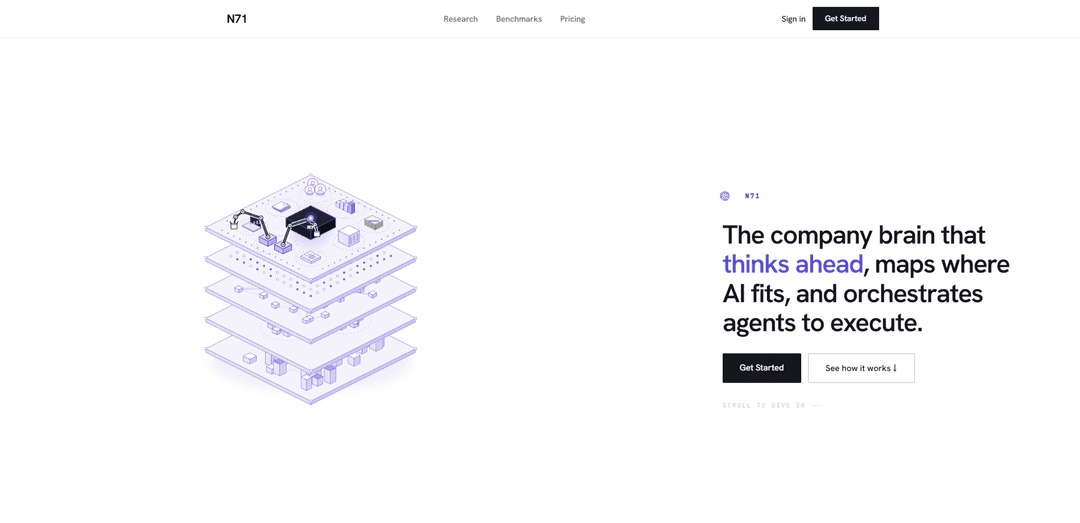
N71 ist ein „Unternehmenshirn“, das KI-Agenten einen gemeinsamen Speicher und proaktiven Kontext bietet, indem es Ihre Systeme über eine einheitliche Wissensebene und einen Abruf-Stack verbindet, validiert durch veröffentlichte Benchmark-Ergebnisse.
https://n71.ai/?ref=producthunt&utm_source=aipure
Produktinformationen
Aktualisiert:Jul 8, 2026
Was ist N71
N71 ist eine KI-Intelligenzplattform, die als Speicher- und Kontextebene für KI-Agenten positioniert ist – entwickelt, um Organisationen dabei zu helfen, Wissen zu bewahren, fragmentierte Tools zu verbinden und schnell genaue Einblicke zu gewinnen. Vermarktet als „das Unternehmenshirn, das vorausschauend denkt“, konzentriert es sich darauf, verstreute Unternehmensinformationen in einen einheitlichen, nutzbaren Kontext umzuwandeln, damit verschiedene KI-Tools und Agenten nicht „vergessen“, wenn eine Sitzung endet, und aus derselben Quelle der Wahrheit arbeiten können. N71 legt auch Wert auf Messung und Transparenz und veröffentlicht Benchmark-Ergebnisse (einschließlich Misserfolge), um seine Behauptungen über die Speicherleistung zu untermauern.
Hauptfunktionen von N71
N71 ist ein „Unternehmensgehirn“ (Gedächtnis + Kontextschnittstelle) für KI-Agenten, das sich mit Ihren bestehenden Systemen verbindet und einen einheitlichen Wissensgraphen mit einer Abruf-/Ranking-Schicht aufbaut, damit Agenten genaue, aktuelle Erkenntnisse gewinnen können. Es betont messbare Leistung durch veröffentlichte Benchmarks (einschließlich Fehlerfälle) und unterstützt eine schnelle Einarbeitung („Oberfläche Ihres ersten Gedankens in Minuten“), mit Integrationen (einschließlich MCP-basiert), die es mehreren Tools/Agenten ermöglichen, einen konsistenten Organisationskontext zu teilen und sich ändernde Fakten durch abhängigkeitsbewusste Aktualisierungen zu verwalten.
Einheitlicher Wissensgraph-Speicher: Erstellt einen einzigen, gemeinsamen Organisationskontext („Unternehmensgehirn“), indem Unternehmenswissen in einem einheitlichen Wissensgraphen dargestellt wird, sodass KI-Agenten über verbundene Fakten statt über isolierte Chat-Historien nachdenken können.
Hybride Abruf- + Ranking-Schicht: Produktionsreifer Informationsabruf, der darauf ausgelegt ist, genaue Unternehmenseinblicke zu liefern, indem Abruf- und Ranking-Techniken (einschließlich Vektordatenbanken/Embeddings) genutzt werden, um den besten unterstützenden Kontext für Agentenantworten zu finden.
Änderungsbewusste Faktenverbreitung (Kaskade): Wenn sich eine Tatsache ändert, können sich abhängige Fakten entsprechend aktualisieren – mit dem Ziel, veraltetes nachgelagertes Wissen zu reduzieren und abgeleitete Aussagen mit den Aktualisierungen der Quelle der Wahrheit konsistent zu halten.
Abwesenheitsbewusstsein: Verfolgt, was das System nicht mehr weiß (oder was nicht mehr wahr ist), und hilft so zu verhindern, dass Agenten veraltete oder ungültige Informationen selbstbewusst verwenden.
Systemkonnektoren + schnelle Wertschöpfung: Entwickelt, um Ihre internen Systeme zu verbinden und schnell nützliche Ergebnisse zu liefern („erster Gedanke in Minuten“), wodurch die Reibung bei der Bereitstellung von gemeinsamem Speicher über Tools hinweg reduziert wird.
Benchmark-gesteuerte Transparenz (MEME Benchmark): Veröffentlicht Benchmark-Ergebnisse und -Fehler, einschließlich einer herunterladbaren Evaluierungssuite (100 Episoden, 1.188 Fragen) zur Validierung von Speicherleistungsansprüchen.
Anwendungsfälle von N71
Wissensbasis für Kundensupport und Serviceabläufe: Vereinheitlichen Sie Produktdokumentationen, bekannte Probleme, Vorfallhistorien und interne Runbooks, damit Support-Agenten und KI-Assistenten die aktuellsten Schritte zur Fehlerbehebung abrufen und veraltete Anleitungen vermeiden können.
Unternehmensweite Suche über isolierte Tools hinweg: Verbinden Sie Wikis, Tickets, CRM-Notizen und technische Dokumente in einer Kontextschnittstelle, damit Mitarbeiter und Agenten Fragen stellen und fundierte Antworten mit nachvollziehbarem, geranktem Kontext erhalten können.
Vertriebs- und Account-Intelligence: Aggregieren Sie Account-Pläne, Besprechungsnotizen, E-Mails/CRM-Felder und Produktnutzungssignale, damit KI-Agenten aktuelle Account-Zusammenfassungen und nächste Schritte generieren können, die sich bei Faktenänderungen aktualisieren.
Engineering- und Incident-Retrospektiven: Pflegen Sie einen lebendigen Graphen von Diensten, Eigentümern, Vorfällen und Gegenmaßnahmen; wenn sich Eigentum oder Architektur ändern, können abhängige operative Kenntnisse Aktualisierungen kaskadieren, um veraltete Runbooks zu reduzieren.
Koordination von Multi-Agenten-Workflows: Bieten Sie ein gemeinsames Gedächtnis-/Kontextsubstrat für mehrere KI-Tools und Agenten, damit diese über konsistente Fakten „miteinander sprechen“ können, anstatt dass jedes Tool den Kontext nach einer Sitzung vergisst.
Vorteile
Benchmark-gesteuerte Transparenz mit veröffentlichten Ergebnissen (und Fehlern) sowie herunterladbaren Evaluierungsfragen zur Validierung.
Starker Fokus auf die Aktualisierung des Wissens durch änderungsbewusste Aktualisierungen (Kaskade) und das Bewusstsein für ungültiges Wissen (Abwesenheit).
Entwickelt für reale Agenten-Bereitstellungen: einheitlicher Wissensgraph plus Abruf-/Ranking-Schicht und Integrationen zur Verbindung von Unternehmenssystemen.
Nachteile
Integration und Wissensgraph-Modellierung können einen erheblichen Einrichtungsaufwand und eine kontinuierliche Datenverwaltung erfordern, um in komplexen Organisationen effektiv zu sein.
Leistungsansprüche basieren auf Benchmarks; Ergebnisse in der realen Welt können je nach Konnektorabdeckung, Datenqualität und Abstimmung von Abruf/Ranking variieren.
Als spezialisierte Gedächtnis-/Kontextschnittstelle benötigen Teams möglicherweise immer noch zusätzliche Tools für Orchestrierung, Benutzeroberfläche und End-to-End-Agenten-Workflows.
Wie verwendet man N71
1) Gehen Sie zu N71: Öffnen Sie https://n71.ai/ ("N71 – Das Unternehmenshirn, das vorausschauend denkt").
2) Starten Sie den Anmeldevorgang: Klicken Sie auf „Get Started“ (Erste Schritte) und gehen Sie zur Anmeldeseite unter https://n71.ai/auth?mode=signup.
3) Verbinden Sie Ihre Unternehmenssysteme (erstellen Sie einen gemeinsamen Kontext): Verbinden Sie die Tools/Systeme, die Ihr Team bereits verwendet, damit N71 als gemeinsame Kontextebene fungieren kann („Geben Sie all Ihren KI-Agenten einen gemeinsamen Kontext“ / „Verbinden Sie Ihre Systeme“).
4) Aktivieren Sie den MCP-Zugriff für Ihre Agenten/Tools: Richten Sie den MCP-Zugriff ein, damit Ihr Kontext Sie in verschiedene Agenten/Tools begleiten kann (die Quellen erwähnen den MCP-Zugriff von Claude, ChatGPT und Cursor).
5) Erstellen Sie Ihren ersten „Gedanken“: Nachdem Sie Systeme verbunden haben, generieren/zeigen Sie Ihren ersten „Gedanken“ an (die Website behauptet, Sie können dies „in Minuten“ tun).
6) Verwenden Sie herkunftsgestützte Antworten: Wenn N71 Ausgaben liefert, nutzen Sie die Funktion „Full provenance“ (Vollständige Herkunft), damit Antworten ihren Quellen zugeordnet werden.
7) Überwachen Sie den proaktiven Feed auf Änderungen: Verwenden Sie den proaktiven Feed, um zu sehen, was sich geändert hat, bevor Sie fragen („was sich geändert hat, angezeigt, bevor Sie fragen“).
8) Verlassen Sie sich auf Kaskadenaktualisierungen, wenn sich Fakten ändern: Wenn zugrunde liegende Fakten in verbundenen Systemen aktualisiert werden, verwenden Sie das Kaskadenverhalten von N71, damit abhängige Fakten entsprechend aktualisiert werden („Kaskade – wenn sich eine Tatsache ändert, werden abhängige Fakten aktualisiert“).
9) Validieren Sie Leistungsansprüche anhand von Benchmarks (optional): Überprüfen Sie die veröffentlichten Benchmark-Ergebnisse und die Methodik von N71 unter https://n71.ai/benchmarks (MEME Benchmark 12.–16. Juni 2026; enthält herunterladbare Fragen zur Validierung).
10) Skalieren Sie auf Teamnutzung und Bereitstellungsanforderungen (optional): Wählen Sie ein Betriebsmodell, das zu Ihrer Organisation passt (Teamplätze, jährliche Verpflichtung/verwaltete Option oder Perimeter-Bereitstellungen einschließlich luftdichter/rechtsgebundener Ebenen, wie in den Quellen erwähnt).
N71 FAQs
N71 wird als „das Unternehmensgehirn, das vorausschauend denkt“ positioniert, das einem Unternehmen einen gemeinsamen Kontext geben soll, indem es seine Systeme verbindet und Erkenntnisse („Gedanken“) schnell aufdeckt.
Beliebte Artikel
Atoms: Eine Multi-Agenten-KI-Plattform, die Ideen in startbereite Produkte verwandelt
May 22, 2026

Nano Banana SBTI: Was es ist, wie es funktioniert und wie man es im Jahr 2026 einsetzt
Apr 15, 2026

Atoms Review – Der KI-Produkt-Builder, der die digitale Erstellung im Jahr 2026 neu definiert
Apr 10, 2026

Kilo Claw: Wie man einen echten "Do-It-For-You" KI-Agenten bereitstellt und verwendet (2026 Update)
Apr 3, 2026
Neueste KI-Tools ähnlich wie N71
Snapmark
Snapmark ist eine KI-gestützte Suchmaschine für Lesezeichen, die es Benutzern ermöglicht, Webseiten, Bilder und Texte ohne manuelles Tagging oder Kategorisierung zu speichern, zu suchen und zu organisieren.
Uměl.cz
Uměl.cz ist eine tschechische KI-gestützte Suchmaschine, die intelligente und kontextuelle Antworten auf Benutzeranfragen liefert.
想读 (WantRead)
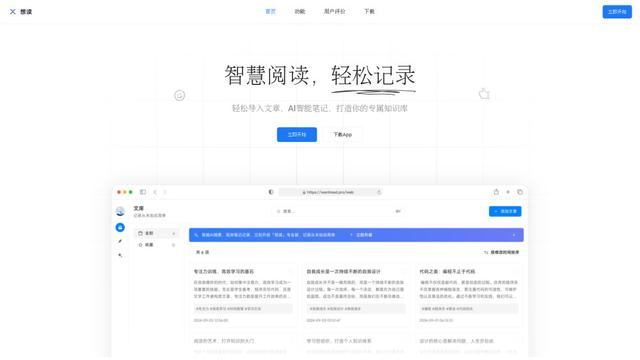
想读(WantRead) ist eine KI-gestützte Lese- und Notizplattform, die Benutzern hilft, einfach zu importieren, zu lesen, zu annotieren und ihre persönliche Wissensbasis aufzubauen.
PodExtra AI
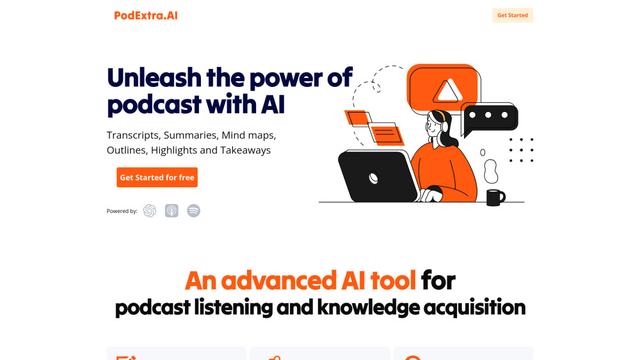
PodExtra AI ist ein fortschrittliches KI-gestütztes Podcast-Tool, das Podcast-Inhalte in verdauliche Formate durch Transkripte, Zusammenfassungen, Mind Maps, Gliederungen, Highlights und Erkenntnisse verwandelt.
Beliebte KI-Tools wie N71
Rememberall
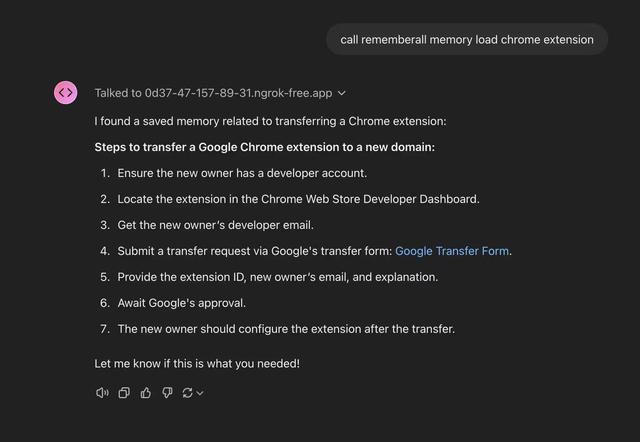
Rememberall ist eine sichere, Open-Source-Lösung für langfristige Erinnerungen, die es KI-Anwendungen und GPT-Modellen ermöglicht, persistente Erinnerungen über Gespräche hinweg durch semantische Suche und vektorbasierte Speicherfunktionen aufrechtzuerhalten.
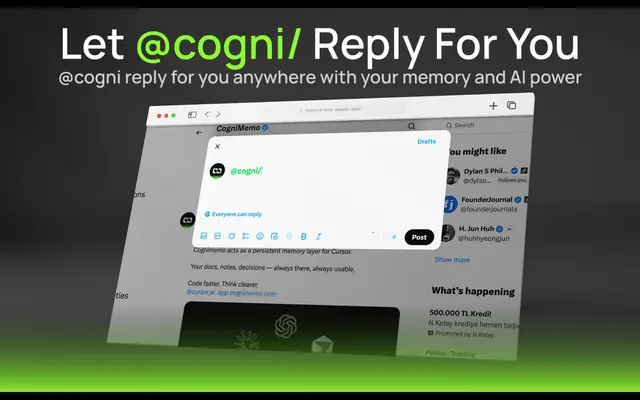
CogniMemo Extension
CogniMemo ist eine Browsererweiterung, die KI-Tools wie ChatGPT, Claude, Gemini und DeepSeek Langzeitgedächtnisfähigkeiten hinzufügt, indem sie kontextbezogene Gespräche und Wissensmanagement durch gespeicherte Notizen und vergangene Chats ermöglicht.

iglu
Iglu ist eine private, KI-gestützte Mikro-Journaling-App, die Benutzern hilft, ihre Gedanken, Erinnerungen und Ideen durch Text- und Medieneinträge mit intelligenten Such- und Empfehlungsfunktionen aufzuzeichnen, zu organisieren und wieder aufzugreifen.
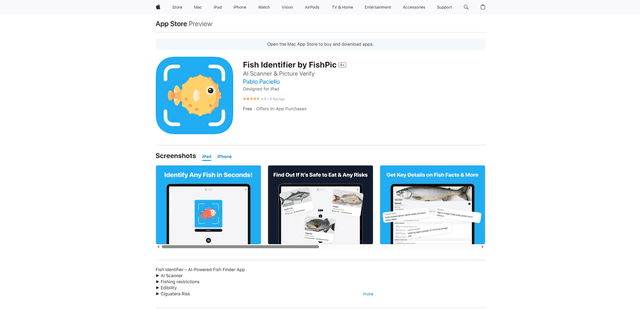
FishPic
FishPic ist eine KI-gestützte App zur Fischidentifizierung, die Fischarten anhand von Fotos sofort erkennt und gleichzeitig umfassende Informationen über Essbarkeit, Vorschriften und Rezepte liefert.