
Merge
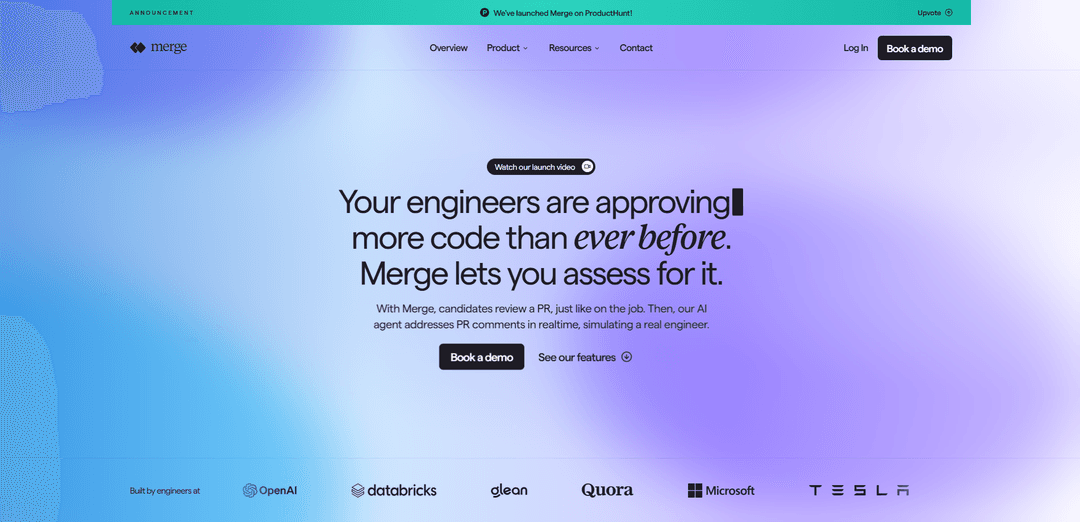
Merge is an AI-native code review assessment platform that evaluates candidates through a realistic pull-request review loop, AI-generated PR revisions, customizable role-specific assessments, and detailed reporting including token-use efficiency.
https://mergeoa.com/?ref=producthunt
Product Information
Updated:Aug 14, 2026
What is Merge
Merge is a hiring assessment product designed to measure real engineering judgment through code review, rather than traditional algorithm-style quizzes. It places candidates into a small, realistic codebase and has them review an actual pull request by leaving comments on issues like correctness bugs, refactors, and security risks. Built for hiring teams that want stronger, job-relevant signals, Merge provides an end-to-end assessment flow—from inviting candidates to producing a hiring-ready scorecard—so teams can make decisions based on how candidates read, critique, and iterate on real code.
Key Features of Merge
Merge is an AI-native code review assessment platform that evaluates engineering candidates by having them review realistic pull requests inside a small, understandable codebase, then iteratively judge AI-generated revisions that address their comments. It provides an end-to-end assessment workflow—from inviting candidates through configurable role-specific assessments to producing a reporting scorecard—while also exposing token usage and efficiency metrics to help teams understand how candidates work with AI and control evaluation cost.
PR-based Review Loop assessment: Candidates review a real pull request in a realistic codebase, leave comments on bugs/refactors/security risks, then re-review subsequent PR revisions generated in response to their feedback.
AI agent that addresses review comments in realtime: After the candidate submits review comments, an AI agent produces an updated PR revision that incorporates the feedback, simulating how an engineer responds during an actual review cycle.
Custom assessment configuration: Hiring teams can calibrate assessments by difficulty (intern through principal), specialization (e.g., frontend, backend, infra, security), and language constraints to match the role.
Hiring-ready reporting and scorecards: Produces reports that connect candidate comments to code quality signals such as risk detection, prioritization, reasoning, and judgment about whether the revised code is approval-ready.
Token use and efficiency analytics: Tracks how efficiently candidates spend tokens, estimates cost, and surfaces behavior across revisions to help teams evaluate AI-assisted workflows and manage spend.
Use Cases of Merge
Software engineering hiring (core SWE): Replace or augment algorithmic coding tests with a code-review-centered evaluation that measures practical skills: identifying correctness issues, suggesting refactors, and approving/rejecting changes.
Security-focused hiring loops: Configure assessments to emphasize vulnerability discovery and secure coding practices, then evaluate how candidates prioritize and validate security fixes across PR revisions.
Infrastructure/platform engineering assessment: Assess candidates on infrastructure- or platform-oriented PRs (e.g., reliability/performance/operability changes) and evaluate their ability to reason about production risk and maintainability.
University recruiting and new-grad screening: Use calibrated difficulty settings to assess fundamentals via smaller, scoped codebases while still measuring real-world engineering judgment and review habits.
Internal upskilling and benchmarking: Run standardized review-loop exercises for existing engineers to benchmark code review quality, AI-assisted efficiency, and improvement over iterative revisions.
Pros
More job-relevant signal than puzzle-style coding tests by focusing on PR review, prioritization, and iteration.
Role customization (difficulty, specialization, languages) enables tighter alignment to what the team actually hires for.
Transparent token/efficiency metrics help evaluate AI-native workflows and manage assessment cost.
Cons
Effectiveness depends on the realism/quality of the provided codebases and PR scenarios for a given role.
Candidates unfamiliar with code review workflows may be disadvantaged compared to those with PR-heavy experience.
AI-generated revisions may not perfectly mirror a real teammate’s behavior, which can influence the assessment dynamics.
How to Use Merge
1) Book a demo / get access: Go to https://mergeoa.com/ and click “Book a demo” (or use the Log In link if you already have access). This is the entry point to start using Merge’s AI-native code review assessment platform.
2) Create a new assessment: In the platform, start a new assessment configuration. Merge is designed to turn a pull-request review into a hiring assessment, so you’ll be setting up an evaluation that candidates complete by reviewing a PR.
3) Configure the role calibration (difficulty): Set the assessment difficulty to match the role level you’re hiring for (e.g., intern, new graduate, junior, mid-level, senior, staff, principal). This calibrates the expected depth and rigor of the candidate’s review.
4) Configure specialization focus: Choose the specialization that best matches the job (examples shown by Merge include frontend, backend, infrastructure, security, platform, distributed systems, data pipelines, performance, networking, core database, systems, APIs). This focuses the PR review signal on the work you care about.
5) Configure language constraints: Restrict the assessment to specific programming languages for depth, or allow broader stacks for generalist roles. This ensures candidates are evaluated in relevant technologies.
6) Invite the candidate: Send an invite to the candidate from the platform (Merge describes the workflow as “from invite to hiring decision”). The candidate will enter the assessment environment when they start.
7) Candidate reads the codebase: The candidate begins by inspecting a small, realistic codebase with a scoped pull request that can be understood quickly. This establishes context before reviewing changes.
8) Candidate reviews the PR and leaves comments: The candidate performs a real PR review: they comment on correctness bugs, refactors, and security risks—mirroring on-the-job code review behavior.
9) Candidate submits the review: The candidate submits their PR comments. Merge evaluates their priorities and reasoning before generating the next step in the loop.
10) AI agent publishes a revision in response to comments: Merge’s AI agent addresses the candidate’s PR comments in real time and opens a fresh PR revision. This simulates how an engineer would respond to review feedback.
11) Repeat the review loop until completion: The candidate reviews the updated PR revision, adds or adjusts comments, and continues iterating. The loop repeats until time expires or the candidate decides the PR is ready to approve.
12) Review reporting and scorecard: After the session, use Merge’s reporting to evaluate the candidate. Reports connect candidate comments to code quality, risk detection, revision judgment, and practical hiring recommendations—creating a scorecard the hiring team can discuss.
13) Analyze token use & efficiency (cost/behavior signal): Use the Token Use & Efficiency view to see how efficiently the candidate worked with AI, including token usage, estimated cost, and PR revisions. This provides an additional signal beyond correctness—how effectively they collaborate with AI tools.
14) Make a hiring decision using the collected signals: Combine the review-loop performance, reporting insights, and efficiency metrics to reach a hiring decision grounded in realistic engineering work rather than algorithm-style quizzes.
Merge FAQs
Merge is an AI-native code review assessment platform that evaluates candidates by having them review a pull request (PR) like they would on the job, then uses an AI agent to address their PR comments in realtime and publish a revised PR.
Merge Video
Popular Articles

Vosko AI: Localize and Dub Videos for Global Audiences
Oct 14, 2026
Atoms: A Multi-Agent AI Platform That Transforms Ideas into Launch-Ready Products
Oct 13, 2026

Nano Banana SBTI: What It Is, How It Works, and How to Use It in 2026
Apr 15, 2026

Atoms Review — The AI Product Builder Redefining Digital Creation in 2026
Apr 10, 2026
Latest AI Tools Similar to Merge

Lingogo
Lingogo is an AI-powered English learning app designed specifically for working professionals that offers real-world workplace scenario practice through conversational AI tutoring.
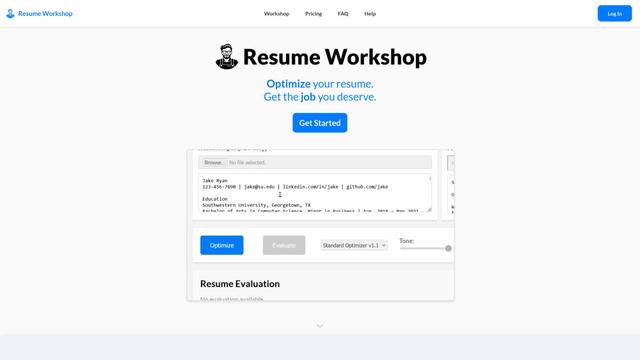
Resume Workshop
Resume Workshop is an AI-powered resume optimization platform that helps job seekers tailor their resumes with relevant keywords and phrases to match specific job postings.
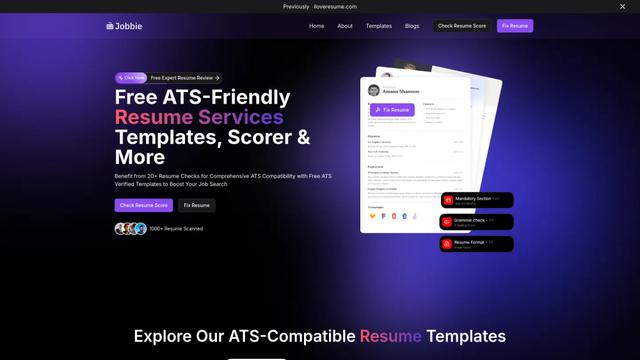
Jobbie
Jobbie is a comprehensive online platform offering free ATS-friendly resume services including resume checking, scoring, templates, and AI-powered optimization tools to help job seekers create professional resumes that pass through Applicant Tracking Systems.

Hiring Studio by Metaview
Hiring Studio by Metaview is a free AI-powered tool that helps recruiting teams generate customized interview questions with follow-up suggestions and detailed answer rubrics.
Popular AI Tools Like Merge
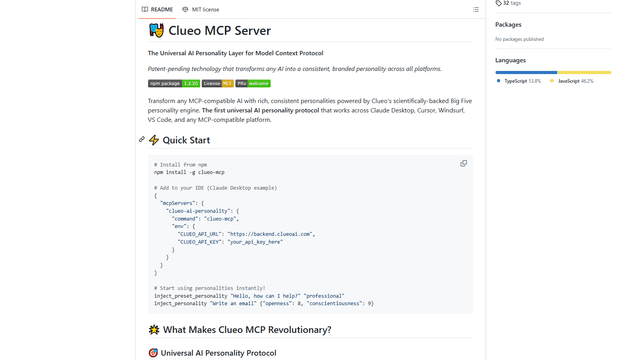
ClueoMCP
ClueoMCP is a universal AI personality layer that transforms any AI into a consistent, branded personality across all platforms using patent-pending technology and scientifically-backed Big Five personality traits.
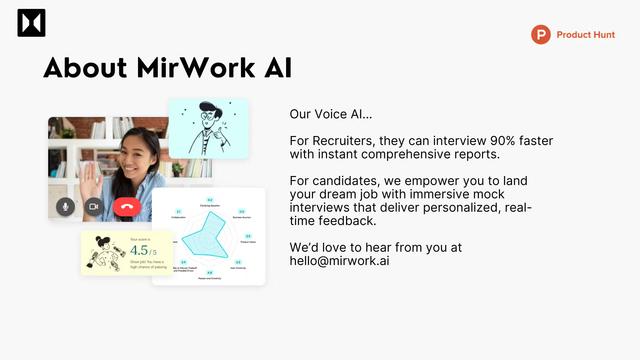
Quick Mock - AI interviewer for Any Job
Quick Mock is an AI-powered interview preparation tool that enables users to extract job descriptions from leading platforms and instantly conduct realistic mock interviews with real-time voice AI technology and comprehensive feedback.
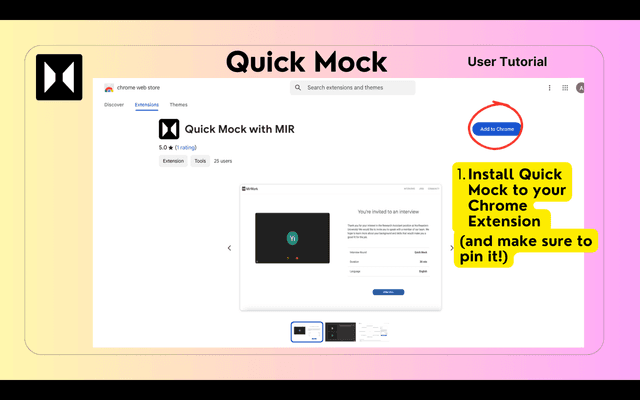
QuickMock 2.0 – AI for Hot Interviews
QuickMock 2.0 is an AI-powered interview preparation tool that instantly converts LinkedIn job descriptions into tailored mock interviews with real-time feedback and a comprehensive question bank from top companies.
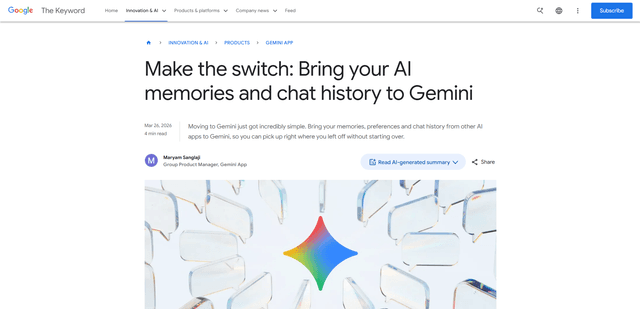
Google Gemini Memory Import
Google Gemini Memory Import is a new feature that allows users to seamlessly transfer their memories, preferences, and chat histories from other AI assistants to Gemini without starting from scratch.