
MentionDrop
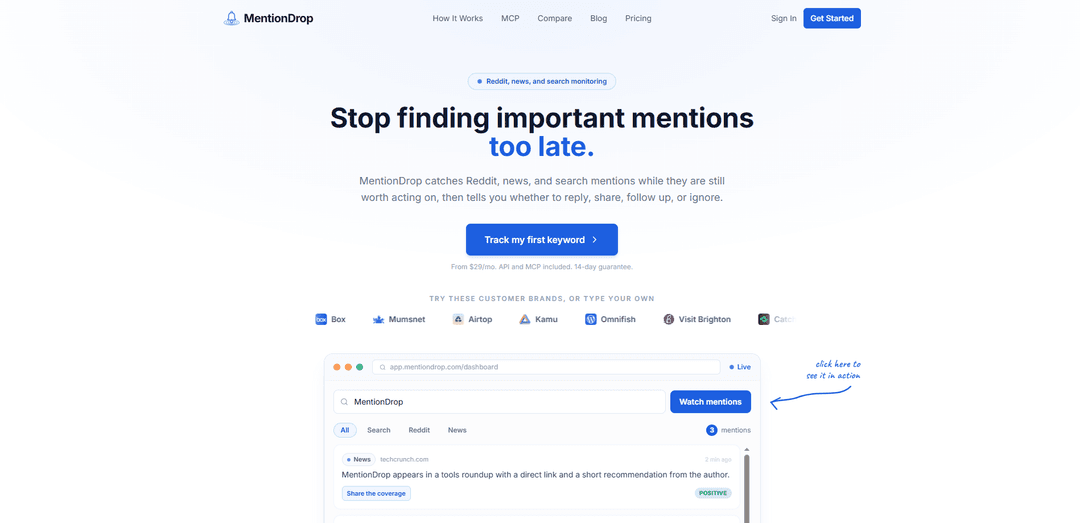
MentionDrop is an AI-powered web and Reddit mention monitoring tool that detects new brand, product, and competitor mentions in minutes and delivers AI summaries, sentiment, and suggested next steps via email, Slack, webhook, API, or MCP.
https://mentiondrop.com/?ref=producthunt
Product Information
Updated:Jul 8, 2026
What is MentionDrop
MentionDrop is a real-time mention monitoring platform built for founders, small teams, and lean marketing/PR workflows who need to catch important conversations early. Instead of relying on slow, index-based alerts (like Google Alerts) or forcing you to babysit an enterprise dashboard, it focuses on high-signal public sources such as Reddit, Google News, search results, and selected web results (e.g., blogs, forums, and documentation). Each surfaced mention is enriched with AI-generated context—summary, sentiment, and an action recommendation—so you can quickly decide what matters and what to ignore. Pricing starts at $29/month, includes developer surfaces (HTTP API and MCP), and comes with a 14-day money-back guarantee.
Key Features of MentionDrop
MentionDrop is an AI-powered web and Reddit mention monitoring tool that detects new keyword mentions in minutes and delivers actionable context instead of raw link dumps. It monitors bounded, high-signal sources (including Reddit, Google News, search results, and selected public web results), then enriches each surfaced mention with an English summary, sentiment classification, relevance/noise filtering, and suggested next steps. Alerts can be routed to email, Slack, or webhooks, and developers can integrate via an HTTP API or MCP to power internal workflows and AI agents for digests, research, and reply drafting.
Real-time mention detection (minutes, not days): Finds new mentions quickly—often within minutes—so teams can respond while threads and coverage are still active, positioned as faster and more reliable than Google Alerts.
Bounded high-signal source monitoring: Watches Reddit plus other high-intent public sources such as Google News, search results, and selected web results (e.g., blogs/forums), focusing on coverage that’s most likely to matter.
AI summaries, sentiment, and suggested actions: Every surfaced mention is summarized in plain English, labeled with sentiment (positive/neutral/negative), and paired with a recommended next step (reply/share/follow up/ignore) to speed triage.
Noise filtering and relevance scoring: Flags broad/ambiguous keywords and helps separate passing references from high-intent complaints, comparisons, or buying signals so teams spend time on what matters.
Multi-channel alert delivery: Sends alerts via email and Slack, and supports webhooks for routing mentions into internal tools, ticketing, or automation workflows.
Developer surfaces: HTTP API + MCP for agents: Includes an HTTP API for mentions/keywords/digests/reply drafts and an MCP endpoint to connect tools like Claude/Cursor/Windsurf (or custom agents) for querying signals and generating drafts.
Use Cases of MentionDrop
Startup launch monitoring: Track launch buzz, reviews, and early discussions across Reddit and web sources in near real time, with AI triage to prioritize threads where a timely reply can drive awareness or signups.
Reputation management for SMBs: Catch complaints, negative sentiment, or misinformation early and get suggested actions and reply drafts, helping small teams respond before issues spread.
Competitor and market intelligence: Monitor competitor mentions and comparison threads to spot where rivals win on pricing/features/support and identify gaps or positioning opportunities.
Agency/consultant client monitoring: Set up keywords for multiple brands and route alerts to Slack/webhooks, using AI summaries and sentiment to quickly brief clients and recommend next steps without manual reading.
Customer research & demand signal discovery: Surface buying-intent conversations (“looking for alternatives”) and recurring pain points in forums/Reddit, then use summaries and digests to feed product, marketing, or sales outreach.
Developer workflow automation: Pull mentions via API or connect an agent via MCP to generate internal digests, classify issues, draft responses, or trigger downstream automation in custom systems.
Pros
Fast, actionable alerts: AI summaries, sentiment, and suggested actions reduce time spent opening and reading raw links.
Strong fit for lean teams: bounded high-signal monitoring (especially Reddit) plus Slack/webhook delivery supports rapid response workflows.
Developer-friendly: HTTP API and MCP enable integrations and agent-driven workflows beyond a traditional dashboard.
Accessible pricing for small teams: plans start at $29/month with a 14-day money-back guarantee.
Cons
Not full social listening: does not position itself as monitoring major social networks like X/Twitter, LinkedIn, Instagram, TikTok, or YouTube.
Coverage is intentionally bounded: focuses on selected high-signal sources rather than claiming exhaustive “entire internet” monitoring.
Paid product for most value: while there may be limited/free access, core capabilities are primarily offered through paid plans.
How to Use MentionDrop
1) Decide what you want to monitor (keywords): List the exact terms you care about: your brand name, product name, common misspellings, key people names, competitor names, and a few high-intent phrases (e.g., “<competitor> alternative”, “best <category> tool”). Start small to keep the feed high-signal.
2) Create an account and start a keyword: Go to MentionDrop and begin signup. Add your first keyword (brand/product/competitor). MentionDrop is designed so your first keyword can be live in minutes.
3) Preview sample results before committing: Use the on-page sample results preview (type your company name) to see what alerts look like: summary, sentiment, and suggested next step. This helps validate that your keyword is specific enough and likely to produce useful mentions.
4) Choose a plan based on keyword count and history needs: Pick Starter ($29/mo) for up to 5 keywords and 30 days of history, or Pro ($59/mo) for up to 20 keywords and 90 days of history. Both include Slack/email alerts, webhooks, HTTP API access, and MCP access. There’s a 14-day usefulness guarantee.
5) Add your keywords (keep them precise): In your MentionDrop workspace, add the keywords you listed. If you see noise from broad/ambiguous terms, tighten the keyword (e.g., use a full brand name) so the feed stays actionable.
6) Understand what sources are being monitored: Confirm you’re monitoring the sources MentionDrop focuses on: Reddit, Google News, search results, and selected public web results. This is intentionally “bounded high-signal sources” rather than an enterprise ‘monitor everything’ dashboard.
7) Turn on alert delivery where you actually work: Configure alert destinations: email and/or Slack for human triage, plus webhook if you want automation. The goal is to route mentions into the tools your team already checks.
8) Start triaging mentions using the AI context: When a mention arrives, read the AI summary, sentiment (positive/neutral/negative), and the suggested action (reply/share/follow up/ignore). Use this to decide quickly whether it needs attention.
9) Click through to the original thread/page when action is needed: Open the source link (e.g., the Reddit thread or news item) directly from the alert to respond while the conversation is still active—especially for complaints, comparison threads, and launch-day buzz.
10) Use reply drafts when you want to respond faster: If a mention deserves a response, use MentionDrop’s reply draft feature to generate a suggested reply aligned to your goal/voice, then edit and post it.
11) Reduce noise with filters (and block irrelevant domains): Apply noise filters to keep alerts focused on mentions worth your time. If specific sites repeatedly produce irrelevant hits, block those domains so they stop cluttering your feed.
12) Track competitor share-of-voice (rolling window): Use the included competitor share-of-voice view (noted as rolling windows in the collected sources) to spot when a competitor is gaining traction and which channels or topics are driving it.
13) Automate workflows with webhooks (optional): If you need automation, send alerts to a webhook endpoint to trigger internal workflows (e.g., create a ticket, post to a channel, update a CRM). This is useful for routing high-priority mentions to the right owner immediately.
14) Pull data into your own tools with the HTTP API (optional): Use account-scoped API keys to fetch mentions, keywords, digests, and reply drafts from MentionDrop’s HTTP API, then integrate them into internal dashboards, scripts, or reporting.
15) Connect AI agents via MCP (optional): If you use Claude/Cursor/Windsurf/Hermes or your own agent, connect via MentionDrop’s MCP endpoint so agents can query digests, competitor signals, demand signals, and reply drafts.
16) Establish a lightweight operating rhythm: Handle urgent alerts as they arrive (especially negative sentiment or high-intent comparisons). Review lower-priority mentions once daily. Once a week, spend ~20 minutes looking for patterns: repeated objections, competitor comparisons, positive language to reuse, and sources that consistently drive useful mentions.
17) Expand coverage carefully: Only add more keywords after you’re confident you can triage the volume. A small, useful feed beats a large noisy one—especially for teams trying to act quickly.
18) Use the 14-day usefulness guarantee if it’s not working: If the alerts are too noisy or not useful, request a refund within 14 days (per MentionDrop’s guarantee). Adjust keywords/filters first, but don’t keep paying for a feed you won’t act on.
MentionDrop FAQs
MentionDrop is a web and Reddit mention monitoring platform that tracks brand, product, and competitor mentions across bounded high-signal public sources (including Reddit, Google News, search results, and selected public web results). It sends alerts with AI-generated summaries, sentiment, and suggested next steps via email, Slack, webhook, and also provides an HTTP API and MCP for agent integrations.
MentionDrop Video
Popular Articles

Vosko AI: Localize and Dub Videos for Global Audiences
Oct 15, 2026
Atoms: A Multi-Agent AI Platform That Transforms Ideas into Launch-Ready Products
Oct 13, 2026

Nano Banana SBTI: What It Is, How It Works, and How to Use It in 2026
Apr 15, 2026
Atoms Review — The AI Product Builder Redefining Digital Creation in 2026
Apr 10, 2026
Latest AI Tools Similar to MentionDrop
Ticknotes
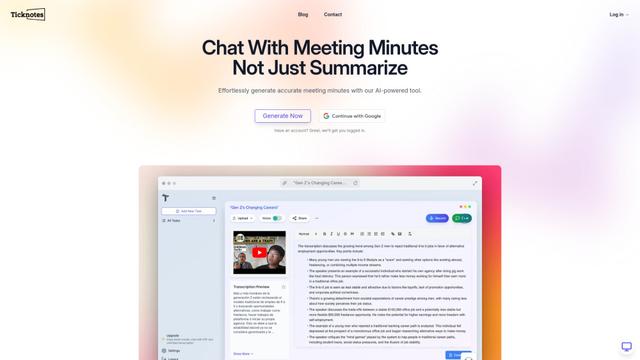
Ticknotes is an AI-powered meeting assistant that automatically records, transcribes, and generates personalized meeting summaries, action items, and key insights from audio, video, and text content.
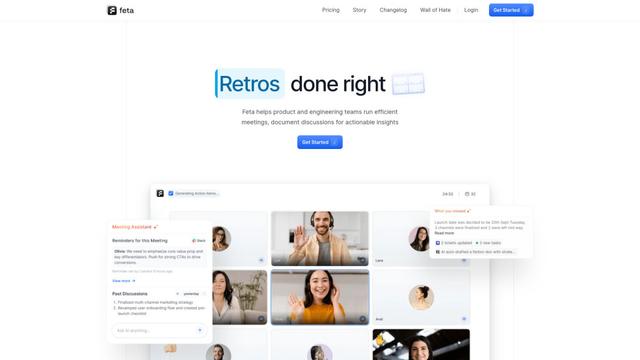
Feta
Feta is an AI-powered meeting tool that helps product and engineering teams run efficient meetings by capturing discussions, automating tasks, and providing actionable insights through smart summaries and integrations.
Aimeet
Aimeet is a comprehensive AI-powered communication platform that combines real-time translation, transcription, screen sharing, and unlimited meeting capabilities for effective virtual collaboration.
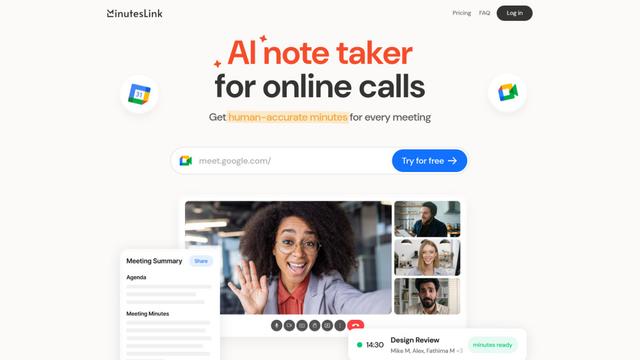
MinutesLink
MinutesLink is an advanced AI-powered note-taking assistant that automatically records, transcribes, summarizes and organizes virtual meetings while building personalized digital avatars from meeting data.
Popular AI Tools Like MentionDrop
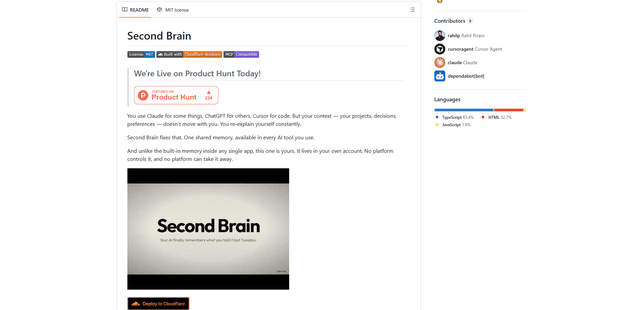
Second Brain for AI
Second Brain for AI is a self-hosted, MCP-compatible persistent memory layer on Cloudflare that lets Claude, ChatGPT, Cursor, and other AI clients store and semantically recall shared context across sessions.
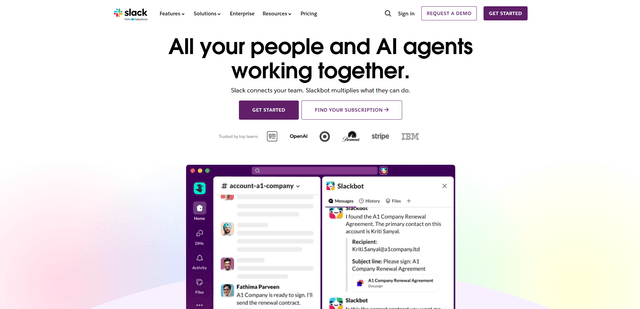
Slack
Slack is an AI-powered work platform that brings team communication, channels, files, automation, and app integrations into one conversational workspace.
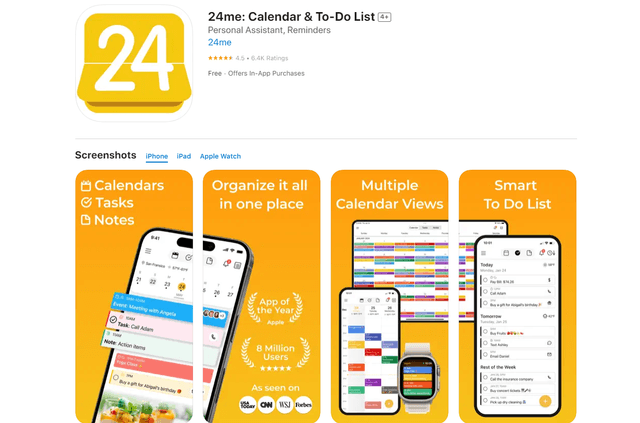
24me Smart Personal Assistant
24me is an award-winning smart personal assistant app that combines calendar, to-do lists, notes, and personal accounts in one unified platform to help boost productivity and time management.
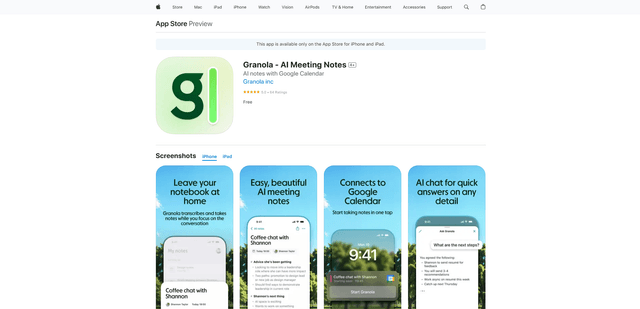
Granola for iOS
Granola for iOS is an AI-powered notepad app that helps users effortlessly capture, transcribe and summarize meeting conversations through intelligent note-taking and one-tap recording capabilities.