
Constellation Gate AI
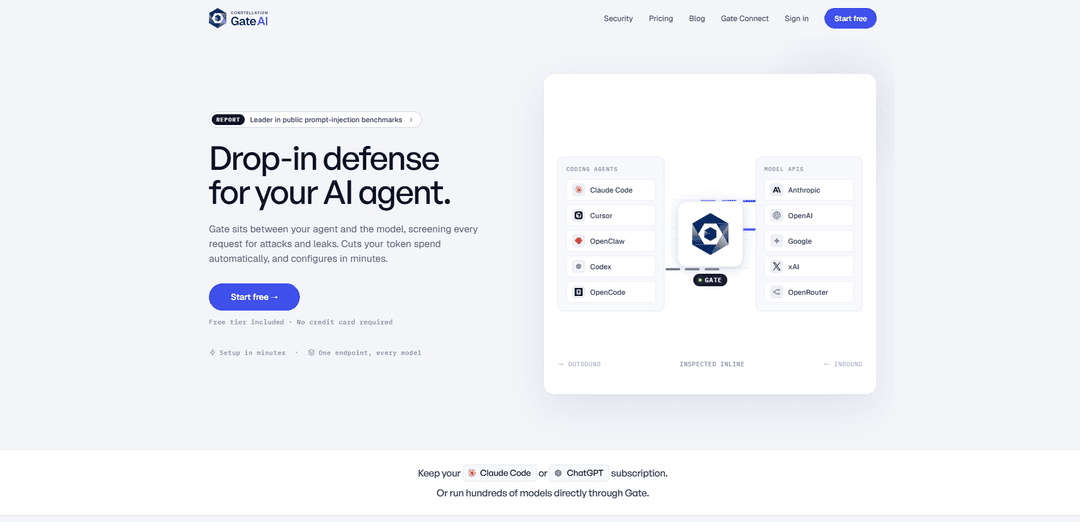
Constellation Gate AI adalah gateway keamanan AI real-time yang berada di antara agen Anda dan LLM untuk memblokir injeksi prompt, mencegah kebocoran rahasia/PII, mengurangi biaya token melalui kompresi/caching, dan menghasilkan jejak audit yang diverifikasi blockchain dan tahan perubahan dari setiap panggilan model.
https://constellationgate.ai/?ref=producthunt&utm_source=aipure
Informasi Produk
Diperbarui:Jul 15, 2026
Apa itu Constellation Gate AI
Constellation Gate AI adalah lapisan keamanan dan audit drop-in untuk aplikasi AI yang dibangun oleh Constellation Network. Ini dirancang untuk melindungi agen AI produksi dan alur kerja bertenaga LLM dari risiko umum yang dieksploitasi secara aktif—terutama injeksi prompt dan kebocoran data—dengan menyaring permintaan dan respons secara real time sebelum mencapai (atau meninggalkan) model. Gate AI bekerja di seluruh API model komersial utama dan model open-weight, dapat diadopsi dengan gesekan minimal (seringkali perubahan satu endpoint/base-URL atau melalui aplikasi desktop Gate Connect), dan menambahkan visibilitas dan tata kelola terpadu di atas akun penyedia yang ada atau opsi bayar sesuai penggunaan melalui Gate.
Fitur Utama Constellation Gate AI
Constellation Gate AI adalah "inline AI security gateway" yang berada di antara agen/aplikasi Anda dan penyedia LLM untuk memeriksa setiap permintaan dan respons terhadap serangan "prompt-injection", pembajakan "tool-output" tidak langsung, dan kebocoran data sensitif (rahasia/PII). Ini dapat diterapkan dengan gesekan minimal (seringkali perubahan "base-URL" tunggal atau melalui aplikasi desktop Gate Connect) sambil menambahkan penegakan berbasis kebijakan (blokir, redaksi, tandai) dan menghasilkan jejak audit yang "tamper-evident", dapat diverifikasi secara independen yang berlabuh ke lapisan Bukti Digital Constellation. Gate juga mengurangi biaya token melalui kompresi "prompt" tanpa kehilangan dan optimasi "prompt-cache", dan dapat digunakan baik dengan kunci penyedia Anda yang sudah ada (BYOK) atau melalui "unified endpoint" bayar sesuai penggunaan untuk banyak model "frontier" dan "open-weight".
Pertahanan "prompt-injection" "inline": Menyaring lalu lintas masuk/keluar dan memblokir instruksi berbahaya (misalnya, "abaikan instruksi sebelumnya...") sebelum mencapai model, menargetkan risiko "prompt-injection" OWASP LLM.
Perlindungan kebocoran rahasia & PII: Mendeteksi dan meredaksi kredensial dan data pribadi sensitif dalam masukan/keluaran model (misalnya, kunci API, SSN, email) sebelum respons kembali ke pengguna atau sistem hilir.
Pencegahan injeksi tidak langsung / pembajakan "tool-output": Memeriksa hasil alat (halaman web, tiket, dokumen) yang mungkin dipercaya agen, menghentikan konten yang dikendalikan penyerang agar tidak menjadi instruksi agen berikutnya.
Penegakan berbasis kebijakan (blokir/redaksi/tandai): Memungkinkan tim menentukan aturan dan tindakan berbasis tingkat keparahan; Gate menegakkan keputusan secara "inline" dan mencatat apa yang terdeteksi dan tindakan apa yang diambil.
Pengurangan biaya token melalui kompresi & "caching": Menerapkan kompresi permintaan "lossless", "cache-aware" dan injeksi "prompt-cache" untuk mengurangi token yang ditagih (seringkali penghematan 20%+) tanpa mengubah keluaran model.
Jejak audit yang diverifikasi "blockchain": Membuat log "prompt", balasan, dan keputusan aturan yang terhubung secara kriptografis, "tamper-evident", yang berlabuh ke Constellation Digital Evidence untuk verifikasi independen.
Kasus Penggunaan Constellation Gate AI
Mengamankan agen AI produksi di perusahaan: Tempatkan Gate di depan "copilot"/agen internal untuk memblokir "prompt injection" dan mencegah pengungkapan data rahasia yang tidak disengaja sambil mempertahankan catatan yang dapat diaudit dari setiap panggilan model.
Dukungan pelanggan dan otomatisasi pusat kontak: Melindungi alur kerja dukungan berbasis LLM dari "jailbreak" dan mengurangi risiko kebocoran PII pelanggan atau kebijakan internal dalam respons.
Alat pengembang dan agen pengkodean: Arahkan alat seperti agen pengkodean gaya Claude Code/Cursor melalui Gate untuk mengurangi pengeluaran token dan mencegah rahasia digaungkan atau dieksfiltrasi selama pembuatan dan "debugging" kode.
Industri yang diatur (keuangan, kesehatan, hukum): Gunakan redaksi + tanda terima audit yang tidak dapat diubah untuk mendukung kebutuhan kepatuhan (ketertelusuran, tinjauan insiden, dan verifikasi pihak ketiga) ketika LLM menyentuh catatan sensitif.
Platform AI multi-model / "vendor-agnostic": Standardisasi inspeksi keamanan dan kemampuan audit di berbagai penyedia model (API komersial dan model "open-weight") melalui satu "gateway endpoint".
Alur kerja "agentic" yang bergantung pada konten eksternal: Melindungi agen yang membaca dari web, email, atau tiket dengan memindai keluaran alat untuk "prompt injection" tidak langsung sebelum agen bertindak berdasarkan itu.
Kelebihan
Adopsi gesekan rendah (perutean desktop atau perubahan "base-URL" tunggal) tanpa penulisan ulang alur kerja utama.
Menggabungkan kontrol keamanan (blokir/redaksi/tandai) dengan jejak audit yang dapat diverifikasi, "tamper-evident" yang berlabuh ke Bukti Digital.
Dapat mengurangi biaya LLM yang berkelanjutan melalui kompresi "prompt" tanpa kehilangan dan optimasi "prompt-cache".
Bekerja di berbagai penyedia/model melalui BYOK atau "unified endpoint" bayar sesuai penggunaan.
Kekurangan
Menambahkan lapisan "gateway inline", yang dapat memperkenalkan ketergantungan operasional dan potensi latensi untuk setiap panggilan model.
Beberapa kemampuan (misalnya, "audit anchoring" dan tingkatan tertentu) mungkin bergantung pada ketersediaan produk/detail paket dan waktu peluncuran.
Penghematan token bergantung pada struktur "prompt"/dukungan "caching" penyedia; hasilnya dapat bervariasi berdasarkan beban kerja.
Cara Menggunakan Constellation Gate AI
1) Buat ruang kerja Gate AI (tingkat gratis): Buka https://constellationgate.ai dan buat ruang kerja gratis (tidak diperlukan kartu kredit). Di sinilah kebijakan Anda, permintaan yang dipindai, dan entri jejak audit akan dikelola.
2) Pilih cara Anda akan menghubungkan Gate ke penggunaan AI Anda: Pilih salah satu dari dua jalur koneksi yang didukung: (A) Aplikasi desktop Gate Connect (direkomendasikan untuk sebagian besar pengguna) untuk merutekan alat AI yang ada melalui Gate dengan satu klik per alat, atau (B) Pertukaran base-URL SDK (direkomendasikan untuk pengembang) untuk mengarahkan kode yang ada ke Gate dengan perubahan satu baris.
3A) Terhubung melalui Gate Connect (aplikasi desktop) — instal: Buka opsi Gate Connect dari situs (halaman aplikasi Gate Connect). Unduh dan instal aplikasi desktop. Gate Connect dirancang untuk mendeteksi alat AI yang sudah Anda gunakan dan merutekan masing-masing melalui Gate.
4A) Terhubung melalui Gate Connect — masuk sekali: Luncurkan Gate Connect dan masuk ke ruang kerja Gate Anda. Aplikasi menangani perutean setelah Anda mengautentikasi.
5A) Terhubung melalui Gate Connect — aktifkan perutean satu klik per alat: Di Gate Connect, pilih setiap alat yang terdeteksi (misalnya, Claude Code, Cursor, OpenClaw, Codex, OpenCode) dan klik untuk menghubungkannya. Setiap alat dirutekan melalui Gate dengan satu klik. Sebagian besar pengaturan selesai dalam waktu kurang dari satu menit.
3B) Terhubung melalui SDK (pengembang) — tukar URL dasar: Dalam penggunaan SDK yang kompatibel dengan OpenAI yang ada, ubah base_url klien ke endpoint Gate sehingga permintaan di-proxy melalui Gate dan dipindai/diaudit. Contoh:
from openai import OpenAI
client = OpenAI(
base_url="https://gate.constellationgate.ai/v1",
api_key=os.getenv("GATE_API_KEY"),
)
Ini menjaga bentuk respons yang sama dan tidak memerlukan perubahan kode lainnya.
4) Pilih cara Anda akan membayar (BYOK vs bayar sesuai penggunaan): Opsi A (Bawa Kunci Anda Sendiri): terus bayar penyedia Anda yang ada (Anthropic/OpenAI/Gemini/xAI/dll.) secara langsung; Gate menambahkan inspeksi sebaris, redaksi, dan jejak audit. Opsi B (Bayar sesuai penggunaan): isi ulang dengan Gate dan jalankan banyak model dari satu endpoint tanpa akun penyedia terpisah.
5) Mulai kirim permintaan melalui Gate: Setelah terhubung (melalui Gate Connect atau SDK), gunakan alat Anda secara normal. Gate berada di antara aplikasi/alat Anda dan API model, meneruskan permintaan sambil memindai prompt keluar dan balasan masuk secara real time.
6) Verifikasi tindakan keamanan (blokir, redaksi, tandai) berfungsi: Konfirmasi Gate menegakkan perlindungan yang dijelaskan di situs: pertahanan injeksi prompt (memblokir serangan sebelum model melihatnya), perlindungan kebocoran kredensial/PII (meredaksi rahasia/PII sebelum respons kembali), dan perlindungan injeksi tidak langsung (menghentikan output alat yang dibajak agar tidak menjadi instruksi).
7) Tinjau jejak audit untuk setiap panggilan model: Di ruang kerja Gate Anda, periksa entri jejak audit yang tahan perubahan untuk prompt, balasan, dan keputusan aturan (misalnya, “Prompt dipindai,” “Injeksi diblokir,” “Balasan dipindai · rahasia direduksi,” “Berlabuh ke Bukti Digital”).
8) Konfirmasi verifikasi independen melalui penambatan Bukti Digital Constellation: Periksa apakah catatan audit ditambatkan ke lapisan Bukti Digital Constellation (didukung blockchain). Situs tersebut menyatakan bukti hidup di Bukti Digital daripada server Gate, sehingga jejak audit tetap dapat diverifikasi bahkan jika Gate tidak tersedia.
9) Aktifkan/amati fitur penghematan token (kompresi + caching): Gate menerapkan kompresi permintaan tanpa kehilangan, sadar cache, dan injeksi cache prompt untuk mengurangi token yang ditagih tanpa mengubah output model. Pantau penggunaan token untuk memvalidasi penghematan yang diharapkan (situs mengklaim sebagian besar pengguna dapat mengharapkan penghematan ~20%+).
10) Perluas cakupan di seluruh alat dan penyedia model: Setelah keberhasilan awal, rutekan alat AI tambahan melalui Gate Connect dan/atau arahkan lebih banyak layanan ke endpoint Gate. Gate diposisikan sebagai gateway sebaris tunggal yang dapat berada di depan beberapa API model dan alur kerja sambil menjaga pemindaian dan auditabilitas yang konsisten.
FAQ Constellation Gate AI
Constellation Gate AI adalah gateway keamanan dan audit real-time yang berada di antara aplikasi/agen AI dan API model. Ini memeriksa permintaan dan respons secara inline untuk bertahan dari injeksi prompt, mencegah kebocoran kredensial/PII (melalui pemblokiran/redaksi/penandaan), dan mencatat jejak audit yang tahan rusak yang ditambatkan ke lapisan Bukti Digital Constellation.
Artikel Populer

Vosko AI: Lokalisasi dan Sulih Suara Video untuk Audiens Global
Oct 15, 2026

Atoms: Platform AI Multi-Agen yang Mengubah Ide menjadi Produk Siap Diluncurkan
May 22, 2026

Nano Banana SBTI: Apa Itu, Bagaimana Cara Kerjanya, dan Cara Menggunakannya di Tahun 2026
Apr 15, 2026

Ulasan Atoms — Pembuat Produk AI yang Mendefinisikan Ulang Kreasi Digital di Tahun 2026
Apr 10, 2026
Alat AI Terbaru Serupa dengan Constellation Gate AI
Gait
Gait adalah alat kolaborasi yang mengintegrasikan generasi kode yang dibantu AI dengan kontrol versi, memungkinkan tim untuk melacak, memahami, dan membagikan konteks kode yang dihasilkan AI dengan efisien.
invoices.dev
invoices.dev adalah platform penagihan otomatis yang menghasilkan faktur langsung dari komit Git pengembang, dengan kemampuan integrasi untuk layanan GitHub, Slack, Linear, dan Google.
EasyRFP
EasyRFP adalah toolkit komputasi tepi yang didukung AI yang memperlancar respons RFP (Permintaan Proposal) dan memungkinkan fenotip lapangan waktu nyata melalui teknologi pembelajaran mendalam.

Cart.ai
Cart.ai adalah platform layanan bertenaga AI yang menyediakan solusi otomatisasi bisnis yang komprehensif termasuk pengkodean, manajemen hubungan pelanggan, pengeditan video, pengaturan e-commerce, dan pengembangan AI kustom dengan dukungan 24/7.
Alat AI Populer Seperti Constellation Gate AI

GitHub Copilot Chat
GitHub Copilot Chat adalah asisten pengkodean bertenaga AI yang menyediakan interaksi bahasa alami, saran kode waktu nyata, dan dukungan kontekstual langsung di dalam IDE yang didukung dan GitHub.com.
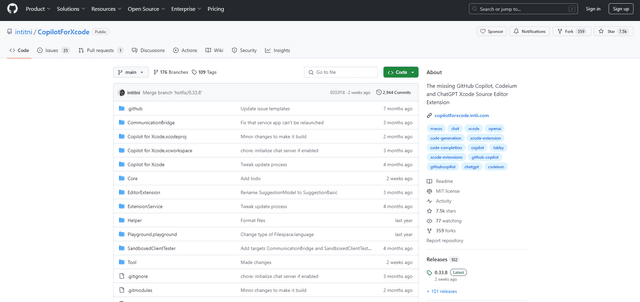
CopilotForXcode
CopilotForXcode adalah Ekstensi Editor Sumber Xcode yang mengintegrasikan GitHub Copilot, Codeium, dan ChatGPT untuk memberikan saran kode yang didukung AI, bantuan obrolan, dan fungsionalitas prompt-to-code di dalam Xcode.
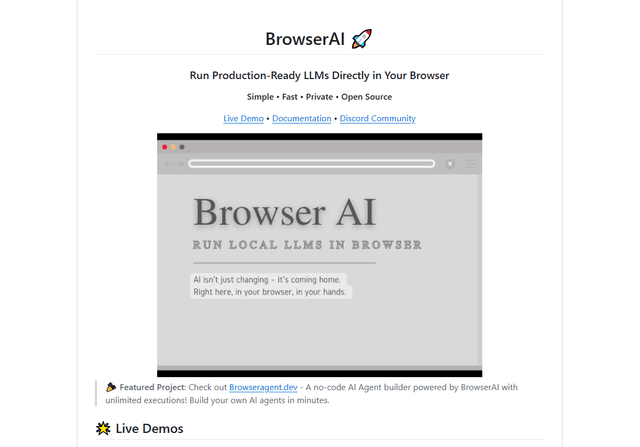
BrowserAI
BrowserAI adalah pustaka sumber terbuka yang memungkinkan menjalankan Model Bahasa Besar (LLM) lokal langsung di browser web dengan akselerasi WebGPU, menawarkan kemampuan AI yang berfokus pada privasi tanpa memerlukan infrastruktur server.
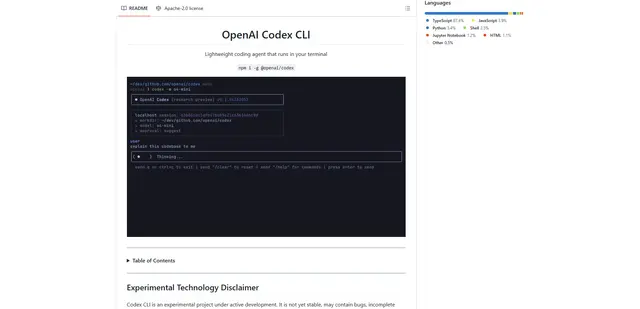
OpenAI Codex CLI
OpenAI Codex CLI adalah agen pengkodean sumber terbuka ringan yang berjalan di terminal Anda, memungkinkan pengembang untuk menerjemahkan bahasa alami ke dalam eksekusi kode sambil memberikan penalaran tingkat ChatGPT dengan kemampuan untuk menjalankan kode, memanipulasi file, dan melakukan iterasi di bawah kontrol versi.