
Flint
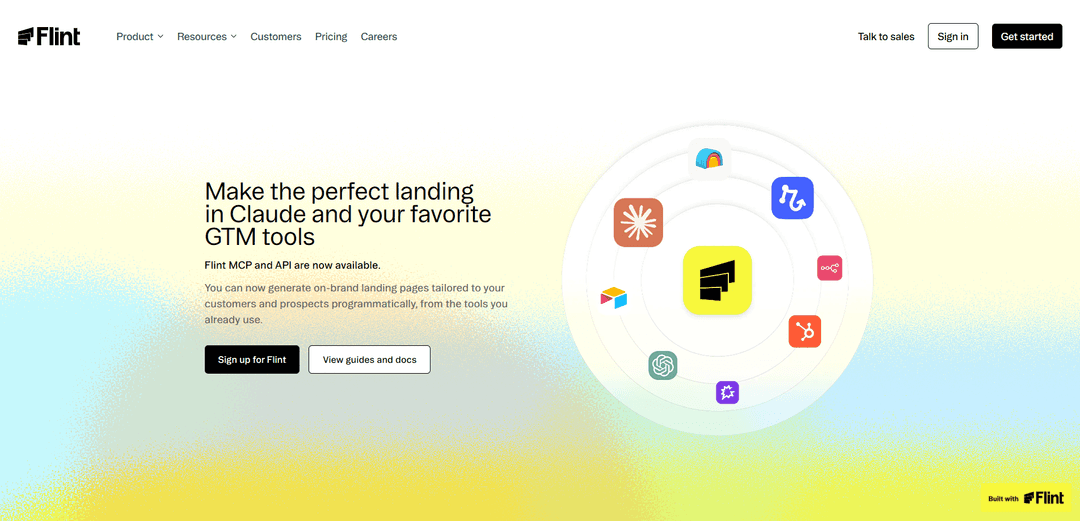
Flint is an autonomous web platform that enables fast-growing marketing and GTM teams to instantly create, launch, and optimize on-brand landing pages programmatically through AI, with native API and MCP integrations for tools like Claude and Clay.
https://www.tryflint.com/product/api-mcp?ref=producthunt
Product Information
Updated:Apr 10, 2026
What is Flint
Flint is an AI-powered autonomous website platform designed specifically for marketing and go-to-market teams at fast-growing B2B SaaS companies. Founded in March 2024 and emerging from stealth with $5 million in seed funding, Flint solves the critical problem of marketing velocity by enabling non-technical team members to launch production-ready, on-brand landing pages in minutes without opening pull requests or waiting for developer resources. The platform works by scanning existing brand identities from live websites to automatically import design systems, colors, typefaces, and components, then uses this foundation to generate custom landing pages tailored to specific keywords, ads, customer segments, or individual prospects. Flint can power either specific subdomains for landing pages while integrating with existing CMS solutions, or serve as the complete website infrastructure, and includes built-in analytics, GTM integrations, CRO tools, SEO optimization, and approval workflows.
Key Features of Flint
Flint is an autonomous website platform designed for growth teams to create and optimize on-brand landing pages instantly without requiring developer resources. It uses AI to autonomously generate custom landing pages that can adapt and personalize themselves based on visitor behavior, competitor launches, and marketing needs. The platform integrates with existing brand systems and offers both MCP (Model Context Protocol) and API access, allowing users to create production-ready pages directly from tools like Claude, Clay, and other workflow automation platforms. Flint enables programmatic page generation for various marketing purposes including ad campaigns, account-based marketing, SEO optimization, and personalized outreach.
AI-Powered Autonomous Page Generation: Automatically creates custom, on-brand landing pages that can adapt to different visitors, generate competitor comparison pages when needed, and personalize content based on user behavior—all without manual intervention.
MCP and API Integration: Provides Model Context Protocol server and REST API access, enabling seamless integration with Claude, Clay, Relay.app, and other workflow tools for programmatic page creation directly from your existing marketing stack.
One-Click Brand Import: Scans existing live websites to automatically import brand identities including colors, typefaces, and design components, ensuring all generated pages maintain consistent brand standards without manual design work.
Real-Time Page Creation at Scale: Enables creation of dozens of targeted landing pages in minutes for different keywords, ad campaigns, or customer segments, with built-in analytics and GTM integrations that work out of the box.
Non-Technical Team Collaboration: Allows marketing and sales teams to make copy changes and launch new pages without opening pull requests or requiring developer involvement, streamlining the page management workflow.
Flexible Hosting Options: Can be deployed as standalone landing pages on subdomains or folders while keeping existing CMS for homepage, or can power entire websites, providing flexibility based on team needs.
Use Cases of Flint
Ad Campaign Landing Pages: Marketing teams can research ad campaign keywords in Claude and automatically generate high-converting, keyword-specific landing pages for each ad variation, improving ad relevance scores and conversion rates.
Account-Based Marketing (ABM) Microsites: Sales teams can create personalized landing pages for each prospect directly from CRM data using Clay integration, delivering tailored pitches that address specific customer pain points and increase deal velocity.
Post-Sales Call Follow-Up Pages: Using Relay.app automation, sales reps can automatically generate personalized pitch pages after each sales call based on transcript analysis, providing prospects with customized resources that address their specific questions.
SEO and GEO-Targeted Pages: Growth teams can rapidly deploy location-specific or keyword-optimized landing pages at scale to capture organic search traffic and improve local SEO performance across multiple markets.
Competitor Response Pages: When competitors launch new products or features, Flint can autonomously generate comparison pages that highlight competitive advantages, enabling rapid market response without waiting for developer resources.
Personalized Outbound Campaigns: Marketing operations teams can integrate Flint with their outbound workflows to create unique landing pages for different customer segments, industries, or company sizes, improving email campaign performance and lead quality.
Pros
Eliminates developer bottlenecks by enabling non-technical teams to create and publish landing pages independently
Seamless integration with popular tools like Claude, Clay, and workflow automation platforms through MCP and API
Automatically maintains brand consistency across all generated pages through intelligent design system import
Enables rapid scaling of landing page creation from one to dozens of pages in minutes
Cons
Requires an existing brand identity and live website for initial setup—not suitable for companies starting from scratch
Learning curve for teams unfamiliar with MCP protocol or API-based workflows
Pricing and feature limitations may vary based on subscription tier
Autonomous page generation may require oversight to ensure content accuracy and brand voice consistency
How to Use Flint
1. Sign up for Flint: Go to tryflint.com and create an account. You get a 14-day free Pro trial with no credit card required.
2. Import your brand design system: Flint will automatically scan your live, publicly accessible website to clone your design system including colors, typefaces, and components. This is done with one-click brand import during setup.
3. Set up your domain: Configure where Flint pages will be hosted. You can either use Flint for just landing pages in a subfolder (like yourbrand.com/compare/) or host your entire website with Flint.
4. Choose your integration method: Decide how you want to create pages: via the Flint MCP (Model Context Protocol) in Claude, Claude Cowork, or Claude Code, or via the Flint API for programmatic access from tools like Clay or Relay.app.
5. Connect Flint MCP to Claude (Optional): If using Claude, add the Flint MCP connector to enable Claude to create and manage landing pages directly through conversational prompts.
6. Connect Flint API to your tools (Optional): For automation workflows, integrate the Flint API with tools like Clay for ABM pages, Relay.app for sales follow-ups, or your ad platforms for keyword-specific landing pages.
7. Create your first landing page: Use natural language prompts in Claude or API calls to generate on-brand landing pages. Specify the target audience, messaging, or use case (e.g., competitor comparison, product feature, geographic targeting).
8. Review and publish: Pages are automatically generated following your brand guidelines. Review the page and publish it live to your domain. Analytics and GTM integrations work automatically.
9. Set up automated workflows (Optional): Create automated page generation workflows such as: pulling top Google Ads keywords weekly to generate landing pages, creating ABM pages for enriched prospects in Clay, or generating follow-up pages after sales calls.
10. Manage and optimize pages: Use Flint's built-in tools for ongoing page management including CRO (conversion rate optimization), SEO, approvals, and analytics. Non-technical team members can make copy changes without opening a PR.
Flint FAQs
Flint is a platform that allows you to create custom, on-brand landing pages programmatically. It autonomously creates landing pages so every keyword, ad, and customer gets the right pitch. You can generate pages directly from tools like Claude, Clay, and other GTM tools using Flint's MCP (Model Context Protocol) and API integrations.
Flint Video
Popular Articles

Atoms: A Multi-Agent AI Platform That Transforms Ideas into Launch-Ready Products
May 22, 2026

Nano Banana SBTI: What It Is, How It Works, and How to Use It in 2026
Apr 15, 2026

Atoms Review — The AI Product Builder Redefining Digital Creation in 2026
Apr 10, 2026

Kilo Claw: How to Deploy and Use a True "Do‑It‑For‑You" AI Agent(2026 Update)
Apr 3, 2026
Latest AI Tools Similar to Flint
GPT Easy Web
GPT Easy Web is a user-friendly AI-powered platform that enables users to easily build, customize and manage websites through natural language interactions and automated tools without requiring coding knowledge.
AI Website Tool
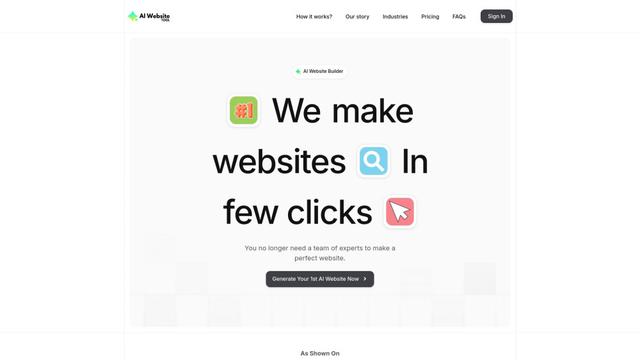
AI Website Tool is an AI-powered website builder that creates professional websites in minutes by automatically generating business-focused copy, custom visuals, and responsive designs with just a few clicks.
Softgen
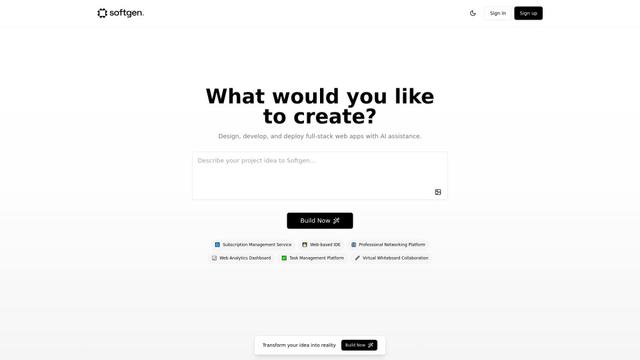
Softgen.ai is an AI-powered full-stack project generator platform that enables users to transform their ideas into functional web applications without coding requirements.
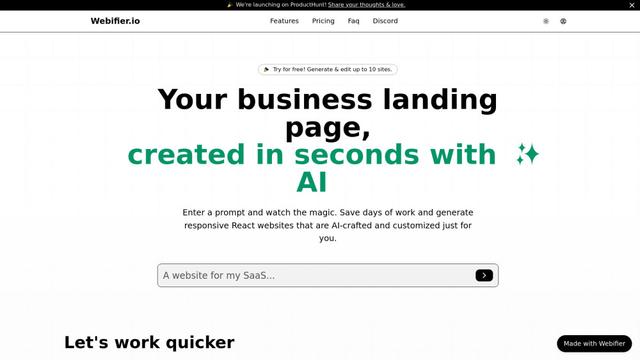
Webifier
Webifier is an AI-powered tool that transforms text prompts into fully functional React landing pages with clean, exportable code using NextJS14, TailwindCSS, and Shadcn components.
Popular AI Tools Like Flint
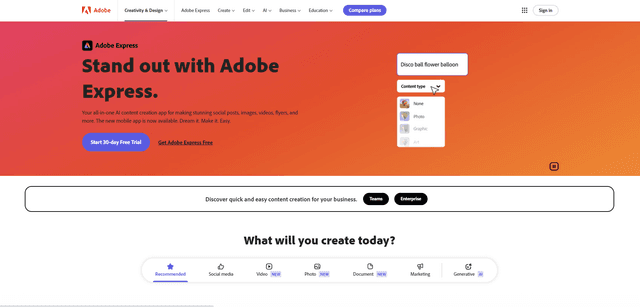
Adobe Express
Adobe Express is an all-in-one AI-powered content creation app for easily making stunning social posts, images, videos, flyers, and more with professionally designed templates and assets.
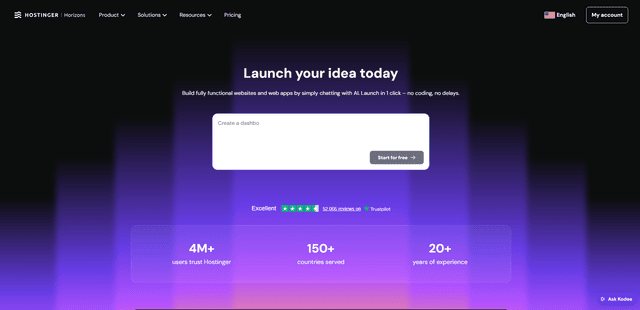
Hostinger
Hostinger is a web hosting and domain service provider offering AI-powered tools like Horizons that enables anyone to build, edit, and publish custom web apps and websites without coding through a simple chat interface.
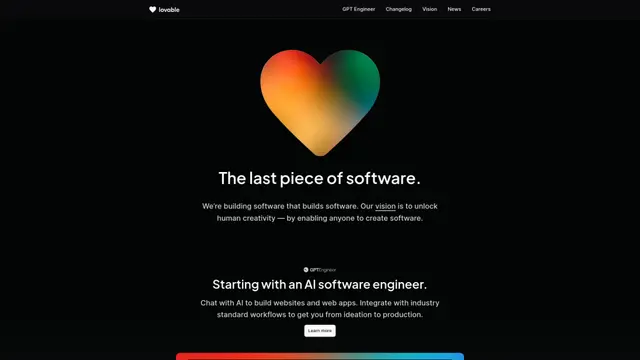
GPT Engineer
GPT Engineer is an AI-powered software development tool that enables anyone to build web applications by chatting with an AI engineer.
Manus Shopify Connector
Manus Shopify Connector lets you build a Shopify-backed storefront, manage your catalog, and generate data-driven campaigns from a single chat—using Shopify APIs with OAuth-scoped access and Shopify checkout.