CrawlRaven
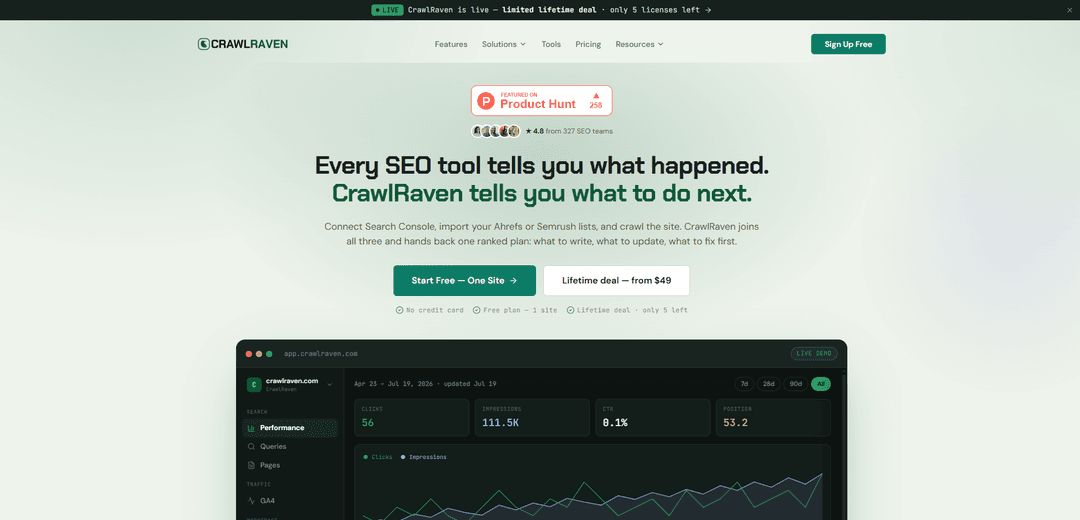
CrawlRaven é uma plataforma de auditoria de SEO baseada na web que combina insights do Google Search Console, listas de palavras-chave importadas do Ahrefs/Semrush e um rastreamento de site com mais de 200 verificações em um plano de ação priorizado e classificado – o que escrever, atualizar e corrigir primeiro.
https://crawlraven.com/?ref=producthunt&utm_source=aipure
Informações do Produto
Atualizado:Aug 8, 2026
O que é CrawlRaven
CrawlRaven é uma plataforma de SEO técnico e planejamento de conteúdo construída para transformar dados de SEO dispersos em uma lista de tarefas acionável. Em vez de forçar as equipes a lidar com exportações separadas do Google Search Console, ferramentas de pesquisa de palavras-chave e software de rastreamento, o CrawlRaven reúne esses conjuntos de dados em um só lugar e os traduz em recomendações claras. Projetado para agências, consultores e equipes internas de SEO, ele suporta rastreamentos profundos (até 50.000 páginas por auditoria), produz relatórios de marca branca prontos para o cliente e foca na priorização para que os usuários saibam qual trabalho provavelmente moverá os rankings mais rapidamente.
Principais Recursos do CrawlRaven
CrawlRaven é um motor de decisão de SEO que combina dados de desempenho do Google Search Console, listas importadas de pesquisa de palavras-chave (Ahrefs/Semrush/CSV) e um rastreamento técnico aprofundado do site em um único plano de ação classificado. Em vez de produzir painéis separados e longas listas de problemas, ele mapeia palavras-chave para as páginas que devem ser classificadas, sinaliza oportunidades de conteúdo (lacunas, "runner-ups", "decay", canibalização) e adiciona uma auditoria técnica de mais de 200 verificações para que as equipes saibam o que escrever, atualizar e corrigir primeiro. Ele também suporta fluxos de trabalho de agências com relatórios "white-label", colaboração em equipe e auditorias baseadas em API para uso programático.
Plano de SEO unificado e classificado: Combina dados do Search Console, listas de palavras-chave e descobertas de rastreamento em uma lista de tarefas priorizada que informa o que escrever, o que atualizar e o que corrigir primeiro – focado no impacto em vez do volume de avisos.
Search Console + mapeamento de palavras-chave: Importa listas de palavras-chave CSV (Ahrefs, Semrush ou qualquer ferramenta) e as mescla com descobertas do GSC para construir um mapa palavra-chave→página, de modo que cada termo seja atribuído à URL que deve ser classificada.
Detecção de oportunidade de conteúdo: Revela consultas "runner-up" (página 2), lacunas de conteúdo que valem a pena criar, alertas de "decay" e sinalizadores de canibalização, transformando tendências de desempenho em ações de conteúdo concretas.
Auditoria técnica de SEO de mais de 200 pontos: Rastreia até ~50.000 páginas por auditoria e verifica fatores técnicos/on-page como links quebrados, cadeias de redirecionamento, meta tags, conteúdo duplicado, validação de dados estruturados, verificações HTTPS/segurança e Core Web Vitals – então prioriza os problemas pelo impacto estimado na classificação.
Relatórios "white-label" prontos para clientes: Gera relatórios de auditoria em PDF "white-label" e com a marca, projetados para agências e consultores compartilharem listas de correção claras e acionáveis com as partes interessadas.
Automação e integrações (API/MCP): Fornece acesso à API (e integração MCP referenciada) para acionar auditorias programaticamente, recuperar resultados como JSON e conectar auditorias em ferramentas internas ou fluxos de trabalho orientados por IA.
Casos de Uso do CrawlRaven
Agências de SEO gerenciando múltiplos clientes: Produza planos de ação priorizados e auditorias em PDF "white-label" por cliente, otimize relatórios mensais em uma lista de correção focada na execução e coordene o trabalho entre as equipes/espaços de trabalho do cliente.
Planejamento de sprint de SEO interno: Transforme o desempenho do GSC ao vivo + a saúde do rastreamento em um backlog semanal (vitórias rápidas, decaimentos para atualizar, bloqueadores técnicos) para que as equipes entrem nos sprints sabendo as tarefas de maior impacto.
SEO técnico para e-commerce (Shopify/WooCommerce/Magento): Execute verificações específicas da plataforma para identificar duplicação de variantes/categorias, lacunas de links internos e problemas de metadados comuns em modelos de e-commerce – então priorize as correções pelo provável impacto na pesquisa.
Equipes de conteúdo otimizando páginas existentes: Use palavras-chave "runner-up", detecção de canibalização e alertas de "decay" para decidir quais URLs atualizar, consolidar ou expandir – sem construir planilhas a partir de múltiplas exportações.
Operações de SEO lideradas por empresas/engenharia: Use a API de auditoria para agendar rastreamentos recorrentes, monitorar regressões e integrar descobertas técnicas em painéis internos, pipelines de QA ou sistemas de tickets.
Supervisão de SEO local/multi-local: Aplique módulos de auditoria e benchmarking de SEO local (conforme referenciado) para monitorar problemas no nível do local e manter a consistência em muitas listagens/sites a partir de uma única visualização.
Vantagens
Combina GSC, importações de pesquisa de palavras-chave e rastreamento profundo em um único plano priorizado – reduz a triagem pesada de planilhas.
Auditoria técnica profunda (mais de 200 verificações, grande capacidade de rastreamento) com priorização de problemas por impacto na classificação, em vez de gravidade bruta.
Saídas amigáveis para agências, como relatórios em PDF "white-label", recursos de colaboração e fluxos de trabalho multi-site.
O acesso à API/auditoria programática permite a automação e a integração em ferramentas internas.
Desvantagens
Não é uma ferramenta de pesquisa de palavras-chave autônoma; você deve trazer listas de palavras-chave do Ahrefs/Semrush/outras fontes para um valor de planejamento completo.
Algumas funcionalidades são descritas como "em breve" nas fontes fornecidas (por exemplo, certas funcionalidades de nível como acesso MCP e disponibilidade de auditoria técnica em níveis de vida útil específicos), portanto, a disponibilidade de recursos pode variar de acordo com o plano e o tempo.
O melhor valor depende de equipes que desejam priorização e execução; especialistas que precisam de rastreamento altamente configurável (por exemplo, controles avançados de renderização JS, extração personalizada) ainda podem exigir ferramentas complementares.
Como Usar o CrawlRaven
1) Crie uma conta e comece com o plano Gratuito: Vá para https://app.crawlraven.com/login e crie uma conta. Comece com o plano Gratuito (sem cartão de crédito) para conectar 1 site e gerar seu primeiro plano de SEO classificado.
2) Conecte sua propriedade do Google Search Console (OAuth): Dentro do CrawlRaven, escolha conectar o Google Search Console. Conclua o fluxo OAuth de um clique e selecione a propriedade GSC correta para o seu site. O CrawlRaven puxará consultas, páginas, impressões, cliques e posição média, e então sincronizará diariamente para que seu plano permaneça baseado em dados ao vivo.
3) Importe sua pesquisa de palavras-chave (CSV do Ahrefs/Semrush ou qualquer ferramenta): Exporte sua lista de palavras-chave do Ahrefs ou Semrush (CSV), ou use um CSV de qualquer ferramenta de palavras-chave. Faça o upload para o CrawlRaven para que ele possa mesclar sua pesquisa com as descobertas do GSC em um único mapa de palavras-chave e conjunto de oportunidades.
4) (Opcional) Conecte o GA4 quando disponível: Se a conexão GA4 estiver disponível em sua conta, conecte-a para adicionar contexto de tráfego e engajamento ao plano. (De acordo com a fonte, o GA4 está/estava pendente de lançamento/verificação, então a disponibilidade pode variar.)
5) Execute um rastreamento de site / auditoria técnica (verificações de 200 pontos) quando disponível: Inicie um rastreamento de site integrado para gerar a auditoria de SEO técnico. O CrawlRaven rastreia o site e executa uma auditoria de 200 pontos (por exemplo, Core Web Vitals, dados estruturados/schema, redirecionamentos, links quebrados, meta tags, conteúdo duplicado, segurança/HTTPS). Os problemas são pontuados e classificados pelo impacto estimado no ranking e acompanhados de orientação de correção passo a passo. (De acordo com a fonte, a auditoria de rastreamento estava/estava marcada como "em breve", então a disponibilidade pode variar.)
6) Revise o plano de SEO classificado (sua lista de tarefas semanal): Abra a visualização principal do plano/saída. O CrawlRaven combina: (a) o que está acontecendo (GSC), (b) o que você quer que aconteça (lista de palavras-chave) e (c) se o site pode suportar isso (auditoria de rastreamento) em uma única lista de ações priorizadas — o que escrever, o que atualizar e o que corrigir primeiro.
7) Use o mapa Palavra-chave → Página para atribuir alvos: Vá para a visualização de mapeamento de palavras-chave e confirme se cada palavra-chave está atribuída à URL que deve classificar. Use isso para evitar direcionamento incompatível e para garantir que cada termo importante tenha uma página "proprietária" clara.
8) Identifique e resolva a canibalização (páginas concorrentes): Verifique os sinalizadores de canibalização/cluster de tópicos para encontrar casos em que duas URLs competem pela mesma consulta. Decida se deve consolidar o conteúdo ou diferenciar a intenção para que os rankings não se dividam.
9) Priorize palavras-chave "vice-campeãs" (vitórias na página 2): Abra a visualização de vice-campeãs/distância de ataque para encontrar consultas que estão perto da página 1 e têm impressões significativas. Use a página de destino mapeada para focar as atualizações onde você já tem tração.
10) Encontre lacunas de conteúdo e planeje novas páginas: Use a visualização de lacunas de conteúdo para ver novas páginas que valem a pena criar, derivadas das impressões que você já ganha (de acordo com a fonte). Siga o plano de links internos sugerido para que as novas páginas sejam lançadas com links de suporte de páginas existentes relevantes.
11) Monitore e corrija a deterioração do conteúdo precocemente: Use o rastreamento de deterioração/tendências para páginas, consultas e clusters para identificar a queda de desempenho antes que se torne uma grande perda de tráfego. Atualize ou expanda a(s) URL(s) em deterioração e verifique novamente o impacto em sincronizações subsequentes.
12) Execute recomendações de links internos: Use a orientação de links internos que especifica a página de origem, o texto âncora e a página de destino. Implemente links para direcionar a autoridade intencionalmente para as páginas que você está tentando classificar.
13) Trabalhe nas correções técnicas em ordem de prioridade: Abra a lista de correções priorizadas da auditoria técnica e resolva os problemas de cima para baixo (classificados pelo impacto no ranking). Isso é projetado para remover bloqueadores críticos de rastreamento/indexação/ranking antes de gastar esforço em avisos de baixo impacto.
14) Marque itens como concluídos ou descarte para manter o foco: À medida que você conclui o trabalho, marque as tarefas como concluídas (ou descarte itens irrelevantes) para que o plano permaneça uma lista de sprint acionável e atual, em vez de um backlog avassalador.
15) Gere relatórios PDF de marca branca (nível vitalício de 10 sites): Se você estiver no nível que inclui relatórios de marca branca, exporte relatórios PDF com sua marca para clientes. Use-os para apresentar a lista de correções priorizadas e o progresso em um formato amigável ao cliente.
16) Rastreie novamente e/ou execute verificações programadas mensalmente para detectar regressões: Execute novamente a auditoria de rastreamento periodicamente (a fonte sugere mensalmente) para detectar novos problemas, regressões ou alterações de plataforma/tema (especialmente para e-commerce) que podem reintroduzir metadados duplicados, problemas de redirecionamento ou barreiras de rastreamento.
17) Use painéis multi-site e colaboração (equipes/agências): Se você gerencia vários domínios, use o painel multi-site para executar o mesmo fluxo de trabalho em sites de clientes. Colabore com sua equipe em torno do único plano classificado por site para que todos se alinhem sobre o que enviar a seguir.
18) Use a integração API / MCP quando disponível (avançado): Se o seu plano incluir acesso à API (e MCP quando lançado), acione auditorias programaticamente, obtenha resultados como JSON e integre as saídas do CrawlRaven em ferramentas internas ou fluxos de trabalho automatizados.
Perguntas Frequentes do CrawlRaven
CrawlRaven é uma plataforma de SEO que combina dados de desempenho do Google Search Console, listas de palavras-chave importadas (por exemplo, CSVs do Ahrefs/Semrush) e um rastreamento de site integrado em um plano de ação classificado - o que escrever, o que atualizar e o que corrigir primeiro.
Vídeo do CrawlRaven
Artigos Populares
Atoms: Uma Plataforma de IA Multiagente Que Transforma Ideias em Produtos Prontos para Lançamento
May 22, 2026

Nano Banana SBTI: O Que É, Como Funciona e Como Usá-lo em 2026
Apr 15, 2026

Análise do Atoms — O Construtor de Produtos de IA Redefinindo a Criação Digital em 2026
Apr 10, 2026
Kilo Claw: Como Implementar e Usar um Verdadeiro Agente de IA "Faça Você Mesmo" (Atualização de 2026)
Apr 3, 2026
Ferramentas de IA Mais Recentes Semelhantes a CrawlRaven
Frizerly
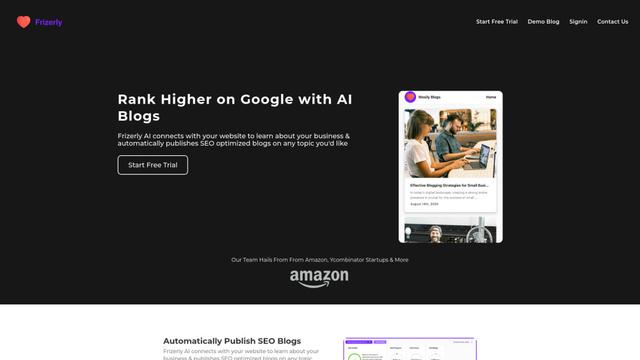
Frizerly é uma plataforma alimentada por IA que cria e publica automaticamente conteúdo de blog otimizado para SEO, aprendendo sobre seu negócio e indústria para ajudar a melhorar as classificações de busca do seu site.
GPT Easy Web
GPT Easy Web é uma plataforma amigável impulsionada por IA que permite aos usuários construir, personalizar e gerenciar sites facilmente através de interações em linguagem natural e ferramentas automatizadas, sem exigir conhecimento em programação.
altcheckerai
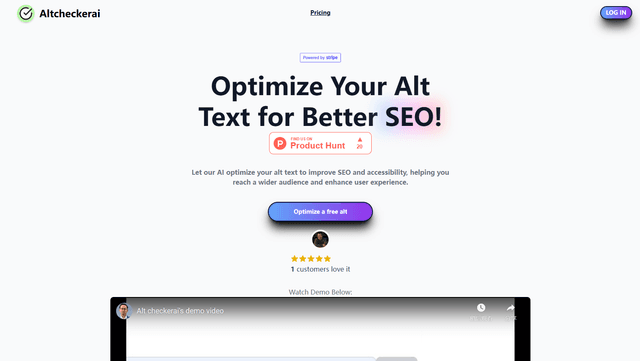
O AltCheckerAI é uma ferramenta impulsionada por IA que otimiza automaticamente o texto alternativo de imagens para melhorar o SEO do site e a acessibilidade por meio de recomendações inteligentes.

Scribly AI
Scribly AI é uma plataforma de criação de conteúdo impulsionada por IA que ajuda os usuários a gerar artigos, blogs, e-mails e vários tipos de conteúdo de alta qualidade em minutos, mantendo a otimização para SEO e a consistência da voz da marca.
Ferramentas de IA Populares Como CrawlRaven
GrowMatic SEO Chrome Browser Extension
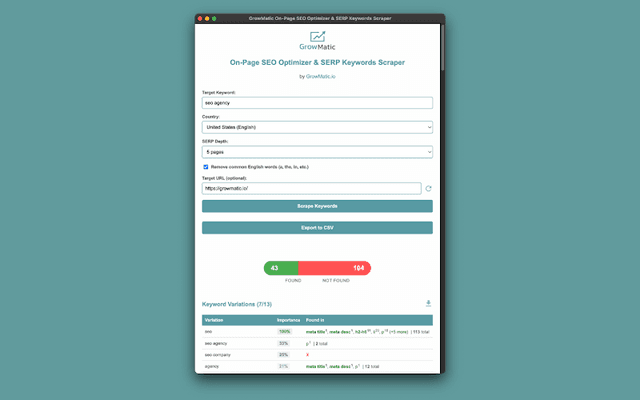
GrowMatic é uma poderosa extensão para o navegador Chrome que ajuda profissionais de SEO e criadores de conteúdo a analisar Páginas de Resultados de Busca do Google (SERPs) em 20 países para otimizar conteúdo para melhores classificações em motores de busca.
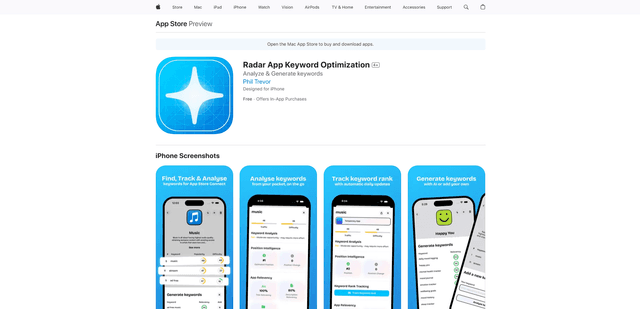
Radar
O App Radar é uma ferramenta abrangente de otimização da loja de aplicativos (ASO) que aproveita a pesquisa de palavras-chave com tecnologia de IA, a análise da concorrência e ferramentas automatizadas para ajudar a melhorar a visibilidade e as classificações de aplicativos na Apple App Store e no Google Play Store.

AISEO
AISEO é um assistente de escrita alimentado por IA que ajuda a criar conteúdo otimizado para SEO rapidamente, com recursos como geração de artigos, parafraseamento, melhoria de legibilidade e bypass de detecção de IA.
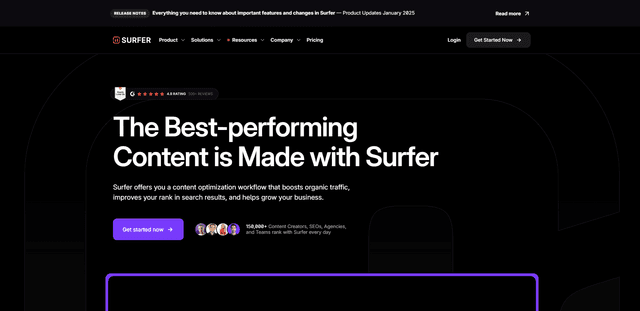
Surfer
Surfer é uma plataforma abrangente de otimização de conteúdo para SEO que ajuda criadores de conteúdo, profissionais de marketing e agências a criar, otimizar e classificar conteúdo através de análise orientada por dados, escrita impulsionada por IA e ferramentas de otimização automatizadas.