
Clark
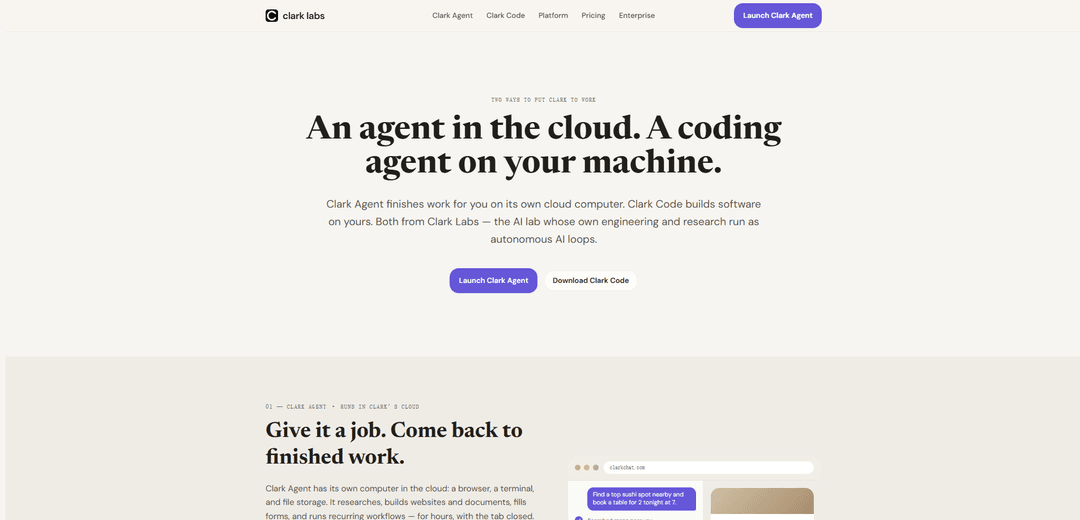
Clark is an autonomous computer-use AI agent from Clark Labs that runs real browser and file-system workflows to produce finished, inspectable deliverables, alongside companion products for repo memory and on-device coding.
https://www.clarkchat.com/?ref=producthunt
Product Information
Updated:Aug 8, 2026
What is Clark
Clark is the flagship AI product suite from Clark Labs, an applied AI lab focused on building agents and compact models that complete real work end-to-end. The core offering, Clark Agent, is a full “computer-use” agent designed for execution-heavy tasks such as browser workflows, website publishing, scheduled monitoring, and generating research files with inspectable outputs. Clark is available across platforms, including a web interface (clarkchat.com), an Android app, and native desktop clients for macOS, Windows, and Linux. Clark Labs also offers Clark Code, a separate product: a local coding IDE with Clark built in, designed to read, edit, and run your real project with persistent repo memory and integrated research.
Key Features of Clark
Clark (by Clark Labs) is an autonomous computer-use agent platform where hands-on engineering and research are executed by AI loops, with humans providing taste, intuition, and oversight. It’s designed to perform real tasks on a computer (not just chat), with strong observability that lets users watch actions in real time and take over mid-execution. The ecosystem includes Clark Agent (computer-use automation), Clark Hash (a memory layer for retaining context and enabling retrieval/scoring), and Clark Code (a local coding IDE that reads/edits/runs your real repo and persists project memory, with built-in research and cited browsing). Clark is accessible via web (clarkchat.com) and mobile (Android), and is positioned for workflows like website creation and ongoing software development support.
Autonomous computer-use agent: Clark Agent can operate a computer to execute multi-step tasks end-to-end (a core focus is being “the best computer-use agent”), going beyond Q&A into hands-on digital work.
Real-time observability + human takeover: Users can watch the agent work live and step in to guide or correct it mid-run, then hand control back—providing oversight and reducing the risk of fully autonomous execution.
Cross-platform access: Available via a web app at clarkchat.com and an Android app, enabling use across desktop and mobile contexts.
Persistent memory layer (Clark Hash): A dedicated memory/retrieval component aimed at storing and recalling context; includes vector sketching and scoring primitives (e.g., bit-packed sketches and asymmetric scoring) to support fast lookup and evaluation.
Clark Code: local coding IDE with repo memory: A separate product from Clark Agent that runs on your machine, reads/edits/runs your real project, and keeps persistent memory of architecture and conventions so sessions pick up where you left off.
Inline research with citations in the IDE: Clark Code can search/browse via Clark’s research infrastructure and bring back cited findings directly inside the development workflow.
Use Cases of Clark
Website creation and iteration: Use Clark Agent to create or update websites by performing browser-based steps autonomously, while you supervise live and intervene when necessary.
Software development acceleration: Use Clark Code to understand a codebase, apply changes, run the project locally, and maintain continuity via repo memory—useful for feature work, refactors, and debugging.
Operational workflow automation: Automate repetitive “digital labor” tasks (multi-step computer workflows) with an agent that can be monitored and corrected in real time.
Research-assisted engineering: Bring cited web findings into coding tasks (libraries, APIs, best practices) without leaving the IDE, improving traceability and reducing context switching.
Mobile agent supervision on the go: Use the Android app to check progress, oversee execution, or provide guidance when you’re away from a desktop session.
Pros
Human-in-the-loop control: real-time observability and takeover provide oversight during autonomous execution.
End-to-end task execution: designed for actual computer-use workflows, not just conversational assistance.
Strong continuity for developers: persistent repo memory in Clark Code helps maintain context across sessions.
Cons
Product scope can be confusing: Clark Agent (computer-use) and Clark Code (IDE) are distinct offerings with different capabilities.
Autonomous agents may still require supervision: the need for takeover implies non-trivial failure modes on complex tasks.
Some components are technical/infrastructure-heavy: memory/scoring primitives may require expertise to integrate or evaluate outside the default product experience.
How to Use Clark
1) Choose how you want to access Clark: Pick a platform based on where you want the agent to run: (a) Web app at clarkchat.com for browser-based access, (b) Android app for mobile access, or (c) Clark Desktop (native macOS/Windows/Linux client) to watch web + file work happen in one window with inspectable steps and outputs.
2) Create an account and confirm eligibility: Create an account and ensure you meet the minimum age requirement (18+ or the minimum age to consent to online services in your jurisdiction, whichever is higher). Keep your account details accurate and current.
3) Understand what Clark can do (so you can assign the right tasks): Clark Agent is designed for execution-heavy work: it can use a real browser to click through websites, compare options, gather evidence, and complete multi-step workflows; it can work with files to produce shareable deliverables (docs, spreadsheets, decks, generated files); and it can run scheduled/recurring workflows (e.g., monitoring and report generation).
4) Give Clark a concrete, outcome-based task: Write your request as a deliverable with constraints. Example: “Compare three options on these websites, cite evidence for each claim, and produce a spreadsheet summary + a short recommendation memo.” Clark is intended to finish work, not stop at suggestions.
5) Provide the necessary inputs and boundaries: Include URLs to visit, what to extract, formatting requirements for outputs, and any do/don’t rules (e.g., “Do not submit forms,” “Only use official sources,” “Save results as a shareable document”).
6) If actions require third-party access, authorize responsibly: If you instruct Clark to access third-party websites/services, you are responsible for ensuring you have the right to authorize those actions and for compliance with the third-party terms. Do not share credentials for accounts you do not own or are not authorized to use.
7) Watch execution and inspect the work (especially on Clark Desktop): As Clark runs, review the step-by-step activity. Clark Desktop is designed to show what happened as it happens, and to make outputs inspectable (evidence-backed steps, produced files, published URLs when applicable) rather than hiding behavior behind a spinner.
8) Review evidence and verify outputs before relying on them: Clark’s Terms note that AI outputs may contain inaccuracies even when they look detailed. You are responsible for reviewing and verifying outputs—especially for legal, financial, medical, or other high-stakes decisions.
9) Request revisions or additional passes until the deliverable is correct: If anything is missing (sources, formatting, edge cases, or coverage), ask Clark to rerun specific parts, expand comparisons, or regenerate the deliverable. Provide precise feedback like “Add citations for rows 5–10” or “Re-check pricing on these pages.”
10) Set up recurring/scheduled workflows (when you need ongoing monitoring): For tasks like price monitoring or periodic report generation, instruct Clark to run on a schedule and specify cadence, data to track, and the output format (e.g., weekly spreadsheet + summary).
11) Use Clark Code when you specifically want an on-machine coding IDE (not the agent): If your goal is coding inside your real project, use Clark Code (a separate product from Clark Agent). It runs on your machine, reads/edits/runs your project, keeps persistent repo memory, and can pull cited research inline while you work.
12) Practice basic security hygiene: Maintain the security of your Clark account and any credentials you choose to share. Clark Labs’ Terms emphasize you are responsible for account security and for reviewing actions taken on your behalf.
Clark FAQs
Clark Labs is an AI lab described as “the first AI lab where humans don’t do hands-on engineering or research.” Humans provide taste, intuition, and feedback, while engineering and research are run as fully autonomous AI loops.
Clark Video
Popular Articles
Atoms: A Multi-Agent AI Platform That Transforms Ideas into Launch-Ready Products
May 22, 2026

Nano Banana SBTI: What It Is, How It Works, and How to Use It in 2026
Apr 15, 2026

Atoms Review — The AI Product Builder Redefining Digital Creation in 2026
Apr 10, 2026

Kilo Claw: How to Deploy and Use a True "Do‑It‑For‑You" AI Agent(2026 Update)
Apr 3, 2026
Latest AI Tools Similar to Clark
Gait
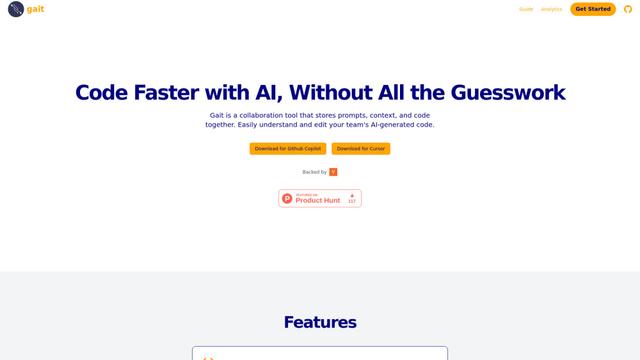
Gait is a collaboration tool that integrates AI-assisted code generation with version control, enabling teams to track, understand, and share AI-generated code context efficiently.
invoices.dev
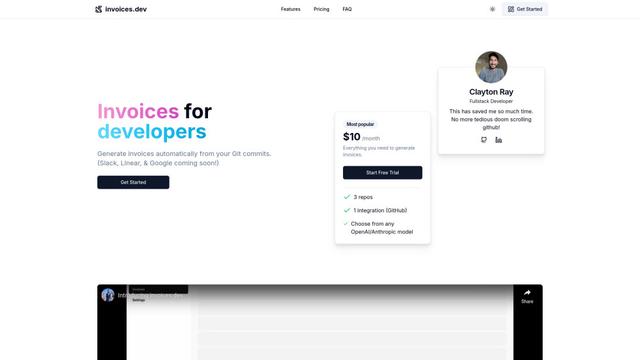
invoices.dev is an automated invoicing platform that generates invoices directly from developers' Git commits, with integration capabilities for GitHub, Slack, Linear, and Google services.
EasyRFP
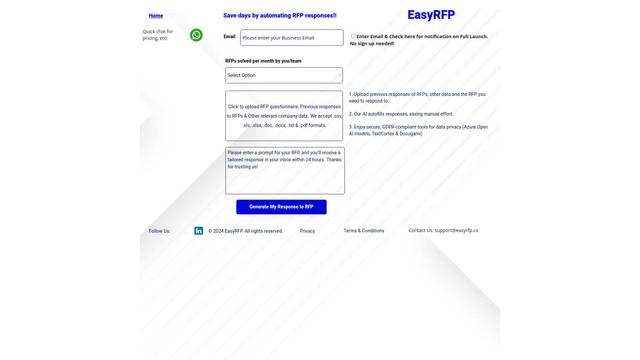
EasyRFP is an AI-powered edge computing toolkit that streamlines RFP (Request for Proposal) responses and enables real-time field phenotyping through deep learning technology.

Cart.ai
Cart.ai is an AI-powered service platform that provides comprehensive business automation solutions including coding, customer relations management, video editing, e-commerce setup, and custom AI development with 24/7 support.
Popular AI Tools Like Clark

GitHub Copilot Chat
GitHub Copilot Chat is an AI-powered coding assistant that provides natural language interactions, real-time code suggestions, and contextual support directly within supported IDEs and GitHub.com.
CopilotForXcode
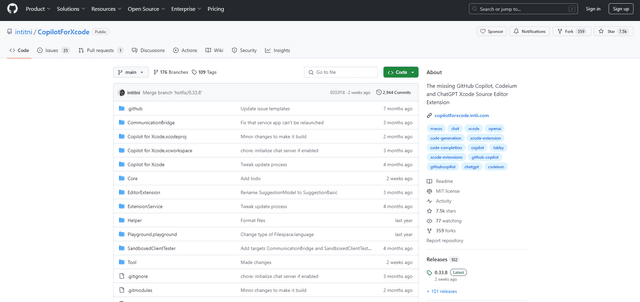
CopilotForXcode is an Xcode Source Editor Extension that integrates GitHub Copilot, Codeium, and ChatGPT to provide AI-powered code suggestions, chat assistance, and prompt-to-code functionality within Xcode.
BrowserAI
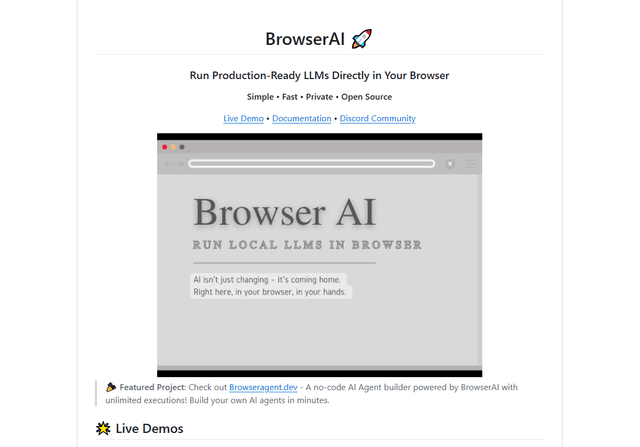
BrowserAI is an open-source library that enables running local Large Language Models (LLMs) directly in web browsers with WebGPU acceleration, offering privacy-focused AI capabilities without requiring server infrastructure.
OpenAI Codex CLI
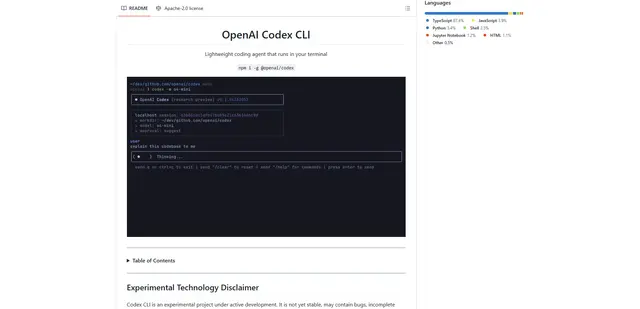
OpenAI Codex CLI is a lightweight, open-source coding agent that runs in your terminal, enabling developers to translate natural language into code execution while providing ChatGPT-level reasoning with the ability to run code, manipulate files, and iterate under version control.