
Axol
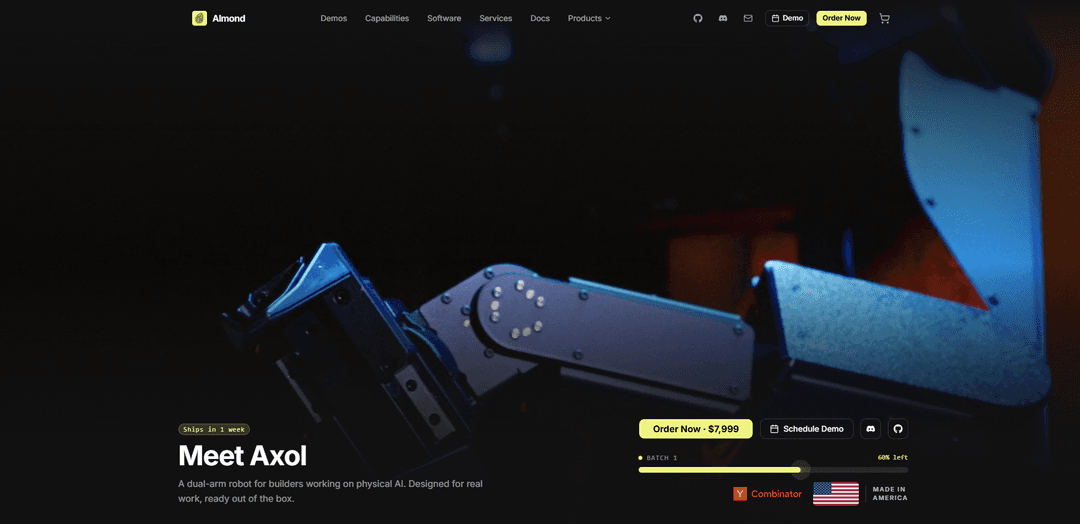
Axol is an open-source, ready-to-deploy dual-arm robot for physical AI, featuring two 7-DOF arms with 860mm reach, 6.5kg peak payload, and 500Hz control for real-world manipulation.
https://almond.bot/?ref=producthunt
Product Information
Updated:Jun 15, 2026
What is Axol
Axol is a dual-arm robotic platform built by Almond for AI researchers and AI-first robotics teams who need a capable bimanual system out of the box. Designed for real work rather than demos, it pairs long reach and high range of motion with a robust base and integrated compute/vision options. Axol ships from San Francisco and is designed and assembled in Almond’s Dogpatch workshop, emphasizing close customer collaboration and deployment-ready hardware. Key specs include 7 degrees of freedom per arm, 860mm arm reach, up to 6.5kg peak payload, and a 500Hz control rate.
Key Features of Axol
Axol is an open-source, dual-arm robot platform built for physical-AI teams that need real-world manipulation out of the box. It features two 7-DOF arms with long reach, high peak payload, and a high-rate control loop, plus an integrated software stack (Python SDK/CLI, bimanual IK, low-level CAN motor interface, VR teleoperation via WebXR, ZED camera streaming, LeRobot bindings, and joint tuning tools) to go from raw joint control to data collection and trained policies. Designed and assembled in Dogpatch, San Francisco, Axol targets practical deployments with strong workspace coverage and fewer singularities than comparable platforms.
Dual-arm, 7-DOF manipulation: Two 7-DOF arms enable bimanual tasks (handoffs, stabilizing + manipulating) with 860mm reach per arm and 6.5kg peak payload for more real-world handling capacity.
High-rate control over CAN: 500Hz control rate with USB-C to CAN motor control supports responsive, low-level control suitable for research, tuning, and policy execution.
Open-source SDK + CLI for end-to-end workflows: Python SDK/CLI includes a bimanual IK solver, low-level motor interface, joint tuning toolkit, and integration hooks to accelerate development from calibration to autonomy.
Vision-ready with ZED camera streaming: Designed for vision-first robotics with ZED camera streaming support and kit options that include multiple ZED cameras and an NVIDIA Orin-based compute box.
VR teleoperation & data collection (WebXR): WebXR pipeline streams controller/hand/elbow poses from common VR headsets to the Axol SDK over WebSocket, enabling teleop, demonstrations, and recording modes for dataset creation.
Lab-to-deployment oriented hardware ecosystem: Includes dual grippers with swappable tips, ports for wrist cameras, a rugged mobile base option with leveling casters and sit-to-stand height adjustment, and a high-power 24V supply.
Use Cases of Axol
Imitation learning data collection: Use VR teleoperation to quickly record high-quality bimanual demonstrations (with synchronized vision streams) to train policies for manipulation tasks.
Physical-AI research platform: Run experiments on bimanual IK, control, and policy learning using the open-source SDK, 500Hz control loop, and tooling for joint tuning and low-level interfacing.
High-mix pick-and-place prototyping: Leverage dual arms, long reach, and vision integration to prototype flexible pick-and-place workflows where parts and layouts change frequently.
Warehouse and fulfillment manipulation R&D: Develop and validate grasping, sorting, packing, and handoff behaviors that benefit from two arms and a large workspace with fewer singularities.
Manufacturing cell experimentation: Test assembly, kitting, and machine-tending concepts using bimanual manipulation, swappable gripper tips, and customizable mounting via the base’s T-slot ecosystem.
Pros
Strong manipulation envelope: dual 7-DOF arms with long reach and high peak payload provide a large, capable workspace.
End-to-end, open-source software stack: SDK/CLI, bimanual IK, CAN control, VR teleop, and vision streaming reduce integration time.
Designed for real deployments: high-rate control, rugged base option, and service/support offerings for on-site repair and integrations.
Cons
Requires substantial power and supporting infrastructure (e.g., 1500W supply and compute/vision stack) compared with smaller desktop arms.
Advanced capabilities (VR teleop, multi-camera vision, policy training) may add setup and calibration complexity for teams new to robotics.
Peak payload is not the same as continuous rated payload; some heavy-duty industrial tasks may exceed practical limits.
How to Use Axol
1) Unbox and assemble the Axol kit: Set up the Axol dual-arm robot on the included height-adjustable Axol Base. Ensure the base is stable using the leveling casters and adjust height as needed.
2) Connect power and control: Connect the included 24V (1500W) power supply to Axol. Connect a host computer to Axol via the robot’s USB-C interface for 500Hz CAN control.
3) Set up the vision system (ZED): Mount/connect the included ZED X One S cameras and connect them to the included ZED Box Orin NX using the provided FAKRA GMSL 2.0 cables. If using wrist cameras, connect them via the robot’s FAKRA GMSL 2.0 ports.
4) Install the Axol Python SDK and CLI: Install the open-source Axol Python SDK and CLI on your development machine to access joint control, bimanual IK, CAN motor interface, ZED streaming utilities, LeRobot bindings, and joint tuning tools.
5) Verify low-level connectivity (CAN motor interface): Use the SDK/CLI to confirm the low-level CAN motor interface is communicating with the arms at the expected control rate (up to 500Hz), and that joints respond to basic commands.
6) Run basic joint control and gripper checks: Command each arm’s 7-DOF joints through small, safe motions and test the 2-finger grippers (including any swappable tips) to confirm actuation and directionality.
7) Use the bimanual IK solver for end-effector control: Switch from raw joint commands to task-space control by using the SDK’s bimanual inverse kinematics (IK) solver to move both end effectors to target poses while avoiding singularities.
8) Enable ZED camera streaming: Start ZED camera streaming through the SDK tooling to get synchronized visual input for teleoperation, debugging, and data collection.
9) Teleoperate with the WebXR VR pipeline (optional): Launch the WebXR VR teleoperation interface and connect from a VR headset. Stream controller/hand and elbow pose data over WebSocket to the Axol SDK to drive the robot in real time.
10) Record demonstrations / collect data (optional): Use the VR teleoperation pipeline’s built-in data collection and recording modes to capture demonstrations for later training or evaluation.
11) Tune joints for your workload: Use the joint tuning toolkit to adjust joint behavior for your application (e.g., responsiveness vs. smoothness), then re-test motions and manipulation tasks.
12) Integrate with learning and policy stacks (optional): Use the LeRobot bindings to connect Axol to learning workflows, leveraging recorded data and camera streams to train and deploy policies.
13) Operate via the console for routine control: Use the provided console (part of the Axol software stack) for day-to-day robot control, quick checks, and repeatable operation flows.
14) Extend or customize hardware integrations (optional): If needed, integrate Axol with an existing hardware stack (e.g., mobile base, telescoping lift, or custom platform) and update arm specs to match application requirements, using the open SDK as the software foundation.
Axol FAQs
Axol is a dual-arm robot platform from Almond designed for builders working on physical AI, intended for real-world manipulation tasks and ready to use out of the box.
Axol Video
Popular Articles

Atoms: A Multi-Agent AI Platform That Transforms Ideas into Launch-Ready Products
May 22, 2026

Nano Banana SBTI: What It Is, How It Works, and How to Use It in 2026
Apr 15, 2026

Atoms Review — The AI Product Builder Redefining Digital Creation in 2026
Apr 10, 2026
Kilo Claw: How to Deploy and Use a True "Do‑It‑For‑You" AI Agent(2026 Update)
Apr 3, 2026
Latest AI Tools Similar to Axol
invoices.dev
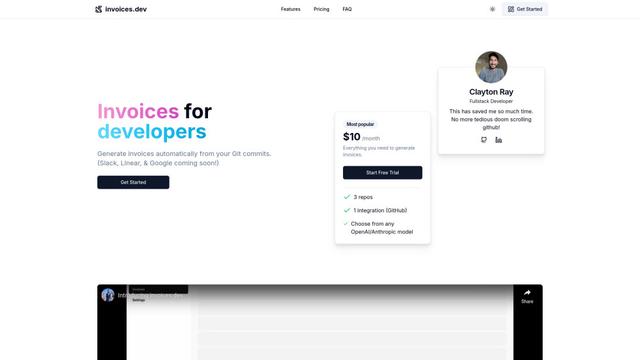
invoices.dev is an automated invoicing platform that generates invoices directly from developers' Git commits, with integration capabilities for GitHub, Slack, Linear, and Google services.
Monyble
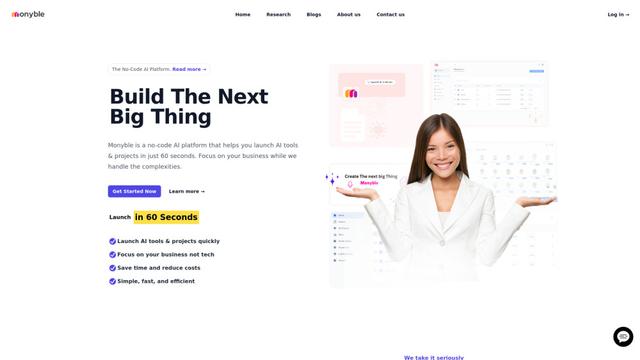
Monyble is a no-code AI platform that enables users to launch AI tools and projects within 60 seconds without requiring technical expertise.
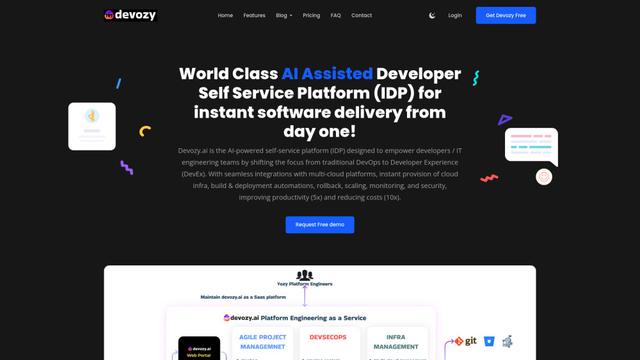
Devozy.ai
Devozy.ai is an AI-powered developer self-service platform that combines Agile project management, DevSecOps, multi-cloud infrastructure management, and IT service management into a unified solution for accelerating software delivery.
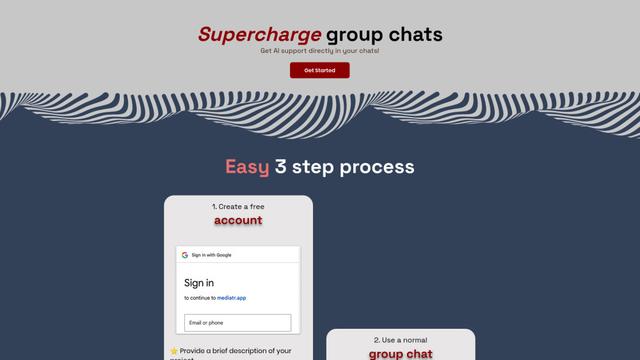
Mediatr
MediatR is a popular open-source .NET library that implements the Mediator pattern to provide simple and flexible request/response handling, command processing, and event notifications while promoting loose coupling between application components.
Popular AI Tools Like Axol
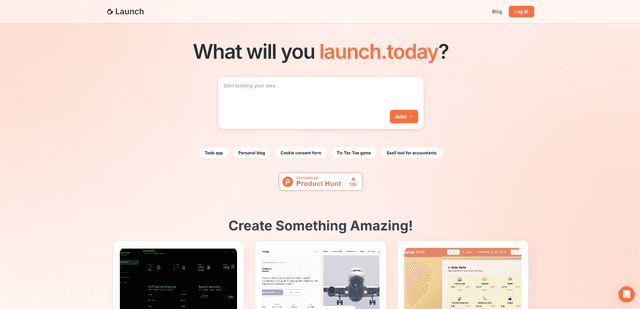
Launch
Launch is an AI-powered platform that enables users to build full-stack applications instantly while providing comprehensive tools for product launches, entrepreneurship programs, and customer acquisition.

GitHub Copilot Chat
GitHub Copilot Chat is an AI-powered coding assistant that provides natural language interactions, real-time code suggestions, and contextual support directly within supported IDEs and GitHub.com.
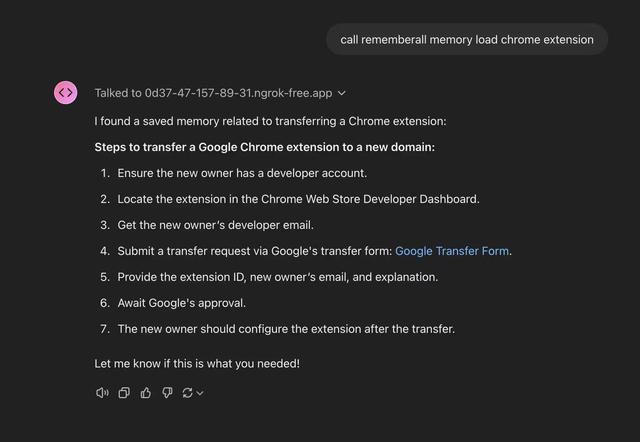
Rememberall
Rememberall is a secure, open-source long-term memory solution that enables AI applications and GPT models to maintain persistent memory across conversations through semantic search and vector storage capabilities.
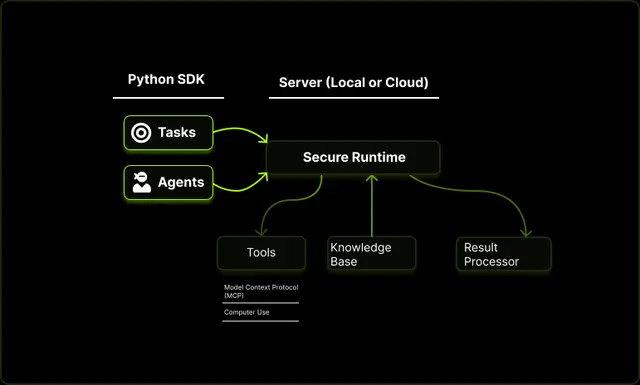
Upsonic
Upsonic is a reliability-focused AI agent framework with dockerized server-client architecture that enables trusted agent workflows through advanced features like verification layers, triangular architecture, and Model Context Protocol (MCP) integration.