
ZooData
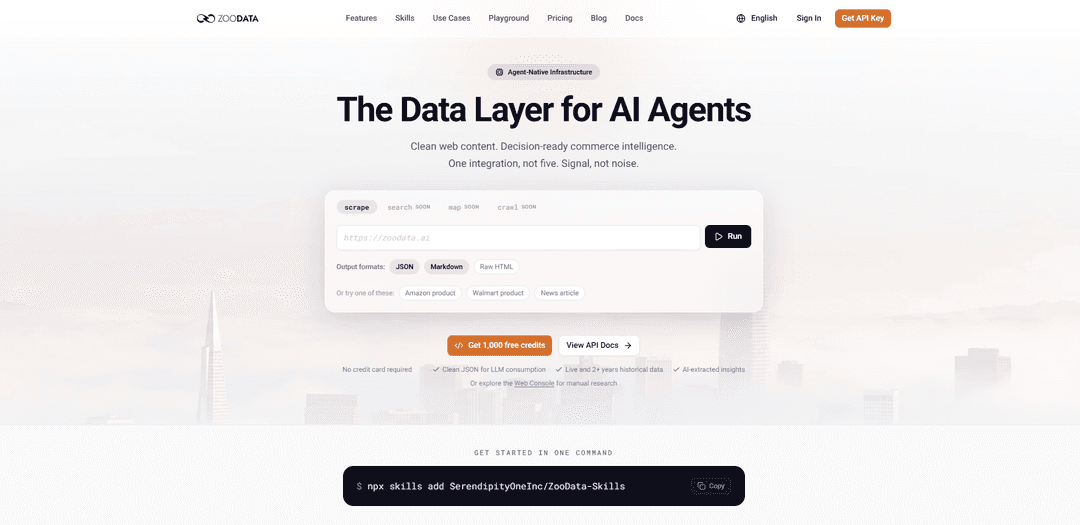
ZooData is an agent-native commerce data layer that delivers clean, structured JSON from live and 2+ years of historical Amazon signals—plus AI-extracted insights—via an API-first OpenAPI v2 interface.
https://zoodata.ai/?ref=producthunt
Product Information
Updated:Aug 8, 2026
What is ZooData
ZooData is purpose-built data infrastructure for AI agents that need decision-ready commerce intelligence rather than raw scraped pages or human-only dashboards. It provides direct, API-first access to large-scale Amazon commerce signals (including hundreds of millions of indexed/tracked products, historical trends, and pre-processed review intelligence) so agents can run autonomous research, monitoring, and analysis workflows. ZooData is designed to be easy to integrate into modern agent stacks, offering an OpenAPI 3.0 spec and a consistent REST pattern (POST requests with JSON bodies) at a single base URL, authenticated with a Bearer API key.
Key Features of ZooData
ZooData is an agent-native commerce intelligence data layer that provides clean, structured JSON access to Amazon commerce signals at scale (hundreds of millions of indexed/tracked products, multi-year history, and pre-processed review insights). It is API-first (OpenAPI 3.0), designed for autonomous agents rather than human dashboards or scraping workflows, and supports real-time and historical market/product intelligence such as prices, inventory, sales rank (BSR), category demand, competitor discovery, and review-derived insights—enabling high-throughput research, monitoring, and automation with predictable per-call pricing.
Agent-ready structured JSON: Returns clean, token-efficient JSON (not raw HTML) so agents can consume results directly with less parsing and lower LLM overhead.
Real-time commerce signals: Provides live product data such as price, inventory, and BSR with freshness tiers (e.g., minutes for key signals) for time-sensitive decisioning.
Multi-year historical intelligence: Offers 2+ years of history for metrics like BSR, price, sales, and ratings to support trend detection, forecasting, and anomaly spotting.
Market & category analysis endpoints: Delivers category-level signals (demand trends, competition density, margin benchmarks) via a single API call to quickly size opportunities.
Competitor lookup & landscape mapping: Finds competitors by brand, ASIN, seller, or keyword to map the field before entering a niche and to track competitive moves over time.
OpenAPI-first integration & agent tooling: OpenAPI 3.0 spec enables quick import into agent frameworks (e.g., LangChain/CrewAI/AutoGen/Claude MCP) and supports simple POST+JSON workflows.
Use Cases of ZooData
Autonomous product research (e-commerce/retail): Agents can scan thousands of product opportunities daily using product search, category signals, and review insights to shortlist winners faster than manual research.
Continuous competitor monitoring (brands & agencies): Track competitor price, inventory, and ranking changes 24/7 and trigger alerts or automated responses when market conditions shift.
Real-time market signal dashboards for agents (analytics teams): Power internal agent-driven reporting on what’s trending now (not static reports), using market analysis plus real-time product endpoints.
Affiliate & content commerce optimization (publishers/creators): Programmatically evaluate large sets of products and competitor listings to prioritize content targets and improve conversion by staying current on pricing and demand.
Supply chain & availability alerts (operators/aggregators): Monitor stock levels and availability across products/competitors to anticipate sell-outs, manage replenishment timing, and reduce lost sales.
Listing automation pipelines (marketplace sellers): Automate discovery-to-listing workflows by feeding structured product attributes, competitive context, and review-derived insights into listing generation systems.
Pros
Purpose-built for AI agents (structured JSON, OpenAPI integration) rather than scraping or human-only dashboards
Combines real-time signals with multi-year historical data for both immediate actions and trend analysis
Pre-processed insights (e.g., review-derived structure) reduce the need for custom NLP pipelines
Usage-based pricing fits high-throughput agent workloads without per-seat limits
Cons
Primary value is tied to supported commerce data sources (e.g., Amazon-focused signals), which may limit usefulness for non-commerce needs
Requires API integration and engineering effort; not positioned as a full human-facing analytics UI
High-volume agent usage can still become costly depending on query frequency and workflow design
How to Use ZooData
1) Create a ZooData account and get an API key: Sign up on ZooData, then copy your API key (Bearer token). You will use it in the HTTP header: Authorization: Bearer YOUR_API_KEY. New accounts typically start with free credits (each API call costs 1 credit).
2) Understand the base URL and request style: All ZooData v2 endpoints use POST requests with a JSON body. Base URL: https://api.zoodata.ai/openapi/v2. Always send Content-Type: application/json and your Authorization header.
3) Make your first call: Market analysis (category landscape): Call POST /markets/search to get category-level signals (demand trends, competition density, margin benchmarks). Example body: {"categoryPath": ["Electronics", "Headphones"]}. The response is clean, flat JSON intended to be agent-ready.
4) Run the same request via curl (quick sanity check): Use: curl -X POST https://api.zoodata.ai/openapi/v2/markets/search -H "Authorization: Bearer YOUR_API_KEY" -H "Content-Type: application/json" -d '{"categoryPath": ["Electronics", "Headphones"]}'. Confirm you receive structured JSON (e.g., demand fields like totalDemand).
5) Query products at scale: Product search & filtering: Call POST /products/search to search across a large tracked catalog (Amazon/TikTok Shop) using keywords and filters. Use this when you want many candidate products for research, ranking, or batch evaluation workflows.
6) Discover competitors: Competitor intelligence: Call POST /products/competitors to find competitors by brand, ASIN, seller, or keyword. Use this to map the competitive landscape before entering a niche or to build a monitoring list.
7) Pull live signals: Real-time product data: Call POST /realtime/product to fetch live price, inventory, and BSR (no caching). Use this for alerts, monitoring, and decisions that require up-to-the-minute data.
8) Analyze trends: Historical time-series data: Call POST /products/history to retrieve 2+ years of history (e.g., BSR, price, sales, rating). Use this to detect seasonality, validate growth, and backtest strategies.
9) Navigate taxonomy: Category discovery: Call POST /products/categories to explore the category taxonomy. Use this to find the correct categoryPath values for market analysis and to standardize category-based research.
10) Integrate in Python (minimal example): Use requests.post with headers {"Authorization": "Bearer YOUR_KEY"} and a JSON body. Example: response = requests.post("https://api.zoodata.ai/openapi/v2/markets/search", headers={"Authorization": "Bearer YOUR_KEY"}, json={"categoryPath": ["Electronics", "Headphones"]}); market = response.json(); print(market).
11) Add ZooData Skills to your agent stack (one-command install): Install the pre-built skills package via: npx skills add SerendipityOneInc/ZooData-Skills. This provides agent-oriented workflows and references for using the endpoints for market research, competitor analysis, ASIN evaluation, pricing, and category research.
12) Use the OpenAPI spec for one-click tool import: ZooData provides an OpenAPI 3.0 spec, enabling quick integration into agent frameworks (e.g., LangChain, CrewAI, AutoGen, Claude MCP). Import the spec, then call the v2 endpoints as tools from your agent.
13) Build common workflows (recommended progression): Start with /markets/search to pick a category, then /products/search to shortlist products, /products/competitors to map the field, /realtime/product to validate live pricing/stock/BSR, and /products/history to confirm durable trends before acting.
14) Monitor continuously and manage cost: Because pricing is per API call (not per seat), design monitoring loops thoughtfully (e.g., poll real-time endpoints on meaningful intervals, batch product searches, and use history endpoints for trend checks). Track credits since each call typically consumes 1 credit.
ZooData FAQs
ZooData is an agent-native data infrastructure that provides AI agents with clean, structured commerce intelligence (not raw scraped HTML). It’s designed to deliver decision-ready signals for e-commerce use cases.
ZooData Video
Popular Articles

Atoms: A Multi-Agent AI Platform That Transforms Ideas into Launch-Ready Products
May 22, 2026

Nano Banana SBTI: What It Is, How It Works, and How to Use It in 2026
Apr 15, 2026

Atoms Review — The AI Product Builder Redefining Digital Creation in 2026
Apr 10, 2026

Kilo Claw: How to Deploy and Use a True "Do‑It‑For‑You" AI Agent(2026 Update)
Apr 3, 2026
Latest AI Tools Similar to ZooData
Tomat
Tomat.AI is an AI-powered desktop application that enables users to easily explore, analyze, and automate large CSV and Excel files without coding, featuring local processing and advanced data manipulation capabilities.
Data Nuts
DataNuts is a comprehensive data management and analytics solutions provider that specializes in healthcare solutions, cloud migration, and AI-powered database querying capabilities.

CogniKeep AI
CogniKeep AI is a private, enterprise-grade AI solution that enables organizations to deploy secure, customizable AI capabilities within their own infrastructure while maintaining complete data privacy and security.
EasyRFP
EasyRFP is an AI-powered edge computing toolkit that streamlines RFP (Request for Proposal) responses and enables real-time field phenotyping through deep learning technology.
Popular AI Tools Like ZooData

Researcher & Analyst in M365 Copilot
Contact for PricingAI Data Mining
Researcher and Analyst are two first-of-their-kind AI reasoning agents in Microsoft 365 Copilot that help users tackle complex research and data analysis tasks by leveraging both enterprise and web data with advanced reasoning capabilities.
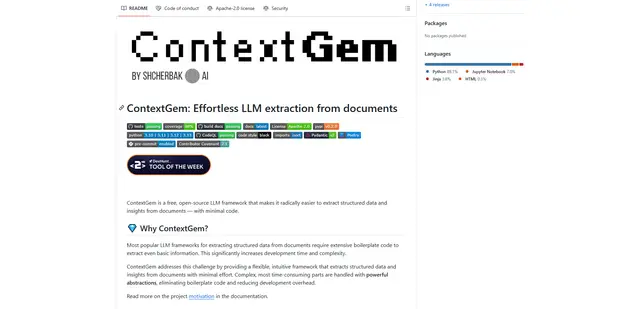
ContextGem
ContextGem is a free, open-source LLM framework that simplifies structured data and insights extraction from documents with minimal code through powerful built-in abstractions and automated features.
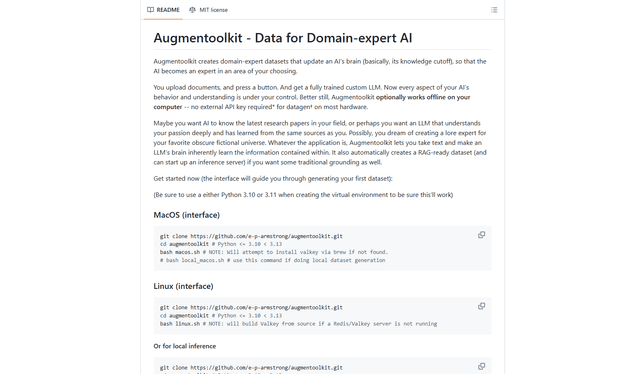
Augmentoolkit 3.0
Augmentoolkit 3.0 is a refined and battle-tested open-source tool that creates domain-expert datasets to train custom LLMs with your own data, featuring an intuitive interface, offline capability, and automatic dataset generation and training processes.
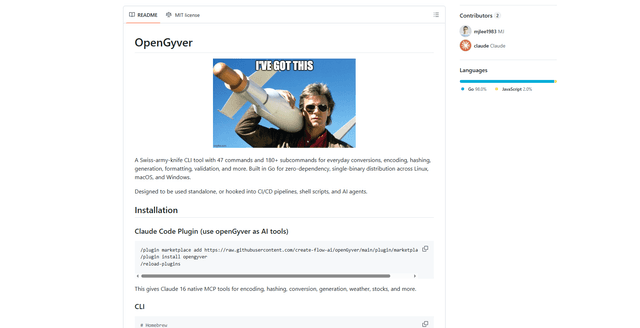
OpenGyver
OpenGyver is an open-source Swiss-army-knife CLI tool with 47 commands and 180+ subcommands for everyday conversions, encoding, hashing, generation, formatting, and validation, designed for standalone use or integration with CI/CD pipelines, shell scripts, and AI agents.