
VC Boom
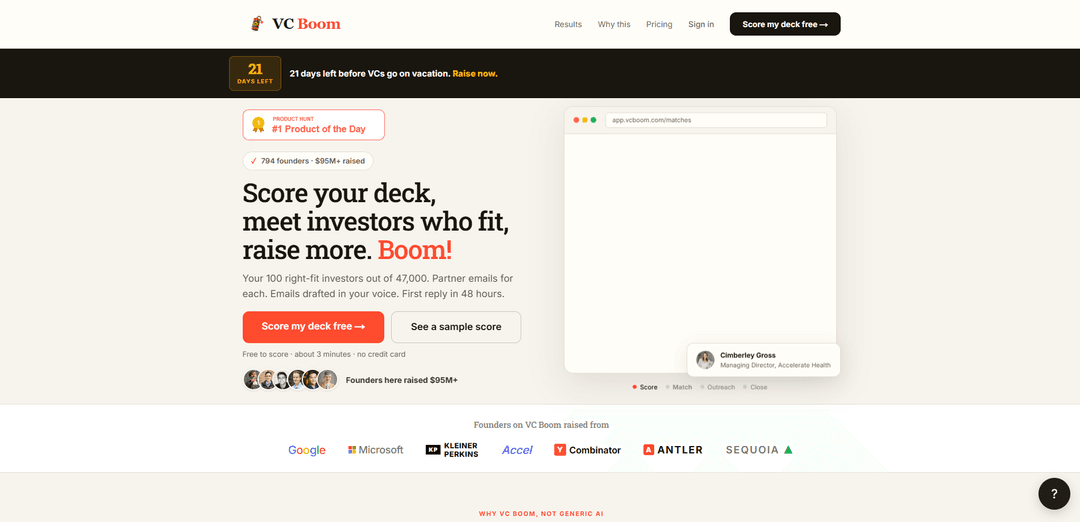
VC Boom is a fundraising tool that scores your pitch deck, matches you to right-fit investors from a 47,000+ database, and drafts personalized cold emails in your voice to help you book meetings and raise faster.
https://vcboom.com/?utm_source=aipure&utm_medium=referral&utm_campaign=ph-launch&ref=producthunt
Product Information
Updated:Jun 15, 2026
What is VC Boom
VC Boom is an AI-powered platform built for startup founders raising capital. It combines three core workflows—pitch deck evaluation, investor discovery, and outbound outreach—into one product designed to move from “deck” to “term sheet” with less trial-and-error. Founders can start for free by uploading a deck to receive an investor-style score and actionable feedback, then use the platform to identify investors aligned with their stage, sector, and check size, and generate outreach emails tailored to each target.
Key Features of VC Boom
VC Boom is a fundraising workflow tool for founders that combines AI pitch-deck scoring, investor matching across a 47,000+ profile database, and personalized cold-email drafting based on your deck and each investor’s thesis/portfolio. It reads decks directly from Figma exports (multimodal), flags specific gaps across investor-style scoring dimensions, produces a ranked list of right-fit investors with partner contact details, and generates outreach plus follow-up sequences that stay consistent with your round context and prior communications—helping teams move from deck to meetings faster with one-time pricing and no commission.
AI deck scoring (7 investor dimensions): Scores your pitch deck the way investors evaluate it (e.g., traction, team, market, ask clarity), with written diagnostics and concrete recommendations to fix specific slides before you start outreach.
Native multimodal deck reading (Figma export): Analyzes the actual visual/slide content from a Figma export rather than relying on OCR-only text extraction, preserving the narrative and layout cues investors react to.
Investor matching across 47,000+ profiles: Ranks investors by fit using factors like stage, check size, vertical, and recent activity to surface a prioritized target list rather than a generic directory.
Partner contact unlocking: Provides direct partner emails (and in some tiers phone numbers) to reduce time spent hunting for accurate contact details and to speed up outbound.
Personalized cold emails in your voice: Drafts investor-specific outreach that references relevant portfolio bets and stated theses, aiming to sound human and tailored instead of templated.
Outreach automation & raise memory: Keeps context from your deck, investor list, and prior emails so drafts stay consistent with your round; higher tiers add follow-up sequences (e.g., day-3/day-7), pitch-coach chat, slide rewrites, and investor briefs.
Use Cases of VC Boom
Pre-seed founder preparing first institutional raise: Use deck scoring to identify narrative/traction gaps, then generate an initial list of right-fit angels/seed funds and send tailored cold emails to start booking intro calls quickly.
Seed-stage SaaS pipeline building: Match to VCs that lead seed checks in your category, export a ranked reach list, and run personalized outbound plus scheduled follow-ups to keep a consistent weekly meeting cadence.
Healthtech/biotech founder needing credibility framing: Refine “why us” positioning (team credibility, moat, clinical insight) via slide-by-slide feedback, then target investors already active in healthcare and reference their prior bets in outreach.
Non–Silicon Valley or under-networked founder: Replace warm-intro dependency by finding predisposed investors from a broad database and emailing them with context-specific hooks drawn from their public focus areas.
Accelerator/incubator fundraising support: Standardize how cohorts improve decks (scoring + rescores), create investor pipelines per company, and help founders send higher-quality outbound without hiring external fundraising consultants.
Pros
End-to-end fundraising workflow in one tool (deck feedback → investor list → outreach), reducing tool sprawl.
Large investor database (47,000+) with ranked matching improves targeting vs. generic lists.
Multimodal deck analysis (Figma export) and investor-specific email drafting can produce more context-aware outputs than generic AI prompts.
One-time pricing with no commission/retainer can be cheaper than consultants or placement agents for many founders.
Cons
Cold email effectiveness still depends on fundamentals (traction, positioning, timing); the tool can’t guarantee replies or term sheets.
Access to broader investor coverage and advanced features is tiered (e.g., full 47,000 database in the top plan).
Requires sharing your deck and outreach context with a third-party platform, which may be a concern for highly sensitive raises despite privacy claims.
Investor data freshness/accuracy (roles, emails, activity) can vary over time in any large directory-style dataset.
How to Use VC Boom
1) Open VC Boom: Go to https://vcboom.com/ and click a call-to-action like “Score my deck free” (or go directly to the scoring flow at https://app.vcboom.com/score).
2) Start the free deck score: Begin the “Score” flow (the site indicates it’s free to start, takes ~3 minutes, and requires no credit card).
3) Upload your pitch deck: Upload your deck to VC Boom for analysis. VC Boom is designed to “actually read your slides” (including visual context) and generate a scoring report.
4) Review your overall deck score: View your total score (out of 100) and use it as a quick read on investor readiness.
5) Inspect the 7 scoring dimensions: Review the breakdown across the seven investor-style dimensions shown on the site: Market Opportunity, Team Credibility, Traction Proof, Ask Clarity, Problem Definition, and Solution Moat (plus the overall scoring framework VC Boom uses).
6) Read the written feedback and identify gaps: Use the written breakdown to find what’s landing vs. what’s unclear. Pay special attention to any “Critical Gap” callouts (e.g., missing traction narrative) so you know what to fix before outreach.
7) Apply slide-fix guidance: Follow VC Boom’s suggested fixes (the site describes “exact prompts to fix each slide” and slide-by-slide rewrites in higher tiers) to improve clarity, traction storytelling, and the fundraising ask.
8) Re-score your updated deck: After edits, run another score to confirm improvements. (Plans mention multiple re-scores; higher tiers include unlimited re-scores.)
9) Generate investor matches: Go to the matching experience (the site references https://app.vcboom.com/matches). VC Boom matches you against its 47,000+ investor profiles using factors it lists: vertical, stage, check size, and recent deal activity.
10) Review your ranked investor list: Look through your “top matches” and their match percentages. Depending on plan tier, you’ll see a larger ranked list (e.g., Top 500, Top 1,500, or full 47,000+ database access).
11) Open investor contact details (if included): Use the unlocked partner contact info (the site mentions direct partner email and phone in certain plans) to prepare outreach.
12) Draft a personalized cold email: Go to the outreach tool (the site references https://app.vcboom.com/outreach). Generate an email that includes investor-specific hooks (e.g., their portfolio bets, public writing, and stated focus areas) and is written in your voice.
13) Customize the email with your key metrics and ask: Ensure the draft includes your traction (e.g., MRR, growth) and your raise details (amount and use of funds). VC Boom emphasizes keeping drafts specific to your round rather than generic templates.
14) Send outreach and track your pipeline: Send your emails to the matched investors. VC Boom positions itself as keeping your deck, investors, and sent emails “in mind” so future drafts stay consistent with your raise.
15) Use follow-up sequences (if included): If your plan includes it, enable built-in follow-ups (the site mentions day-3 and day-7 sequences in the mid-tier plan) to systematically re-contact investors who don’t reply.
16) Use Pitch Coach / deck rewrite tools (if included): If available in your tier, use “Pitch Coach” (chat that knows your deck) and “Deck Tune” (slide-by-slide rewrites) to refine positioning and messaging as you learn from investor responses.
17) Generate investor briefs (if included): If your plan includes it, create an “Investor Brief” (a 1-pager per VC) to prepare for meetings and tailor your pitch to each firm/partner.
18) Iterate until meetings and term sheet: Repeat the loop: improve deck → re-score → refine matches → draft/send emails → follow up. Higher tiers also mention hands-on support (e.g., strategy call, review of top emails, and a direct Slack channel) to help you push toward a term sheet.
VC Boom FAQs
VC Boom is a fundraising tool for founders that combines AI pitch deck scoring, investor matching from a database of 47,000+ investor profiles, and personalized cold email drafting to help founders go from deck to investor outreach.
Popular Articles

Atoms: A Multi-Agent AI Platform That Transforms Ideas into Launch-Ready Products
May 22, 2026

Nano Banana SBTI: What It Is, How It Works, and How to Use It in 2026
Apr 15, 2026

Atoms Review — The AI Product Builder Redefining Digital Creation in 2026
Apr 10, 2026

Kilo Claw: How to Deploy and Use a True "Do‑It‑For‑You" AI Agent(2026 Update)
Apr 3, 2026
Latest AI Tools Similar to VC Boom
MarketYap!
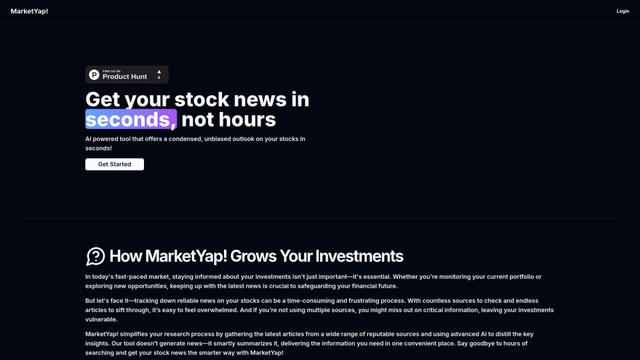
MarketYap! is an AI-powered investment news aggregation platform that simplifies stock research by gathering and summarizing articles from multiple reputable sources.
Feetr.io
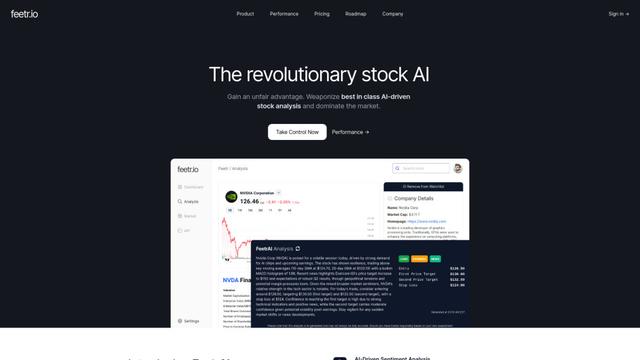
Feetr.io is an AI-powered stock analysis platform that leverages machine learning, social media analytics, and real-time market data to identify potential stock movements before they go mainstream.

ML Alpha
ML Alpha is an AI-driven investment platform that combines machine learning algorithms with community-powered portfolio insights to help investors make data-driven investment decisions in the US stock market.
TradingAPI.rest
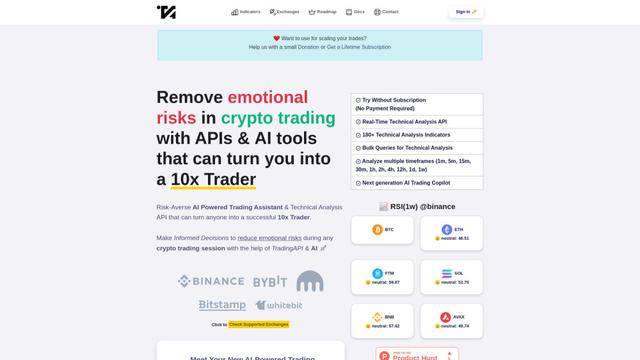
TradingAPI.rest is a comprehensive trading platform that provides Technical Analysis API and AI-Powered Trading Assistant to help traders make data-driven decisions through real-time market analysis, 180+ technical indicators, and natural language insights.
Popular AI Tools Like VC Boom
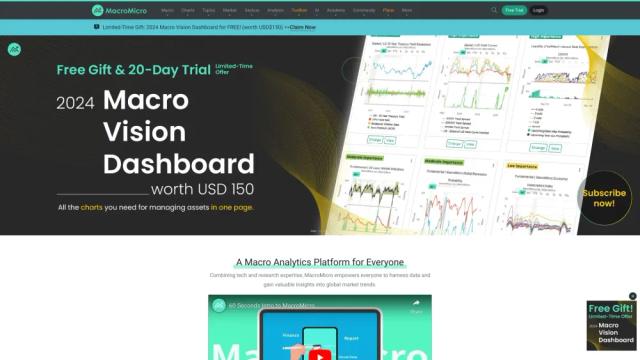
MacroMicro
MacroMicro is a comprehensive macro analytics platform that combines technology and research expertise to empower investors with data-driven insights into global market trends.
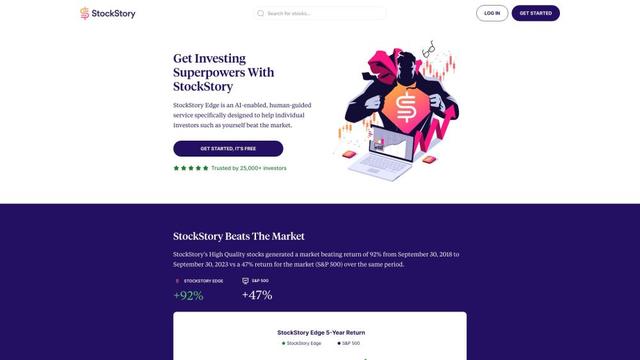
StockStory
StockStory is an AI-powered stock research and investment advice platform that aims to help individual investors beat the market.
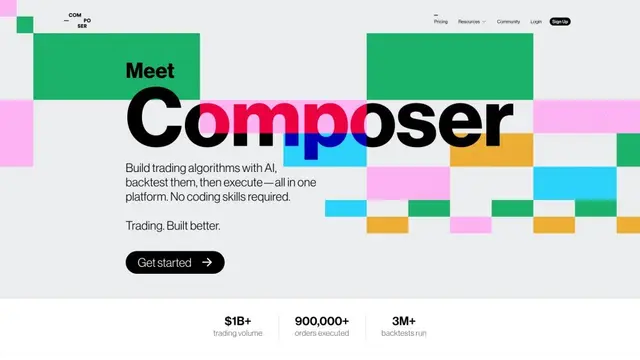
Composer
Composer is an AI-powered trading platform and investment app that allows users to create, backtest, and execute trading strategies using a no-code interface.
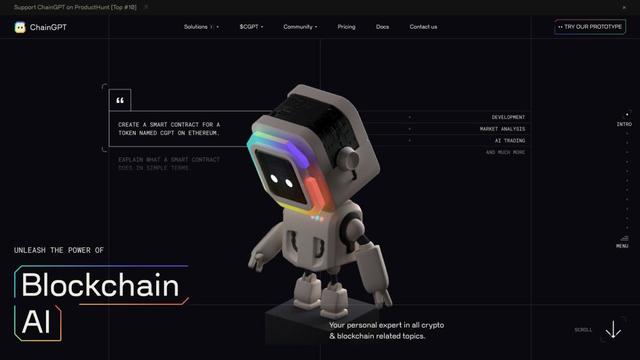
ChainGPT
ChainGPT is a cutting-edge AI platform that integrates blockchain and crypto technology to provide advanced tools and utilities for users.