
PandaProbe Cloud
WebsiteAI DevOps Assistant
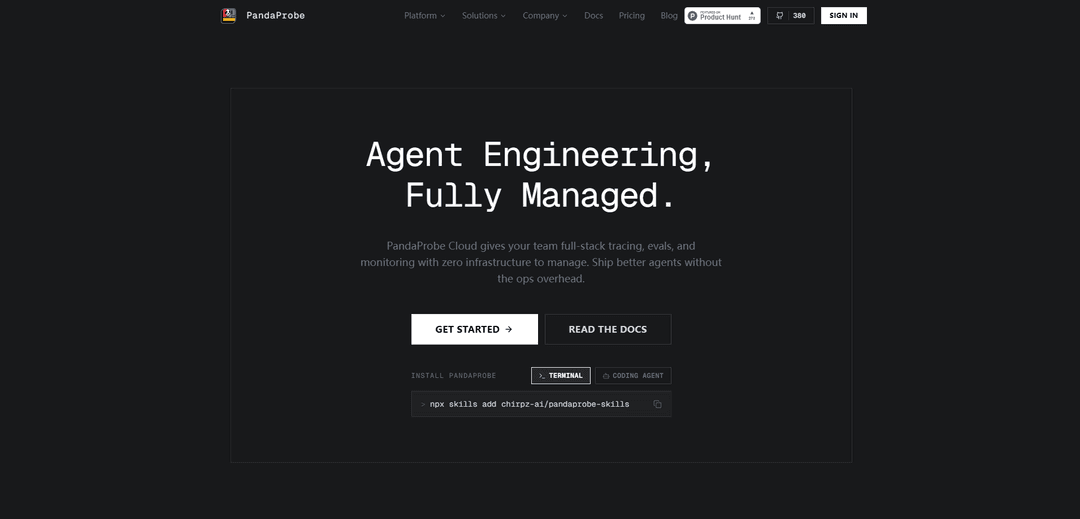
PandaProbe Cloud is a fully managed platform for tracing, evaluation, and production monitoring of AI agents, with auto-scaling infrastructure, built-in eval models, and team features like SSO and permissions.
https://www.pandaprobe.com/platform/cloud?ref=producthunt
Product Information
Updated:Jun 16, 2026
What is PandaProbe Cloud
PandaProbe Cloud is the hosted, fully managed offering of PandaProbe—an open-source agent engineering platform designed to help teams trace, evaluate, monitor, and debug AI agent applications across development and production. It provides full-stack observability (trace ingestion, storage, and dashboards) plus continuous evaluation workflows, so teams can move beyond one-off debugging to systematically understand and improve agent behavior over time, without operating their own observability infrastructure.
Key Features of PandaProbe Cloud
PandaProbe Cloud is a fully managed agent engineering platform that provides full-stack tracing, evaluations, and monitoring for AI agents with zero infrastructure to run. It handles trace ingestion, storage, dashboards, autoscaling, and team access controls, while also running managed evaluation “LLM-as-judge” and embedding models so teams don’t need to bring external API keys. With built-in continuous monitoring via scheduled eval runs and optional enterprise-grade support and SSO, it’s designed to help teams debug, measure, and improve agent quality in development and production without ops overhead.
Managed tracing & dashboards: Hosted trace ingestion, storage, and visualization so teams can debug agent behavior across LLMs, tools, and workflows without provisioning servers.
Managed eval LLM & embeddings: Runs LLM-as-judge evaluations and embedding models for you, eliminating the need for external model API keys for evaluation workflows.
Continuous evaluation scheduler: Built-in scheduler for hourly/daily/custom cron evals against production traffic to catch regressions and monitor quality over time.
Auto-scaling infrastructure: Automatically handles traffic spikes and growing volumes, reducing manual capacity planning for teams moving from prototype to production.
SSO, RBAC, and team permissions: Role-based access control and SSO support to meet organizational security needs as teams expand.
SLA-backed support options: Dedicated support channels and SLA guarantees on higher tiers, aimed at production reliability and faster incident resolution.
Use Cases of PandaProbe Cloud
Debugging production customer-support agents: Trace tool calls and model outputs end-to-end, then run scheduled evals to detect response-quality regressions and reliability issues in live support workflows.
Monitoring multi-step coding agents in CI/CD: Instrument agent runs, store traces centrally, and automate evaluation runs to ensure code-generation or refactoring agents maintain quality across releases.
Evaluating RAG/search assistants: Use managed embeddings and LLM-as-judge evals to continuously assess retrieval quality, groundedness, and answer consistency as knowledge bases change.
Platform team observability for enterprise agents: Apply RBAC/SSO and centralized monitoring so platform teams can track reliability, quality metrics, and regressions across multiple internal agent deployments.
Scaling startups from prototype to high-volume usage: Start quickly with hosted setup, then rely on autoscaling, retention management (higher tiers), and support to maintain quality as traffic grows.
Pros
Zero infrastructure to manage (hosted ingestion, storage, dashboards, scaling).
Managed evaluation models reduce setup complexity and avoid needing third-party API keys for evals.
Built-in scheduled monitoring helps catch regressions continuously in production.
Team/security features (RBAC/SSO) and support/SLA options fit growing organizations.
Cons
Free tier has low monthly limits (e.g., 100 base traces/month and limited eval runs).
Cloud offering implies less direct control than self-hosting for organizations with strict data residency or bespoke infra requirements (enterprise/hybrid options may be needed).
Some advanced capabilities (higher rate limits, retention management, private support channels) require paid tiers.
How to Use PandaProbe Cloud
1) Choose Cloud vs. Open Source: Decide to use PandaProbe Cloud (fully managed) instead of self-hosting. Cloud includes hosted trace ingestion/storage/dashboards, a managed eval LLM + embedding models (no external API keys required), auto-scaling, SSO/permissions, continuous monitoring via an eval scheduler, and SLA/support (plan-dependent).
2) Create a PandaProbe Cloud account: Go to https://app.pandaprobe.com/ and sign up. You can start on the free Hobby plan ($0/forever) with no credit card required.
3) Pick a plan that matches your usage: Select a plan based on expected tracing/eval volume and team size: Hobby (1 seat), Pro (2 seats), Startup (10 seats), or Enterprise (custom/unlimited). Plans differ in included monthly trace ingestion and eval runs, support level, and operational features.
4) Install and connect your agent/app to PandaProbe Cloud: Instrument your AI agent application using PandaProbe’s Python SDK so it can send traces to the managed Cloud ingestion. PandaProbe Cloud is designed to work by default with coding agents and supports integrations with leading agent frameworks and LLM providers, plus custom instrumentation.
5) Send end-to-end execution data (sessions → traces → spans): Run your agent workflows and ensure PandaProbe captures full trajectories as structured sessions, traces, and spans. This lets you follow multi-step loops end-to-end rather than only isolated steps.
6) Use the Cloud dashboard to inspect traces: Open the PandaProbe Cloud dashboard to view ingested traces and debug agent behavior across LLM calls, tool usage, and multi-step workflows. Cloud includes the dashboard out of the box with no infrastructure to manage.
7) Run evaluations using the managed Eval LLM: Configure and run evaluations (including LLM-as-judge scoring with structured feedback) directly in Cloud. PandaProbe Cloud provides the evaluation LLM and embedding models, so you don’t need to supply external API keys for these components.
8) Evaluate full sessions (not just single traces): Use session-level evaluation to score and diagnose behavior over long trajectories. This helps identify where failures originate earlier in the run (e.g., looping, poor tool use, or drift) even if the visible failure happens later.
9) Schedule continuous monitoring (recurring eval runs): Enable the built-in eval scheduler to run evaluations on a cadence (daily, hourly, or custom cron) against production traffic. This helps catch regressions and behavioral drift quickly.
10) Manage team access (SSO & permissions): For growing teams, configure role-based access control and (where included) SSO. This supports enterprise security requirements and controlled access to traces, evals, and monitoring.
11) Scale without ops overhead: Rely on Cloud auto-scaling to handle traffic spikes and increasing volumes. Storage/retention and ingestion infrastructure are managed by PandaProbe Cloud, avoiding ongoing maintenance.
12) Use support channels appropriate to your plan: Hobby uses community support via GitHub; Pro includes email support; Startup includes a private Slack channel; Enterprise adds a dedicated engineering team, support SLA, and trainings/architectural guidance.
PandaProbe Cloud FAQs
PandaProbe Cloud is a fully managed version of PandaProbe that provides full-stack tracing, evaluations, and monitoring for AI agents with zero infrastructure to manage.
PandaProbe Cloud Video
Popular Articles

Vosko AI: Localize and Dub Videos for Global Audiences
Oct 15, 2026

Atoms: A Multi-Agent AI Platform That Transforms Ideas into Launch-Ready Products
Oct 13, 2026

Nano Banana SBTI: What It Is, How It Works, and How to Use It in 2026
Apr 15, 2026

Atoms Review — The AI Product Builder Redefining Digital Creation in 2026
Apr 10, 2026
Latest AI Tools Similar to PandaProbe Cloud

Hapticlabs
Hapticlabs is a no-code toolkit that enables designers, developers and researchers to easily design, prototype and deploy immersive haptic interactions across devices without coding.
Deployo.ai
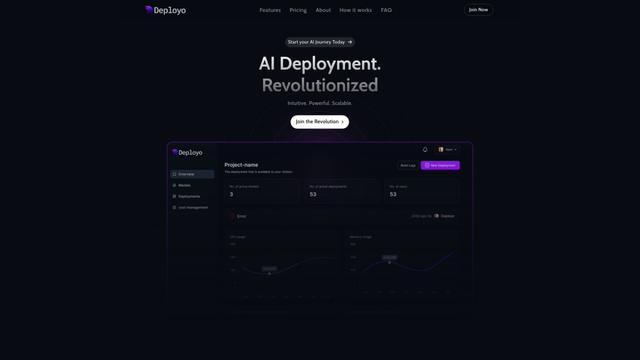
Deployo.ai is a comprehensive AI deployment platform that enables seamless model deployment, monitoring, and scaling with built-in ethical AI frameworks and cross-cloud compatibility.
CloudSoul
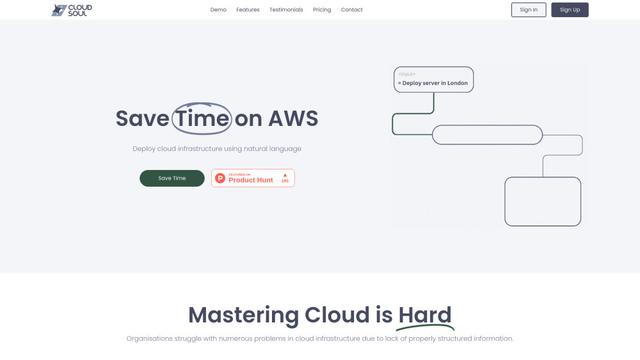
CloudSoul is an AI-powered SaaS platform that enables users to instantly deploy and manage cloud infrastructure through natural language conversations, making AWS resource management more accessible and efficient.
Devozy.ai
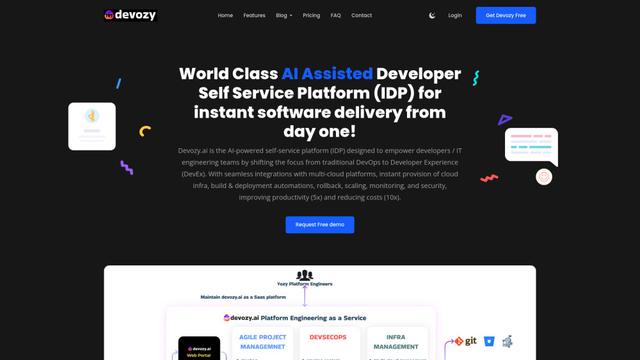
Devozy.ai is an AI-powered developer self-service platform that combines Agile project management, DevSecOps, multi-cloud infrastructure management, and IT service management into a unified solution for accelerating software delivery.
Popular AI Tools Like PandaProbe Cloud

A2A Protocol
A2A (Agent2Agent) Protocol is an open interoperability protocol developed by Google that enables seamless communication and collaboration between AI agents across different frameworks and vendors, regardless of their underlying architecture.
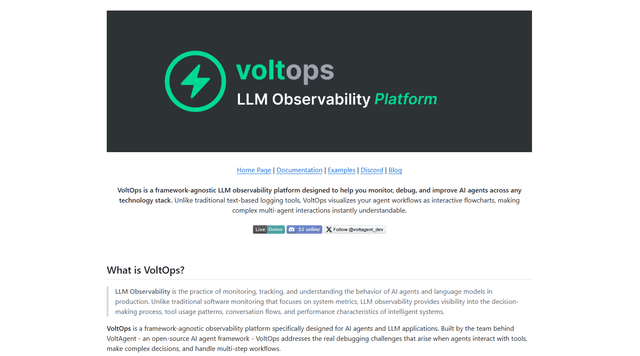
VoltOps
VoltOps is a framework-agnostic LLM observability platform that provides real-time visual monitoring, debugging, and optimization tools for AI agents across any technology stack.
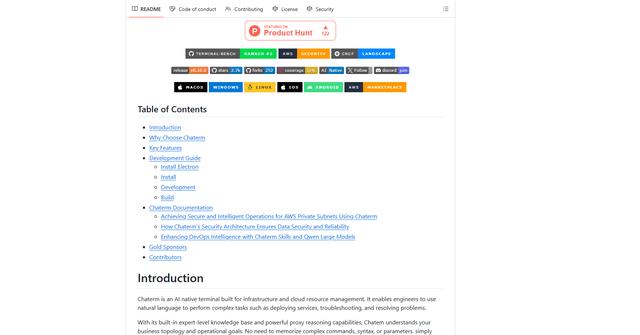
Chaterm
Chaterm is an open-source AI-native terminal and SRE copilot that enables engineers to manage complex infrastructure through natural language, automating deployment, troubleshooting, and operations without memorizing commands.
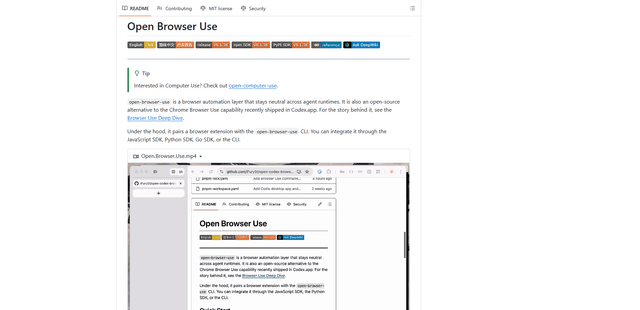
Open Browser Use
Open Browser Use is an open-source, agent-runtime-neutral browser automation layer that pairs a Chrome extension with a CLI/SDK/MCP to enable DOM-aware, CDP-powered tab control, navigation, and actions across different AI agent tools.