
Lunen.ai
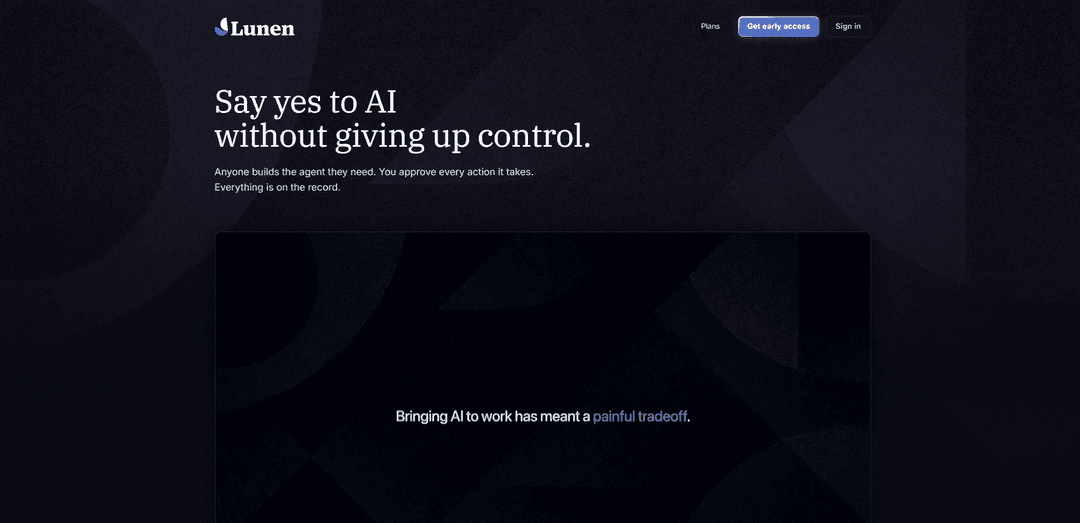
Lunen.ai is a governed control plane for enterprise AI agents that lets anyone build agents in plain language while IT approves actions, scopes data and permissions, and keeps every step auditable on the record.
https://lunen.ai/?ref=producthunt
Product Information
Updated:Aug 8, 2026
What is Lunen.ai
Lunen.ai is an enterprise platform designed to help organizations adopt AI agents without losing control over security, compliance, and operational visibility. It addresses a common failure point in enterprise AI—projects that work in demos but stall or die in security reviews—by unifying agent creation and governance in a single workflow. Built by the team behind REDspace with decades of experience shipping enterprise platforms, Lunen connects to your existing tools and provides one governed control plane where agent behavior, access, and accountability are managed end-to-end.
Key Features of Lunen.ai
Lunen.ai is a governed control plane for building and running AI agents on top of your existing enterprise tools, designed to pass security reviews without killing usability. Subject-matter experts can describe an agent in plain language and Lunen generates a structured execution plan that scopes data access, defines tool usage, and schedules runs. IT and security teams can enforce policies per tool call (especially for “write” actions), require human approvals, and keep comprehensive audit logs of both user and agent activity—so AI automation can run in production with visibility and accountability instead of in shadow IT.
Plain-language agent creation → structured execution plans: Users describe what they need in natural language; Lunen drafts a structured plan with named tools, scoped data, and schedules that can be reviewed, saved, and run.
One governed control plane for agents: Combines agent building and governance in the same workflow, avoiding separate “builder tools” vs “IT governance layers” that slow adoption.
Policy controls per tool (MCP) call: Each connected tool becomes a policy decision: allow unattended execution for safe reads, or require human approval for sensitive actions—especially writes.
Approve the writes, allow the reads: Designed to be defensible in security reviews by separating low-risk access from high-impact operations, with consistent controls across agents and ad-hoc runs.
Unified audit logging for users and agents: Captures who did what, what was approved, which model ran, and what data was touched—exportable on demand for compliance and incident review.
Runs agents on your existing tools (enterprise-ready): Built for real organizational environments, enabling governed automation across the systems teams already use (e.g., Slack and other internal tools).
Use Cases of Lunen.ai
Marketing lead scoring and daily triage: An overnight agent compiles and ranks new leads, adds brief rationale notes, and delivers results to Slack each morning on a schedule.
Finance/accounting workflow automation with approvals: Accounting teams define agents to gather and summarize data, while any actions that change records (writes) require explicit human approval and are fully logged.
IT/security governed rollout of internal AI agents: Centralize agent permissions, enforce tool-call policies, and maintain audit trails so departments can build useful agents without creating shadow AI usage.
Compliance-ready AI operations for regulated industries: Use Lunen’s approval gates and exportable audit logs to support audits and security reviews in industries like finance, healthcare, and insurance.
Enterprise shared services for cross-team automation: Create a standardized path for multiple teams to deploy agents with consistent controls, reducing friction between builders and governance stakeholders.
Pros
Governance and usability are unified, reducing the common gap between agent builders and IT security controls.
Granular approval and policy controls per tool call help agents survive security reviews and prevent risky actions.
Comprehensive, exportable audit logs provide strong accountability and compliance support.
Designed for real enterprise environments and existing tools, supporting practical adoption rather than demos.
Cons
Product appears to be in a design-partner/early-access stage, which may limit immediate availability or maturity.
Requires organizational setup of policies/approvals to get full value, which can add process overhead.
Positioning centers on governed enterprise use; may be less suitable for casual or purely personal agent experimentation.
How to Use Lunen.ai
1) Join as a design partner / request access: Go to https://lunen.ai/ and use the sign-up flow to become a design partner. Lunen indicates they are working with a small group of teams and will schedule a call to understand your AI adoption challenges.
2) Identify the business workflow and the tools it should use: Before building, decide what the agent should do (e.g., lead scoring, accounting ops) and which existing enterprise tools it must interact with. Lunen is positioned as “agents for your existing tools” via MCP tools.
3) Describe the agent in plain language: In Lunen’s agent creation flow, type what you want the agent to do in natural language (no drag-and-drop builder and no YAML). The intent is that a subject-matter expert can specify the workflow directly.
4) Review the drafted structured execution plan: After you describe the agent, Lunen drafts a structured execution plan. Review that plan for: (a) named tools (MCP tools) it will call, (b) the data it will access (scoped data), and (c) the schedule it will run on.
5) Scope the agent’s data access: Adjust the plan so the agent only touches the minimum necessary data. Lunen’s core promise is that the same flow used to describe the agent also scopes its data.
6) Set permissions per tool call (policy decisions): For each MCP tool the agent might use, decide whether it can run unattended or must require human approval. Lunen describes this as “Allow the reads. Approve the writes.”
7) Configure approval rules for write actions: Mark any action that changes production systems (writes) to require explicit approval before each call. Use the same approval toggles for both agents and ad-hoc runs so nothing reaches production data without the rules you set.
8) Set or confirm the run schedule: Define when the agent runs (e.g., daily at 7:30 AM). Lunen’s examples include overnight agents that produce results by morning.
9) Save the agent configuration: Once the plan, data scope, permissions, and schedule are correct, save the agent so it can be executed repeatedly under the same governed configuration.
10) Run the agent (ad-hoc or scheduled): Execute the agent immediately for a test run or let it run on its schedule. During execution, Lunen will follow the configured policies (unattended reads, approvals for writes).
11) Approve gated actions when prompted: If the agent attempts a tool call that requires approval (typically writes), review the requested action and approve or deny it. Lunen’s model is that you approve every action it takes when policy requires it.
12) Inspect the audit log for every action: Open the audit log to see user actions and agent actions in one place. For any event, verify who acted, what was approved, what model ran, and which data it touched. Export logs on demand for security review needs.
13) Iterate: refine the plan, tools, and policies: Based on results and audit findings, update the agent’s plain-language description or the structured plan, tighten/expand data scope, and adjust which MCP tools can run unattended versus requiring approvals.
14) Operationalize across teams with consistent governance: Roll out additional agents for other teams using the same governed path—natural-language agent definition paired with scoped data, permissions, and audit logging—so adoption can scale without running “in the shadows” on personal accounts.
Lunen.ai FAQs
Lunen.ai is a governed control plane for enterprise AI agents where anyone can build the agent they need, while approvals, permissions, and audit logging keep every action controlled and on the record.
Lunen.ai Video
Popular Articles
Atoms: A Multi-Agent AI Platform That Transforms Ideas into Launch-Ready Products
May 22, 2026

Nano Banana SBTI: What It Is, How It Works, and How to Use It in 2026
Apr 15, 2026

Atoms Review — The AI Product Builder Redefining Digital Creation in 2026
Apr 10, 2026

Kilo Claw: How to Deploy and Use a True "Do‑It‑For‑You" AI Agent(2026 Update)
Apr 3, 2026
Latest AI Tools Similar to Lunen.ai

Hapticlabs
Hapticlabs is a no-code toolkit that enables designers, developers and researchers to easily design, prototype and deploy immersive haptic interactions across devices without coding.
Deployo.ai
Deployo.ai is a comprehensive AI deployment platform that enables seamless model deployment, monitoring, and scaling with built-in ethical AI frameworks and cross-cloud compatibility.
CloudSoul
CloudSoul is an AI-powered SaaS platform that enables users to instantly deploy and manage cloud infrastructure through natural language conversations, making AWS resource management more accessible and efficient.
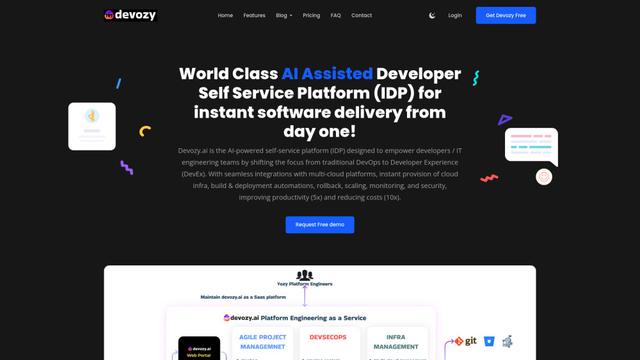
Devozy.ai
Devozy.ai is an AI-powered developer self-service platform that combines Agile project management, DevSecOps, multi-cloud infrastructure management, and IT service management into a unified solution for accelerating software delivery.
Popular AI Tools Like Lunen.ai

A2A Protocol
A2A (Agent2Agent) Protocol is an open interoperability protocol developed by Google that enables seamless communication and collaboration between AI agents across different frameworks and vendors, regardless of their underlying architecture.
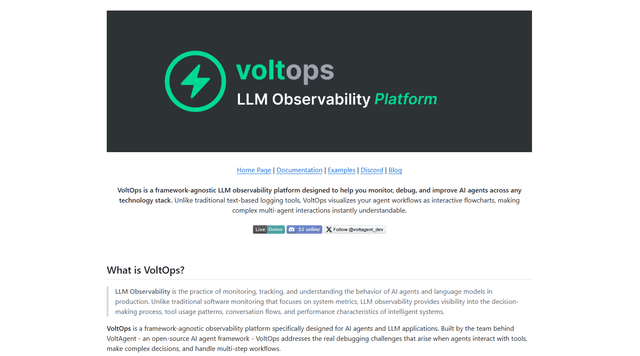
VoltOps
VoltOps is a framework-agnostic LLM observability platform that provides real-time visual monitoring, debugging, and optimization tools for AI agents across any technology stack.
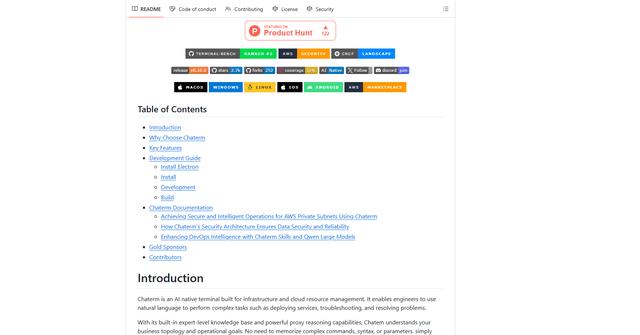
Chaterm
Chaterm is an open-source AI-native terminal and SRE copilot that enables engineers to manage complex infrastructure through natural language, automating deployment, troubleshooting, and operations without memorizing commands.
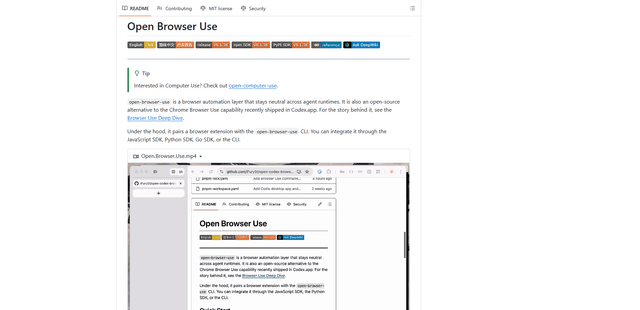
Open Browser Use
Open Browser Use is an open-source, agent-runtime-neutral browser automation layer that pairs a Chrome extension with a CLI/SDK/MCP to enable DOM-aware, CDP-powered tab control, navigation, and actions across different AI agent tools.