
Humalike
Humalike est une infrastructure comportementale pour les agents IA de type humain, offrant des API agnostiques au modèle qui ajoutent de l'intelligence sociale – normes, persona, théorie de l'esprit, mémoire/signaux sociaux et observabilité – afin que les agents puissent s'intégrer de manière proactive dans les conversations individuelles et de groupe.
https://www.humalike.ai/?ref=producthunt&utm_source=aipure

Informations sur le produit
Mis à jour:Jul 8, 2026
Qu'est-ce que Humalike
Humalike fournit un ensemble de composants comportementaux et d'API conçus pour que les agents IA se sentent naturels dans les endroits où « être humain » compte – les chats de groupe, les communautés, les salles de classe, les jeux et les expériences de type compagnon. Plutôt que de se concentrer sur un modèle de fondation ou une application spécifique, Humalike est positionné comme une infrastructure agnostique au modèle, au cas d'utilisation et à la pile que les développeurs peuvent intégrer dans des agents existants pour améliorer les compétences sociales, la proactivité et l'adéquation conversationnelle. La plateforme met l'accent sur la confiance et la sécurité, avec des efforts SOC 2 Type II et ISO 27001 en cours, et offre une rampe d'accès aux développeurs (y compris des crédits gratuits) pour tester et intégrer la couche comportementale dans des produits réels.
Caractéristiques principales de Humalike
Humalike est une couche d'infrastructure comportementale pour les agents d'IA, conçue pour les rendre plus humains dans les discussions individuelles et les discussions de groupe multi-utilisateurs. Il fournit des composants comportementaux (via des API) agnostiques au modèle, à la pile et au cas d'utilisation, qui ajoutent une intelligence sociale telle que l'apprentissage des normes, l'ancrage de la personnalité, le suivi de la théorie de l'esprit, l'observabilité sociale et la mémoire sociale à long terme, afin que les agents puissent s'intégrer dans les communautés et les équipes, se comporter de manière proactive et s'améliorer à "lire la salle" au fil du temps. La plateforme met l'accent sur la confiance et la préparation à l'entreprise avec des contrôles de sécurité et des efforts de conformité (SOC 2 Type II et ISO 27001 en cours), et offre des options d'intégration rapide (par exemple, un plugin Hermes "one-shot") ainsi qu'un crédit gratuit pour commencer à construire.
API comportementales (composants composables): Sept blocs de construction axés sur le comportement qui peuvent être intégrés dans les agents existants pour améliorer l'interaction sociale au-delà des questions-réponses brutes – conçus pour fonctionner sur tous les modèles, piles, et dans les contextes 1:1 et de groupe.
Détection et adaptation des normes: Apprend les blagues internes, les règles cachées, le ton et le style de conversation d'un groupe afin que l'agent se comporte comme un initié plutôt qu'un étranger.
Suivi de la théorie de l'esprit: Maintient une vue évolutive de ce que chaque participant croit, veut et ressent au fur et à mesure que la conversation se déroule, favorisant des réponses plus tactiques et sensibles au contexte.
Mémoire sociale à travers les conversations: Se souvient des normes, des opinions et des modèles de comportement des individus et des groupes au fil du temps pour créer une continuité et des suivis plus naturels dans les interactions futures.
Observabilité et signaux sociaux: Aide l'agent à comprendre comment il est perçu (par exemple, qui est engagé ou agacé) et à lire les signaux subtils que de nombreux agents manquent (par exemple, les pauses de frappe, les modifications, les réactions supprimées) pour ajuster son comportement en temps réel.
Intégration rapide + intégration des développeurs: Comprend une intégration/plugin Hermes "one-shot" et offre 20 $ de crédits gratuits (aucune carte requise) afin que les équipes puissent câbler rapidement les comportements et livrer des prototypes ou des fonctionnalités de production plus rapidement.
Cas d'utilisation de Humalike
Facilitateur de discussion de groupe pour les équipes (style Slack/Discord): Agit comme un participant proactif qui apprend les normes de l'équipe, suit les préférences individuelles et s'améliore au fil du temps à "lire la salle", permettant une meilleure coordination, des rappels et des interventions sensibles au contexte.
Bots et modérateurs de communauté: S'intègre dans les communautés en ligne en s'adaptant à la culture et aux normes locales, en surveillant la dynamique sociale et en répondant d'une manière qui semble alignée sur la communauté plutôt que générique.
Assistants de classe Ed-tech: Soutient les conversations multi-étudiants en suivant l'état et la compréhension de chaque apprenant, en se souvenant des interactions précédentes et en répondant avec un ton et un rythme appropriés pour l'apprentissage en groupe.
Personnages de jeu et compagnons d'escouade: Permet aux PNJ ou aux coéquipiers d'IA de se souvenir des joueurs, de capter les plaisanteries de groupe et de réagir aux signaux sociaux subtils, rendant le jeu coopératif et le jeu de rôle plus réalistes.
Agents de support client et d'intégration: Utilise la théorie de l'esprit et l'observabilité sociale pour adapter la communication aux différents clients, réduire les frictions et maintenir la continuité entre les sessions pour des expériences d'intégration et de support plus fluides.
Agents de type compagnon (continuité relationnelle): Améliore les interactions à long terme en se souvenant des détails personnels, des préférences et des normes conversationnelles, rendant les conversations répétées cohérentes et intentionnelles.
Avantages
Conçu spécifiquement pour un comportement humain dans des environnements multi-utilisateurs (pas seulement le chat mono-utilisateur), abordant les normes, les signaux sociaux et la dynamique de groupe.
Couche comportementale agnostique au modèle/à la pile qui peut être composée dans les agents existants, plus une intégration rapide (par exemple, le plugin Hermes).
Les fonctionnalités de continuité (mémoire sociale, normes, observabilité) favorisent des interactions proactives et de type relationnel au fil du temps.
Posture de sécurité mise en avant avec le chiffrement et les programmes de conformité (SOC 2 Type II et ISO 27001 en cours).
Inconvénients
Certaines fonctionnalités sont répertoriées comme "à venir", de sorte que la disponibilité de toutes les API comportementales peut être limitée en fonction du déploiement.
Les certifications de conformité sont en cours (non déclarées comme terminées), ce qui peut être important pour les acheteurs fortement réglementés.
L'intelligence comportementale dépend du contexte ; les performances peuvent varier selon la communauté, le domaine et la qualité/le volume des données d'interaction.
Comment utiliser Humalike
1) Décidez ce que vous construisez et où cela s'exécutera: Choisissez votre environnement cible (chat 1:1 ou chat de groupe) et votre pile/modèle d'agent existant (Humalike est décrit comme agnostique au modèle, au cas d'utilisation et à la pile). Identifiez les lacunes « humaines » que vous souhaitez combler : normes, persona, théorie de l'esprit, observabilité sociale, mémoire sociale et/ou signaux sociaux.
2) Créez un compte Humalike et commencez avec des crédits gratuits: Rendez-vous sur https://www.humalike.ai/ et utilisez le flux « Démarrer gratuitement » / connexion (lié à https://humalike.ai/sign-in). Les nouveaux comptes sont décrits comme recevant 20 $ de crédits gratuits sans carte requise, censés être suffisants pour câbler les API dans un agent et tester.
3) Choisissez les composants comportementaux que vous souhaitez composer: Sélectionnez parmi les composants comportementaux listés en fonction de vos besoins : Normes (apprendre les blagues internes/règles cachées/ton), Persona (personas ancrés), Théorie de l'esprit (suivre ce que chaque personne croit/veut/ressent), Observabilité sociale (comment l'agent est perçu), Mémoire sociale (se souvenir des normes/opinions/comportements à travers les conversations), Signaux sociaux (lire les indices comme les pauses de frappe/modifications/réactions supprimées).
4) Préparez votre contexte de conversation (surtout pour les groupes): Structurez les informations que votre agent transmettra via la couche comportementale : qui est dans la conversation, quel est le canal/lieu, et la transcription en cours. Humalike met l'accent sur le travail en 1:1 et en groupe avec les mêmes API, alors assurez-vous de pouvoir représenter plusieurs participants et tours.
5) Intégrez via la couche API unique d'Humalike (infrastructure comportementale): Connectez Humalike à votre agent en tant que couche comportementale qui augmente votre modèle existant. Le positionnement du produit indique que vous « les intégrez à vos agents avec une seule API », composant les composants sélectionnés pour ajouter des compétences sociales et de la proactivité.
6) (Facultatif) Utilisez l'intégration Hermes en une seule fois si vous êtes sur Hermes: Si votre agent utilise Hermes (Nous Research), utilisez le « hermes-humalike-plugin » pour intégrer un comportement humain en une seule fois (prise de parole, persona, théorie de l'esprit et apprentissage social) sans reconstruire votre agent. Le site officiel renvoie à : https://github.com/Humalike/hermes-humalike-plugin
7) Configurez les objectifs de comportement par cas d'utilisation: Mappez les composants à votre scénario : par exemple, les bots communautaires et les jeux de rôle s'appuient sur les Normes + Persona ; le support client et l'ed-tech peuvent privilégier la Théorie de l'esprit + l'Observabilité sociale ; l'intégration et les compagnons à long terme bénéficient de la Mémoire sociale ; la nuance conversationnelle en temps réel bénéficie des Signaux sociaux.
8) Testez dans des conversations multi-utilisateurs réalistes: Exécutez votre agent dans les environnements mis en évidence par Humalike (équipes de jeu, salles de classe, compagnons matériels, communautés en ligne). Validez qu'il suit le ton du groupe, gère les prises de parole et s'adapte aux règles cachées plutôt que de répondre comme un assistant générique.
9) Évaluez et itérez en utilisant des benchmarks/datasets le cas échéant: Si vous avez besoin d'une évaluation structurée, utilisez les ressources de benchmark/dataset référencées par Humalike (par exemple, LoSoNA sur Hugging Face : "Humalike-ai/LoSoNA") pour tester le respect des normes et le comportement social. Lors de l'évaluation, ne conservez que le contexte visible par le sujet (canal/lieu/personnages/sujet/transcription) séparé des étiquettes de normes cachées, comme décrit dans les directives du dataset.
10) Surveillez la confiance et la préparation au déploiement: Pour les déploiements en production, alignez-vous sur la posture de sécurité déclarée d'Humalike (SOC 2 Type II et ISO 27001 en cours ; chiffrement en transit et au repos ; contrôles d'accès). Confirmez vos propres exigences en matière de traitement des données avant d'étendre l'utilisation au-delà des crédits gratuits.
FAQ de Humalike
Humalike fournit une infrastructure comportementale pour les agents d'IA "humains" – des API, des modèles et des "benchmarks" axés sur les compétences sociales et la proactivité pour les agents qui doivent se sentir humains dans des contextes individuels et de groupe.
Vidéo de Humalike
Articles populaires

Atoms : Une plateforme d'IA multi-agents qui transforme les idées en produits prêts à être lancés
May 22, 2026

Nano Banana SBTI : Qu'est-ce que c'est, comment ça marche et comment l'utiliser en 2026
Apr 15, 2026

Atoms : L'outil de création de produits IA qui redéfinit la création numérique en 2026
Apr 10, 2026
Kilo Claw : Comment déployer et utiliser un véritable agent d'IA "Faites-le pour vous" (Mise à jour 2026)
Apr 3, 2026
Derniers outils d'IA similaires à Humalike
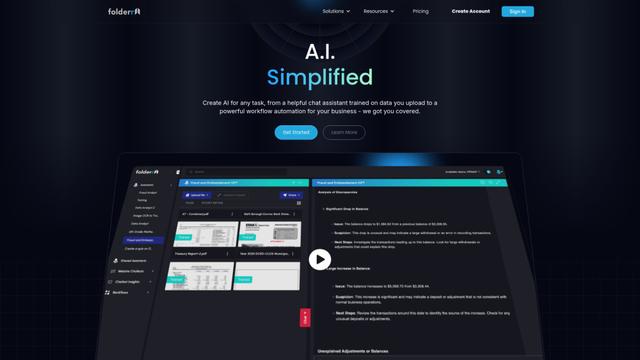
Folderr
Folderr est une plateforme IA complète qui permet aux utilisateurs de créer des assistants IA personnalisés en téléchargeant des fichiers illimités, en s'intégrant à plusieurs modèles linguistiques et en automatisant des flux de travail via une interface conviviale.
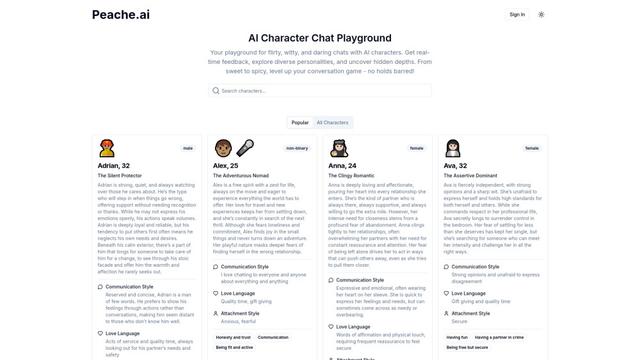
Peache.ai
Peache.ai est un terrain de jeu de chat avec des personnages IA qui permet aux utilisateurs de s'engager dans des conversations flirty, spirituelles et audacieuses avec des personnalités IA diverses à travers des interactions en temps réel.

TalkPersona
TalkPersona est un chatbot vidéo alimenté par IA qui fournit une conversation humaine en temps réel grâce à un visage parlant virtuel avec des capacités de voix naturelle et de synchronisation labiale.
Thaly AI
Thaly AI est un assistant de vente alimenté par l'IA qui automatise les conversations avec les clients et la qualification des prospects pour aider les entreprises à développer leurs opérations de vente tout en économisant du temps.
Outils d'IA populaires comme Humalike

GPT‑5.5 | ChatGPT Official
GPT-5.5 dans ChatGPT est le dernier modèle d'OpenAI axé sur le travail, conçu pour comprendre des objectifs complexes, utiliser efficacement les outils, vérifier son travail et mener à bien des tâches multi-étapes (codage, recherche, documents, feuilles de calcul) avec des protections renforcées.
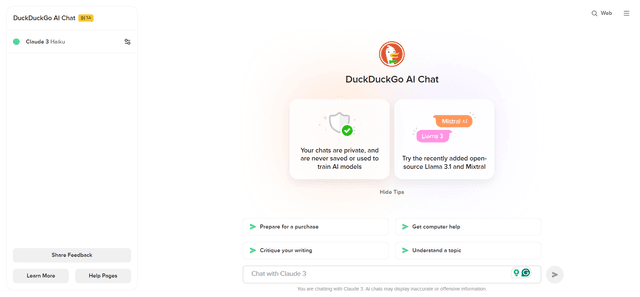
DuckDuckGo AI Chat
DuckDuckGo AI Chat est un moyen gratuit et anonyme d'accéder à des chatbots IA populaires comme GPT-3.5, Claude et d'autres tout en préservant la vie privée des utilisateurs.

Arch
Arch est une passerelle intelligente de couche 7 construite sur Envoy Proxy qui fournit un traitement sécurisé, une observabilité robuste et une intégration transparente des invites avec des API pour construire des agents d'IA rapides, robustes et personnalisés.
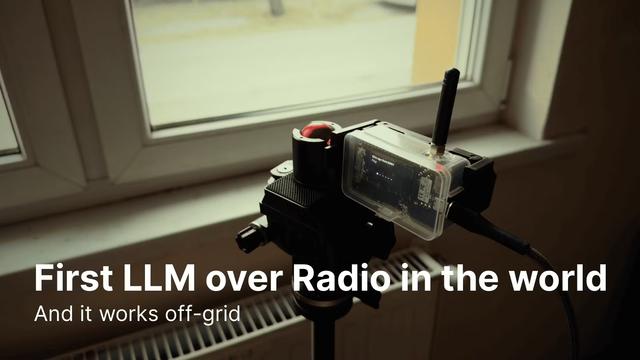
Off-grid LLM over Radio
Une plateforme qui intègre des modèles de langage de grande taille (LLMs) avec des réseaux de communication maillés Meshtastic pour permettre des interactions IA hors réseau et l'exécution automatisée de tâches via la communication radio.